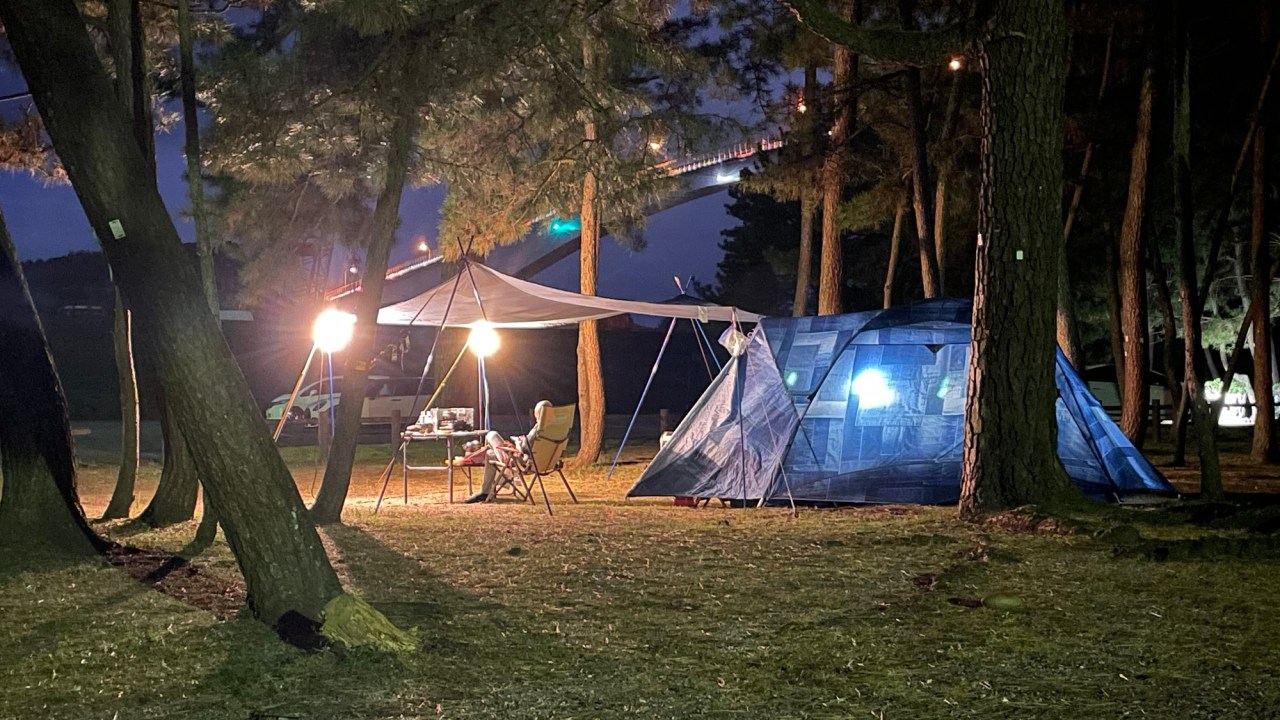
We are huddled under a gazebo, wearing nearly all our clothes. We pitched the tent earlier while it was still dry but now a steady drizzle seems to be settling in for the night.
Just as it’s getting dark, we are joined by two other cyclists: Noelie and Nicholas. They’ve been on a similar journey, also starting in Seoul, and now riding through Shikoku.
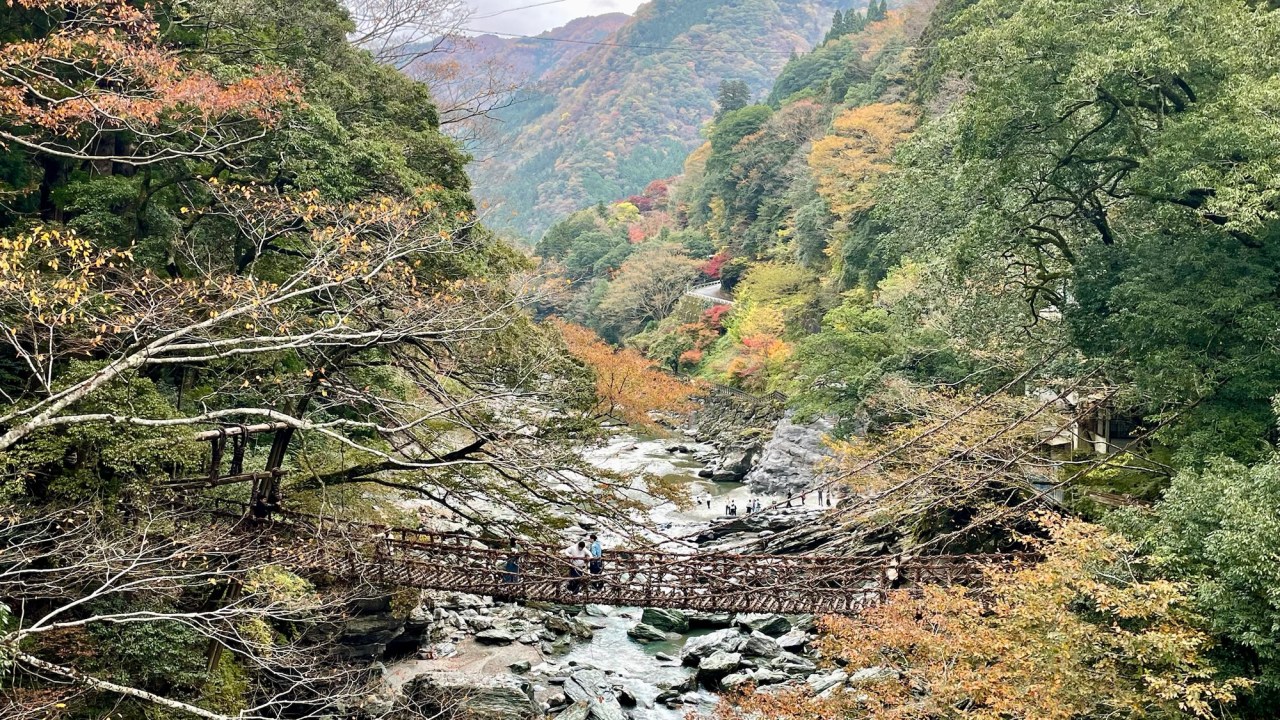
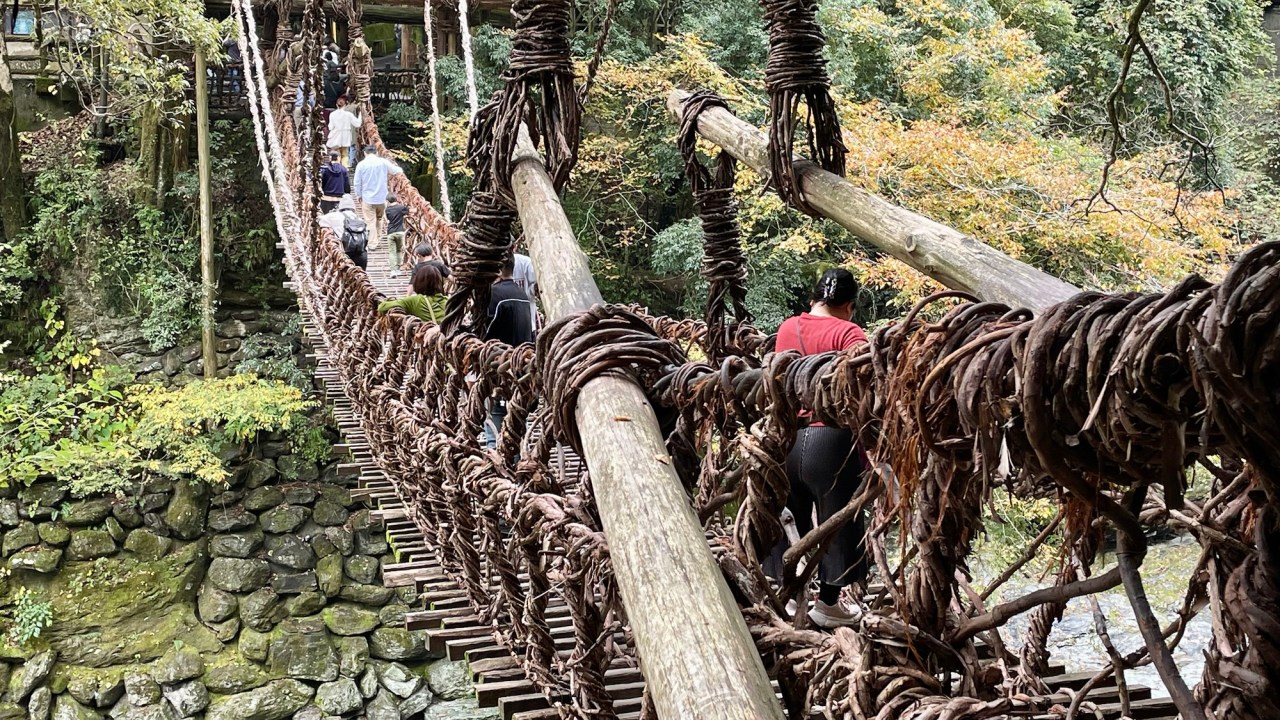
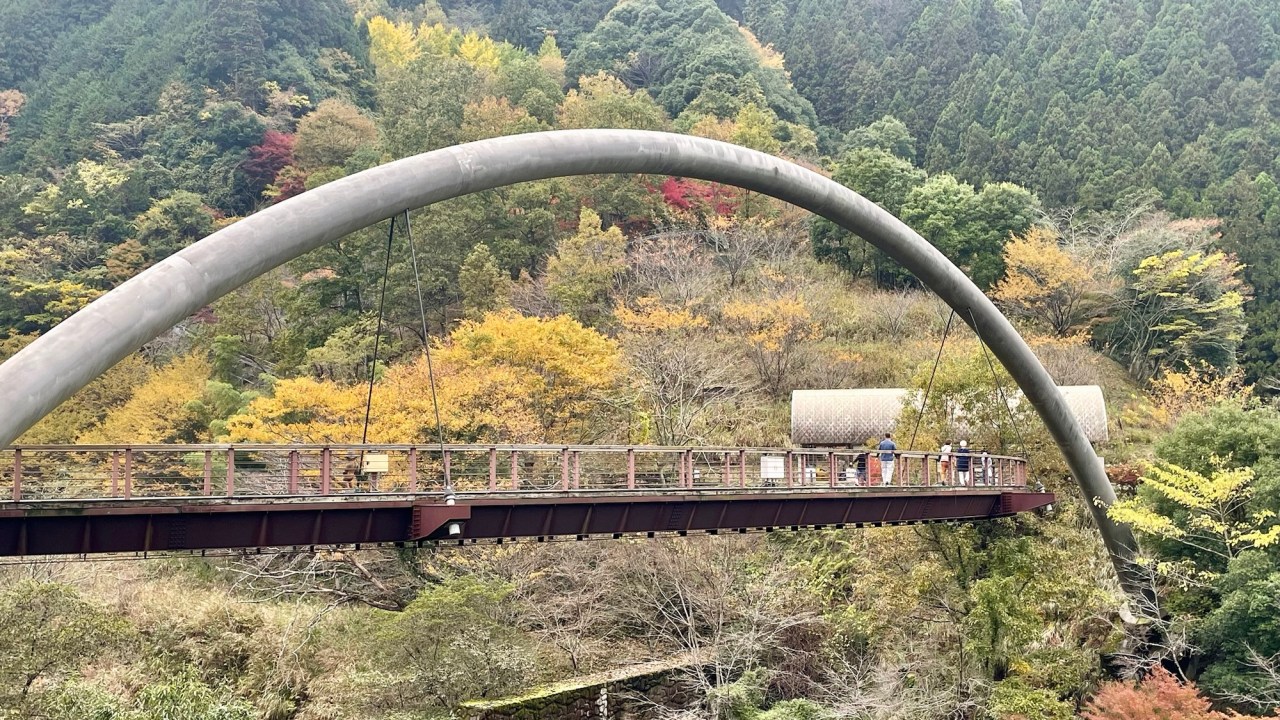
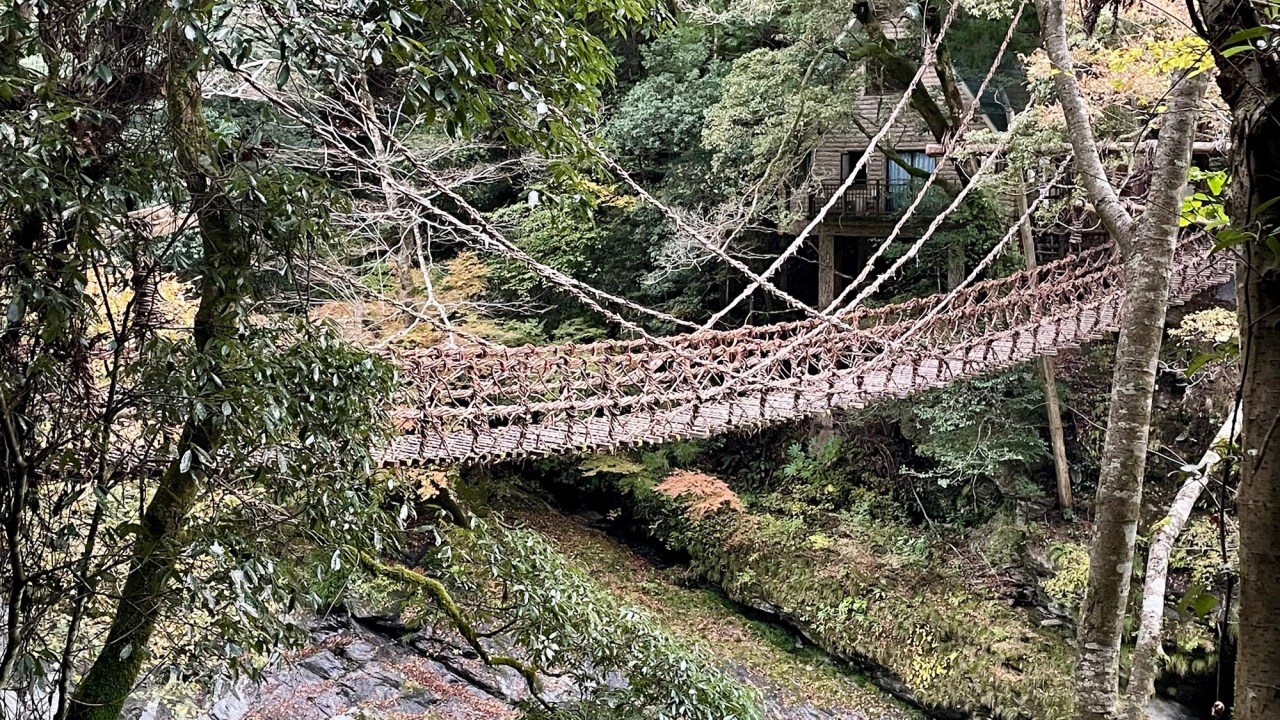
We’re in the Iya Valley at a campsite near the vine bridge, a popular attraction. It’s a traditional kazurabashi pedestrian bridge made of wood and rope-like vines (kazurabashi) from a local kiwi plant, although steel cables have been used to fortify the structure. There were 13 of these bridges but only three still exist.
The temperature really dropped today. It’s about 10 degrees colder than what we’ve been enjoying, a signal that winter is approaching.
We while away the evening chatting with Noelie and Nick while preparing and eating our simple dinners on the camp stoves. Tired of the damp cold, we all retreat to our cozy sleeping bags. In the morning we say our farewells and head off in different directions. The rain has stopped.
We crossed to Shikoku from Beppu to Yawatahama six days earlier and rode to Uchiko via Ōzu where we stopped to look at the castle.

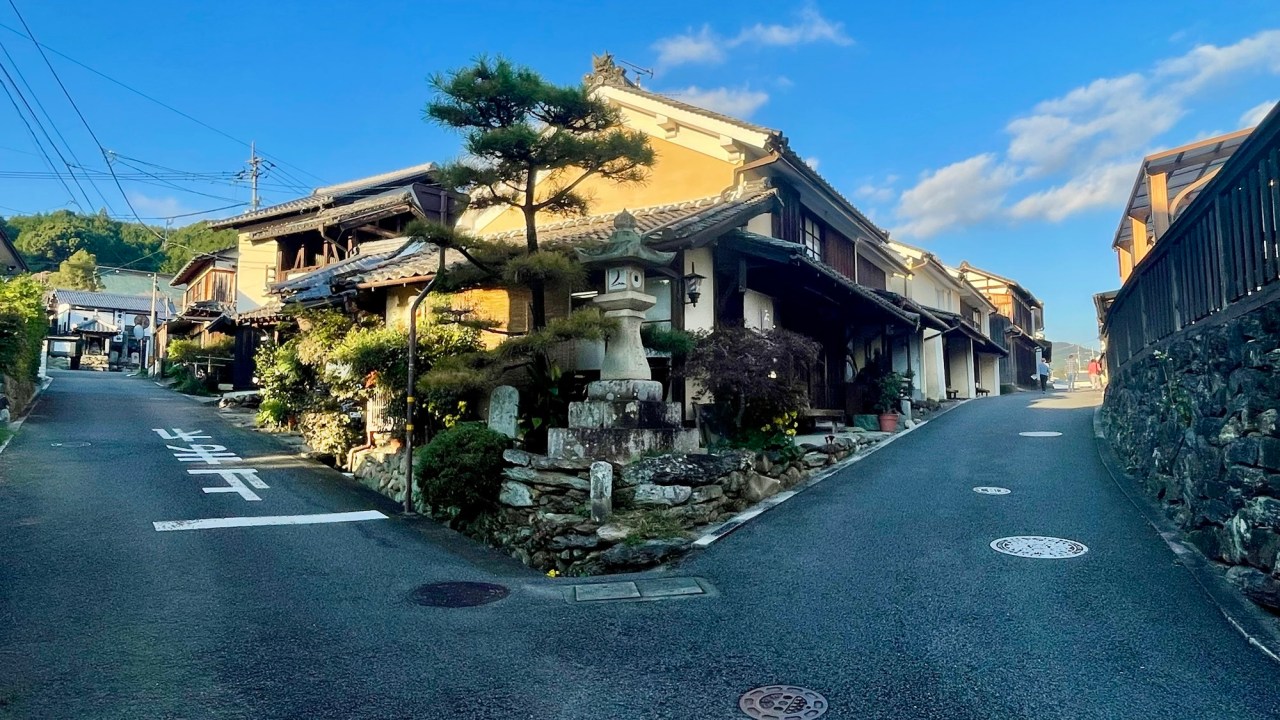
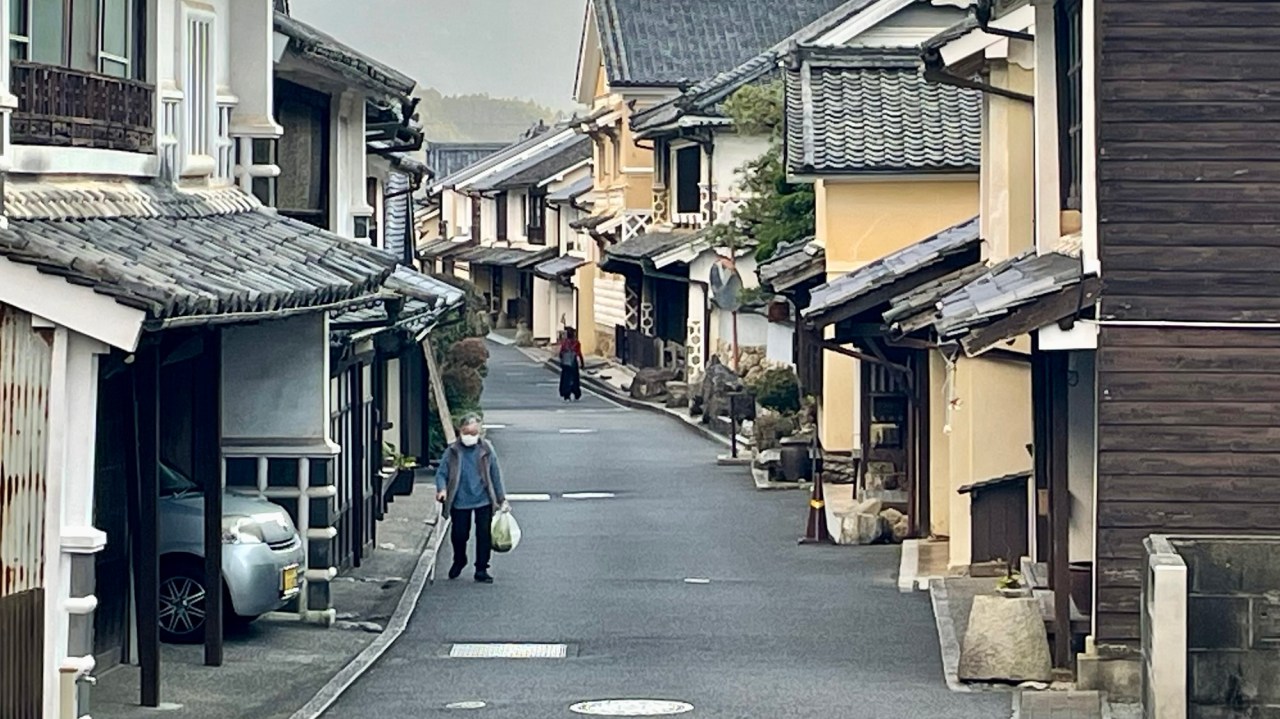
Uchiko was a really nice surprise. There is a section of town with about 90 traditional merchant houses that are still lived in. Uchiko was once known for producing high quality Japanese paper and Japanese wax.
There is also a temple with a giant reclining Buddha on a hill just above the merchant district.


After wandering around the temple we roll back down the hill and cross the bridge to a free campsite on the river. We snack on peanuts and beer as the sun sets and we set up the tent. The days are really getting short.
Instead of cooking we walk back across the bridge to a small family-run restaurant where we have dinner. Simple, delicious food for ¥2,000 ($18)

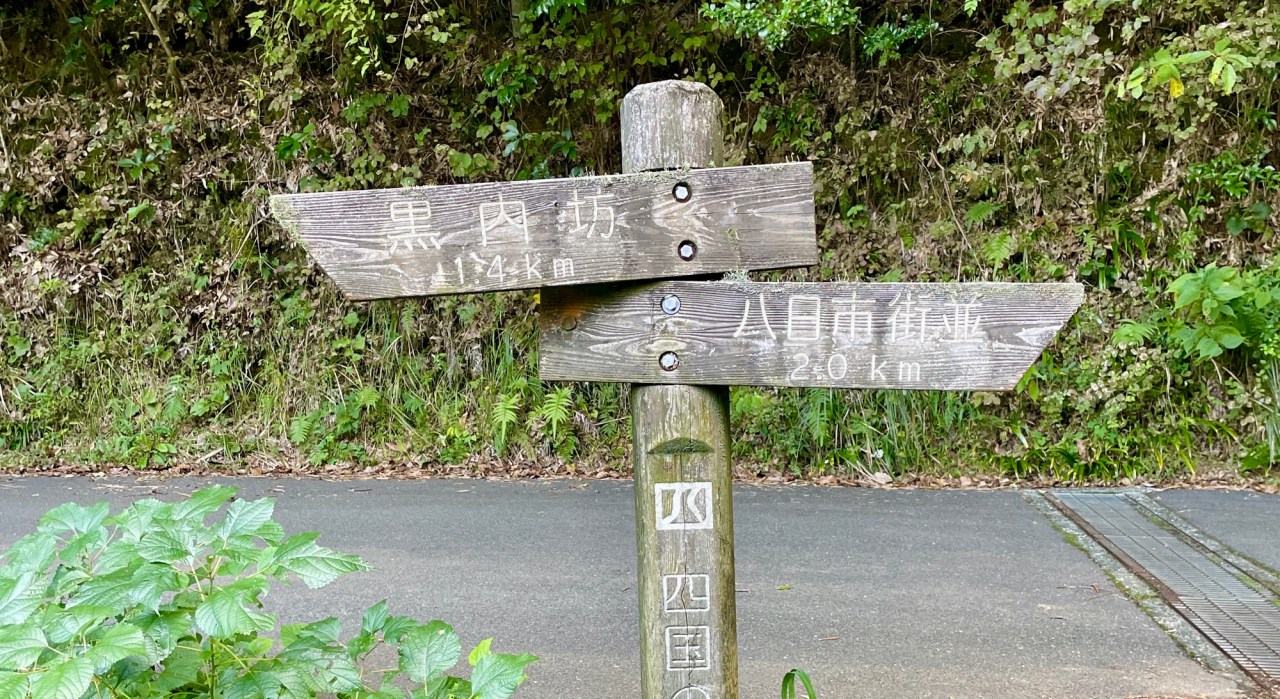
From Uchiko we headed south into the mountains of central Shikoku. This is the smallest and least populated of Japans four main islands. Historically, Shikoku has been quite isolated and retained many of its original characteristics. It is known for its 88 temples pilgrimage: the Henro Trail, a 1,400-kilometre-long route connecting all 88 temples.
Udon is one of Shikoku’s major foods and we sample it often. A simple broth with noodles , prawn tempura and sometimes kagiage, a mixed tempura fritter not unlike the Indian vegetable pakora.

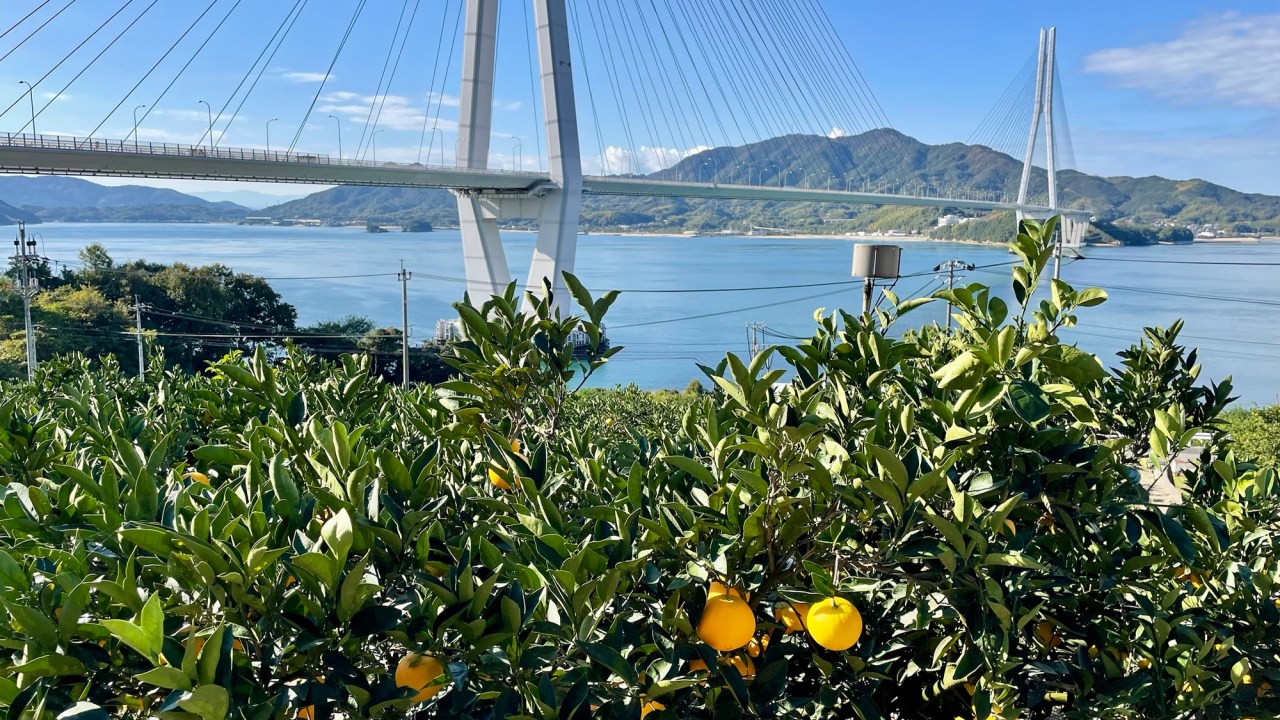
Citrus fruit is widely grown and most days we cycle through groves of mandarin, picking the odd one because it seemed nobody else was and it would be a shame to let such lovely fruit go to waste.
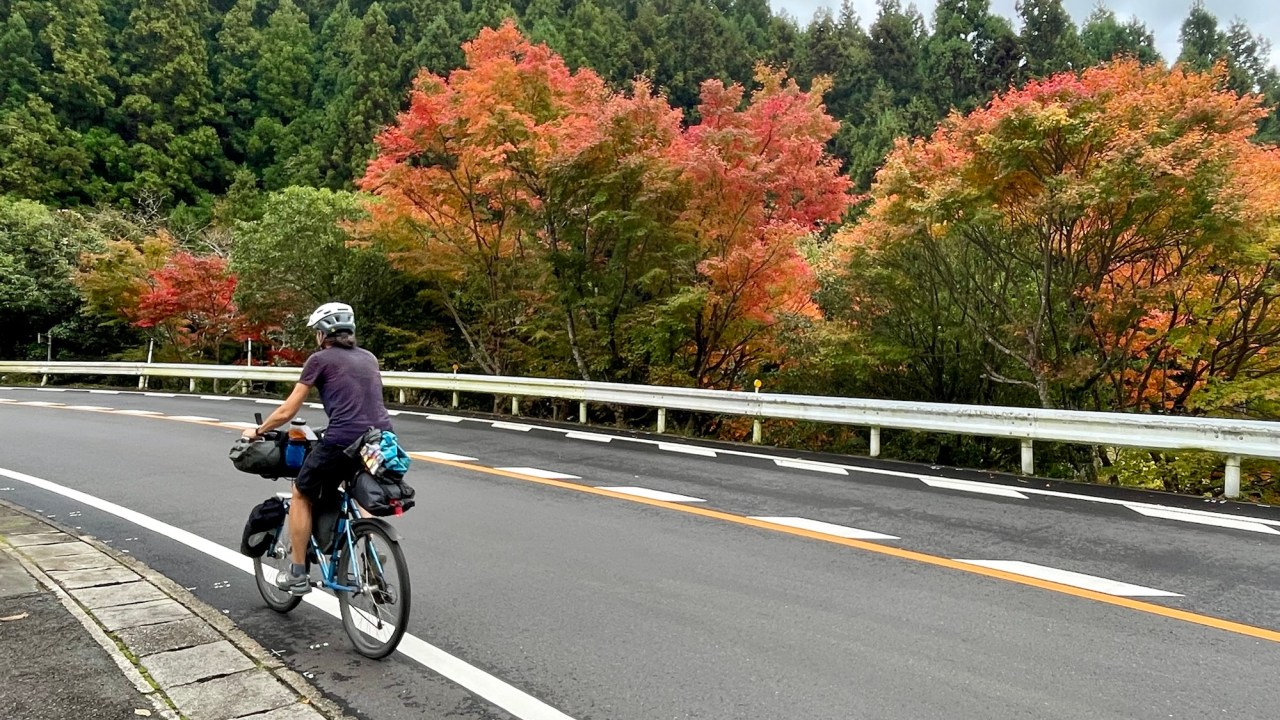
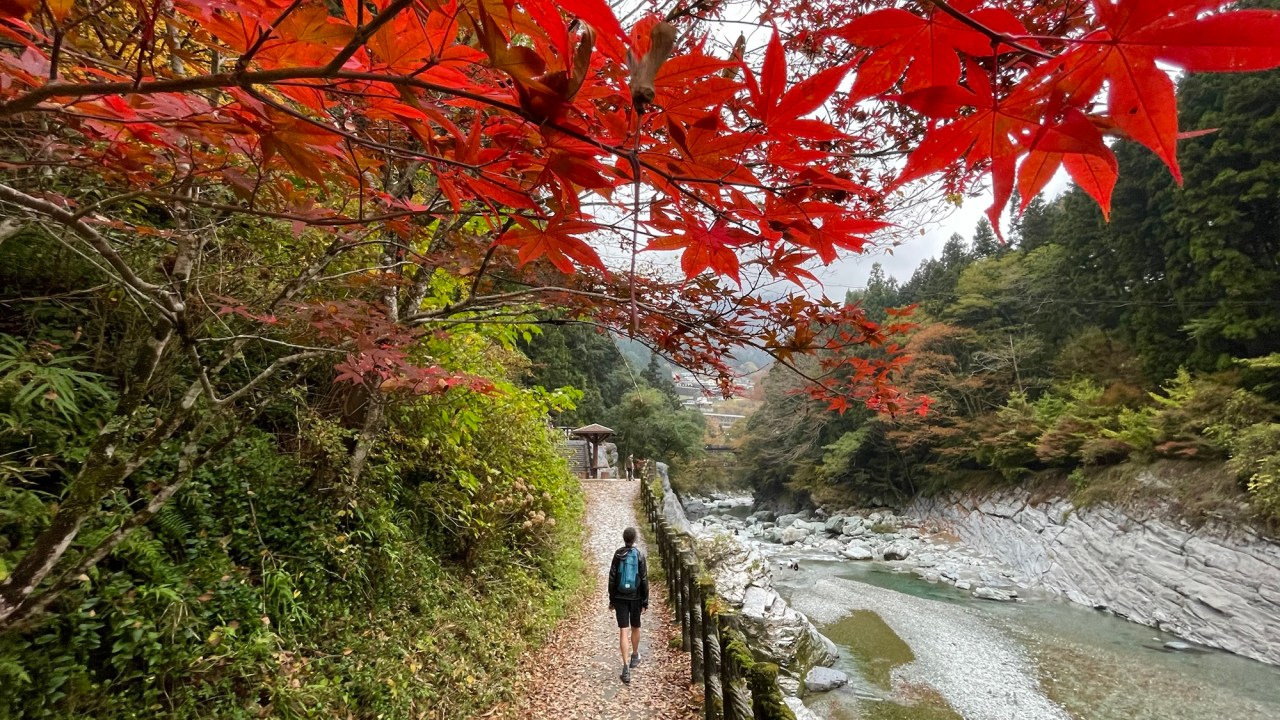
At higher elevations the trees have begun to change, adding swaths of yellows and reds to the otherwise lush, green landscape. The maples in particular are a beautiful deep red. But the warm weather is keeping many of the trees from turning.

We climb steadily all day but at a fairly easily gradient. When we get to Yusuhara, we decide to call it a day. There is a place called the Riders’ Inn, catering to motorcyclists and cyclists. Each room has a bike garage by the entrance and we love the vibe.

A young Russian woman meets us and checks us in. There are only two or three other guests.
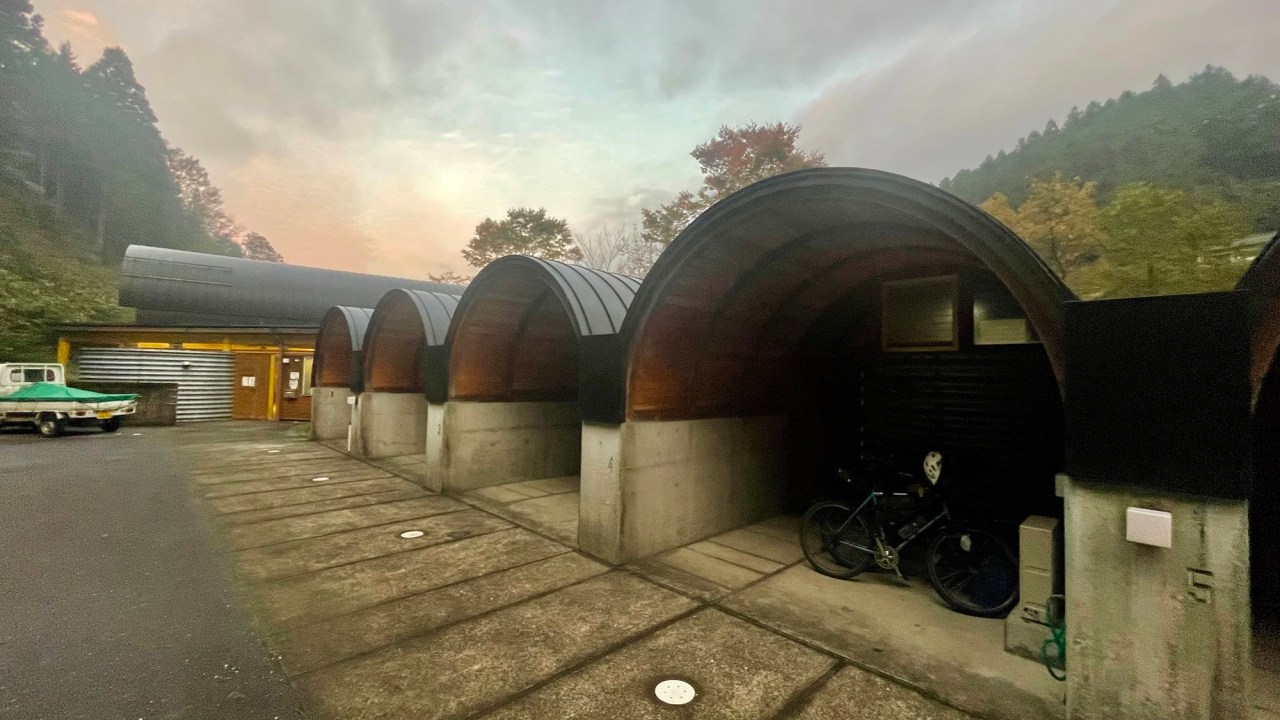
Yusuhara has some outstanding architecture designed by Kengo Kuma. He was inspired by Yusuhara’s old theatre constructed of wood in a traditional style. We tour his Yusuhara Bridge Museum which looks like a bridge made of interlocking jenga blocks. It’s a spectacular structure inside and out.

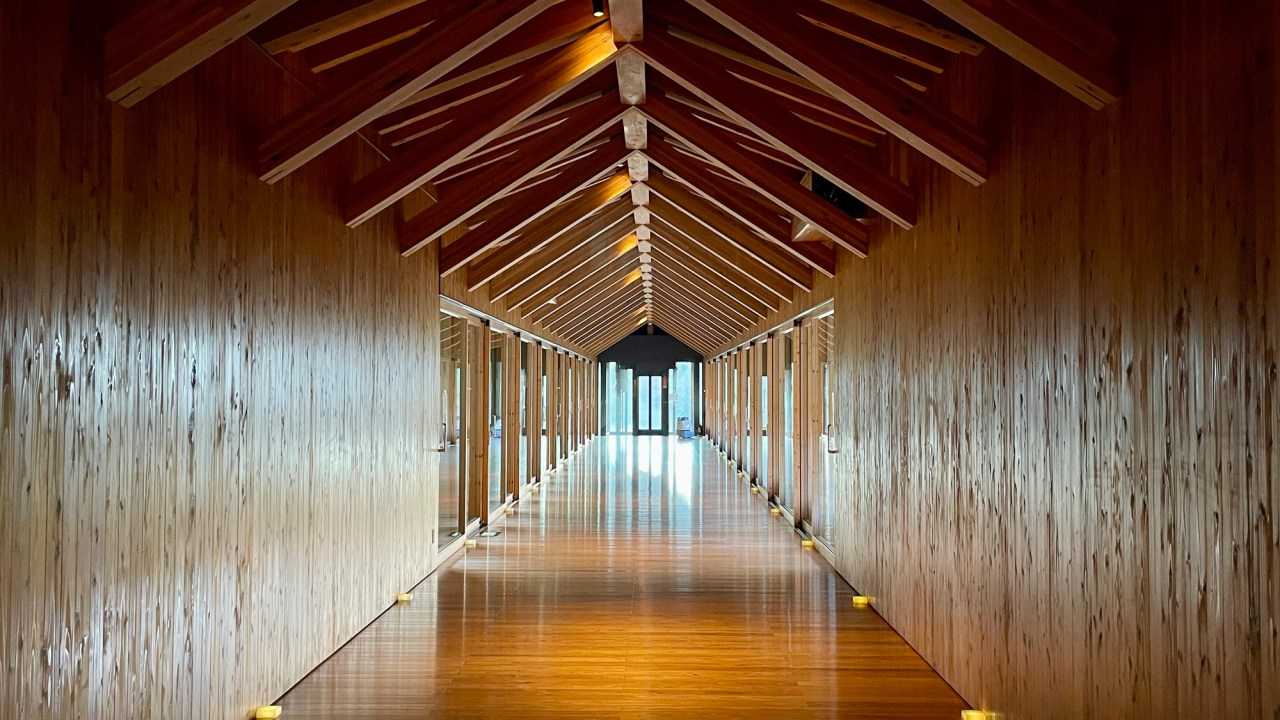
Kuma also designed the town’s market, city hall and a hotel. He fell in love with the valley and it inspired him to work with local materials. He also designed the Japan National Stadium for the 2020 summer Olympic Games, postponed due to Covid and held in 2021, as well as other well known projects around the world.

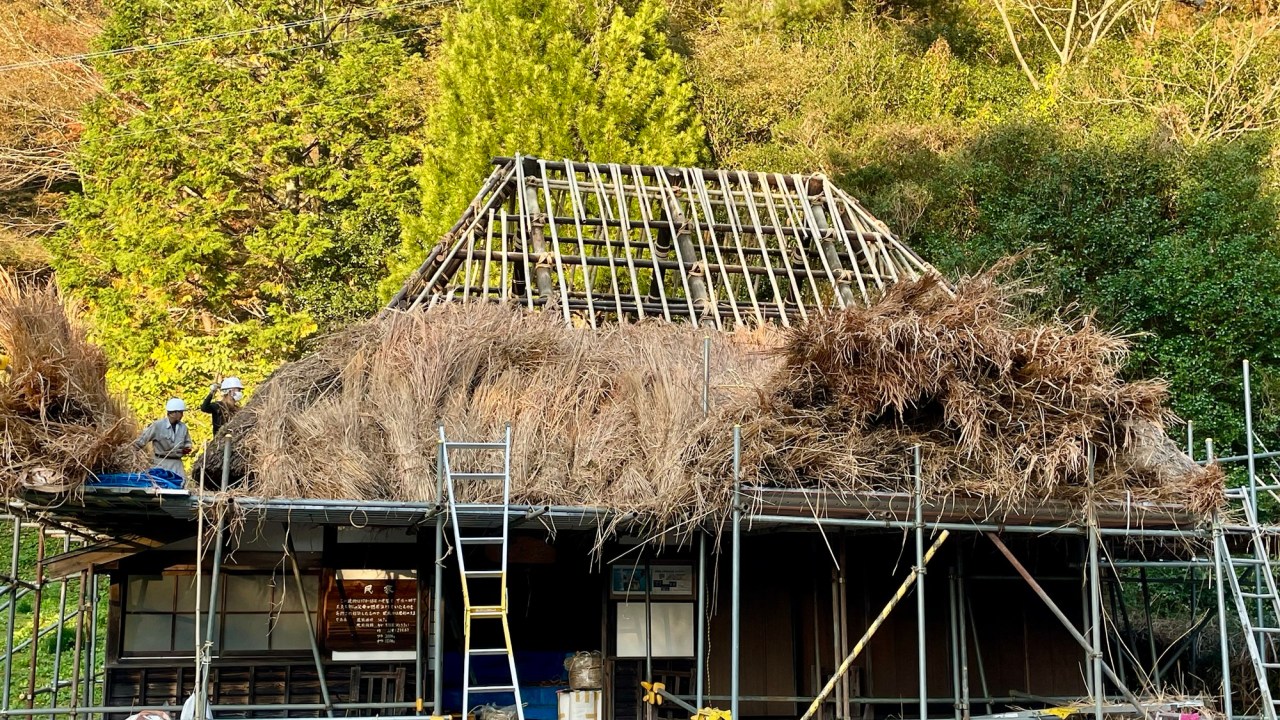
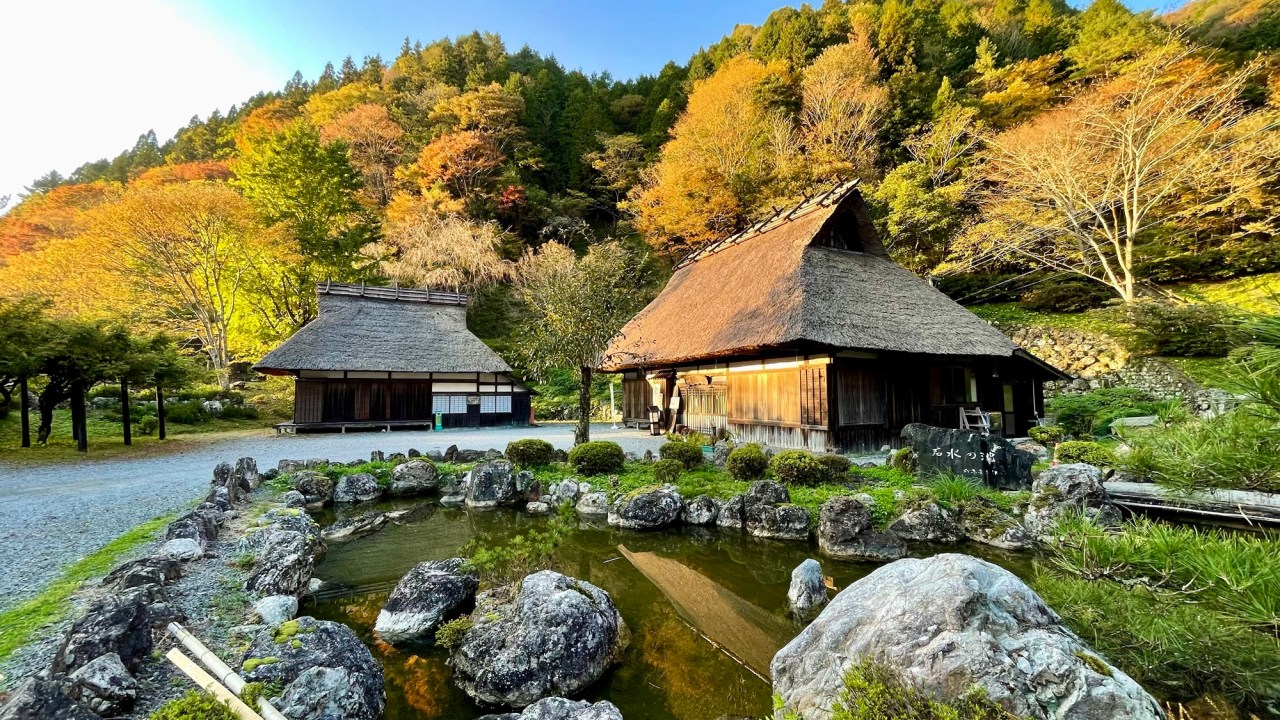
Nearby there are also some traditional houses with thatched roofs. Workers are busy replacing one of the roofs. The structure of the roof is made of bamboo poles lashed together and then covered with a thick layer of thatch.
Back at the Riders’ Inn there is a central common room with a kitchen and seating where we cook our meal and pass the evening, planning the next part of our route.
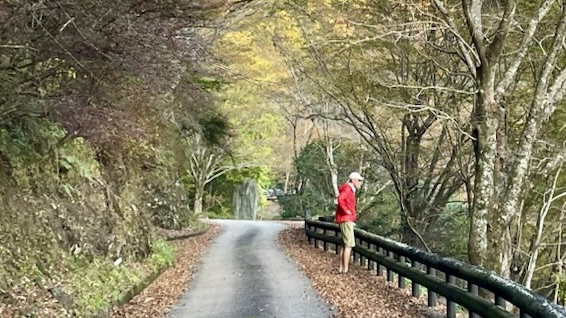
We find a small forest road to take us out of Yusuhara. It’s a bit risky to take these roads because many of them have fallen out of use and are not being maintained. But this one seems to still be connecting small villages.
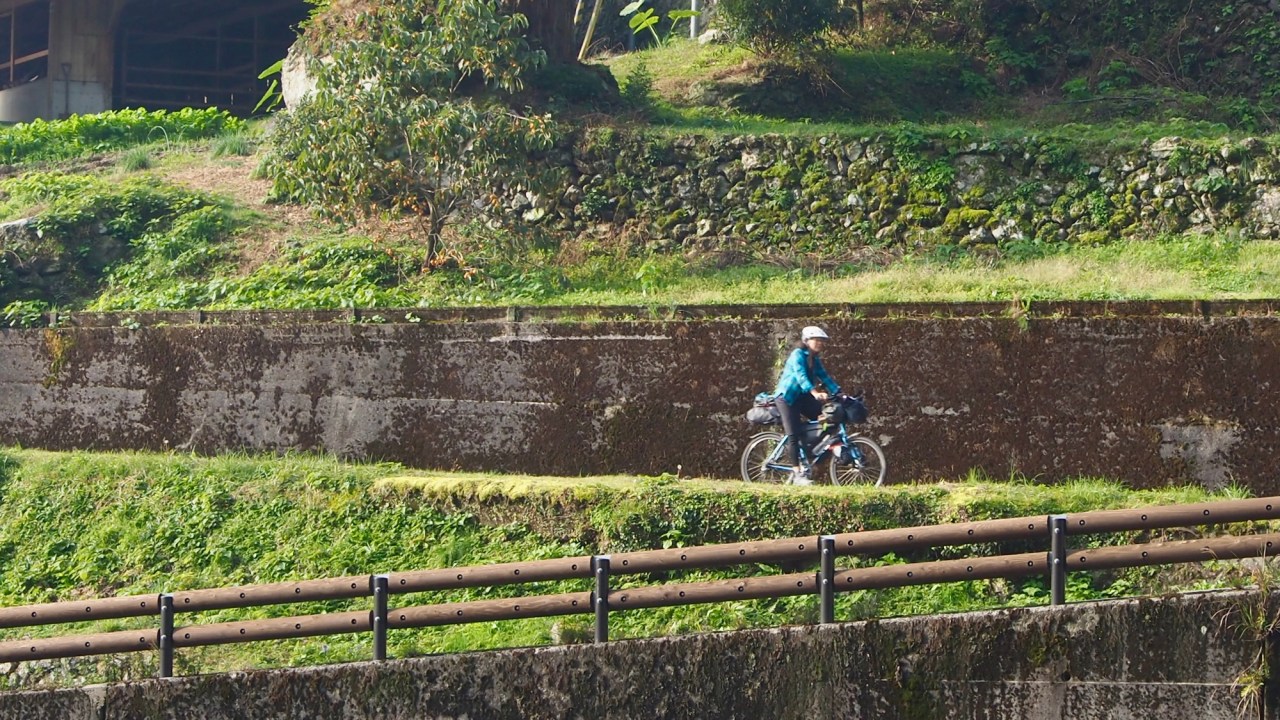
Eventually we end up back on a national road as we zoom downhill in the direction of Kochi when suddenly Jan’s right pedal clatters to the ground. The axle is still in the crank but the pedal has broken away from it.
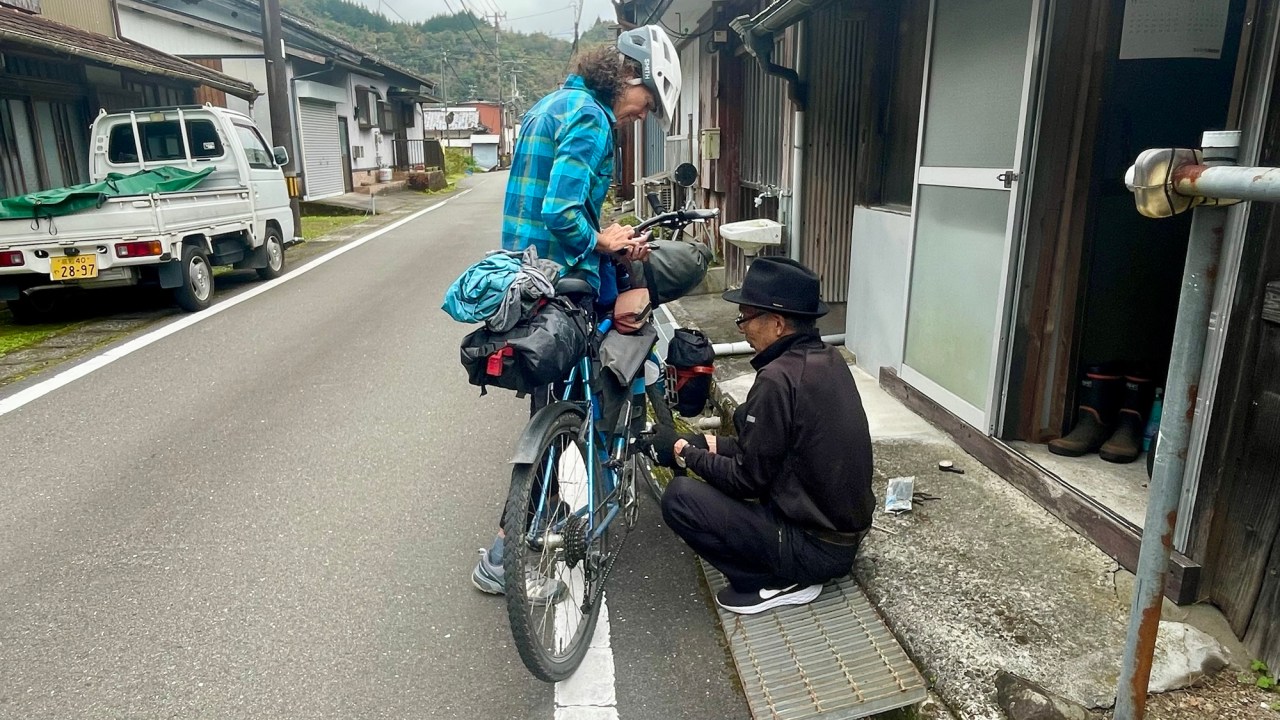
We are in a tiny town and there is no bike shop. A very kind gentleman working on his car is keen to help and somehow lashes the pedal onto the axle using a large elastic band. It works but will not last long.
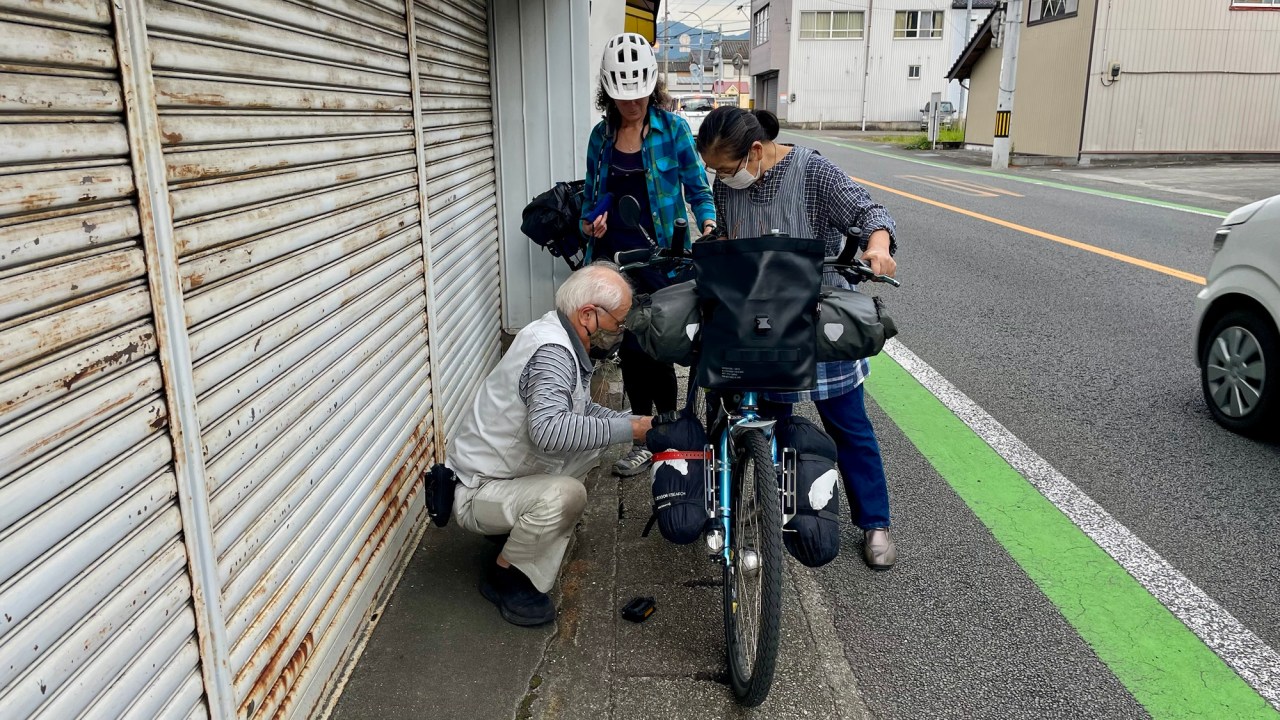
In Susaki we go to the first bike shop but they can’t help us. The second bike shop is stocked with bikes and some parts but we don’t see any pedals. They won’t sell us a pair from one of the many new bikes in the store.
The owner signals to us to wait and he disappears into a back room. A couple of minutes later he comes out with a couple of pairs of pedals. We choose the cheaper ones—basic black pedals with an orange reflector. He insists on installing it while his wife holds Jan’s bike. We pay them and give our thanks with a lot bowing by them and us and we’re back on the road.
In Kochi we camp at the municipal campsite adjacent to the harbour. It’s free and we share the giant park with a couple of other campers nearby.
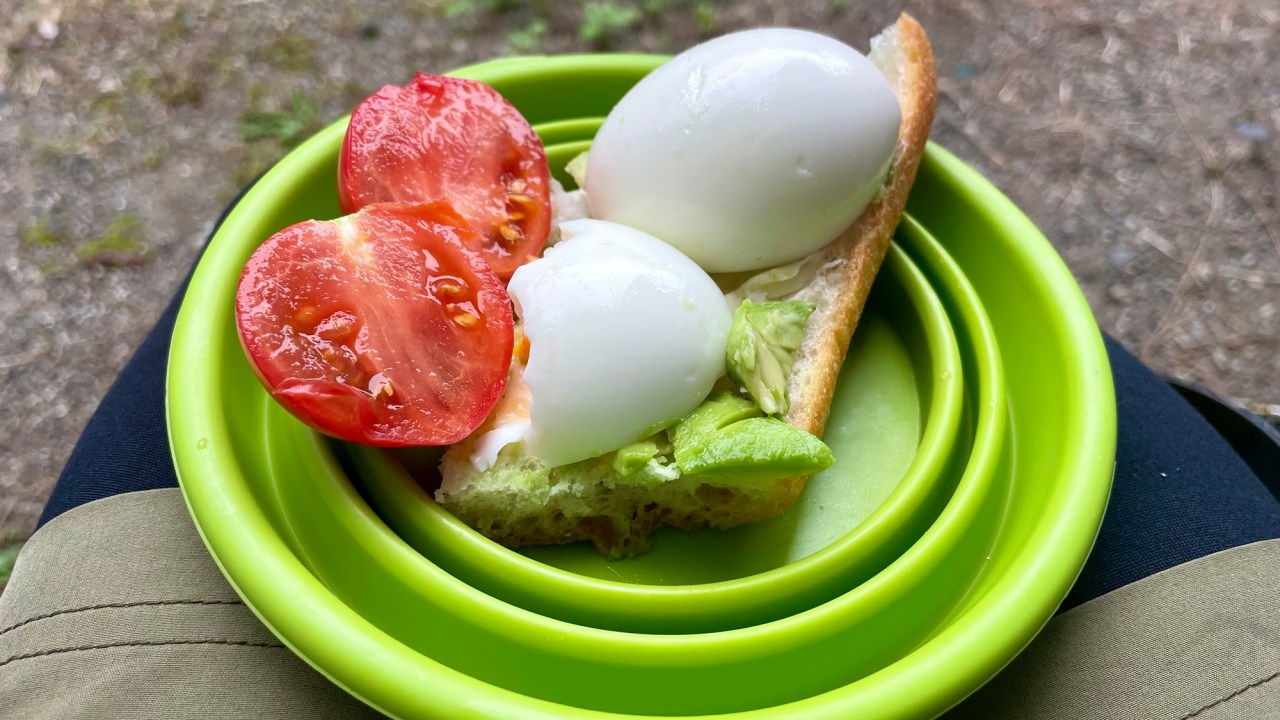
The rain starts while we’re breaking camp. We sit under cover on the edge of the toilet block making our breakfast of boiled eggs, with tomatoes, avocado and a baguette. Good bread has been hard to find so we haven’t eaten much of it. When we do find it we will happily buy it for a change from noodles and rice. Our other breakfast staple, granola, is easy to find in most supermarkets. It’s our go-to breakfast with yoghurt and some fruit.
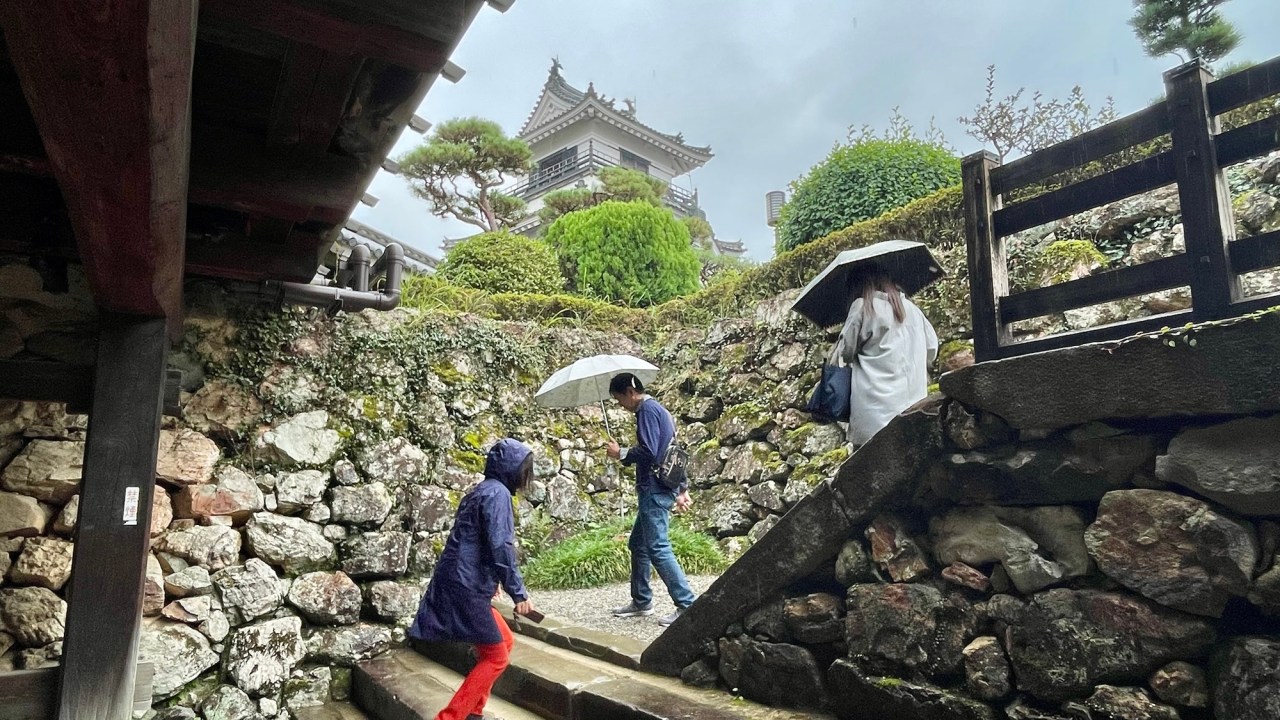
The forecast calls for the rain to subside later in the morning so we delay our departure. We ride to the castle and go for a walk in the drizzle. There is a beautiful park surrounding the castle and there are few people about.
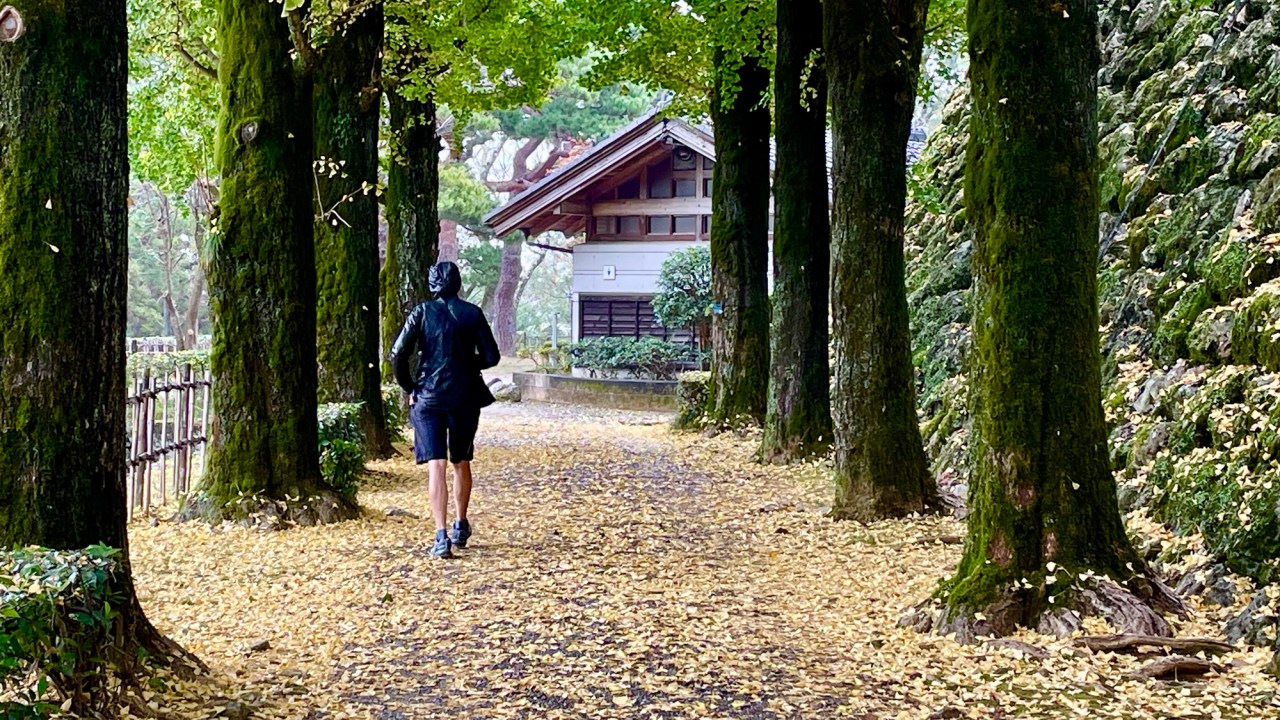
Afterwards, with the rain intensifying, we go to the nearby shopping street and hang out in a coffee shop/co-working space. The rain is not letting up and we finally decide to leave at around noon. We have about 65 kilometres to ride to the guesthouse we booked for the next two nights.
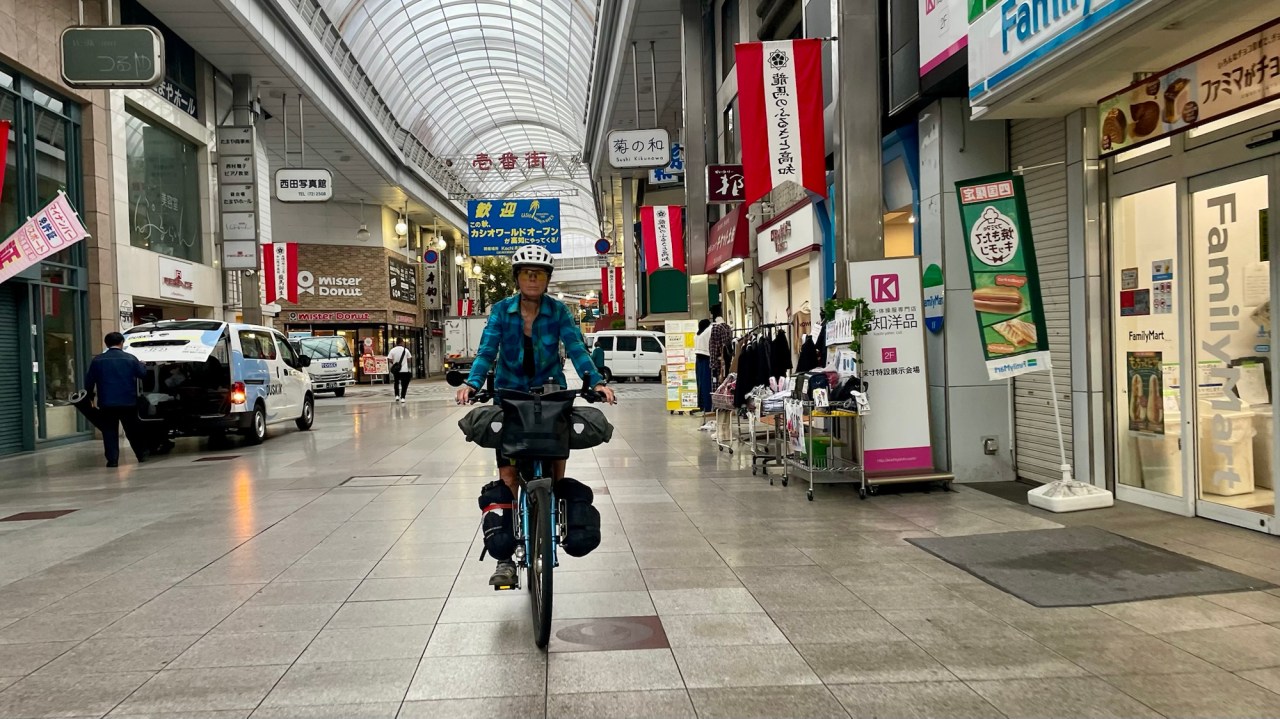
It’s a wet ride as the rain continues to fall. We take a short break in the waiting room of a small train station. We eat the rest of our bread and boiled eggs. Unfortunately, there is no vending machine. We had hoped for a hot coffee. This must be the only train station in Japan without a vending machine.

We push on in the rain. We left too late. It’s getting dark and riding on a wet, twisty mountain road doesn’t feel very safe. We’re happy to finally get onto a side road as we approach the guesthouse. While crossing a bridge a van comes towards us and stops. A woman yells my name through the open window so I stop. She is from the Happy Raft Guest House and tells us to wait on the other side of the bridge. Somebody will pick us up to take us to the house.
We stand and wait in the pitch dark by a railway crossing. The bells sound and the lights flash as a train approaches and passes by. At least the rain has stopped but we’re soaking wet from riding in it all day.
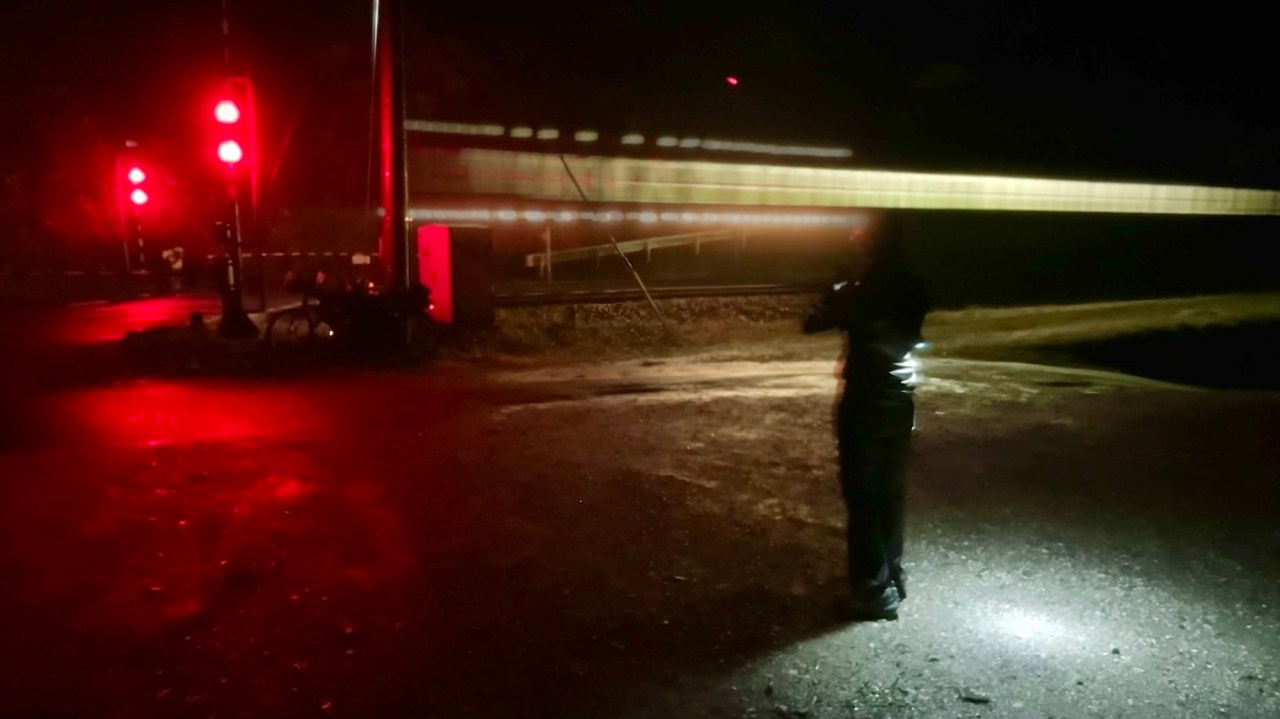
A few minutes later a car comes rushing towards us and screeches to a halt in the gravel parking lot. A young guy jumps out and tells us his name is Rio. He has an Aussie accent. Later we learn he lived in Australia and New Zealand where he learned to be a rafting guide, which is what he does in the summer at Happy Raft. The season is now over but the guest house is still open.
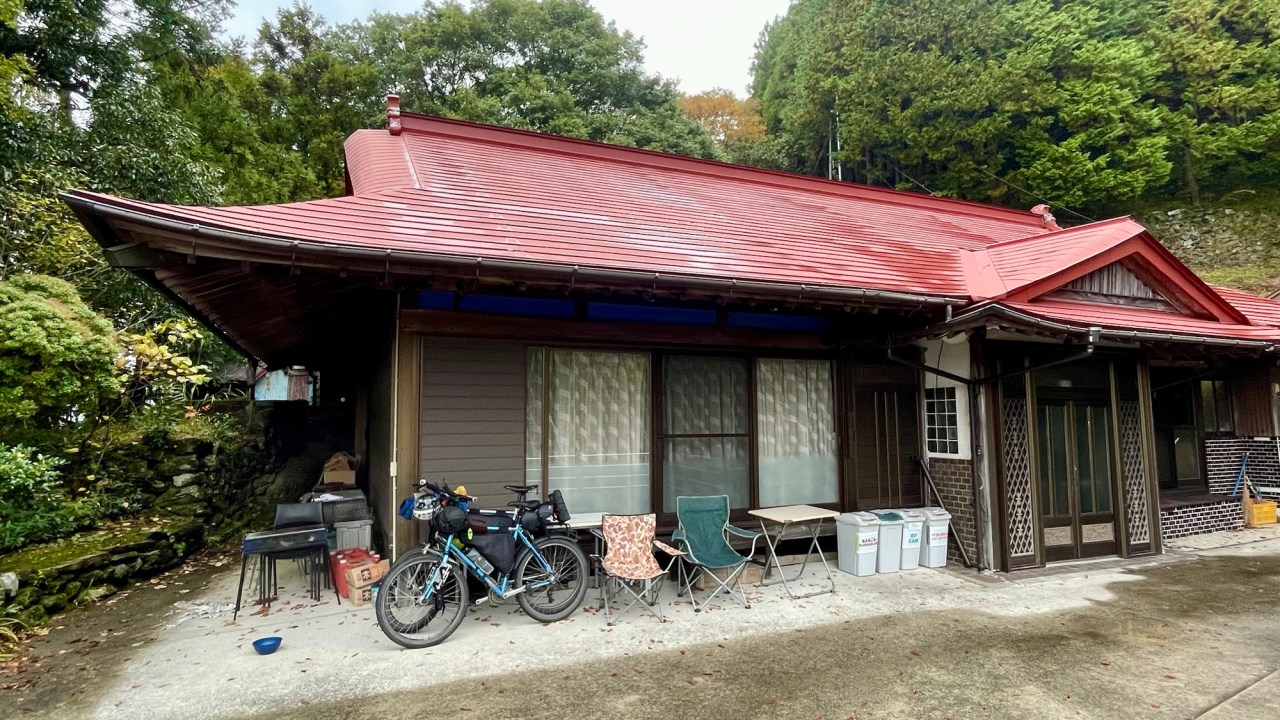
He helps us lift the bikes into the van and we head up a narrow, twisty road that seems impossibly steep and we are thankful we didn’t have to ride up it at the end of what was a miserable day. We would have never made it, nor would we have found the guest house tucked away in the forest down a steep, nearly hidden driveway.
We get inside, strip off all our wet clothes and throw them in the washing machine. Rio brings us the food we had ordered and we can finally relax. We will stay for two nights while the storm blows over.
The guest house is an old, traditional house with multiple tatami rooms behind sliding doors. The doorways are low and I crack my head while going to the kitchen. It doesn’t break the skin but leaves a nice lump.
Rio returns with two other guests he went to meet. They are Oscar and Tatanya from Madrid, Spain. They’re on a six-month sabbatical from work and travelling around Asia. We chat a bit while eating but we are all tired and head to bed. It’s dead quiet up here in the mountains as we drift off to sleep.

We spend the next day doing very little. Oscar and Tatanya leave fairly early as they have to return their rental car. We rest and read and catch up with friends and family. It’s cool and wet outside so we don’t even venture out for a walk. Rio has brought us meat and vegetables that we ordered and sets up the BBQ for us. The charcoal is slow to light but eventually I get a nice bed of hot coals and I grill the steak, chicken and pork. We make a soup with the vegetables and a couple of packets of noodle soup. It’s a great meal at the end of a well-deserved lazy day. In bed we watch a movie on Jan’s iPad.

Shreds of mist cling to the forested hillsides in the morning but there’s blue sky above as we push our bikes up the steep driveway. We zoom down the hill and meet Rio at the Happy Raft base in the valley where we pay for our stay. He’s getting ready to shift over to his winter job at a ski resort on Honshu and he gives us some local info for coming back to ski in Japan, something we really want to do.
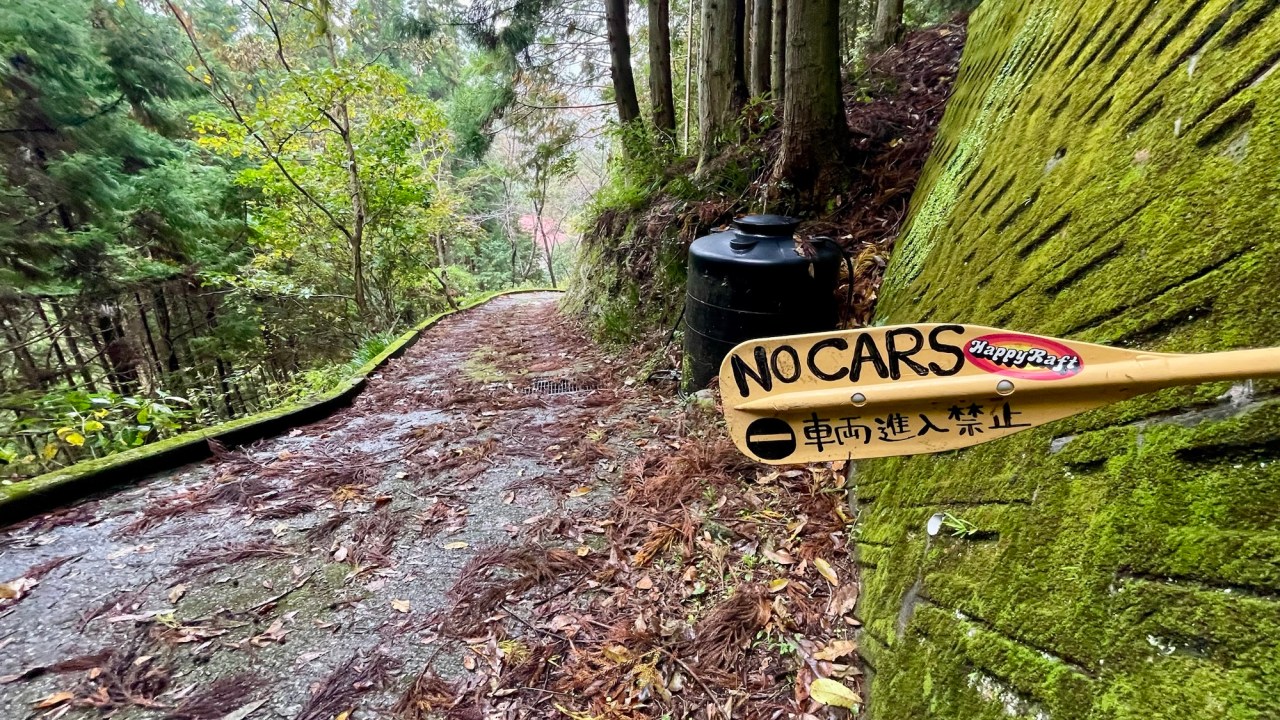
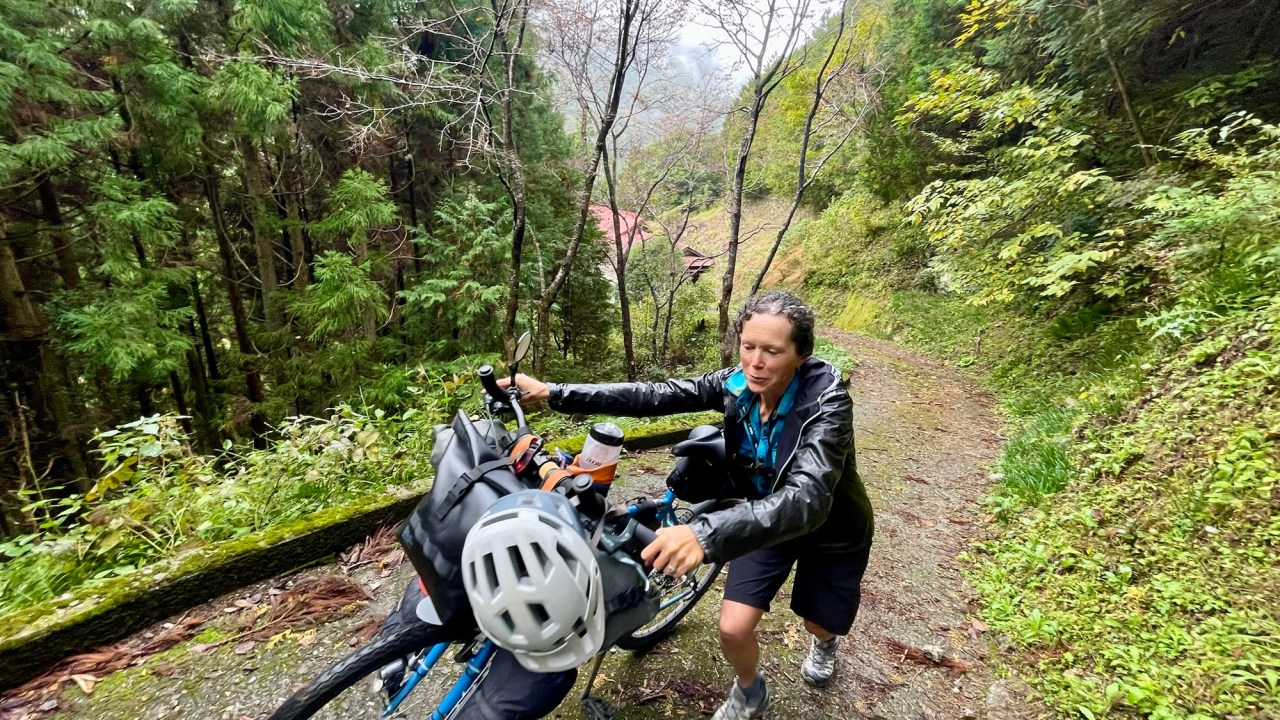

We have a short 25-kilometre ride into the Iya Valley but it comes with a good climb as we have to traverse a mountain range to drop into the valley west of Oboke. It’s quiet on the road and, as usual, there’s a tunnel through the mountain near the summit of the climb. The downhill into the Iya Valley is exhilarating.
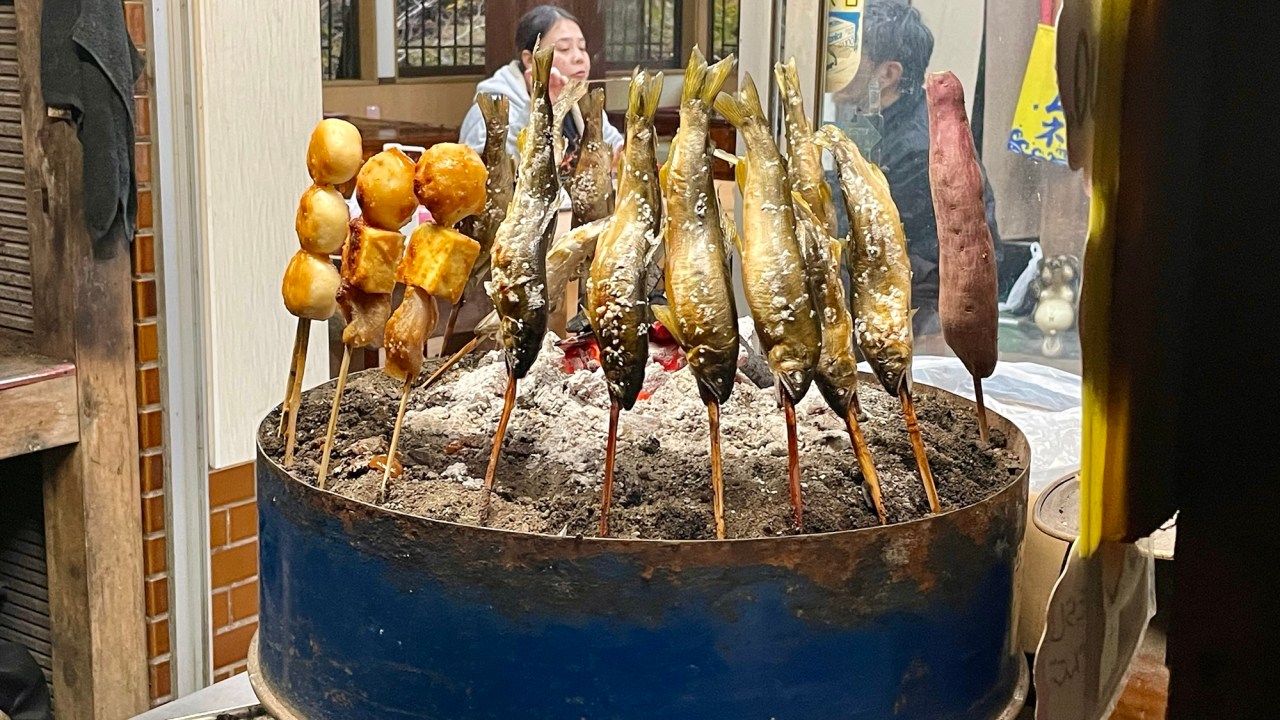
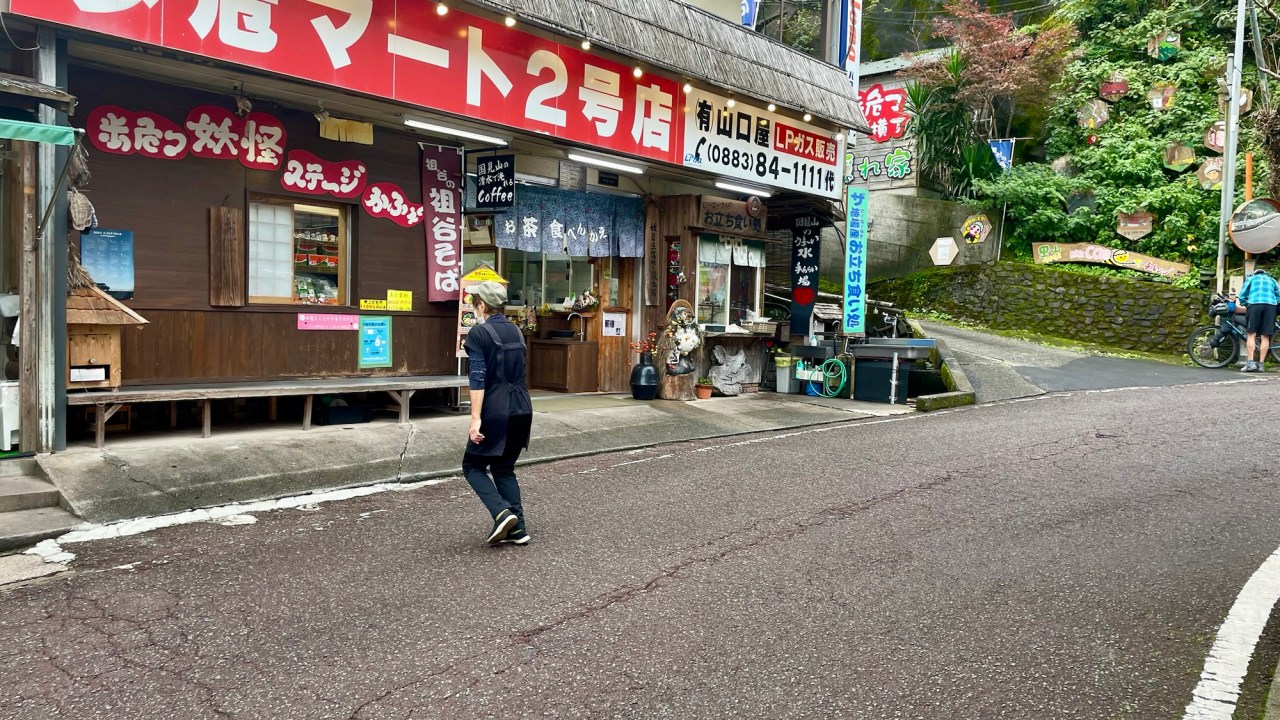
It’s a popular place with tourists because of the kazurabashi bridge. There is a kind of shopping mall in a giant parking lot where people buy local food stuffs and trinkets. We continue down toward the vine bridge but forego paying ¥550 to walk across it with the busloads of tourists. Instead we go to the little noodle shop just above the bridge and have lunch. They sell whole fish grilled on a stick as well as delicious bowls of soba noodles in broth with tempura.
Afterwards we ride a bit further down the valley to the campsite. It costs ¥200 to camp for the night and we’re the only people there. There are even hot showers. We set up camp and walk back up the road to explore a bit more. It’s a small place and there is not a lot else to see. We end up at the coffee shop where we have a hot cuppa with a hot cake drizzled in local honey. Delicious.
When we return to camp just before dusk we are joined by Nick and Noelie and there is another tent a bit further down. The rain sets in and we have an early night.

We’ve decided to loop north from here to make our way to Imabari in a few days and ride along the Shimanami Kaido, a famous cycling route over some spectacular bridges connecting Shikoku and Honshu. Beyond that we’re not sure what to do yet. Riding east to Kyoto isn’t all that appealing as it’s pretty much all city from Fukuyama onwards through Himeji, Kobe and Osaka. Going north of there through the mountains will take too long. But that’s a problem for another day as we focus on the day ahead.

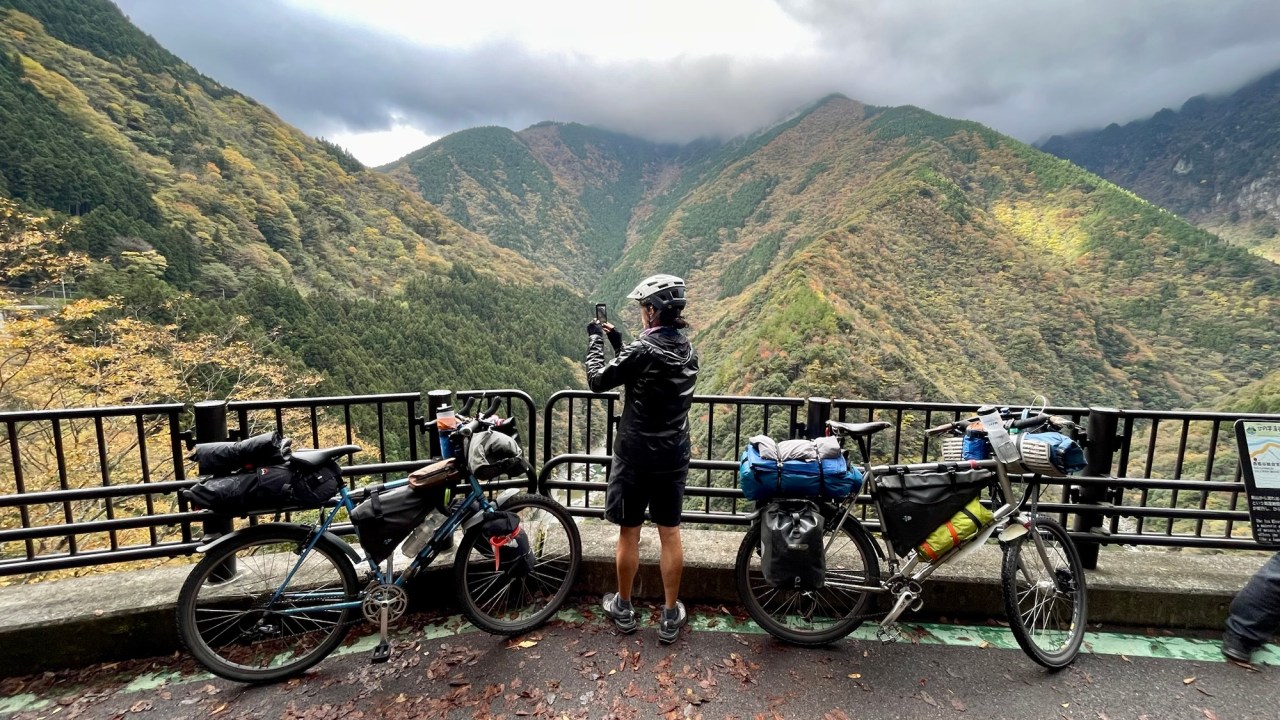
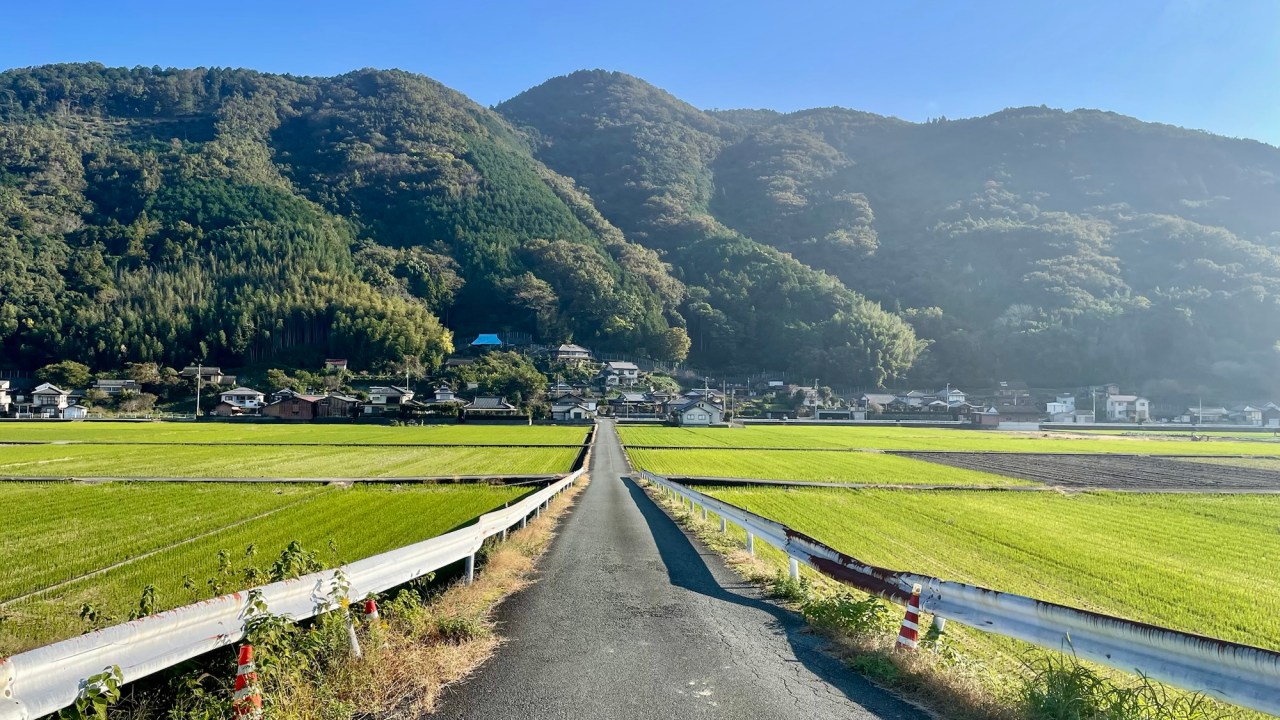
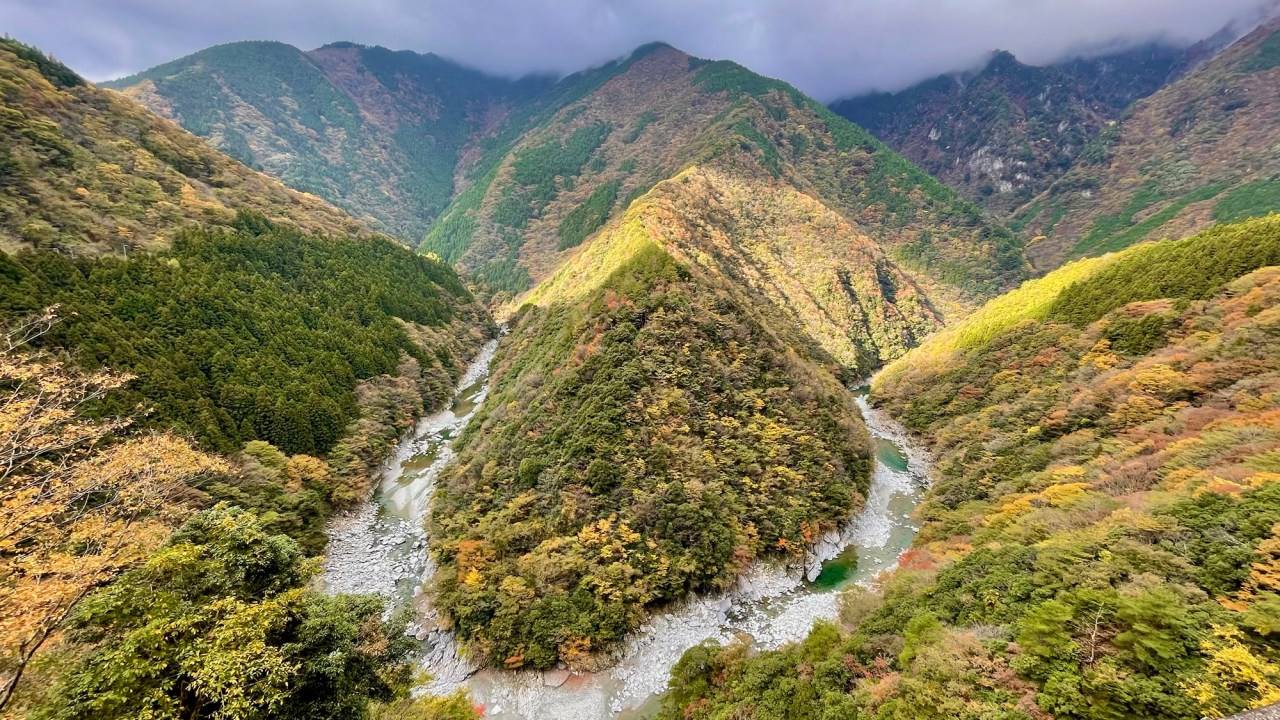
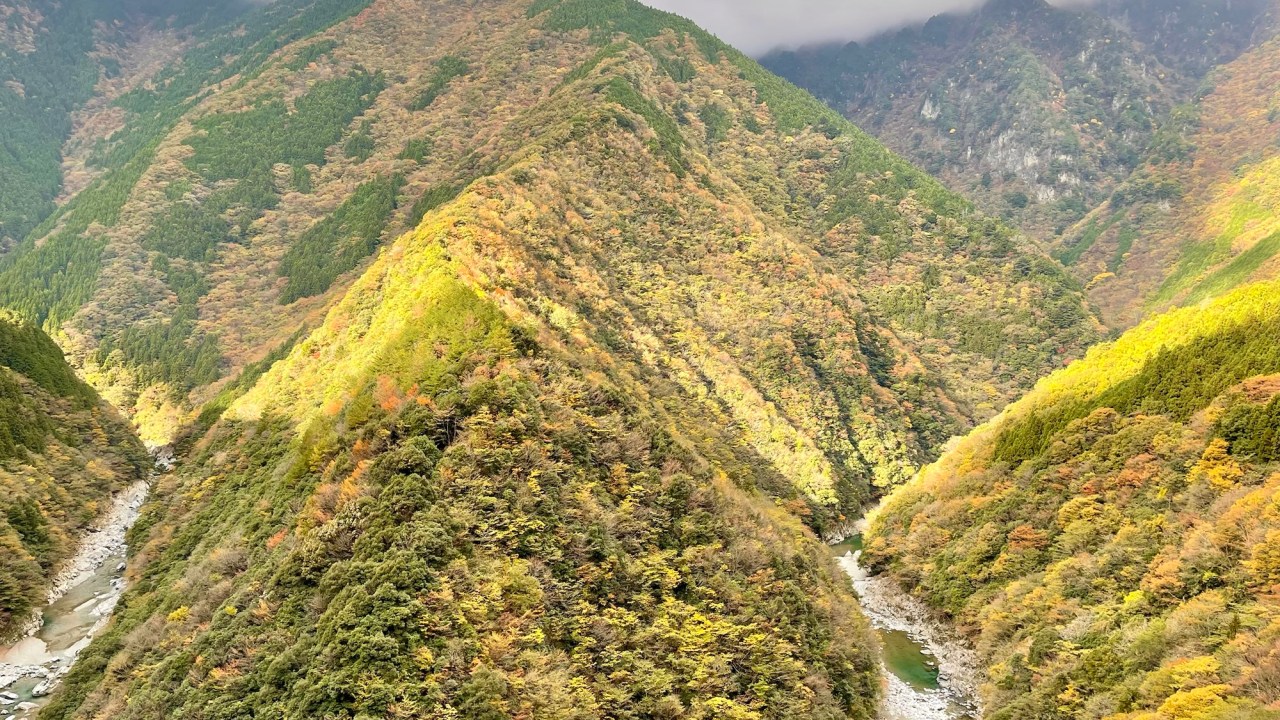
The ride is spectacular as we follow the Iya River north. There are beautiful mountain vistas from the little road with nearly no other traffic. The view of the Hinoji Valley is truly one of the most beautiful things we’ve seen here. Sunlight breaks through the clouds as the light rolls over the landscape highlighting the reds and yellows of fall in a sea of green. I’m awestruck.
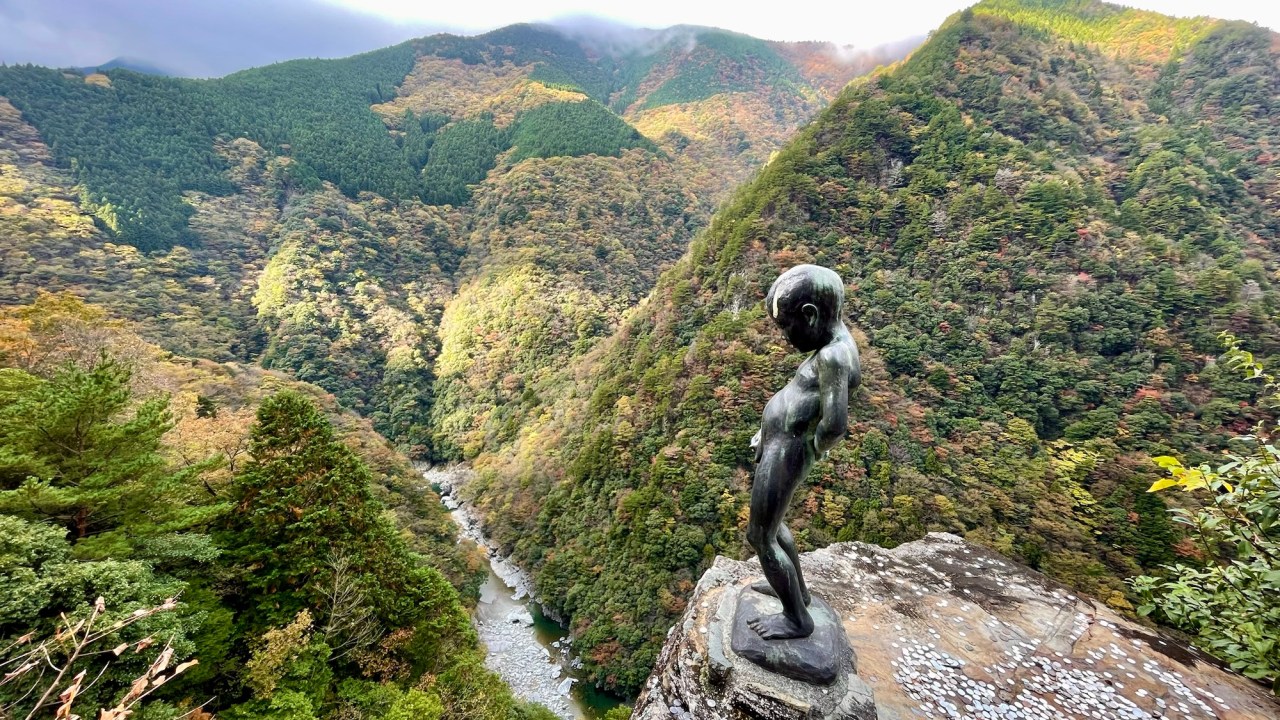
And just a bit further down the road is the peeing boy statue standing on a cliff edge beside the road. In the old days, it’s said the local children would stand on this cliff and urinate into the ravine to show their bravado. I briefly have the urge to climb up there beside the statue and relieve myself but the sheer drop overrules the mischievous boy in me.
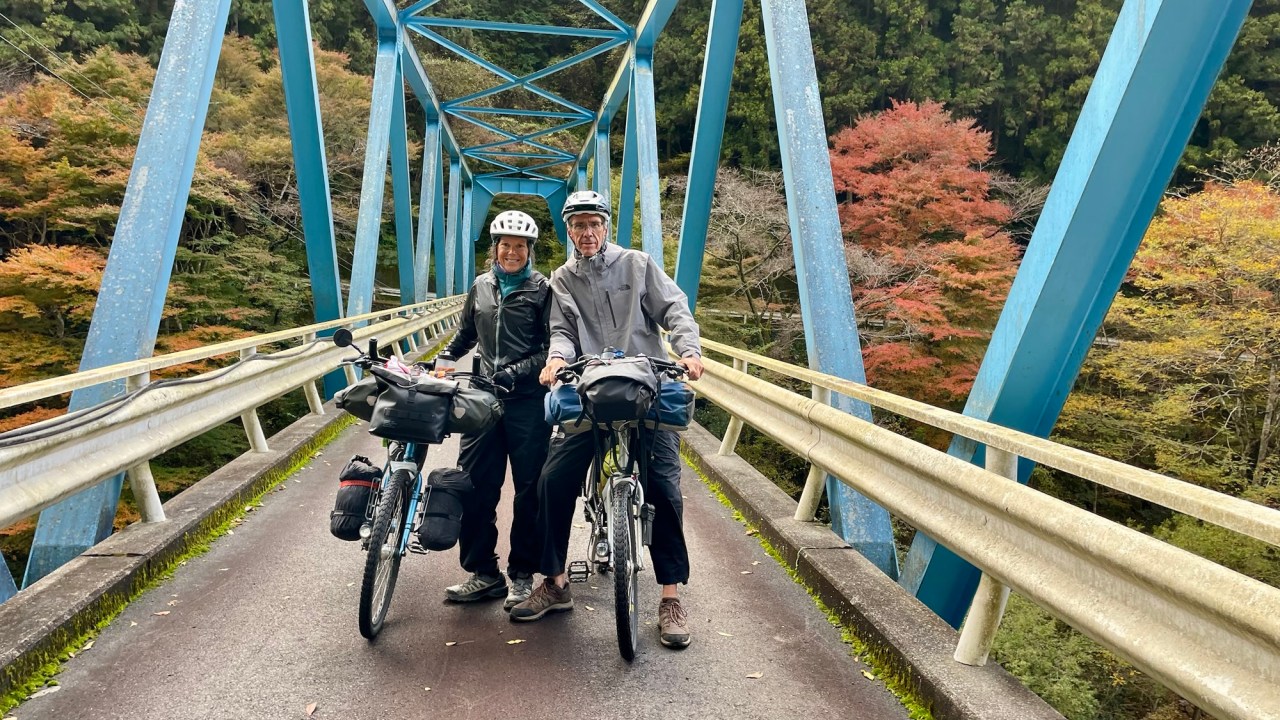
We ride on stopping often to photograph the scenery but eventually we arrive in the valley bottom and the road flattens out as we reach Yamashiro. I stop on a bridge to take a photo. There is an older man there also taking photographs and he insists I give him my phone so he can take our picture.
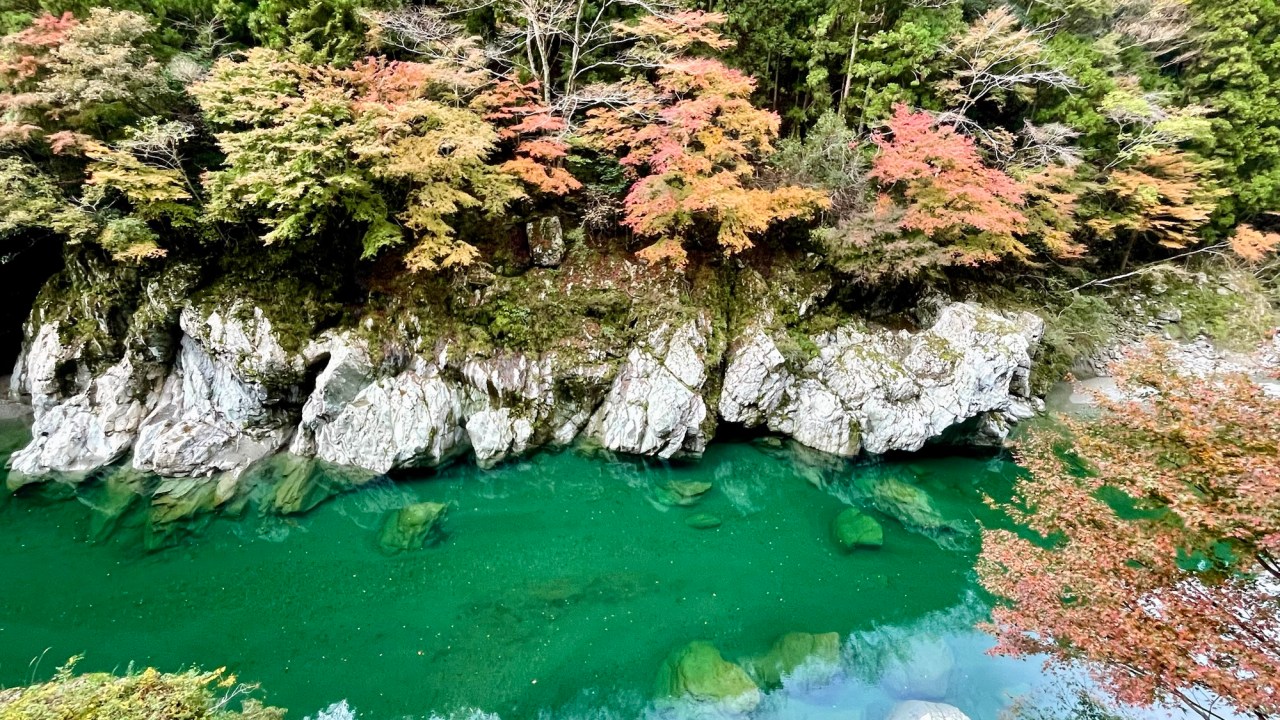
We turn up another valley and begin to climb again. I find a highlight on the map from another cyclists: Café Torinosu. Just as we stop it begins to rain so it’s perfect for a lunch stop. I have a deer meat stew with baked noodles, a kind of Japanese-Italian fusion. It’s amazing. Jan has a shrimp risotto dish.
The rain has stopped and we move on. It’s our favourite kind of riding on a small road through small towns. Almost no traffic. When we round a corner a large troupe of macaques scatter and head back into the forest. We pause to see if they will reappear for a photo but they do only when we’re well away. We see another bunch a little later and I manage a couple of shots before they dash for the safety of the trees.
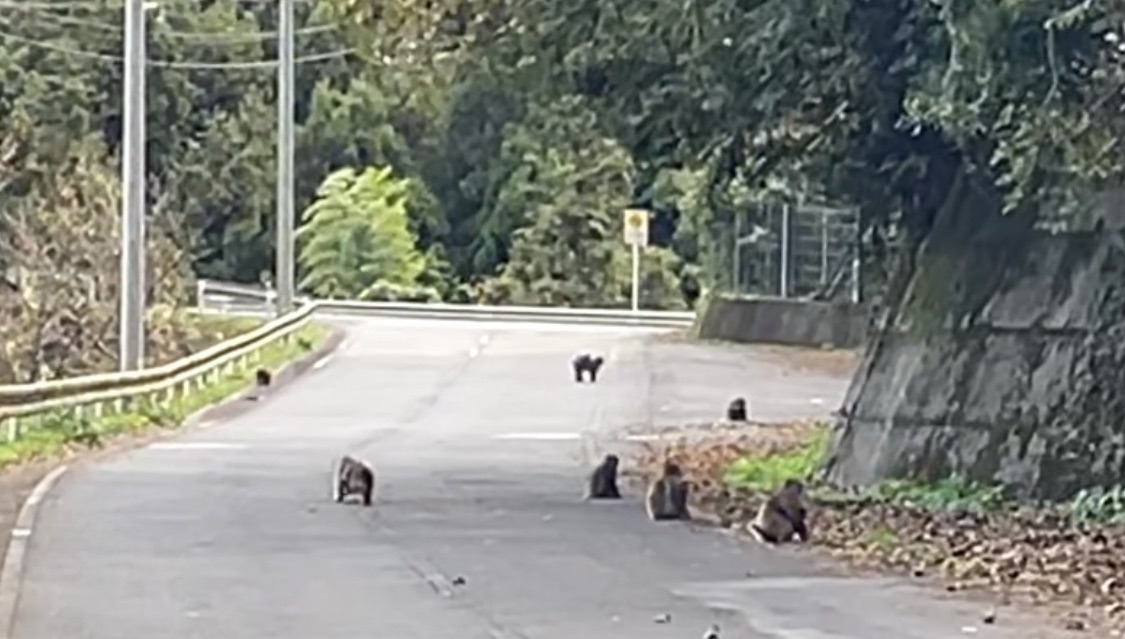
the Japanese macaque is also known as the snow monkey as they live in areas where there is often snow in winter. We’ve all seen the famous photos of them sitting in hot springs with frosty hair around their red faces.
They are the only monkey in Japan and known as Nihonzaru, a combination of Nihon (Japan) and Saru (monkey), or simply Saru. The males are about 60 cm tall and weigh 25 kilos and can be aggressive. They are the northernmost non-human primate and live as far as northern Honshu. They do not occur on Hokkaido.
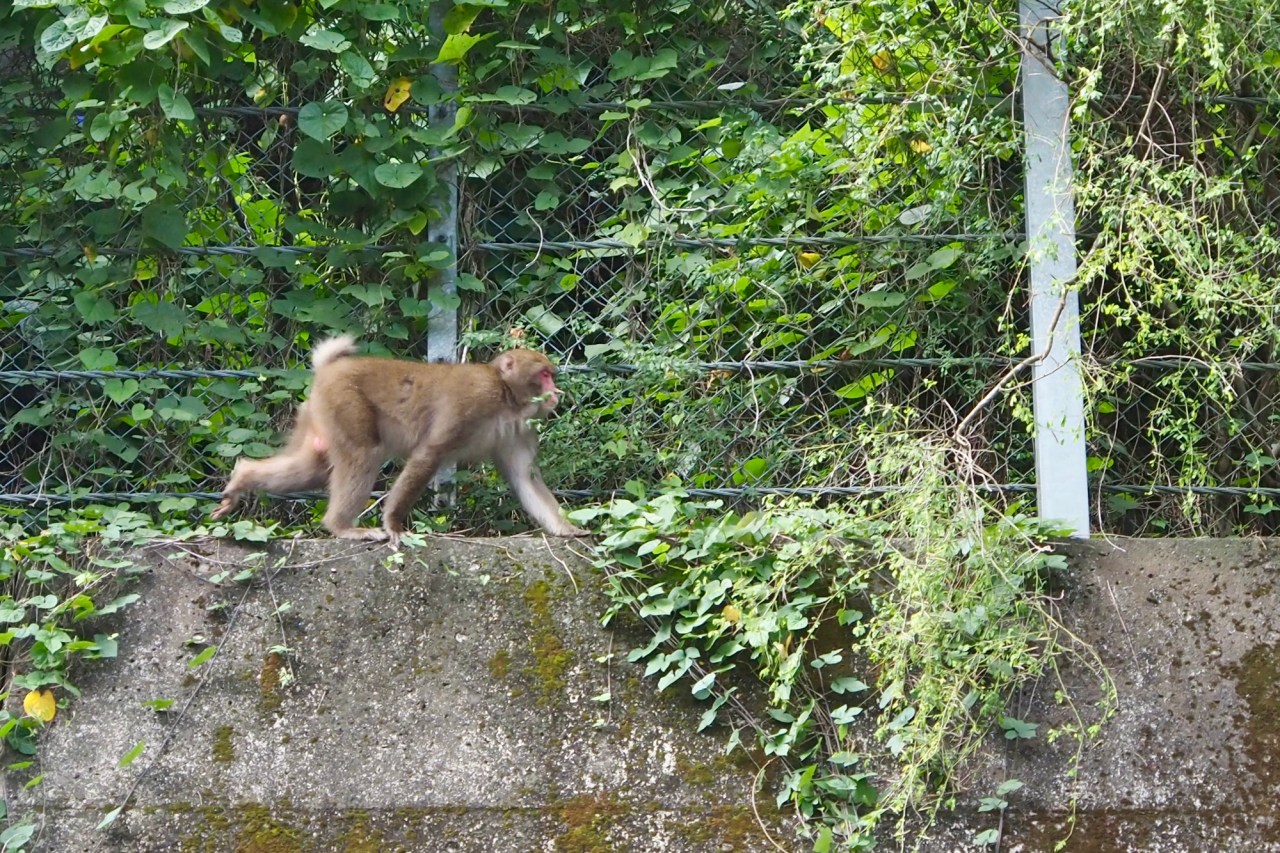
They were protected in the 1940s but the eradication of their main predator, the Japanese wolf, resulted in their population exploding and causing a lot of damage to agricultural crops. Since 2019 more than 20,000 of them are culled each year but there are concerns that this is reducing their range.
We finish the day on the outskirts of Shikokuchuo heading for a campsite but as we ride towards the entrance a gardener stops us and tells us it’s closed for the season. We turn around and since the sun is nearly down we have few options. There is a small park just adjacent to the campsite. It has functioning toilets and a gazebo with a table. Good enough and we call it home for the night.

The temperature drops rapidly in late afternoon and we don extra clothes and puffy jackets. We set up the tent behind the gazebo and make dinner. We head to the warmth of our sleeping bags before 8 pm.

Riding west along the north coast of Shikoku is rather urban and industrial, although there are stretches of countryside that break up the concrete jungle.
We stop on a bridge to watch a guy trying to land a big fish that’s giving him a fight. It turns out to be a ray, at least two feet wide.
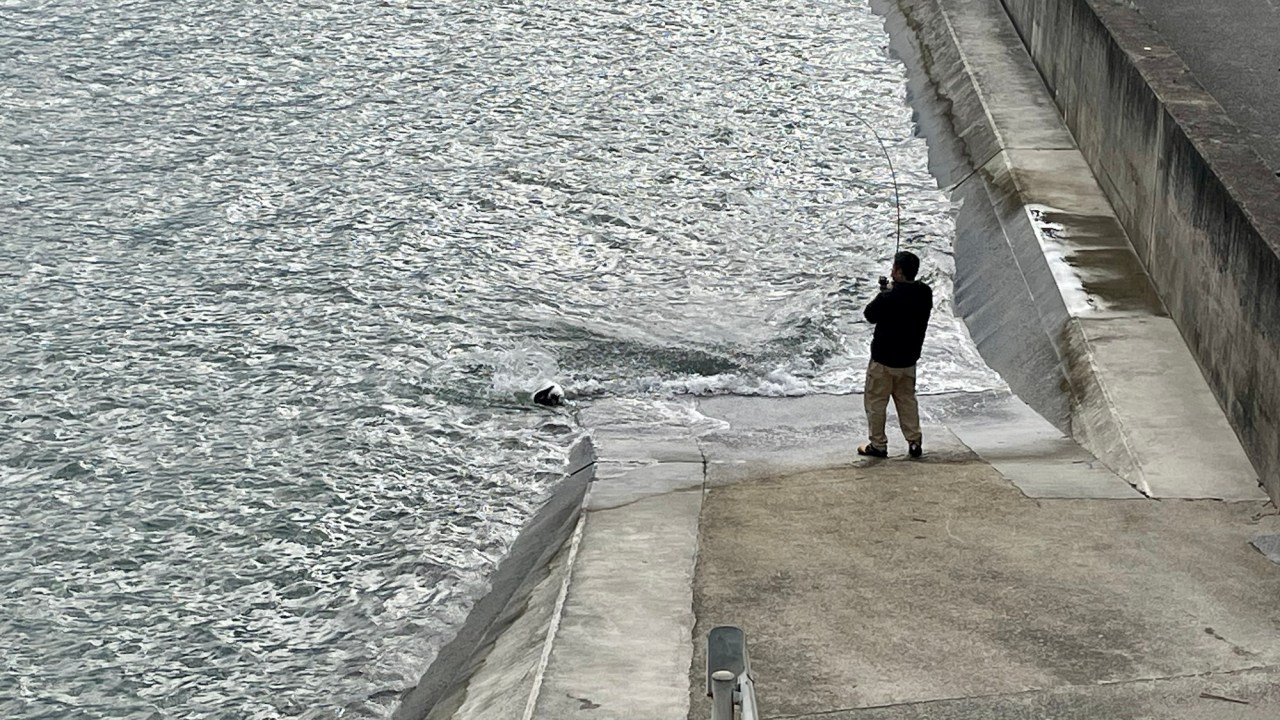
By late afternoon, on the outskirts of Imabari, we ride down into a beachside campsite that’s nearly deserted. There are two tents pitched on the windy field near the bathrooms and we ride around to find a spot that’s out of the cold wind coming off the water.
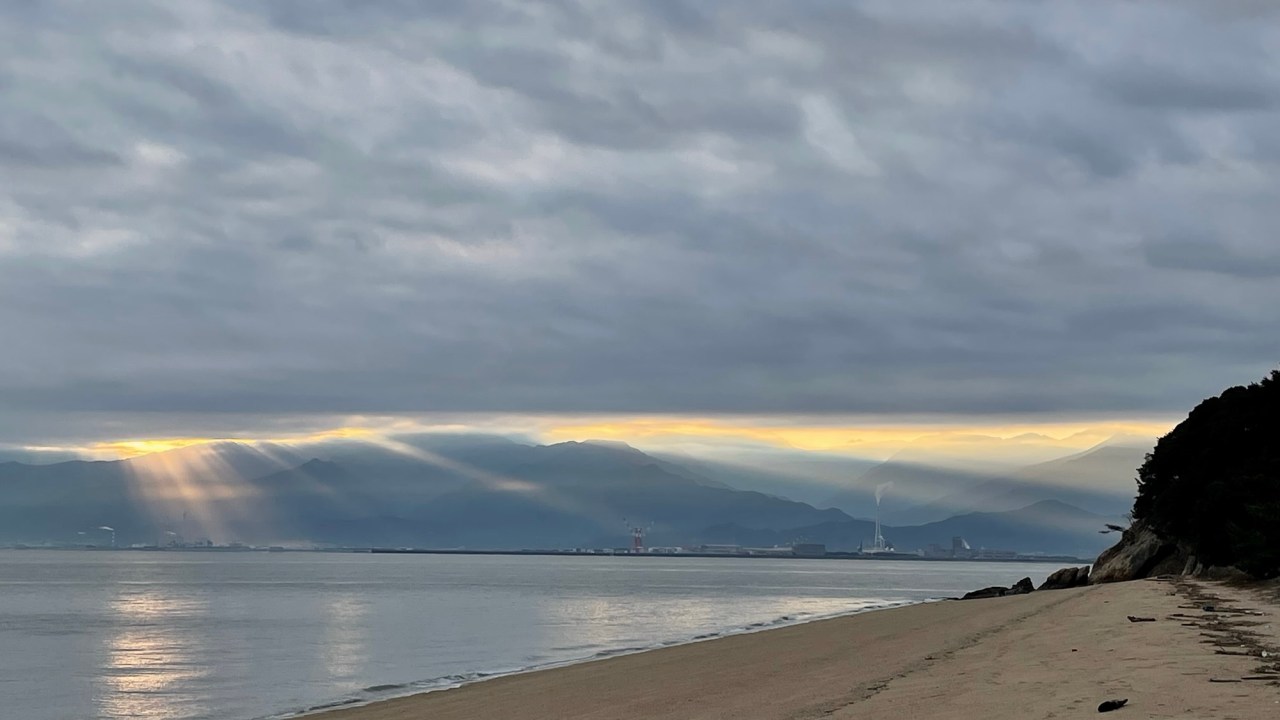
There’s another toilet block and a large covered gazebo nearby with tables and seats as a bonus. The trees provide some shelter from the wind and we install ourselves for the night in another free campsite. This is good for our budget as we suspect our camping days will end soon because of the short days and colder weather. We will be spending money on hotels soon. That evening’s sunset casts glorious light over land and sea.
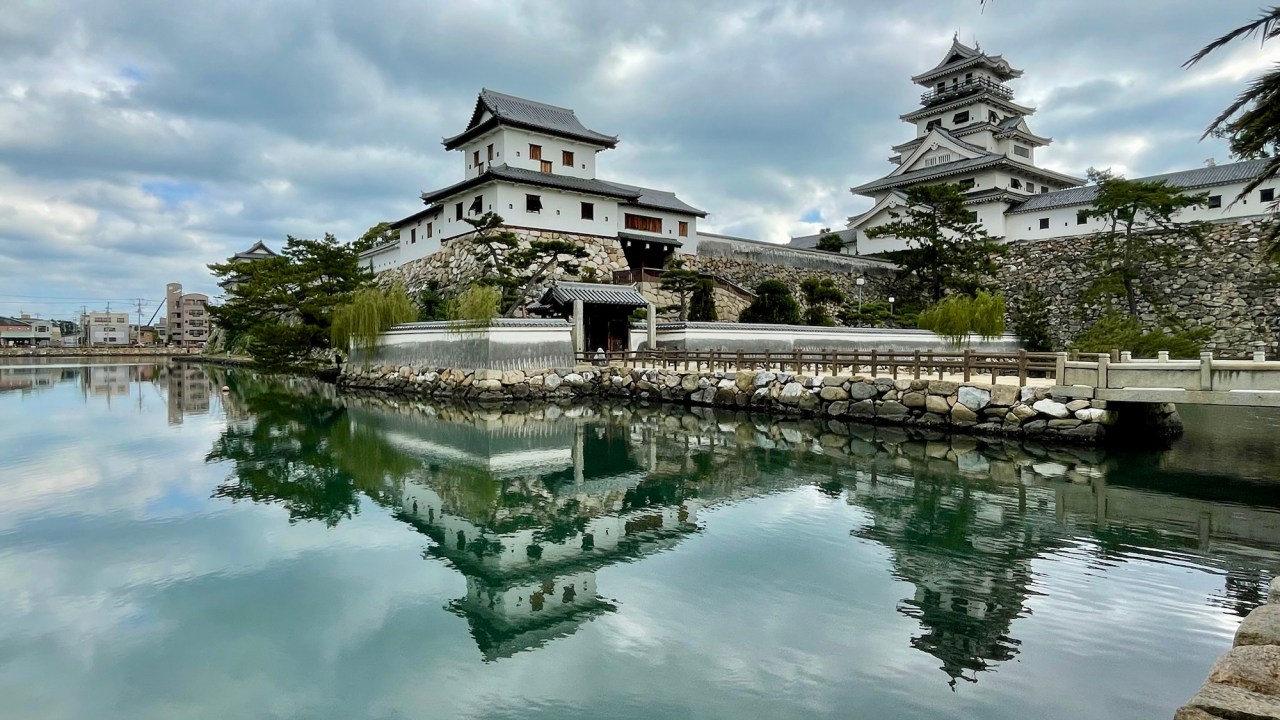
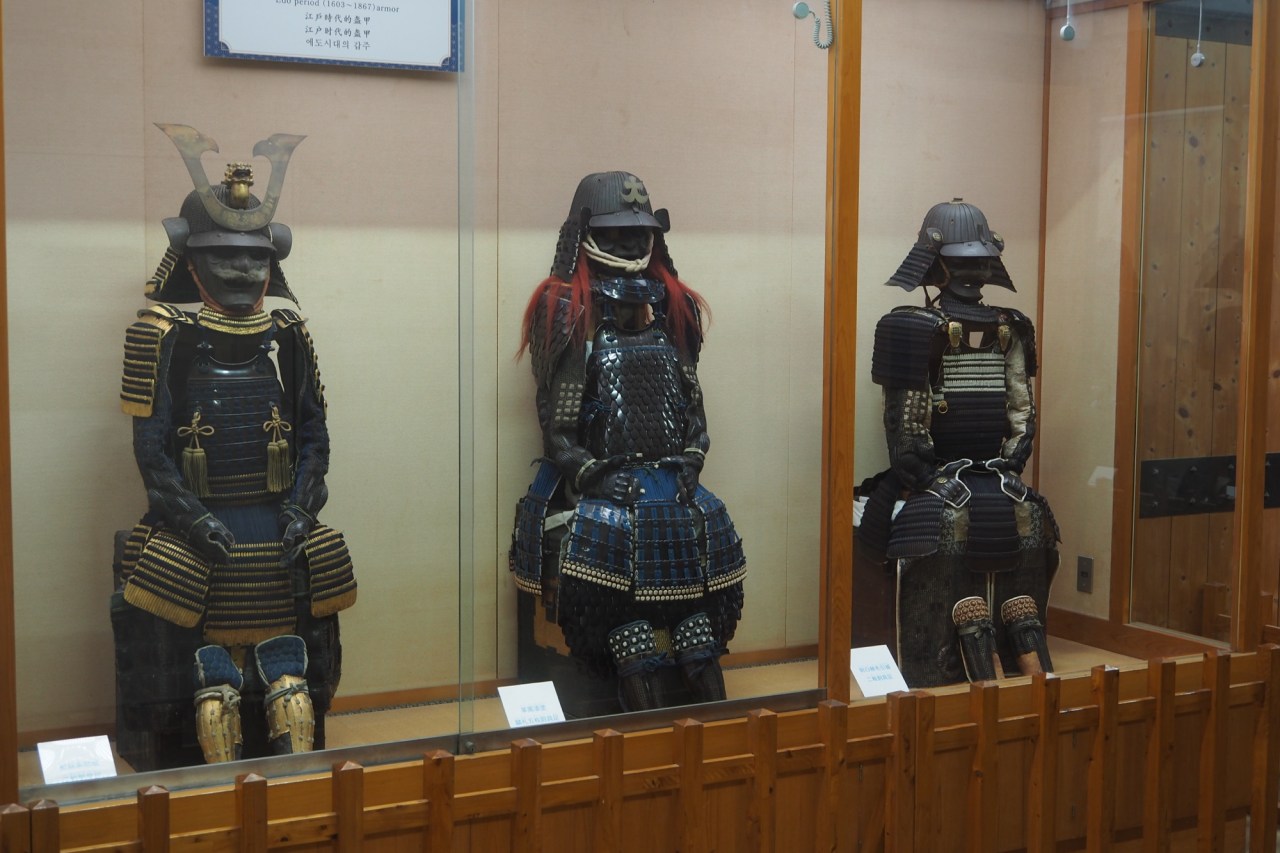
In the morning we ride into Imabari and tour the castle. It’s one of three castles with moats allowing the sea water to come in. It’s beautifully preserved and restored.

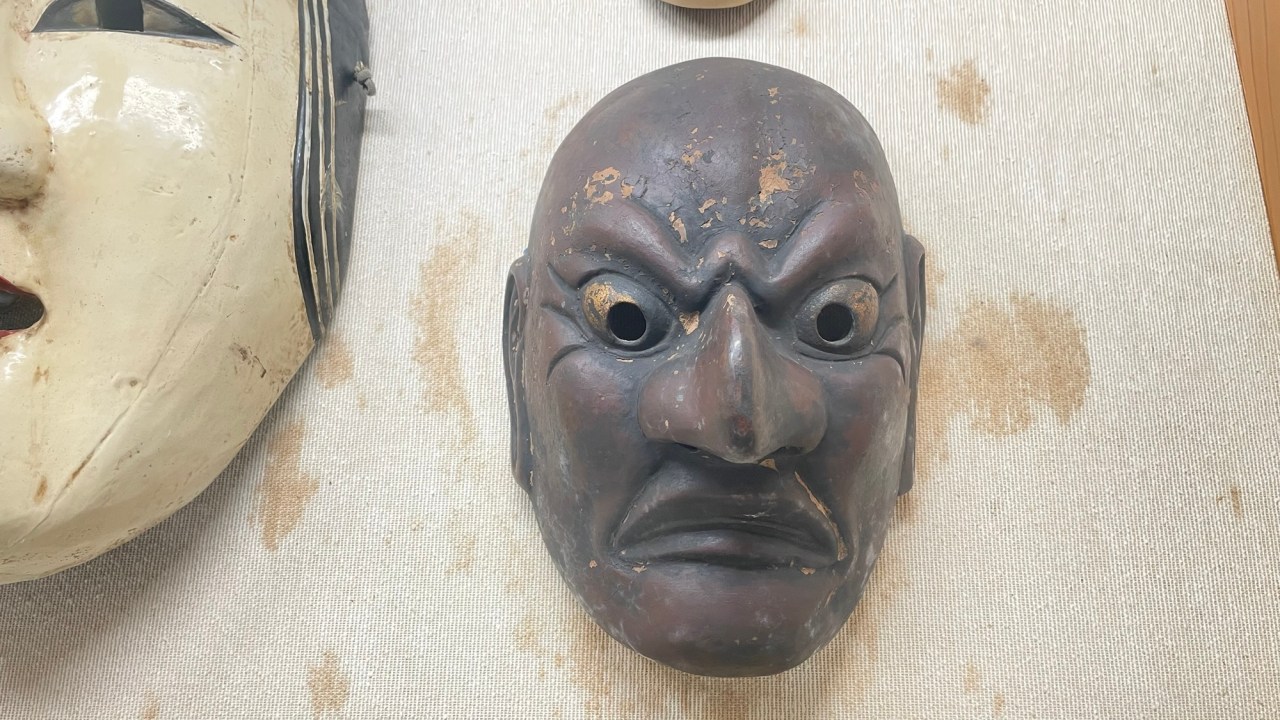
In one of the displays are some masks and I can’t help but notice similarities between some of them and some of the masks I’ve seen at home carved by indigenous people.
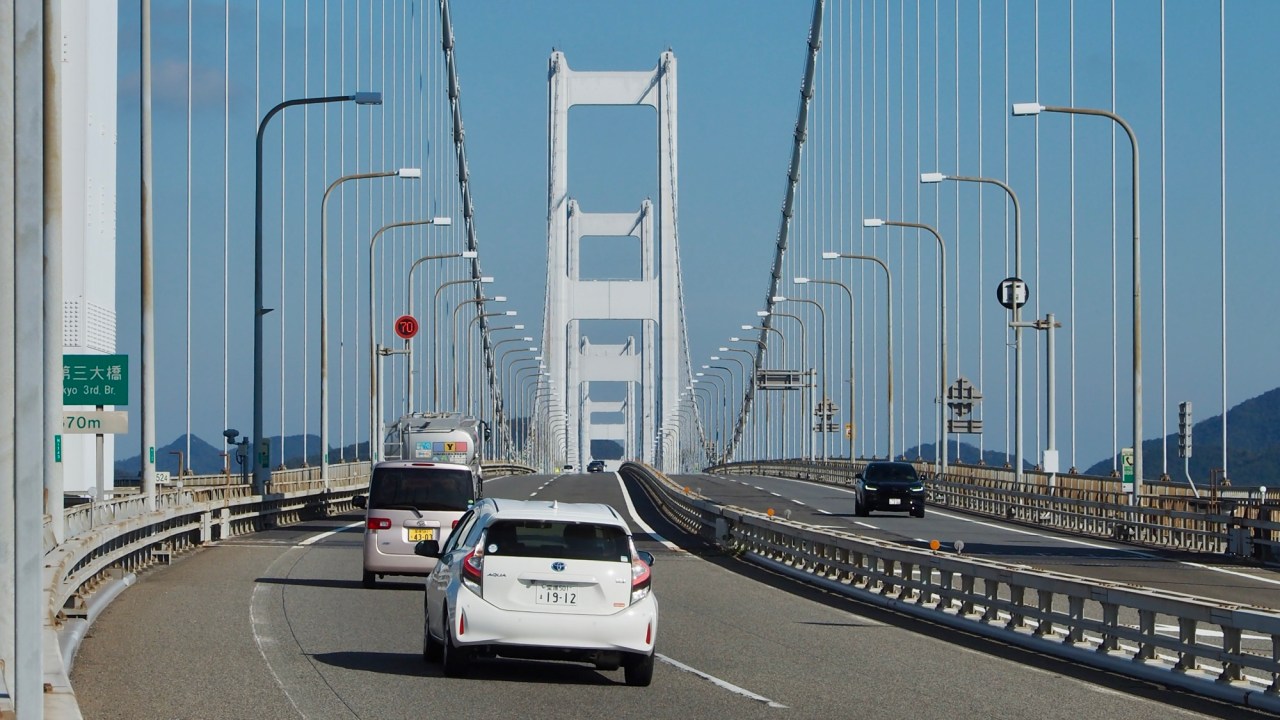
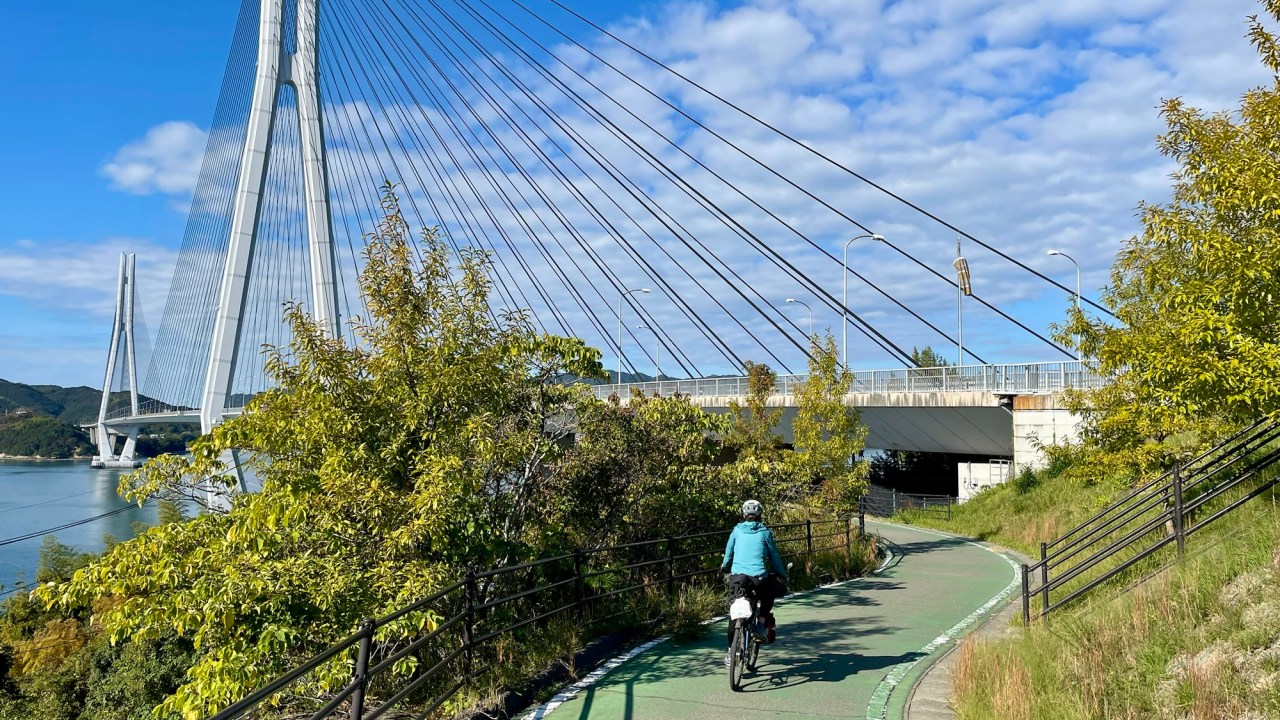
We are now at the southern end of the Shimanami Kaido, a 60-kilometre-long four-lane expressway connecting Shikoku and Honshu. Opened in May, 1999, it is an impressive piece of engineering with the Kurushima Kaikyo bridge, the world’s longest series of suspension bridges, and the Tatara bridge, the world’s fourth longest cable stayed bridge.
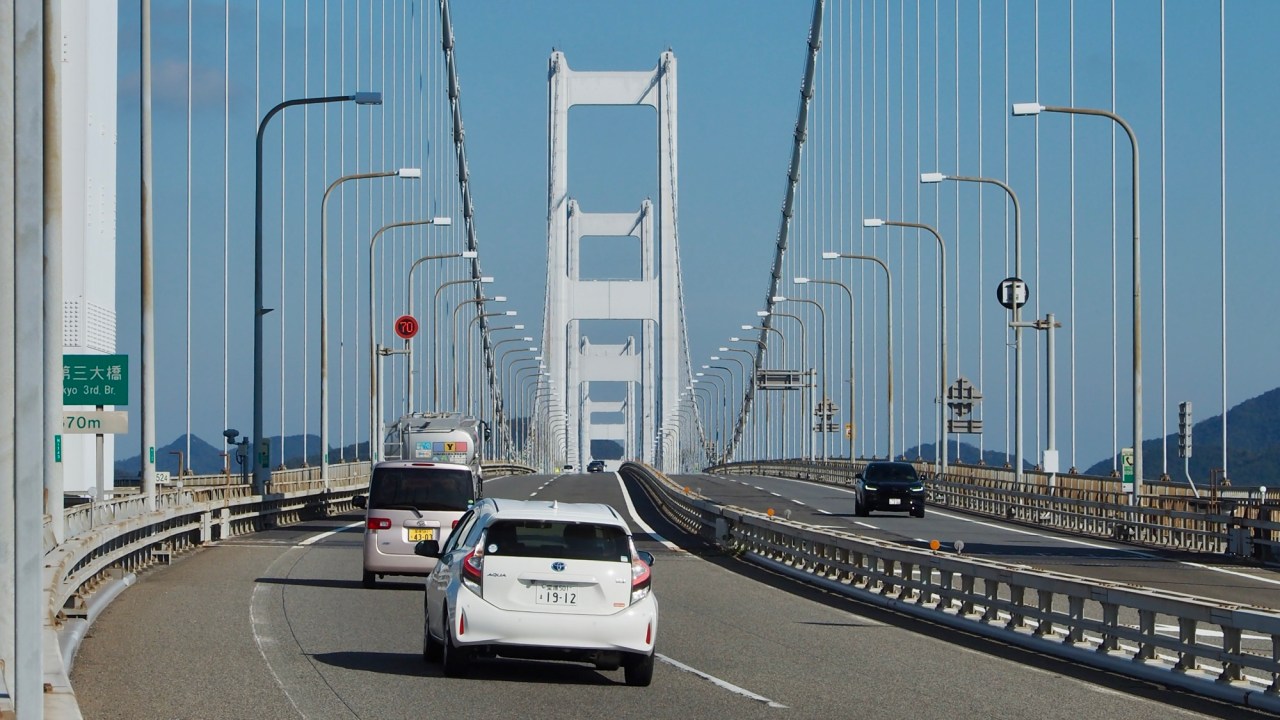
The project was designed with an integrated cycling lane, complete with its own bridge access ramps, and is 70 kilometres in length. It has become japans’s most popular cycling route and we see more caucasians in the first hour on this route than we’ve seen in the last six weeks since starting our journey in Seoul, Korea. We’ve been a bit surprised by the lack of non-Asian tourists but perhaps that’s because of the way we travel, somewhat off the beaten path and often avoiding large cities.

It’s impressive to ride onto the Kurushima Kaikyo bridge on a long spiralling ramp that climbs up to the bridge deck. Once up there, the three connected bridges stretch ahead of you for about five kilometres, undulating as they go.
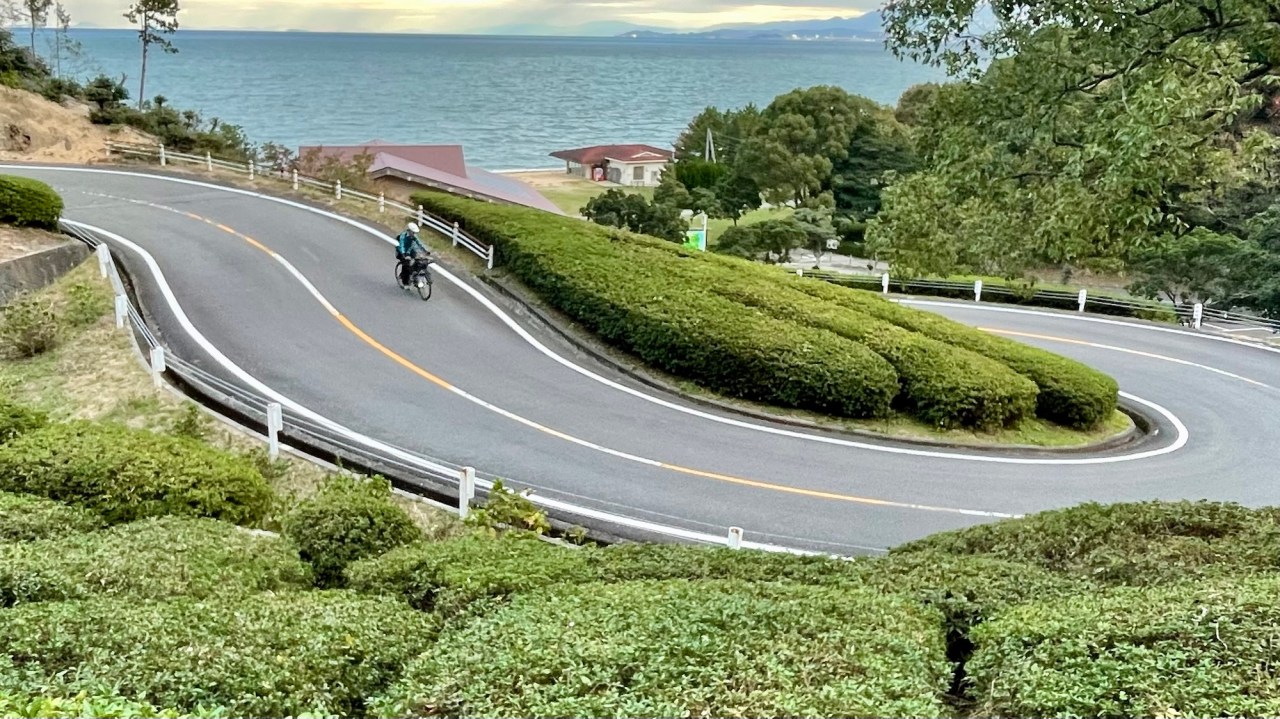
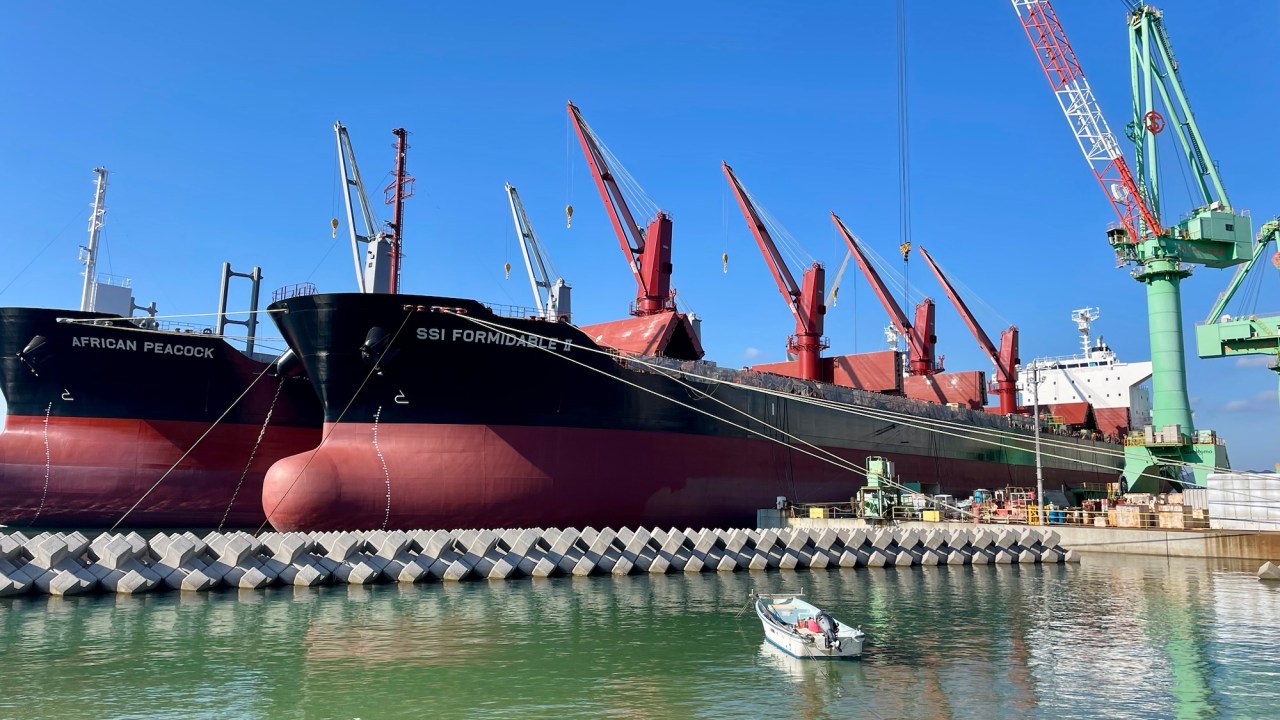
At the other end, on Ōshima Island, we descend a similar spiral ramp and a switchback road to the beach and we ride along the coast of the island past huge ship yards where ships are being repaired and new ones built.
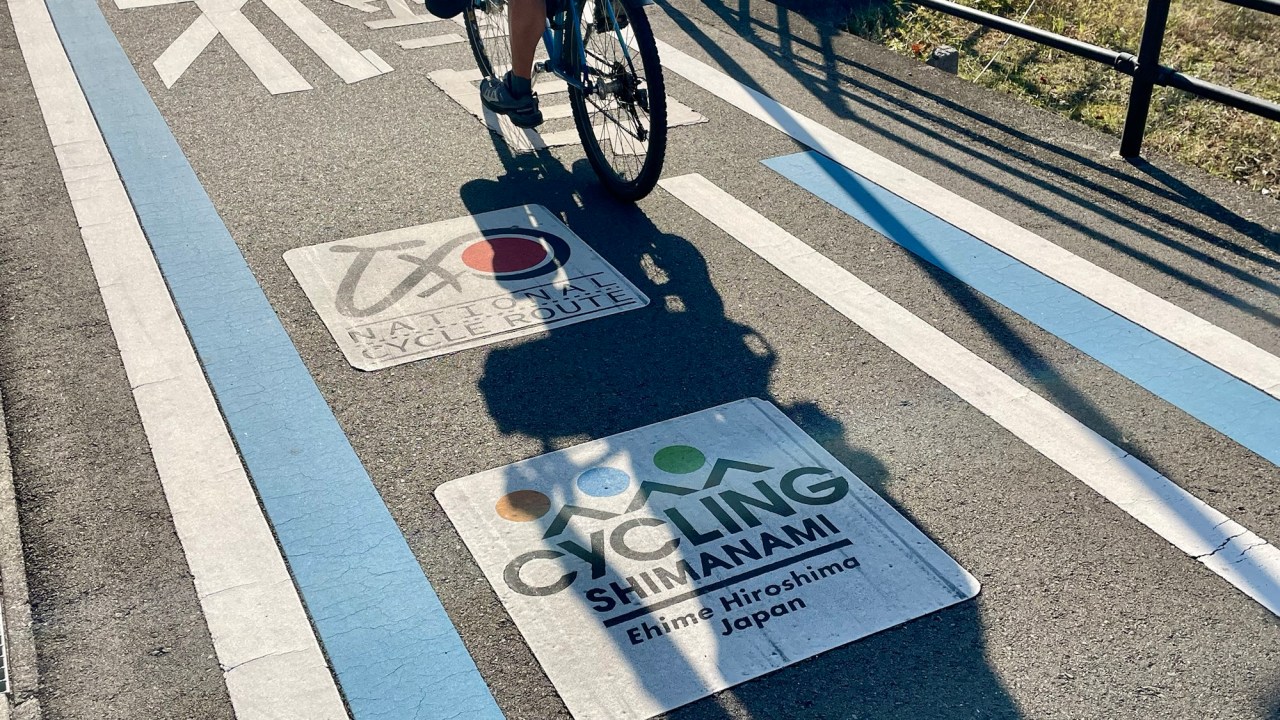
At the north end of the island we climb a switchback cycle path onto the Hakata-Oshima bridge, spanning about three kilometres to Hakata Island. We cross another bridge to Omishima Island and finish the day at a road station under the Tatara bridge where we have an ice cream. It’s just a short ride to the campsite situated nearly under the bridge.

This is not a free campsite, given the popularity of this route, but there is only one other cyclist and a couple of motorists sharing the camp with us. It costs only ¥1,600 but unfortunately it’s lacking a bit in amenities. The toilets are showing their age and could be cleaner and we have to pay ¥200 for the shower which is also not very clean but the water is hot and the water pressure is of an exfoliating quality.
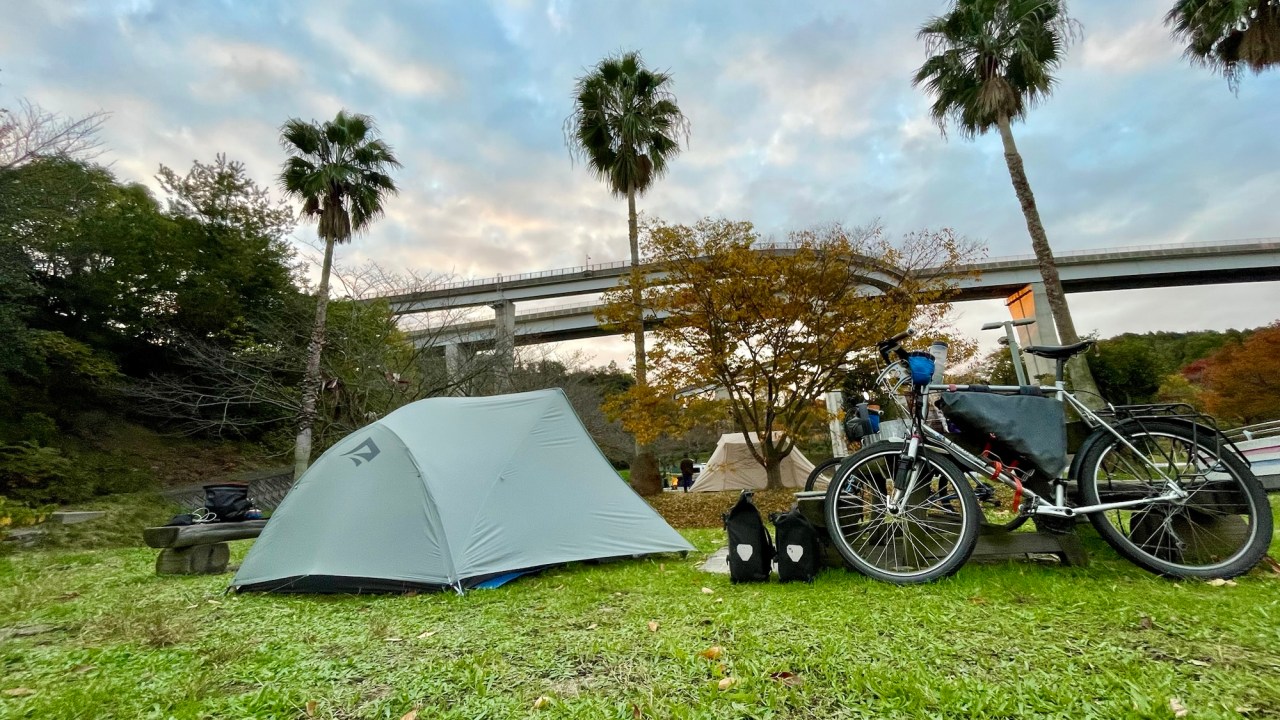
There are no restaurants close by. There is a Lawsons Konbini where we get a couple of drinks and some stuff for breakfast. We decide to walk to the nearest restaurant about a mile up the road. It’s dark. There are no street lights but we can walk along the cycle path.

It’s a small place with a table set for eight—reserved—and four seats at a small bar. We are invited to take seats at the bar by the young chef. A few minutes later other potential diners come in but they are all groups of three or four and there are only two seats left. We happily order a set menu of sashimi, tempura, miso and accompaniments. It’s delicious and we feel thankful for the great food and the warm room as we rush back along the dark road to our cold campsite. But the sleeping bags are warm and cozy. Sleep comes easily.
In the morning I discover my front shifter is not functioning. There is no tension on the levers. I remove it and open it up, confirming what I already knew. It’s busted beyond repair.
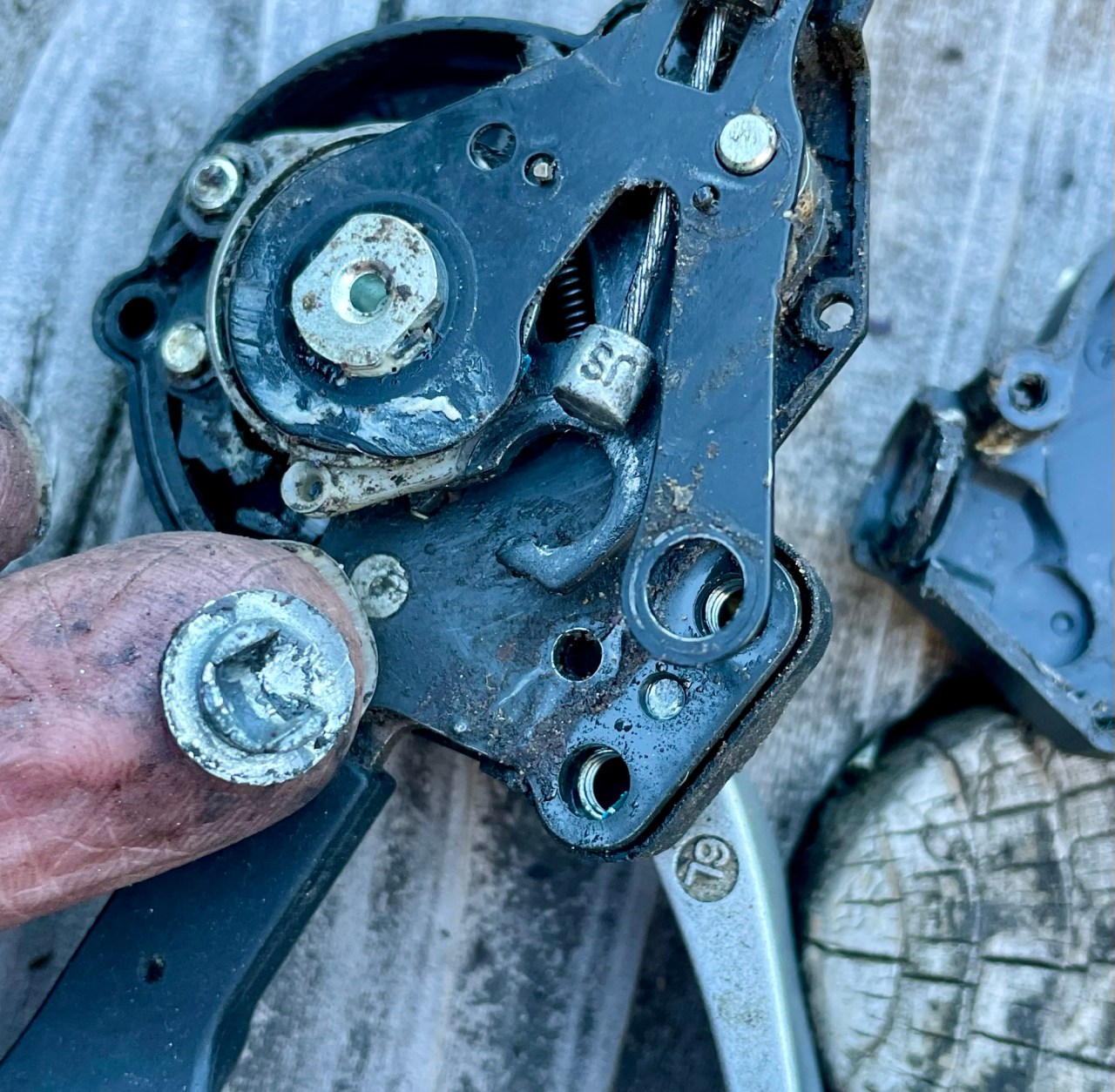
The only thing I can do is set up the bike as a 1×9 speed, using the middle ring. I manage to get just enough tension on the cable to position the front derailleur in the right spot so I can use all 9 gears in the back. It will do but any sustained climb over a certain gradient will mean I’m walking.
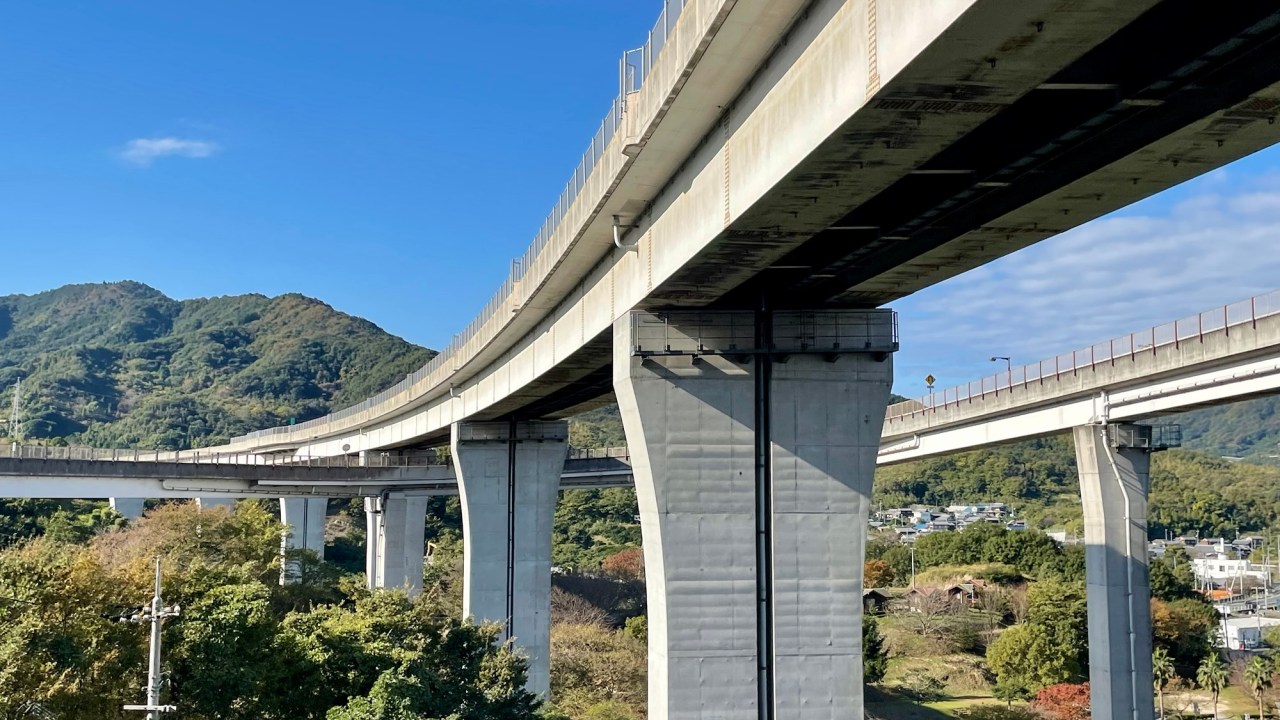
The day begins with a climb up onto the Tatara Bridge and I quickly discover my limit on this new set up but it’s fine. We’re in the land that makes the very bicycle component that I need to have replaced. How hard can it be? Well, harder than you may think. After two bike shops, I give up. I can finish our trip like this if I have to. It will mean pushing the bike here and there but I’ve done that before. It sucks but it’s not the end of the world.
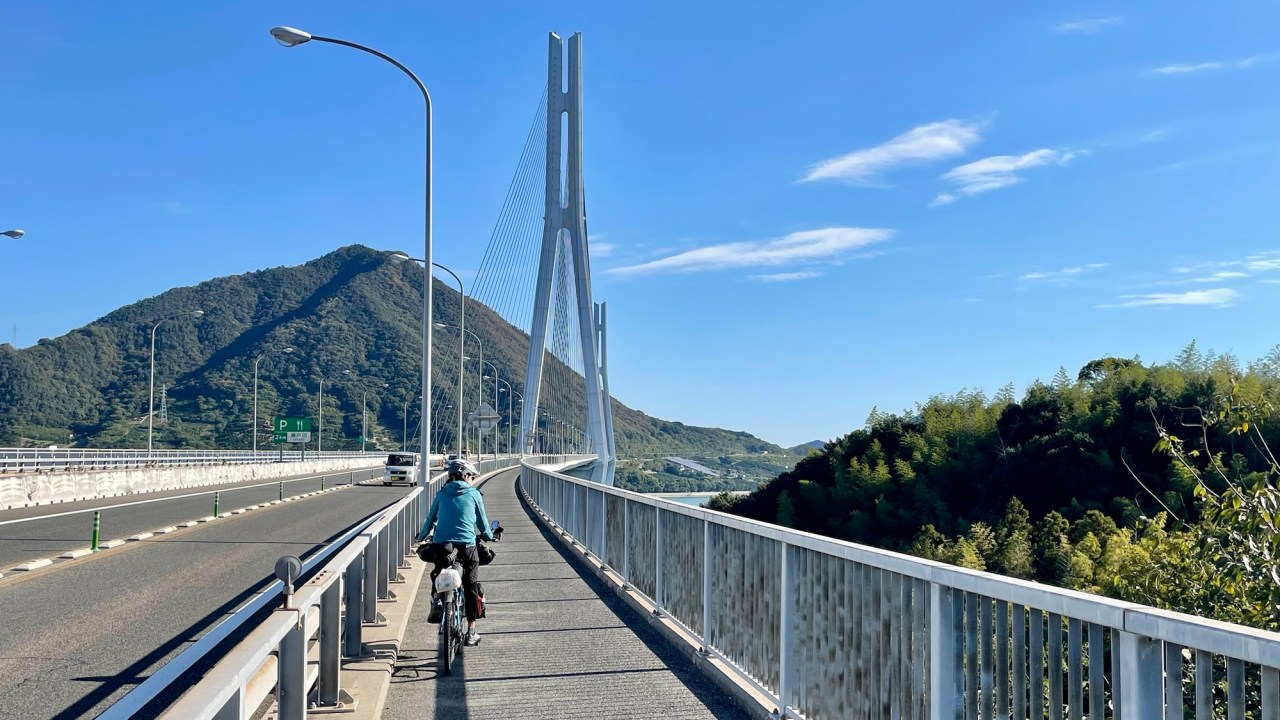
We cross two more bridges to reach the shores of Honshu, Japan’s largest and most populous island. Time is fleeting and we have a plan for the final part of our journey.
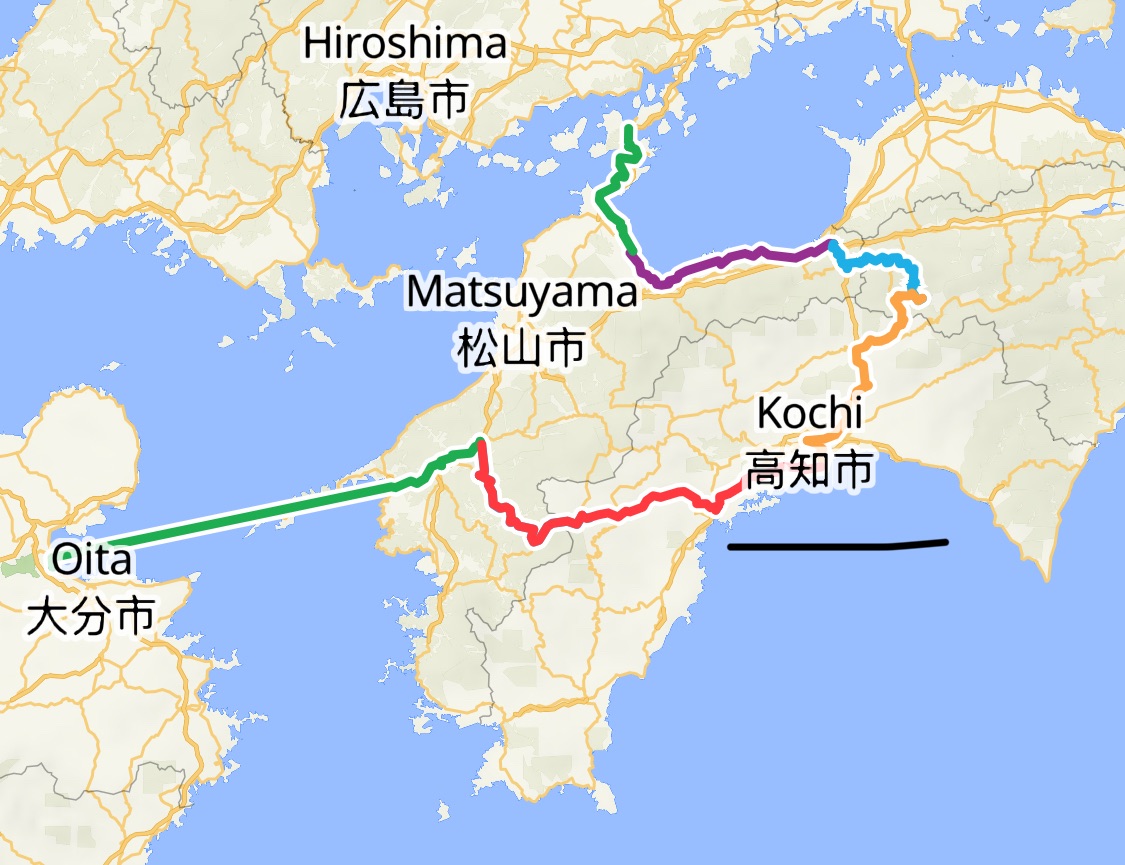
Here is a link to the Shikoku section of our trip.
And a few more pix.





 2 l o v e c y c l i n g
Thank you for sharing. Greetings from Belgium.
Wim and Ingeborg
Love the photos of the forested hills in Shikoku. We loved it there (few non-Asian tourists as you noted).
Would also love to return to ski! And what’s up with a less-than-clean toilet and no vending machine?
I’m always so amazed and impressed at your adventures and love seeing your pics and reading your stories.
You are such adventurers! Love the stories and the photos. I hope to travel a similar route in the near future.
Wow! Such dedication to adventure in not so nice weather. I’m afraid I’m a fine weather traveler but truly admire your stamina. The pictures are glorious and enhance the story. Thanks for letting us ‘ride’ along.
Wow and wow! The forested hills of Shikoku make me think of the village of Kurotani and the 800 year old washi mulberry paper making family. I wonder if you will visit this spot near Kyoto? The connection with you Paul is the relationship between the folks at Kurotani and the Baffin Island Inuit artists. While not exactly near Baffin Island I’m thinking of Tulugaq’s Journey.
Jim Harris
Thanks, Jim. I haven’t thought about Tulugaq in a long time.