We’re nearly two weeks into our trip riding south through the Korean countryside. The rice harvest is beginning and the persimmon trees that seem to be everywhere are heavy with fruit. We pick a ripe one and inhale the soft, juicy fruit.

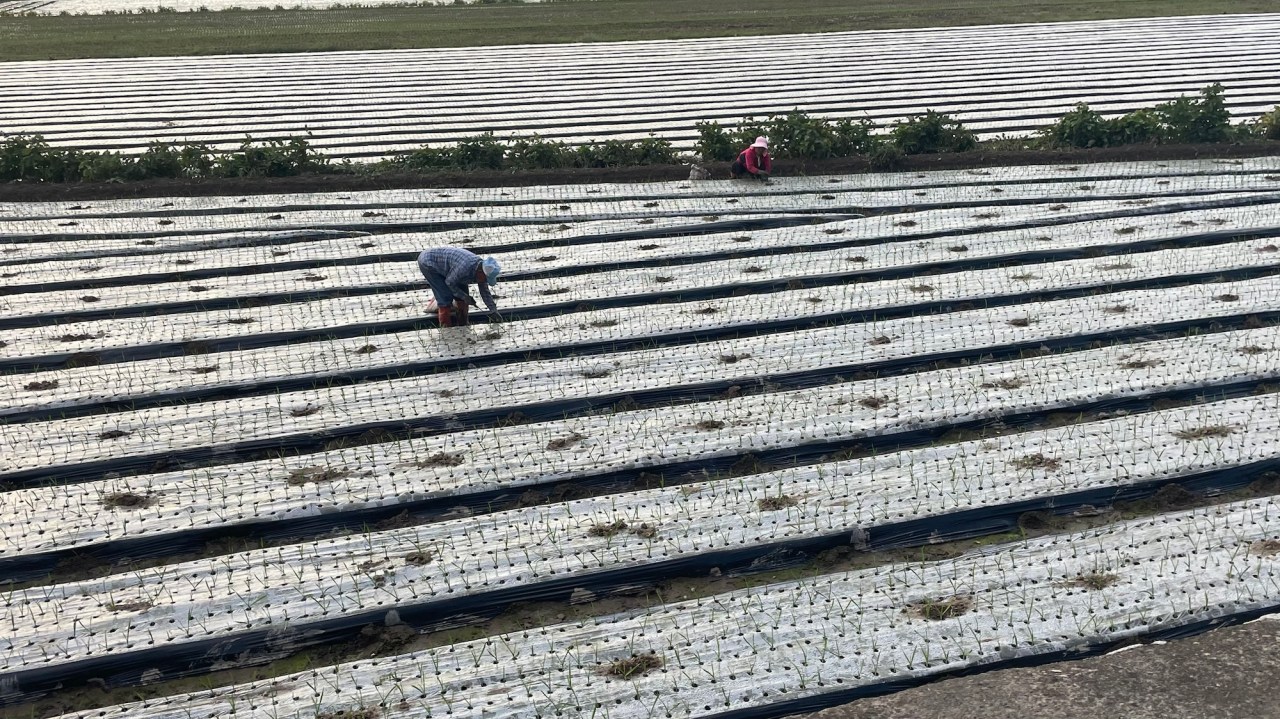

A few days in we talked about how Korea, compared to some of the places we’ve been, lacks a ‘wow’ factor but I thought about that a while and changed my mind.
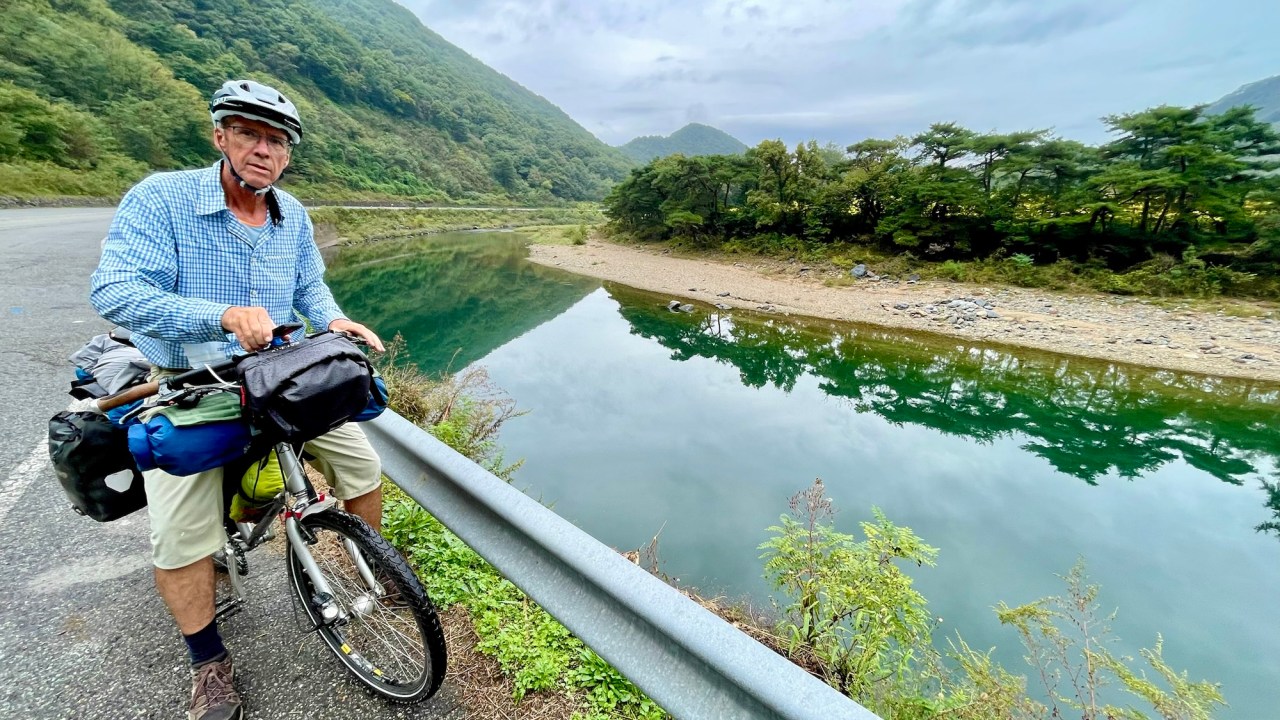
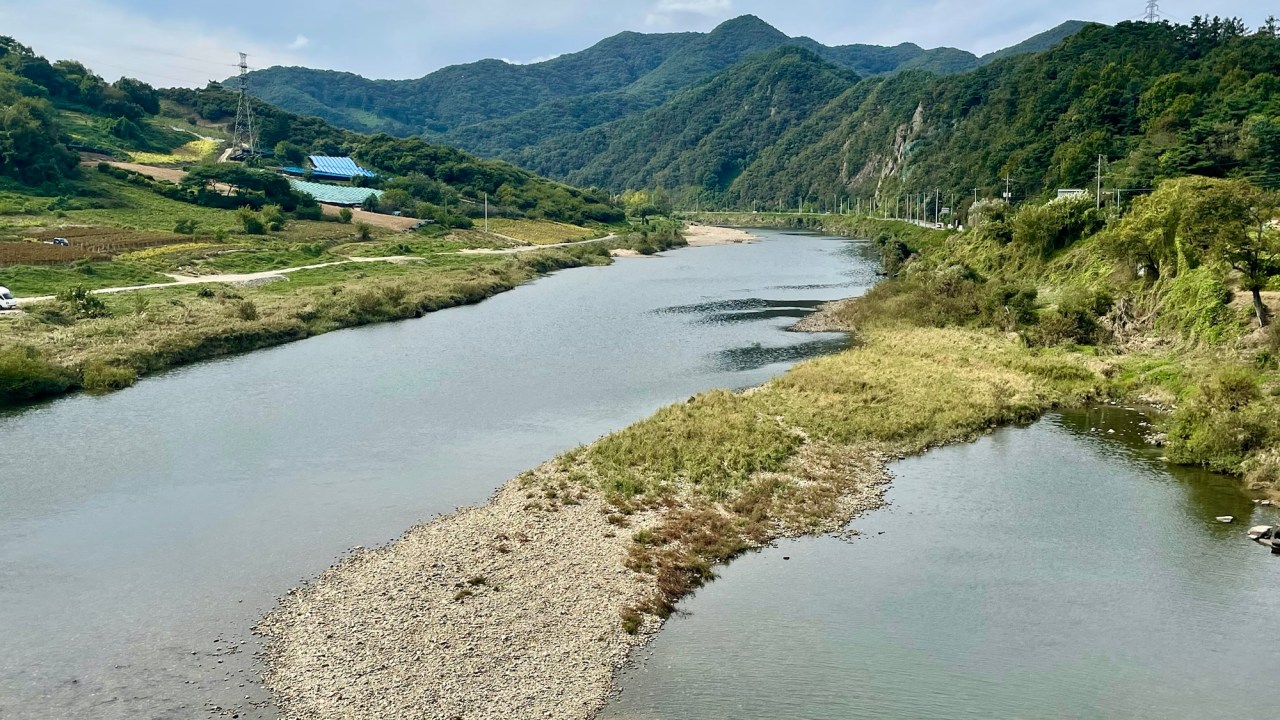
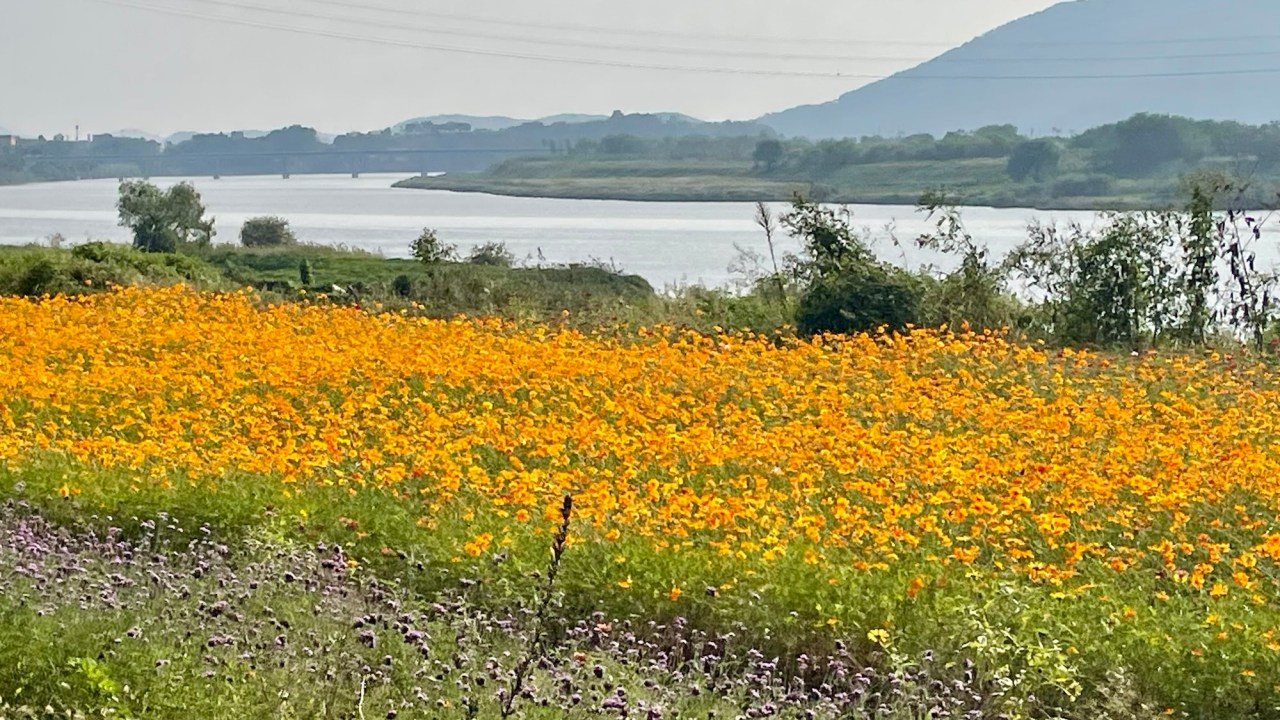
The landscape is beautiful and lush with forested mountains throughout. In the valleys the rivers have large riparian zones where a rich bird population feeds and breeds. We see many egrets and great blue herons and a variety of ducks.
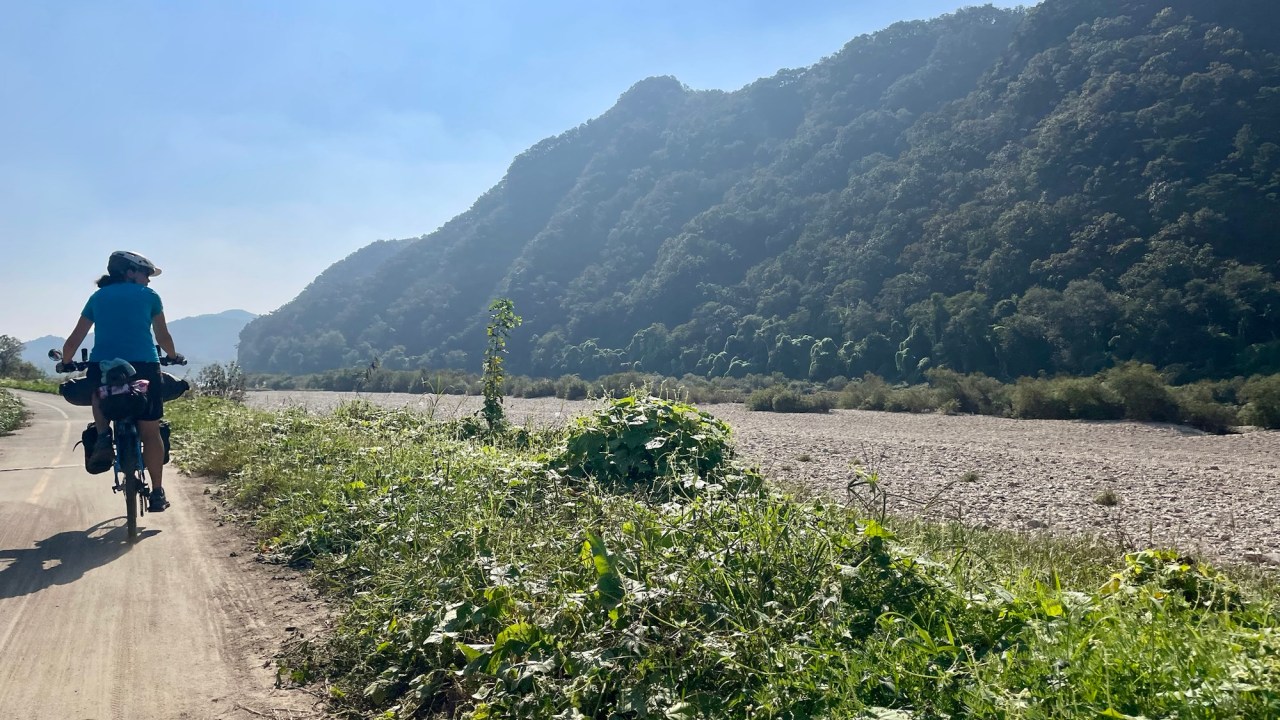
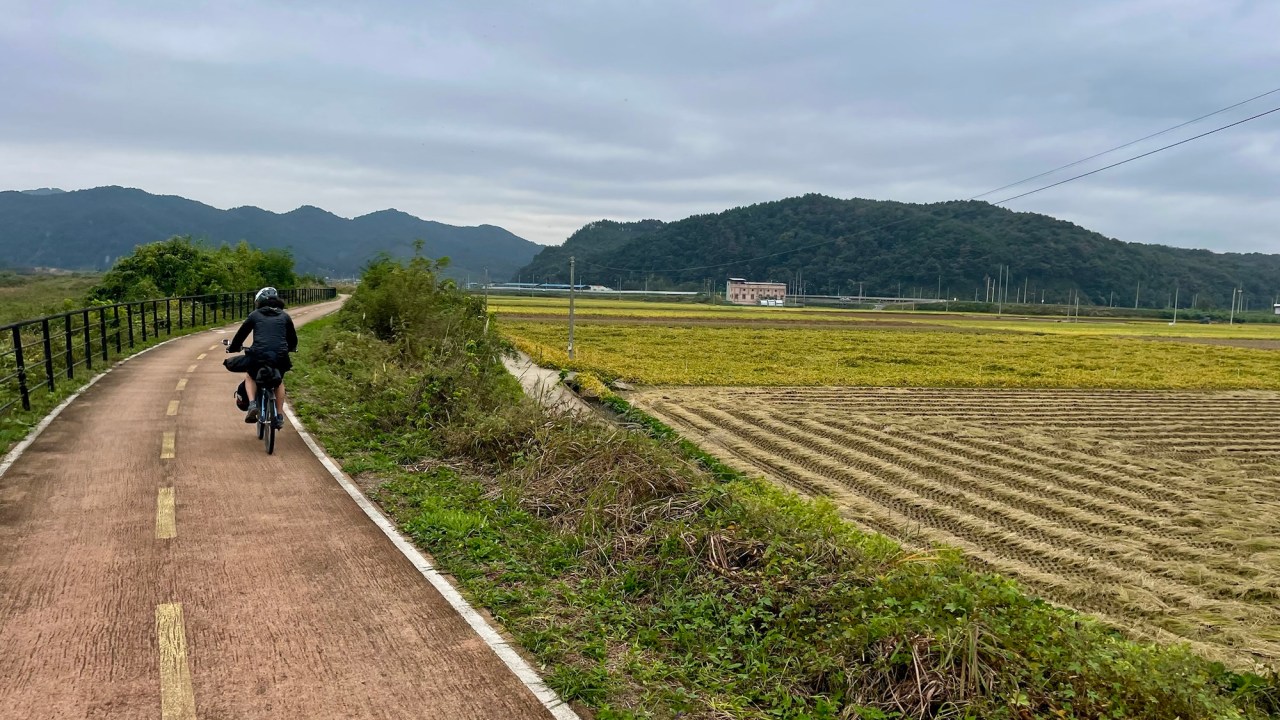
Outside of the riparian zones rice fields, yellow and ready for harvesting, bring colour to the landscape, and through it all run cycle paths crisscrossing the country.
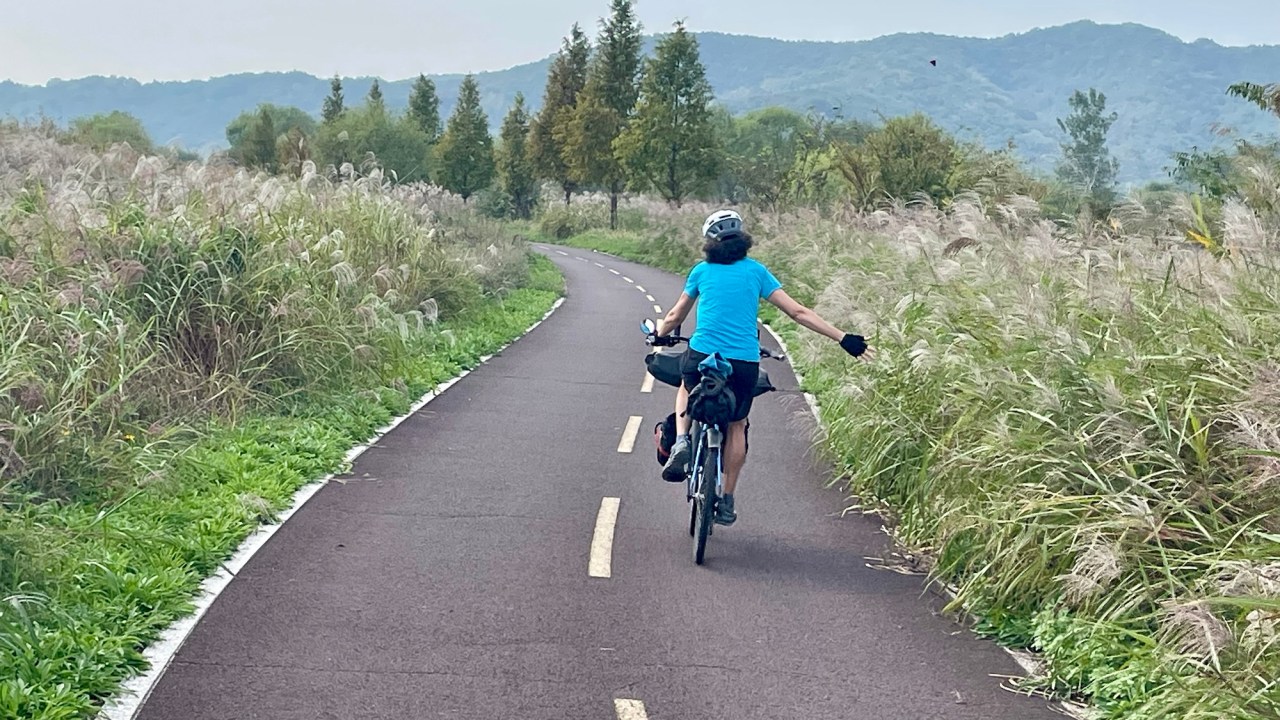
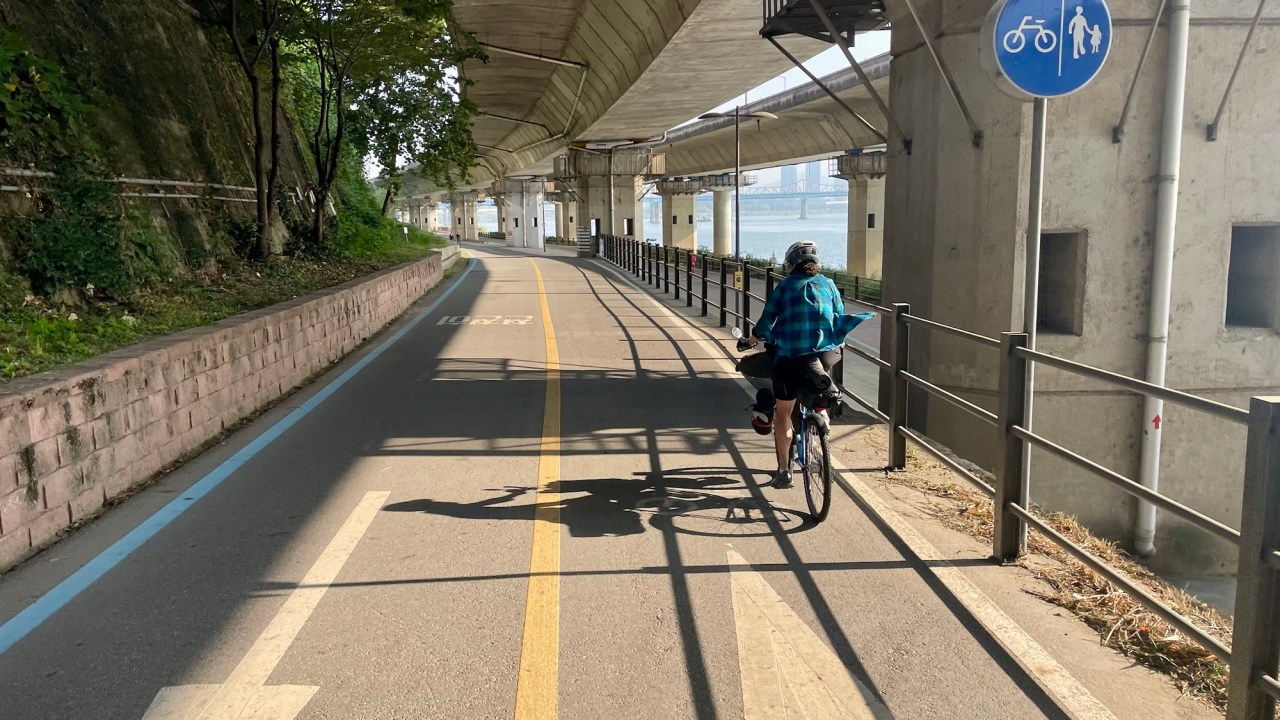
To me, that is the wow factor: the infrastructure Korea has built for active transportation while restoring hundreds of kilometres of river habitat all over the country.
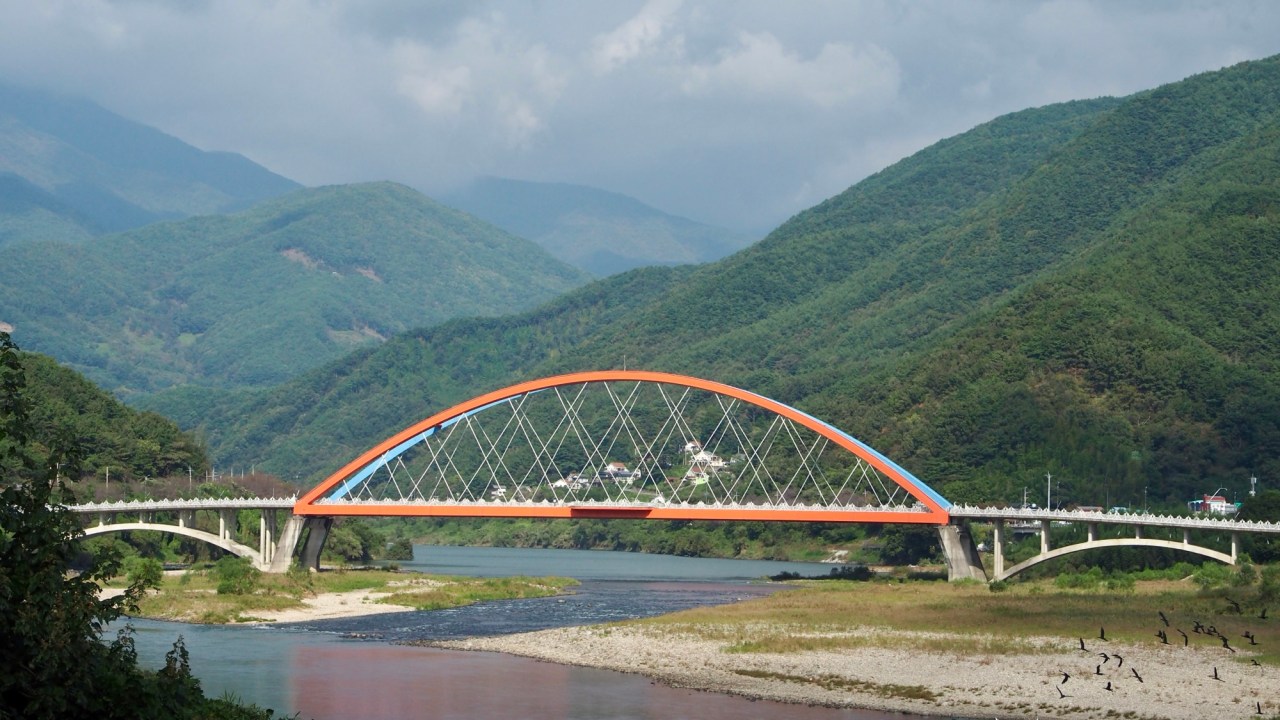
The four rivers trail system was created by K-Water to rehabilitate and repair areas along the rivers and to make the areas safer from floods.
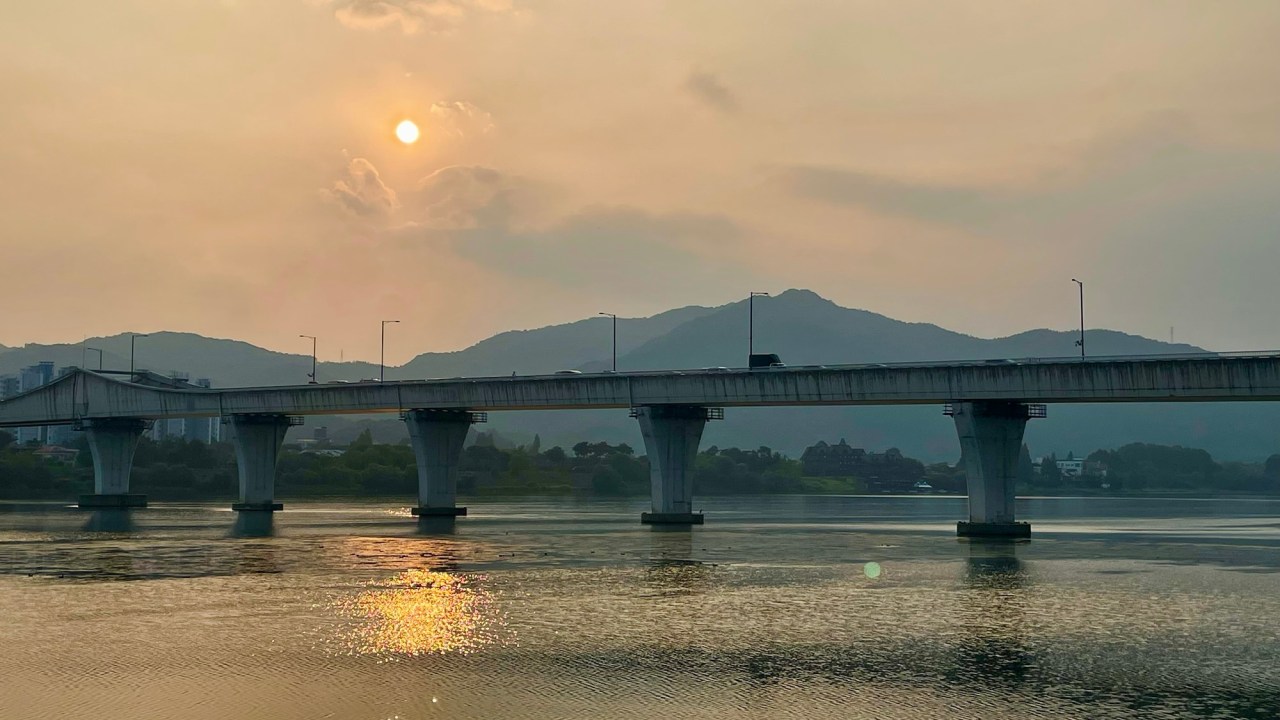
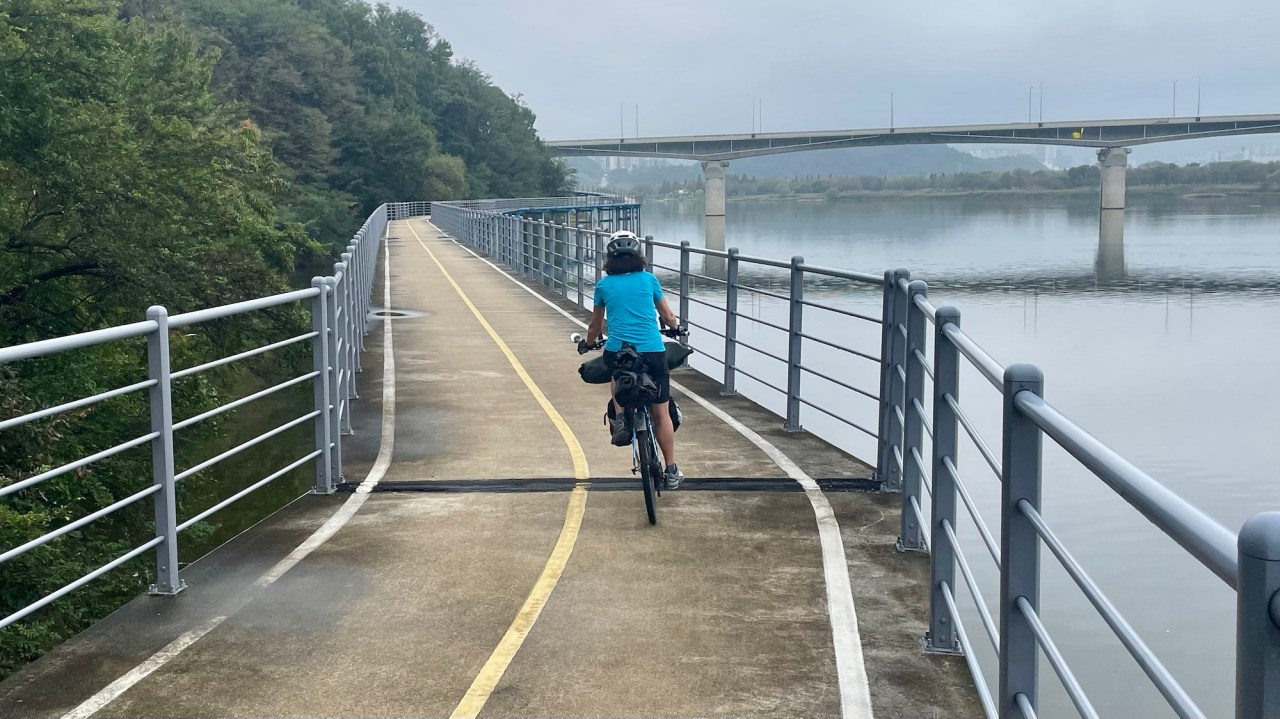
The route follows Korea’s four major rivers: Hangang River, Nakdonggang River, Geumgang River and, Yeongsangang River— stretches approximately 1,750 kilometres across the country and takes riders past traditional villages, historical relics, and restaurants with traditional Korean food. The routes are mostly on paved bicycle paths and small roads that feature vehicle free cycling and offer a variety of facilities including camp sites, coffee shops and cafés, covered shelters and toilets.

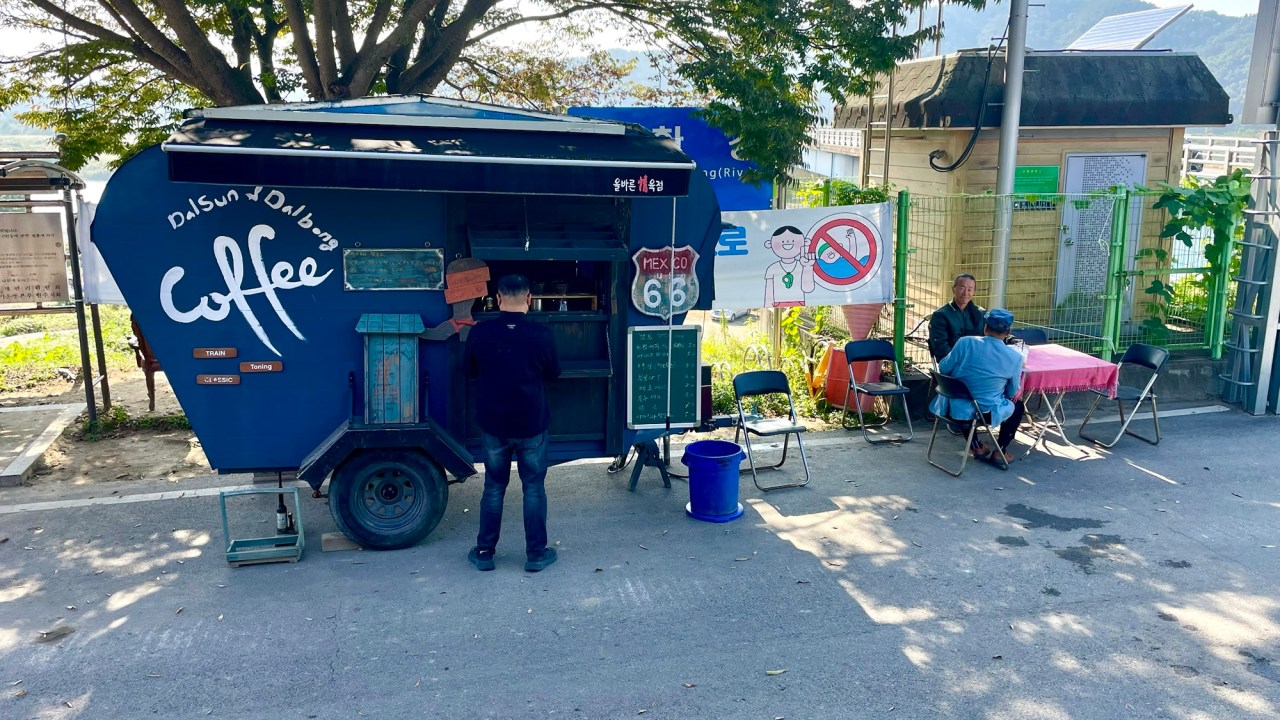

In short: it’s a cycling paradise and can be done by people of all ages and abilities. And the people here make good use of this infrastructure, especially in the cities, but also in the countryside. We’ve met other cyclists of all ages, people walking and seniors on their electric scooters.


True, it’s not as challenging as some other journeys we’ve done but it is a wonderful way to see and experience Korea, a country that has lots to offer.


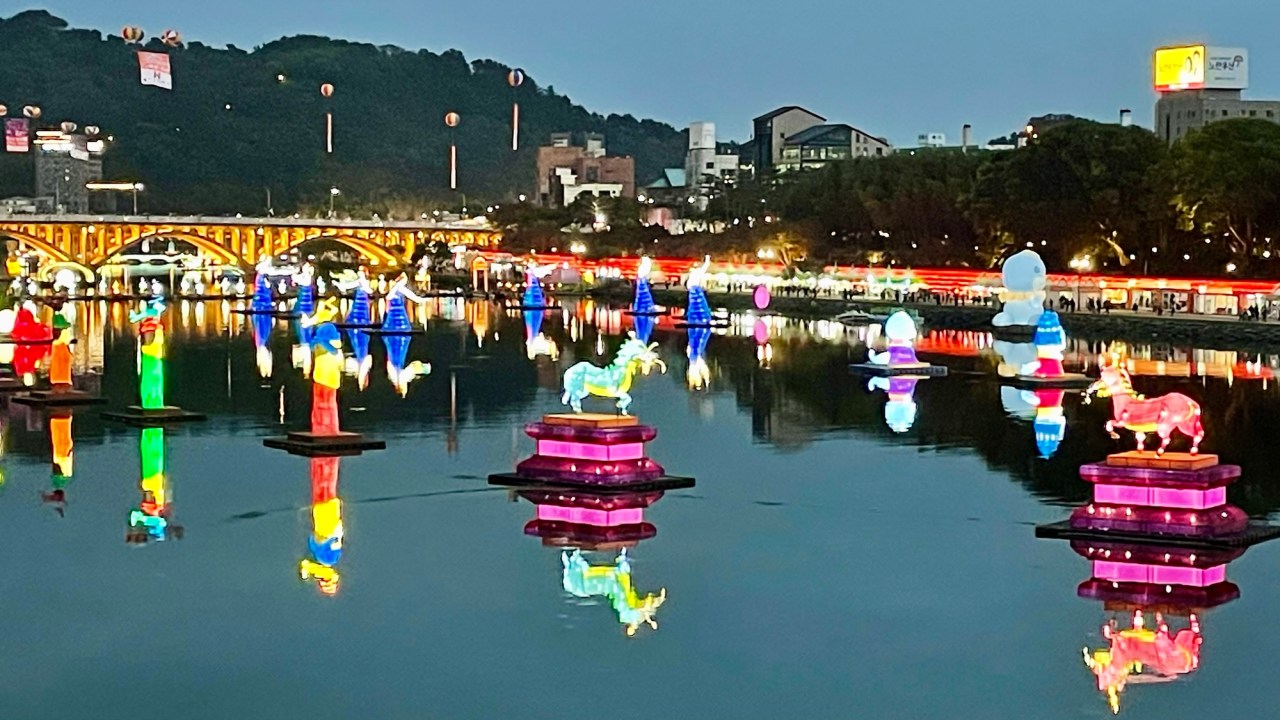
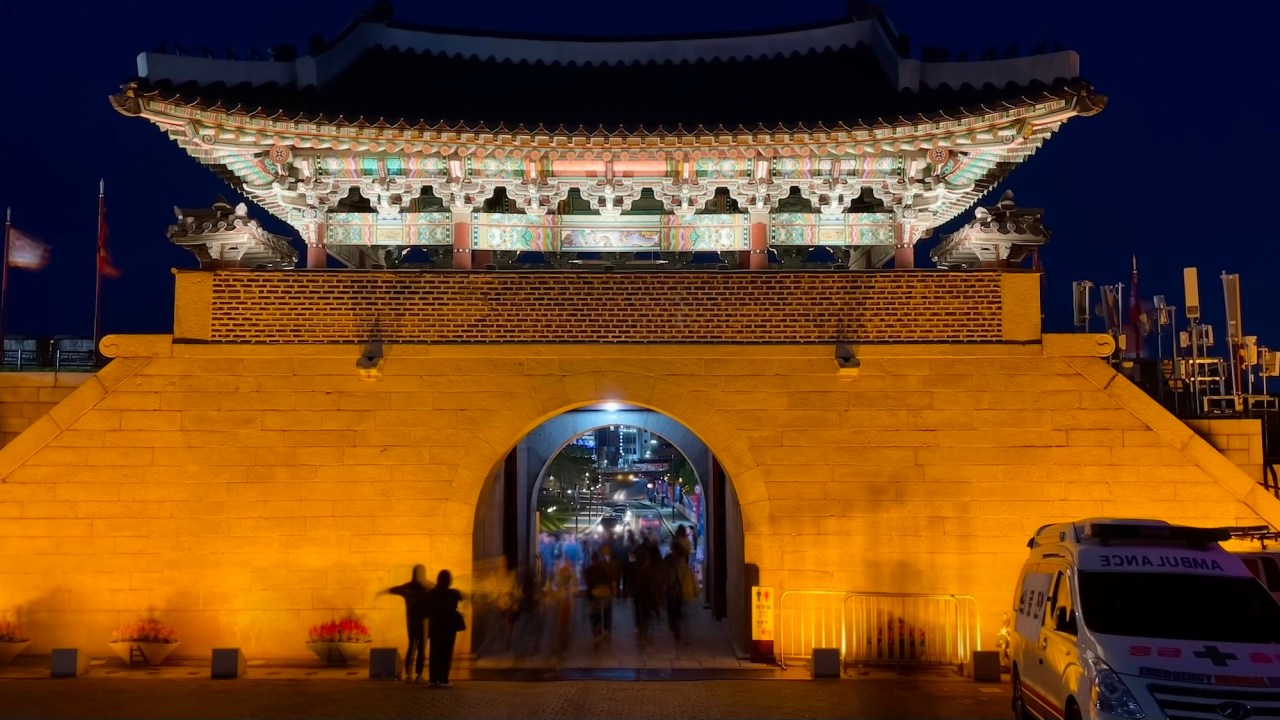
In Jinju, we hit the final day of the lantern festival and the city was lit up around the Jinjuseong Fortress which dates back to the 14th century.


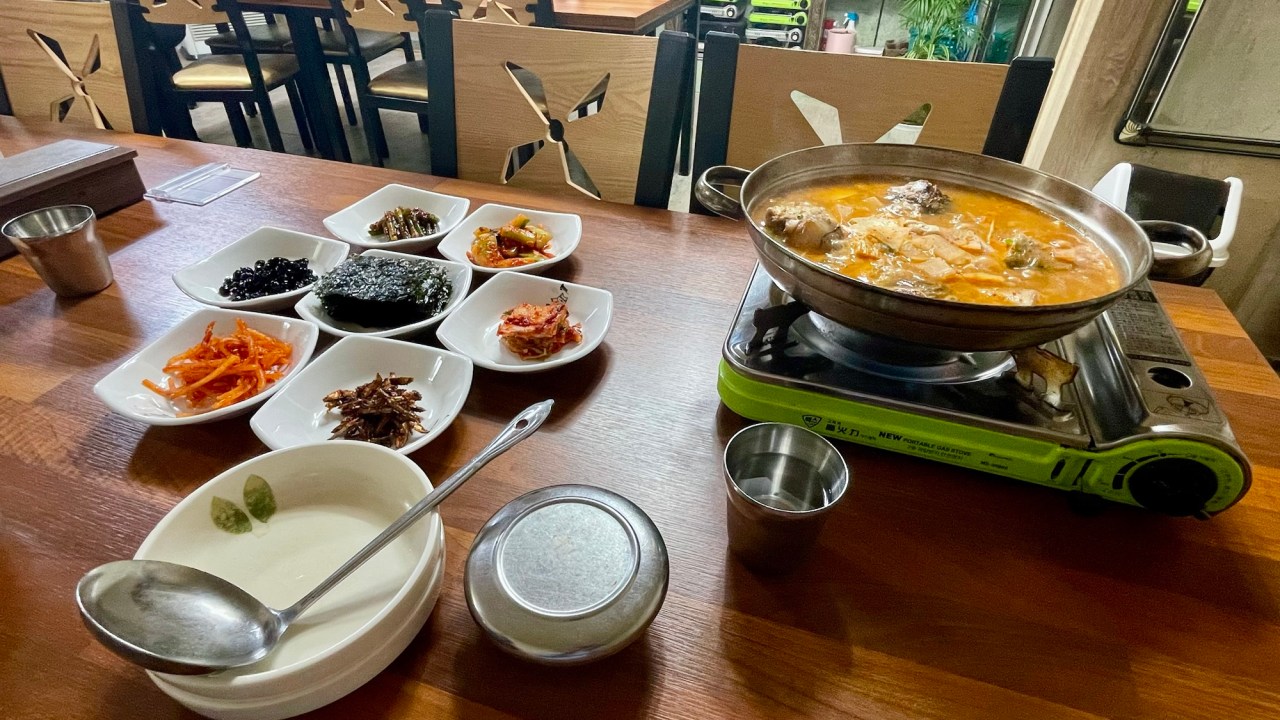
The food alone is worth the trip and deserves a separate post, so more on that later.

Korea has had a long, tumultuous history with repeated invasions by Japan and China. Following World War II, Russia and the US temporarily divided the peninsula on the 38th parallel with plans for Korea to be reunited under a single government but both north and south declared independence in 1948 and failed negotiations resulted in the Korean War in 1950 with Chinese communists backing the north and US-led United Nations backing the south. The war ended in 1953 in a stalemate and remains so to this day with the country separated into North and South Korea and no peace treaty.

The continuous threats from the north sometimes flare up such as this past week with North Korea blowing up any remaining road and rail connections to the south.
We’ve seen fighter jets in the sky nearly every day and I think this country must be in a continuous state of readiness for whatever Kim Jong Un may do. It must be a psychological burden for the south – its people and its government – to live next door to such an unstable regime that is armed with nuclear weapons.
To look at South Korea today it is amazing what has been accomplished here following that devastating war of independence. Korea is a democratic country and technologically advanced. Its GDP is the world’s 14th largest and it has one of the world’s largest standing armies.

We’ve ridden past the factory complexes of global companies like LG, Samsung, Hyundai, KIA and Kumho. We all use the products made here every day to drive, do our laundry, keep our food refrigerated and watch TV.
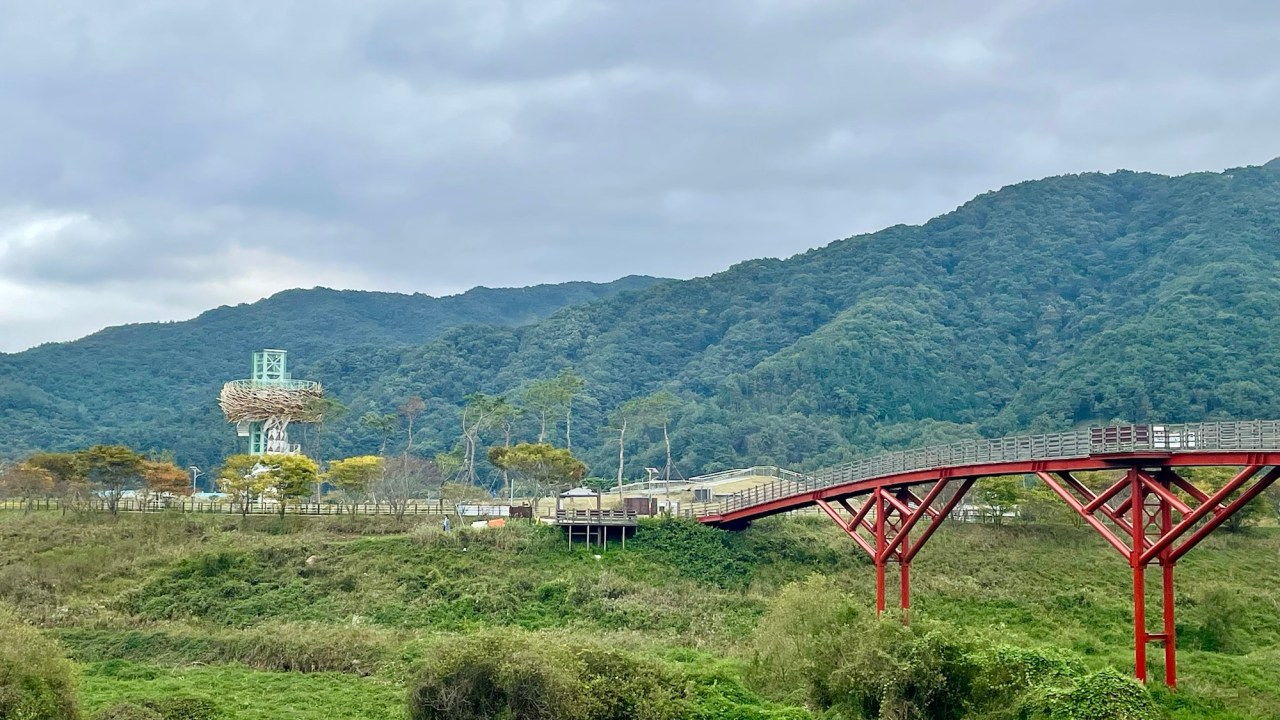
In short, this country has lots of wow factor and the cycling is a great part of that and the reason why we’re here.

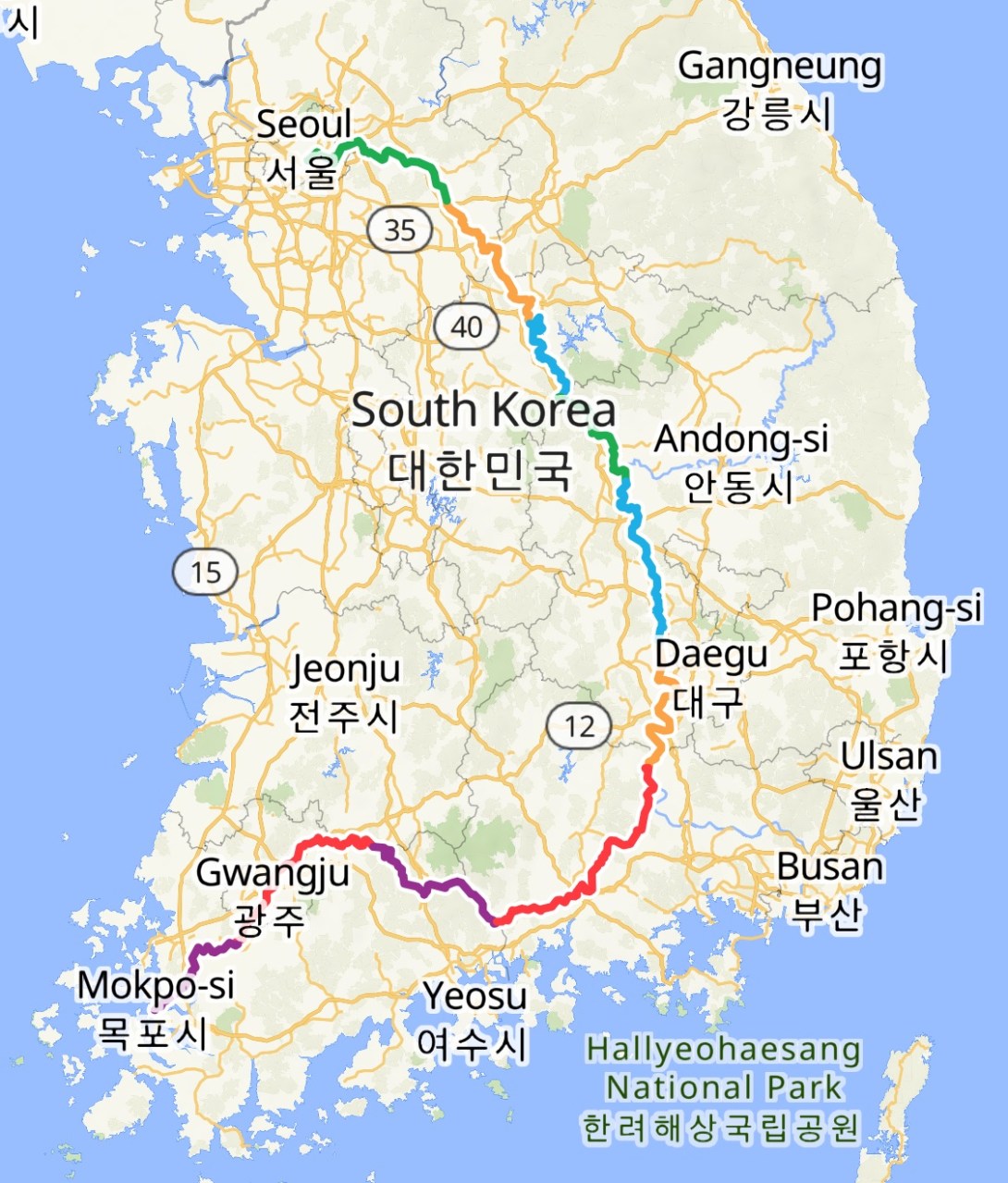
After a few days of riding south from Seoul we decided to get off the trail to Busan and head west instead, choosing local roads but invariably we would end up on yet another bike path. They have built them everywhere.
Past the city of Daegu we angled southwest toward Jinju and from there in an arc through Ha-dong-eup and Sunchang-eup, past Gwangju to Mokpo, a city on the southwest coast with a ferry connection to Jejudo, Korea’s largest island, about 80 kilometres off the coast in the Korea Strait.
Communication is often a challenge. Many people don’t speak English and we don’t speak Korean beyond ‘hello’ and ‘thank you’. But we do get lots of friendly hellos and people are eager to help, despite our respective language barriers. The phone translation apps are very helpful and people readily use them.
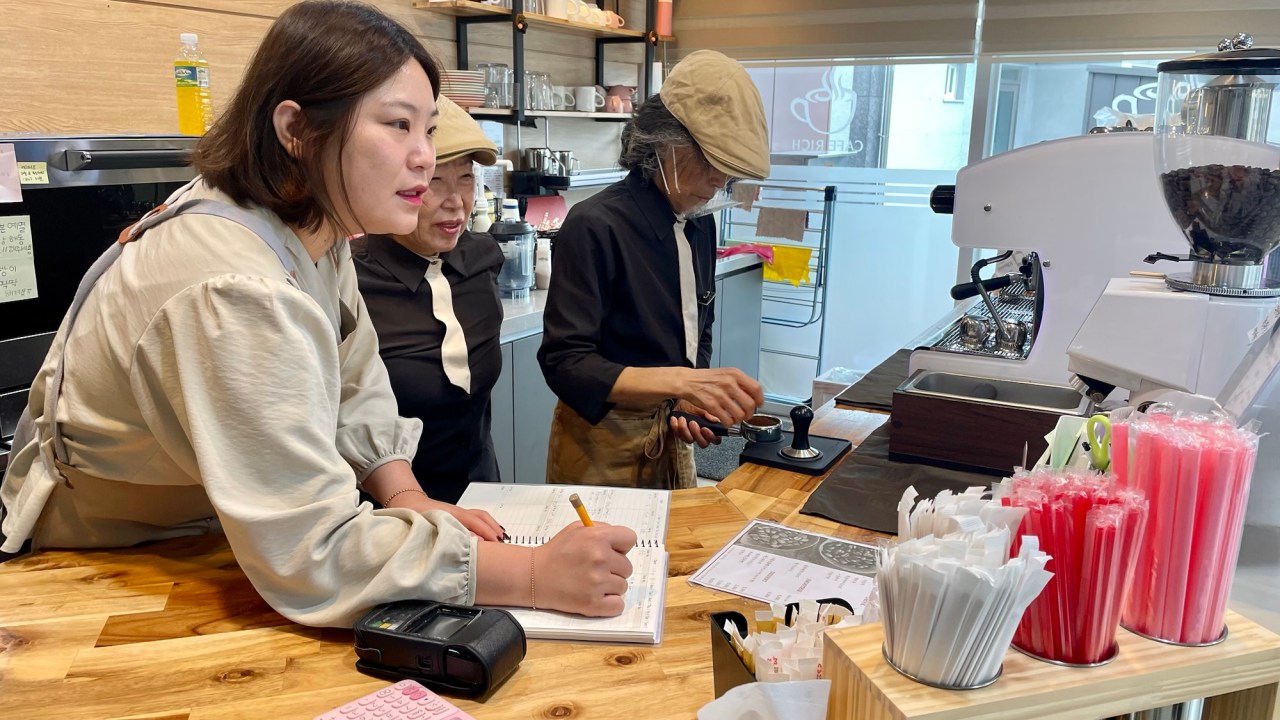
And then occasionally we are approached by an English speaker like a man from Busan just as we were getting back on our bikes after a coffee stop at one of the amazingly fancy coffee shops we’ve had the pleasure to frequent.
He was curious about our journey and told us he felt inspired by what we are doing. He wanted to know how old we were and he said he was the same age and wanted to do what we are doing.

In Hadong, in a small restaurant, we were trying to figure out the menu and a woman at the next table offered to help in perfect English with a hint of a New York accent. She studied in New York. Her husband was also fluent and we learned he is a doctor in Hadong.
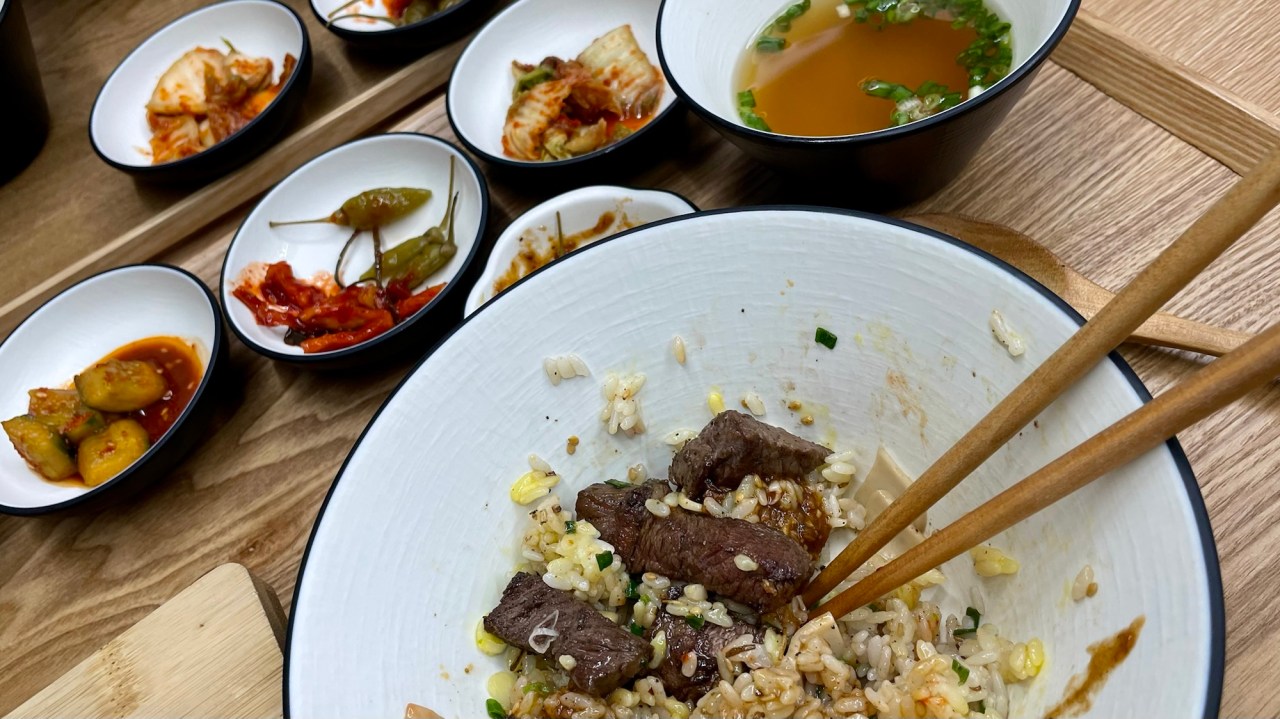
With their help, we ordered our meal and when it arrived they explained what to do as the dish required some mixing of ingredients.
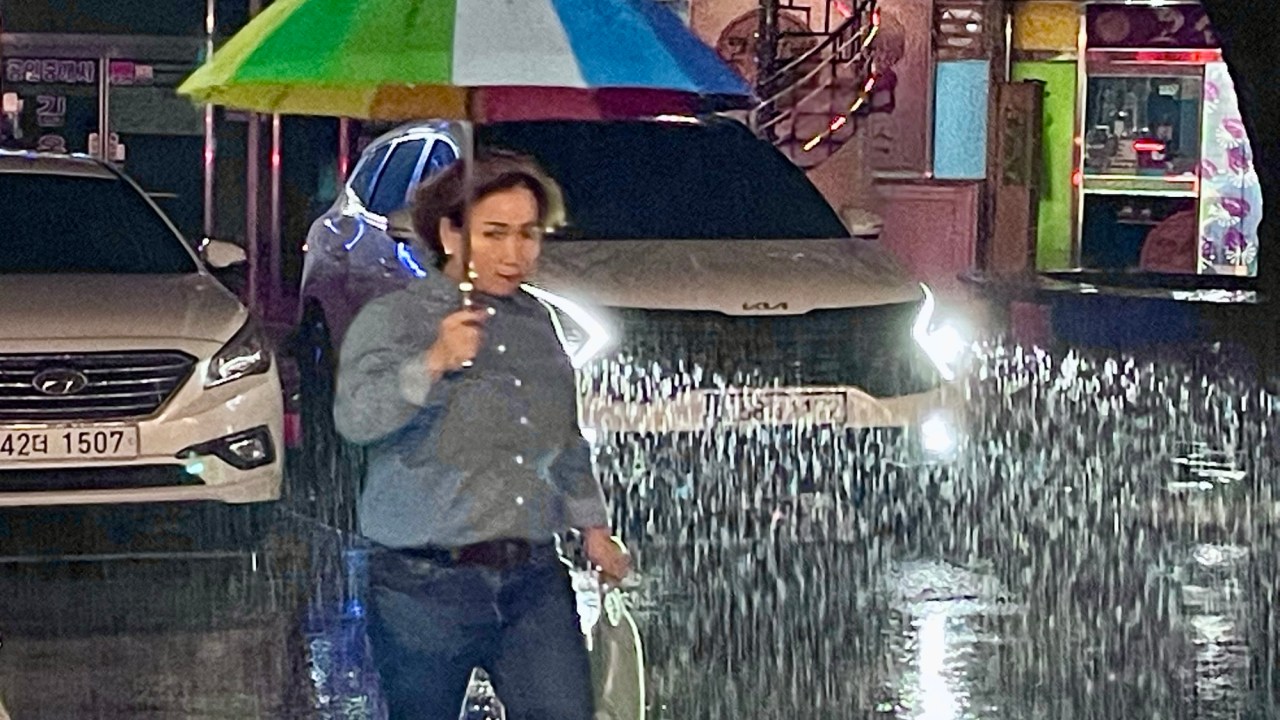
We had arrived in Hadong around noon in a downpour and sought shelter in the Seomjin River Toad Night Market which has roofs over the streets between the buildings. It being the middle of the day it was still quiet with many shops not yet open but we found a little food stall that was serving hot noodle soup.

The husband and wife owners were lovely and eager to feed a couple of dripping wet tourists at their modest little restaurant with pink tables.

We ordered what looked good in the pictures of the menu and before long two steaming bowls of noodles and vegetables in broth arrived along with a couple of side dishes. It was delicious. Afterwards, they gave us coffee for which they refused payment.

The giving of food has been a repeated theme since we’ve been here. In our one and only campsite stay, a man came over to talk to us about our journey and how it was his dream to cycle tour. We encouraged him to just do it. He came back a few minutes later with a small bag of grape tomatoes. A couple managing a coffee shop came and gave us two local delicacies: a sweet bread filled with cream, after we had already consumed two baked goods with our coffee.
The woman caretaker at a hotel gave us a persimmon. She was also incredibly helpful and despite our inability to communicate effectively she understood and helped us with our bikes, allowing us to park in one of the room’s private garages.

Many hotels have these garages where patrons can drive in, close the door and have private access to their room. They are often referred to as love motels for discreet encounters in private. There are even self-checkin machines so there never needs to be any interaction with hotel staff. Often, in the lobby, there is a large computer touch screen where you can select your room and pay for it with a credit card.

We’ve stayed in hotels because they’re ubiquitous and cheap, often cheaper than camping. Campgrounds charge 40,000 to 50,000 KRW, $40 to $50, and hotels are the same price and they are well-appointed with good en-suite bathrooms and always have coffee, tea, water in the fridge and a variety of male and female toiletries, including toothbrushes. One had a massage chair and another even had a steam closet to clean and steam your clothes.

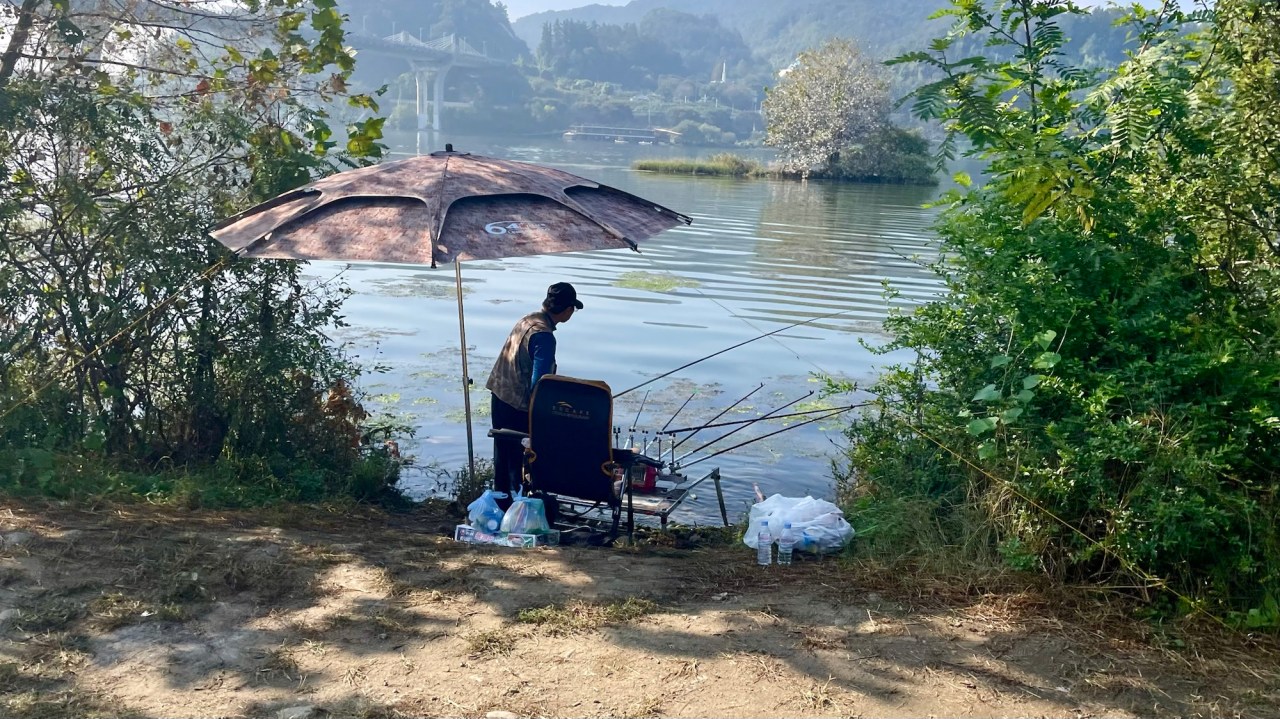
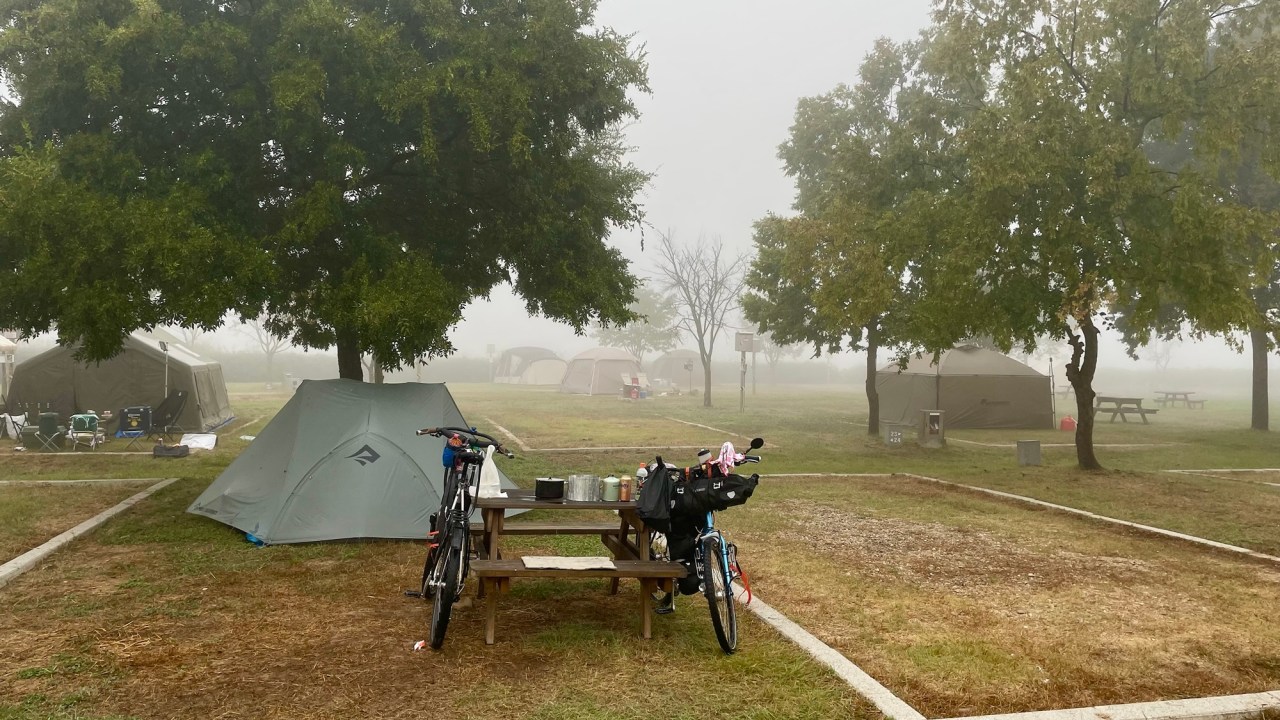
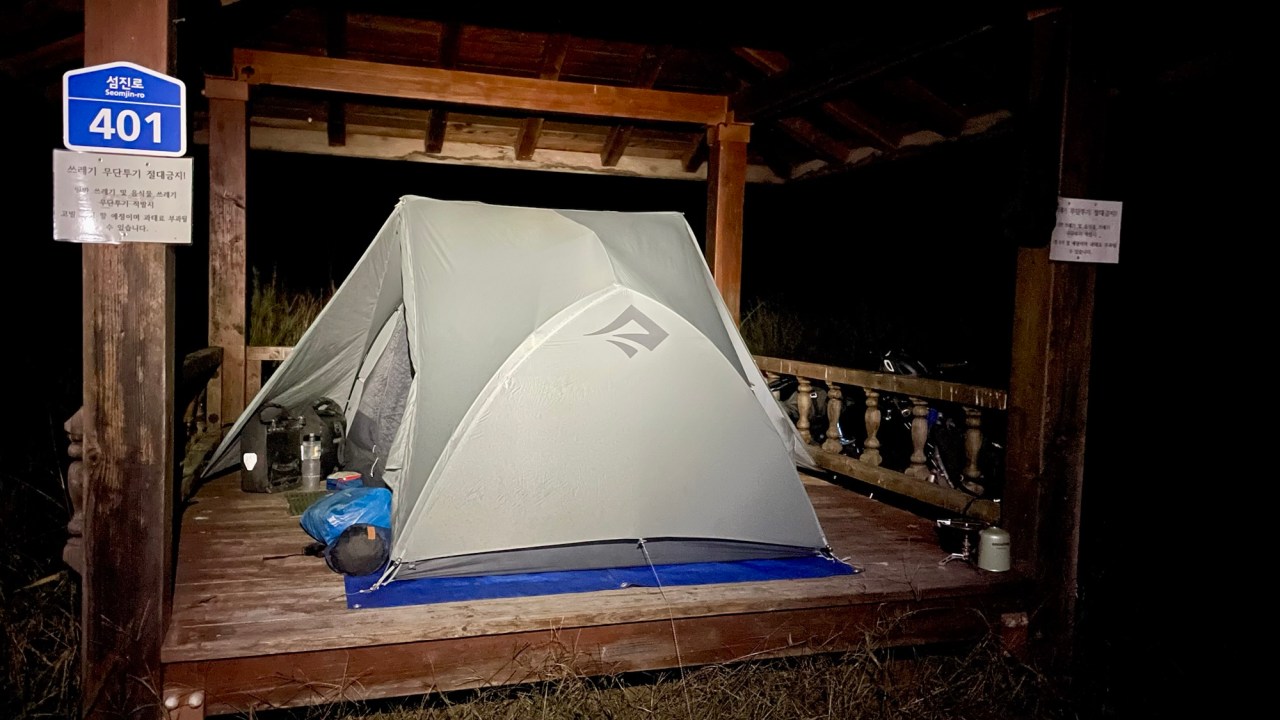
We’ve also camped in rest stops along our route. Many of them have covered shelters, toilets and water. They are free to camp at, and people do. Many Koreans also camp on river banks so they can fish. Fishing is serious business. Some people have elaborate setups with a platform to sit on and holders for as many as half a dozen fishing rods.


We also stayed one night at one of the ‘bike hotels’ that are advertised along the route. We had already cycled more than 80 kilometres and it had begun to rain. We were at a rest stop trying to see if there was some accommodation nearby and realized we were only a few hundred metres from a bike hotel we had seen advertised for the last 200 kilometres.
A young guy on a flashy racing bike spoke a bit of English and offered to phone for us. He said there was room and we could go there.
At 120,000KRW, ($120) it was a bit more money than we like to spend but it included dinner and breakfast and even laundering of all our wet, dirty clothes.

The proprietress was a short, stout woman of determination. When we arrived, she helped put the bikes in the bike shed. She then showed us some laminated cards with English printed on them explaining the procedure:
- you take from your bike the things you need and put them in a basket.
- Then you go to the shower room next door and dump all your clothes in the big tub and you have a shower. Put on clothes hanging on the wall (provided: T-shirts and various cotton pants).
- Now you can come to the house in slippers (provided) and you can go into your room WITHOUT SLIPPERS.
She was adamant on this last point and scolded Jan when she forgot to take them off when Jan went into the bedroom.
Our room had a private bathroom and a bed on the floor with bedding provided. This was a typical Ondol room: simple, sparsely furnished with a heated floor.
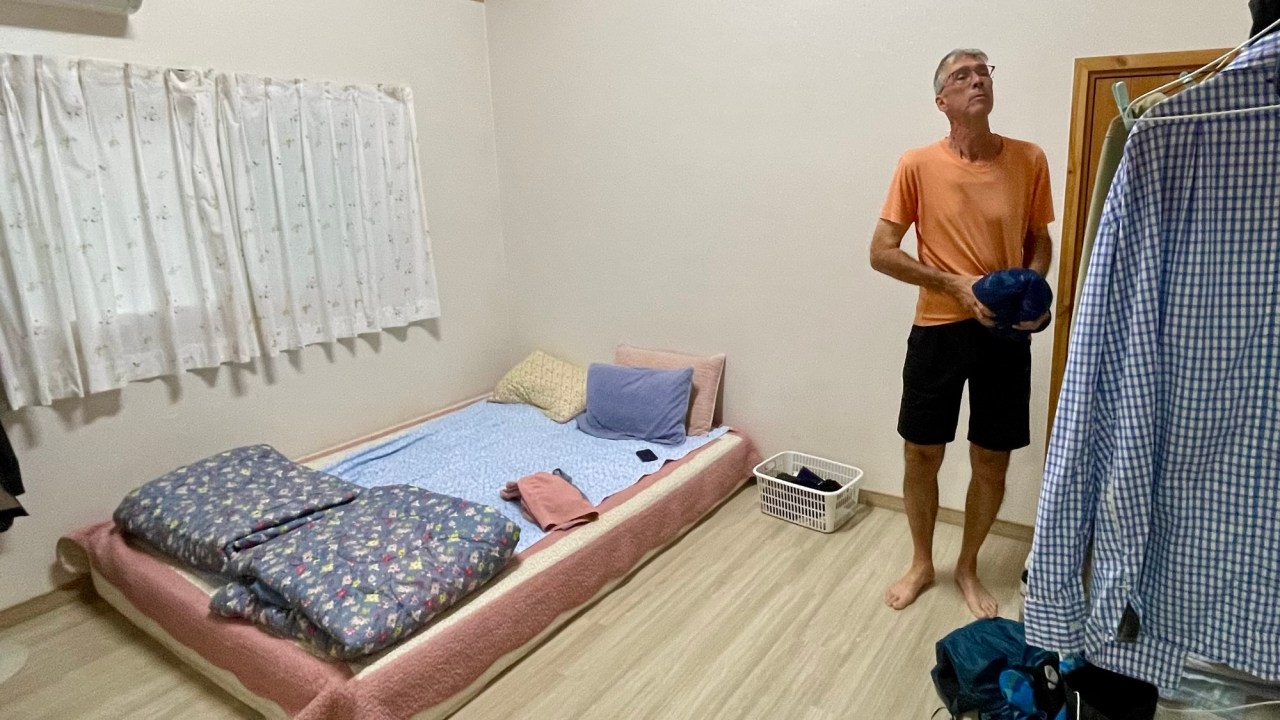
Historically, an ondol had a fireplace at one end and the chimney at the opposite end, often free standing and away from the building. The room was built on top of the horizontal smoke passage on a raised stone floor, supported by stone pillars which help distribute the hot smoke. The stone floor would heat up and heat the room. Today more modern heating systems are used such as in-floor electric or hydronic heating.
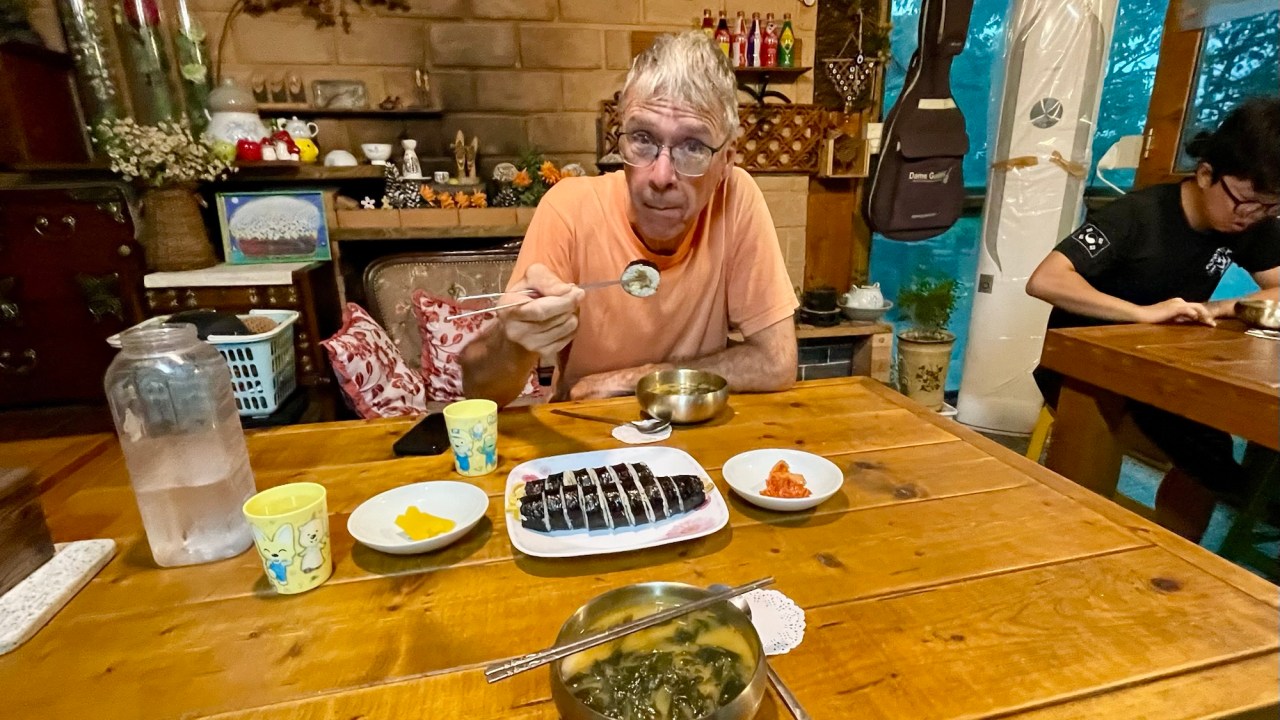
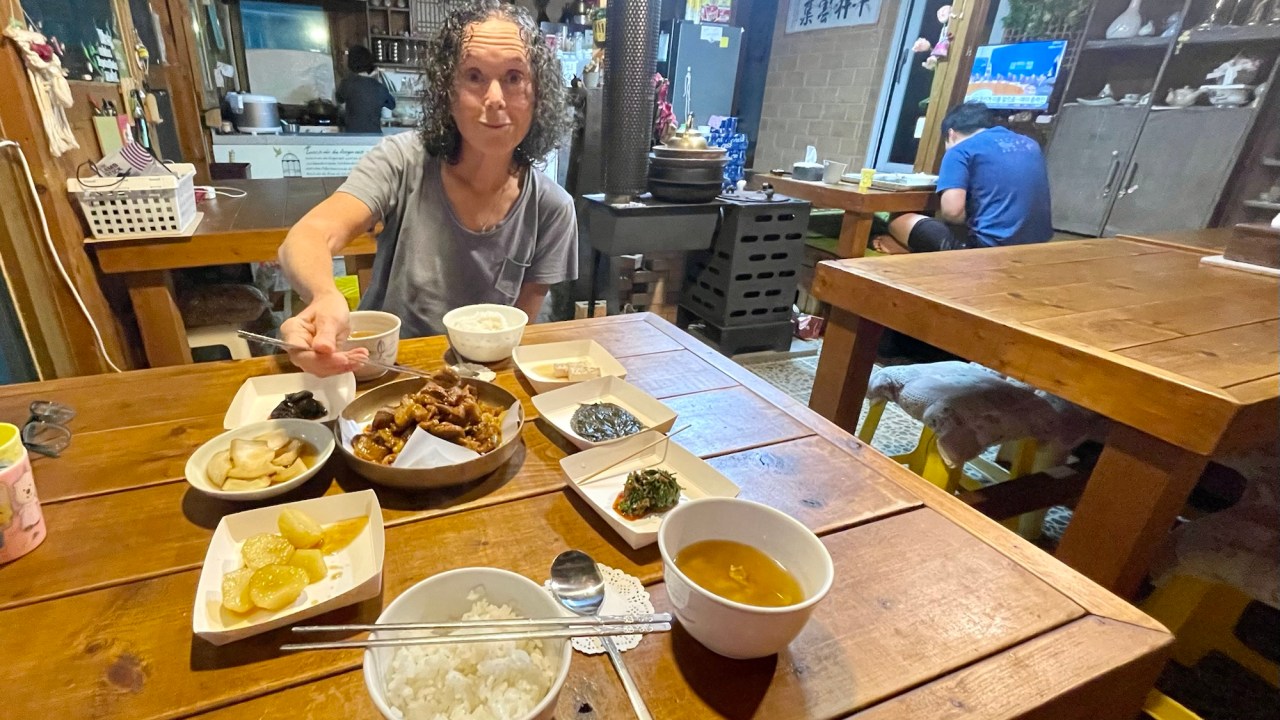
Dinner was a delicious beef stew with rice and various condiments. There were four other cyclists staying in the other two rooms. No English was spoken and, unfortunately, no attempts were made to have conversation.

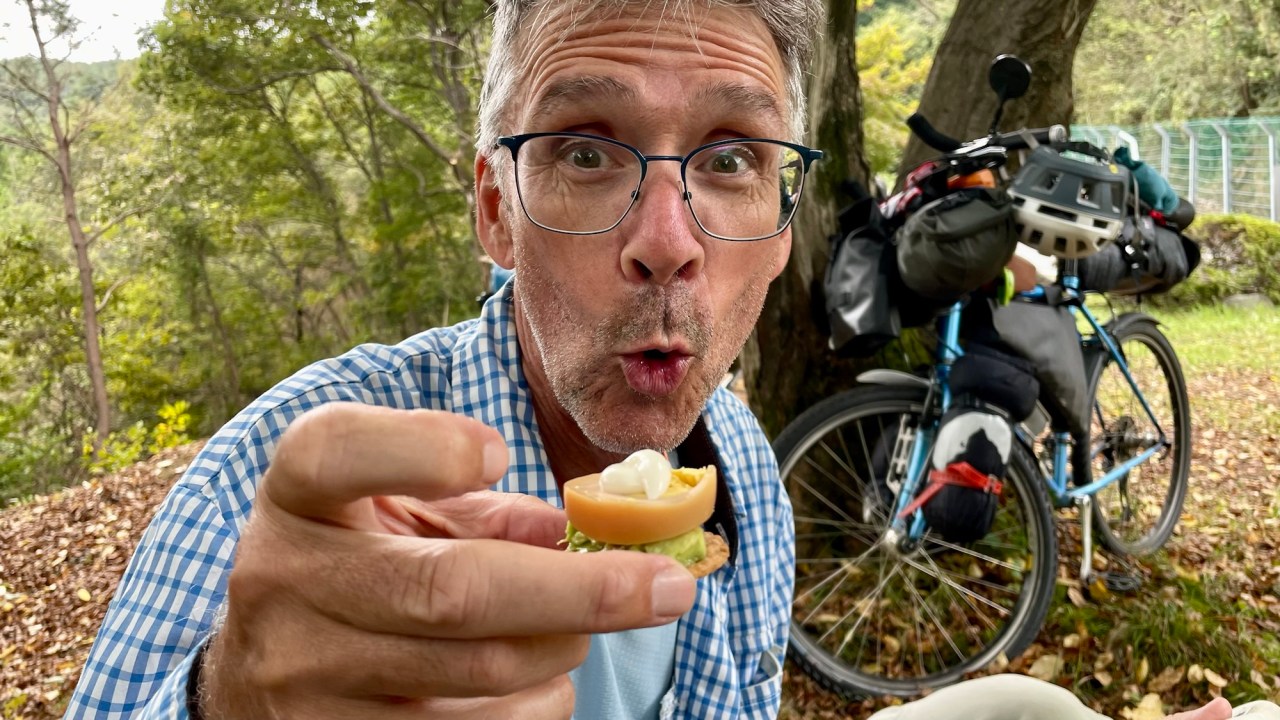
Our room was insufferably hot despite having the window wide open. Neither of us slept very well. At 7 in the morning there were some yelled commands followed by a rapping on the door, meaning breakfast was ready. Soup, egg sushi and coffee. Our clothes were clean and dry and by 8 all of us were ushered out the door into the rain. We would liked to have lingered a while over another coffee to see if the rain would stop but we sensed that wasn’t really an option. It was a good experience but one that would perhaps have been richer if there wasn’t such a language barrier.
One night we camped at a rest stop with a fellow bike traveller. Jan is from Hamburg, Germany, and on his first bike trip. He quit his job and sold what he had and headed east.

We cycled together for about 10 kilometres until our paths diverged. He was heading to Busan and we to the opposite corner of the country.

We’re now on the ferry to Jeju Island where we will spend a few days before heading back to the mainland by yet undetermined means to a yet undetermined port.
Here is a link to our route
Some more images from our journey so far








 2 l o v e c y c l i n g
Really interesting reading your impressions. Can’t wait to hear the compare and contrast when you travel through Japan.
Great post.
Wow! Wh
Hey you guys – great post! Sounds like you’re having a wonderfully quirky adventure – so different from your previous trips! (where else in the world do you get a hotel room with a massage chair 👍). Take good care – f.
Looks amazing and the people sound lovely! We are probably going to cycle next year in Japan so looking forward to your travels there too!
Sounds fabulous. What were the dates of your trip and what were the temperature ranges? Other than the differences in cuisine and language barrier, it sounds like a wonderful place to cycle even for a novice.
Looking forward to the next post.
Hi Norman, we left Seoul on Oct 11 and got to Mokpo on Oct 22. Temperatures in the mid-20s (75F) When are you going?
You never know… I nudged a friend who does cycling adventures.
Here’s my exchange with my friend, the cyclist. Just saw his response to my email referencing your journey.
Ram Reddy
To:Norman Shacat
Tue, Oct 22 at 4:12 PM
you want to do it for your 75th birthday?
On Tue, Oct 22, 2024 at 3:58 PM Norman Shacat wrote:
hi Paul ,
loved reading your blog and we’ve taken lots of tips from it so Thankyou your an inspiration
i have a few questions I hope you don’t mind answering
Me my wife and 5 year old son are planning incheon to Busan in April with the bikes
we are wondering if you have any tips for navigation , maps or apps and generally how easy is it to get lost (because we’re really good at that ) haha
And did you come across any onsens on the way , we have been to Japan and heard there’s a Korean equivalent
Hi Rikki,
Thank you. The four rivers bike route is very well signed and easy to follow. There are also many gpx files of the route you can download and use on your phone or any other gps device. We used ridewithgps and Komoot as well as Google Maps, although that is not fully functional in Korea.
We did not come across onsens on our journey but weren’t looking for them. Lots and lots of coffee shops, though 😁
Enjoy your trip.
Have really enjoyed reading about your experiences and seeing your pics. We will start our ride, Inchon to Pusan, on May 11th. The trail looks fabulous. Can hardly wait – just two retired Canadians coming for a bike ride : )
Thank you. Enjoy the ride 🙂