We descended from the Carpathian Mountains to the Danube plains. It’s a fast, downhill ride through rolling agricultural fields.

Entering Serbia is a mere formality as the border guard stamps us in and teaches us a couple of Serbian words: zdravo (hello) and hvala (thanks).

It had been warm in the mountains but now it was hot. Temperatures of 35C as a heatwave moved west across the Balkans from Greece.
We dropped from 700 m.a.s.l. to just barely above sea level and stopped in the first town on the Serbian side: Bela Crkva.
We had blown all our remaining Romanian cash on a last Langosi just before the border and needed Serbian script. Credit cards are readily accepted almost everywhere, even the smallest shops, but there is the odd place that only takes cash.
With a new currency in our pockets and the conversion to Canadian dollars into our heads – 80 dinar for $1 – we seek out a café and some shade.

Next we get some groceries before we head to a camp site on the edge of town. Marko, the owner, is busy with chores to get his operation running for the summer but he welcomes us and tells us we can camp anywhere.
“If you want a cold drink just grab them from the fridge and tell me later what you had,” he says. “Just be honest.”
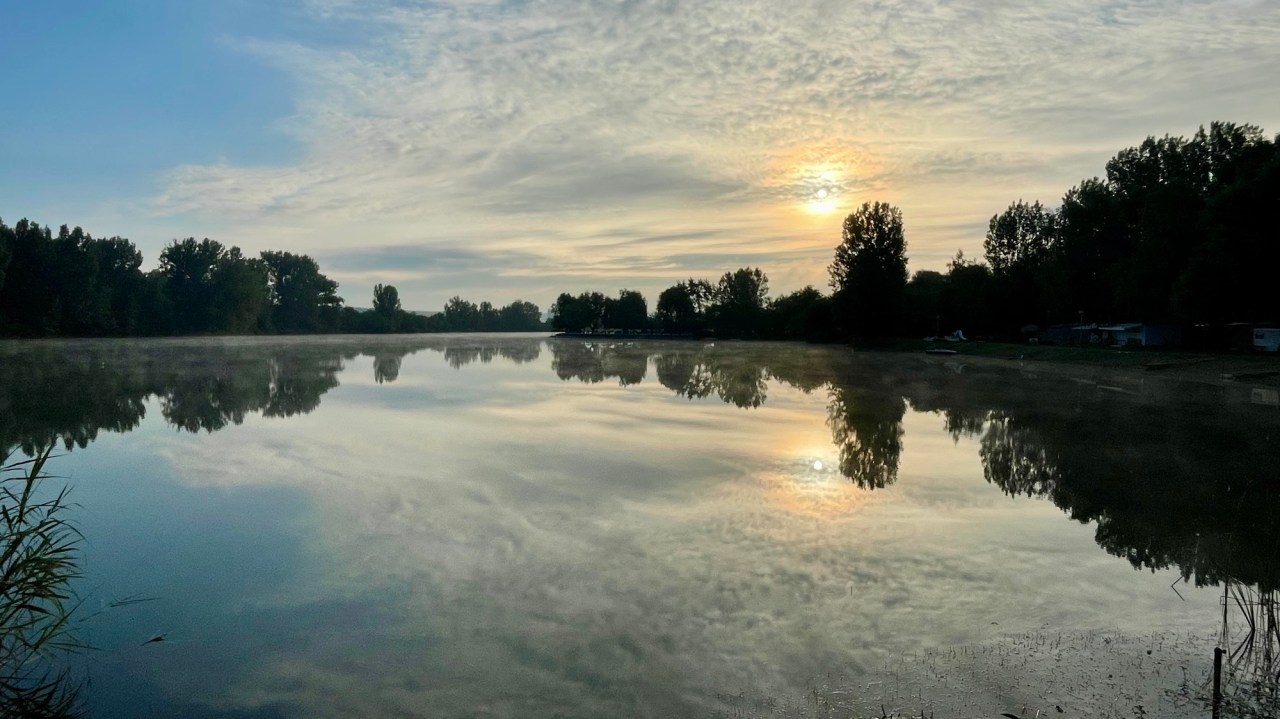
It’s a nice casual atmosphere in a nice setting on a lake. We pitch our tents, have showers and grab some drinks from the fridge. There is only beer and carbonated water but it’s cold and the beer goes down well.
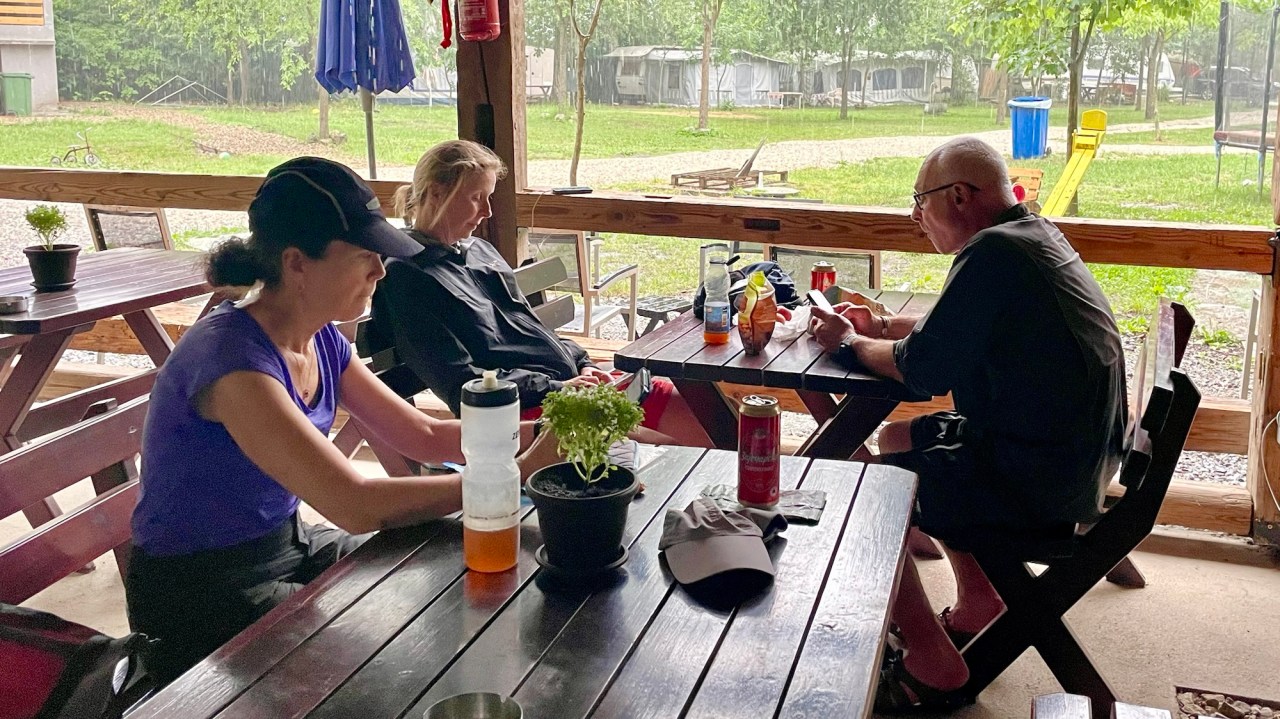
The evenings have brought thunderstorms and today is no exception. Thankfully, there is a large covered seating area from where we watch the rain pelt down, sip our beer, eat chips and make dinner. The restaurant is not operational yet.
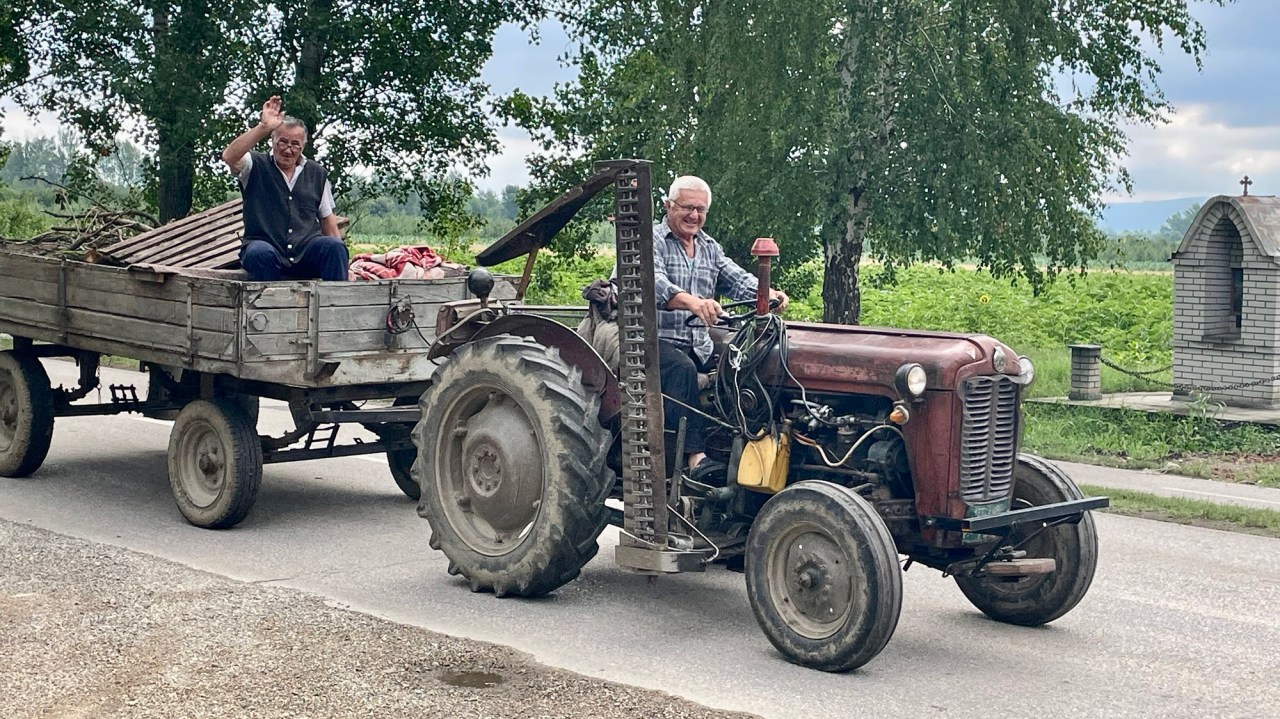
We ride along the Danube towards Belgrade. Hot. Flat and scenic. Impossibly green. Lots of plastic garbage piled up in backwaters.

We take a break at a camp site run by a guy who’s really excited about having cyclists from Canada stop in. He speaks no English or German but he’s very good with a phone translation app and we have conversation while he pours us sludgy Turkish coffee and has pictures taken with us.

The ride along the river is easy. Not much effort is needed but the heat does take its toll.

Part of this route is the EuroVelo 6 which runs from the Atlantic to the Black Sea along some rivers in France and almost the entire length of the Danube, Europe’s second-longest river.

It’s nice cycling but we prefer more vertical terrain for variety. Unfortunately, central and northern Serbia is flat so we choose a route across the country to get into the mountains of Bosnia-Hercegovina.


We find a nice but pricey place to camp in the yard of a home whose owners we reach on WhatsApp. They give us the code to enter and we’re set. We’re too tired to look elsewhere.
As we approach Belgrade, the heat intensifies and we’re in need of a break having cycled 13 days in a row.
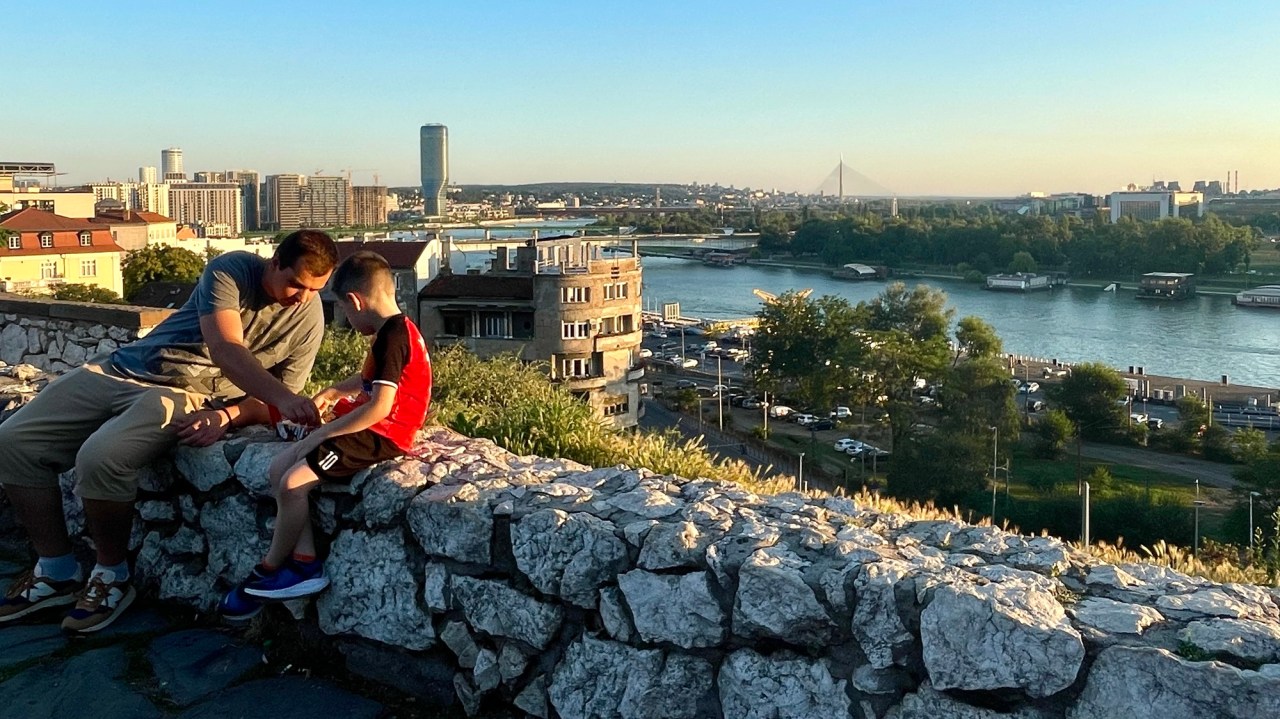
We rent an apartment in central Belgrade with air conditioning and have a well-deserved rest. We explore the city centre in the cooler mornings and return to our air conditioned sanctuary for afternoon siestas.

The European Cup football has started and people everywhere are watching matches on screens at restaurants, cafés and bars. There is a nice easygoing atmosphere despite Serbia losing its opening game 1-0 against a dismal England.
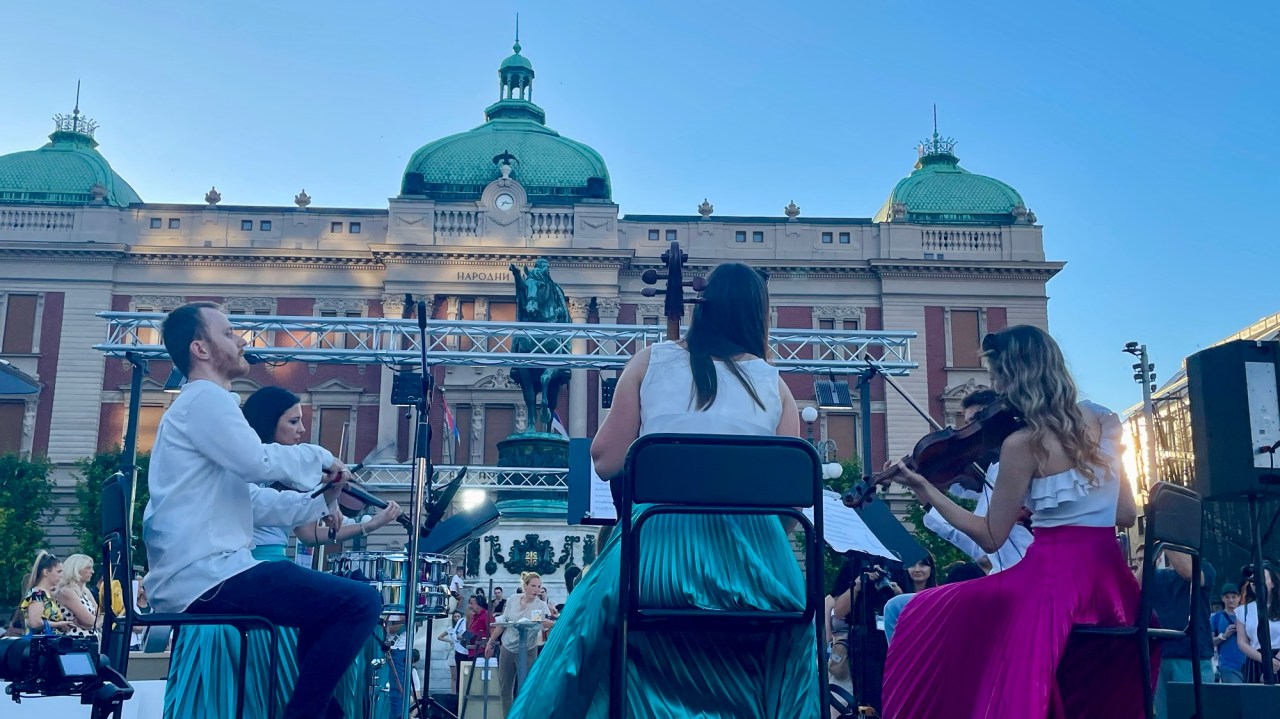
It has been nearly 30 years since the war that ensued following the breakup of Yugoslavia. Then Serbian president Slobodan Miloševiç envisioned a Serbian Nationalist government to replace the Yugoslav republic and the Yugoslav army tried to eradicate the governments of the five other constituent republics: Croatia, Bosnia and Hercegovina, Montenegro, Slovenia and Macedonia.
For 10 years, from 1991 to 2001, insurrections and wars of independence raged in the region with the end result being the countries we now know as the Balkan republics. It was the deadliest conflict in Europe since World War II.
In 2007, Kosovo also declared independence from Serbia. It remains a tense situation as Serbia does not recognize their independence.
UN and European peacekeeping forces remain present in the countries and hopefully tensions will continue to ease but there are deep-seated, historical issues along the various ethnic and religious lines that date back centuries.
A large banner in downtown Belgrade points to the feelings very much present in Serbia.

We can’t really understand the subtleties at play in the feelings between the people of this region. We can only hope that peace prevails and that the countries prosper individually and together.

We get some rest and eat great food before continuing west. The ride out of Belgrade is mostly on bike path and before long we’re out on a nice path along the Sava River heading west to Šabac.


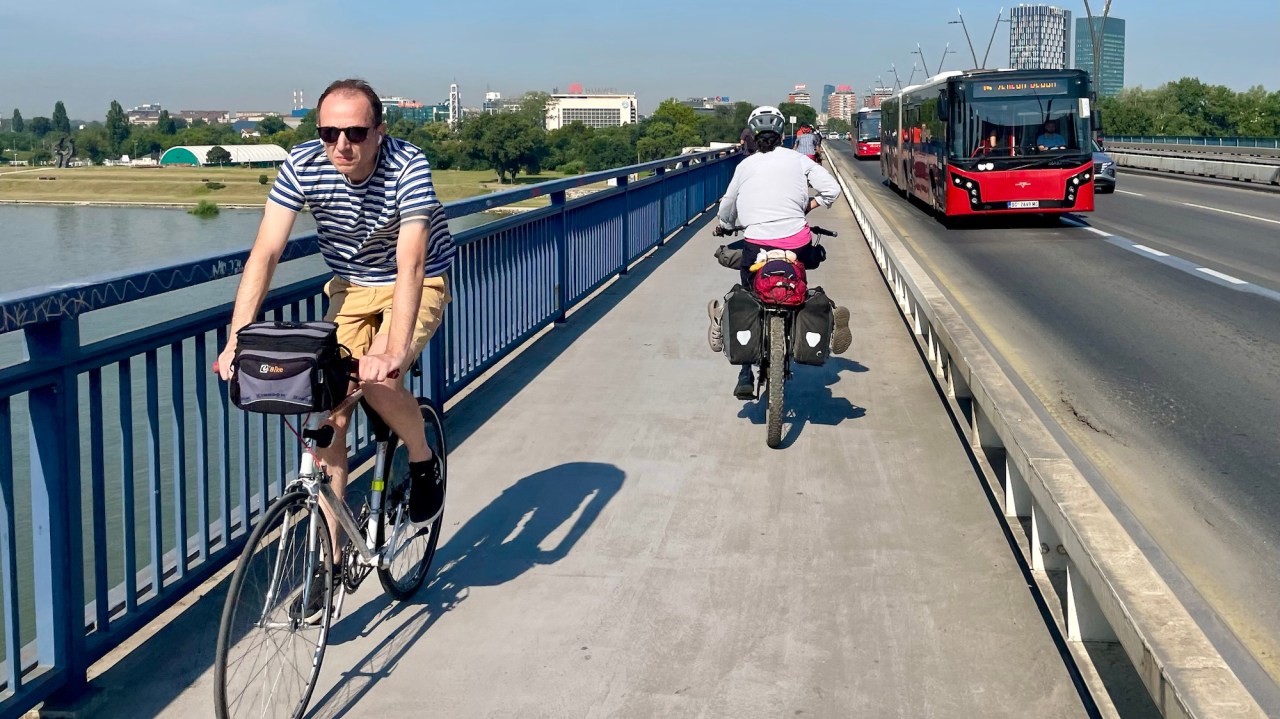
It’s still scorching hot but we press on riding a secondary highway west. It’s not the nicest cycling but there are few options in terms of accommodation or camping.
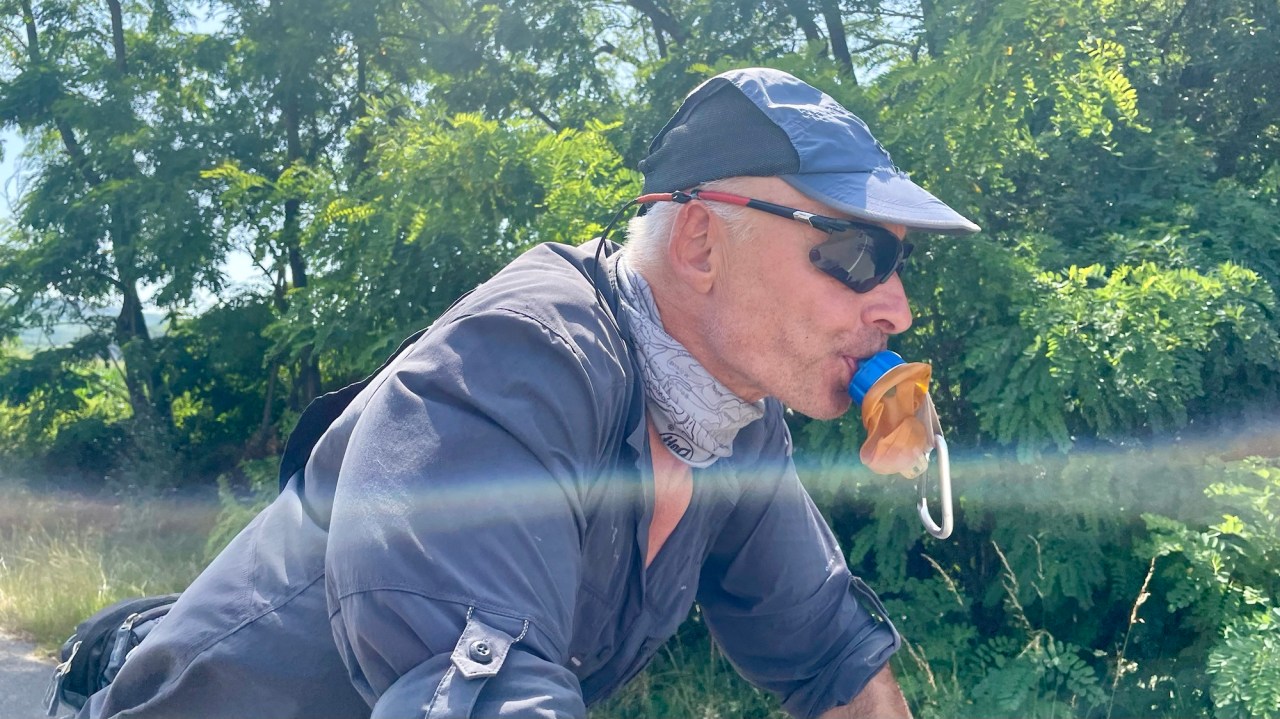
It’s much too hot to camp, so we’ve already decided to just find a room in Šabac when we get there. It’s a 90-kilometre ride. Flat and fast with a bit of tailwind. We look for shade to have breaks and try to take in as much fluid as we can.
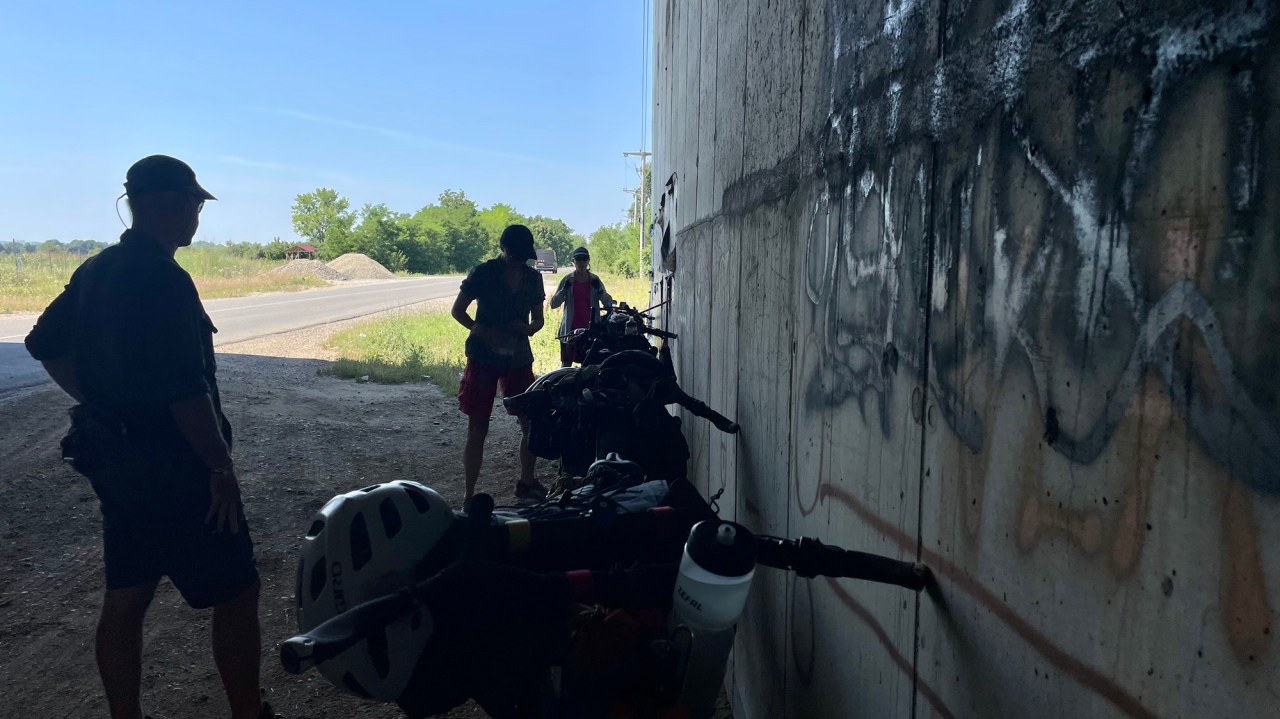
We don’t like to ride those kinds of long distances but it suited our purpose to get to nicer terrain.

From Šabac we find small country roads and some gentle hills through farmland. Much nicer conditions to ride despite the ongoing heatwave.
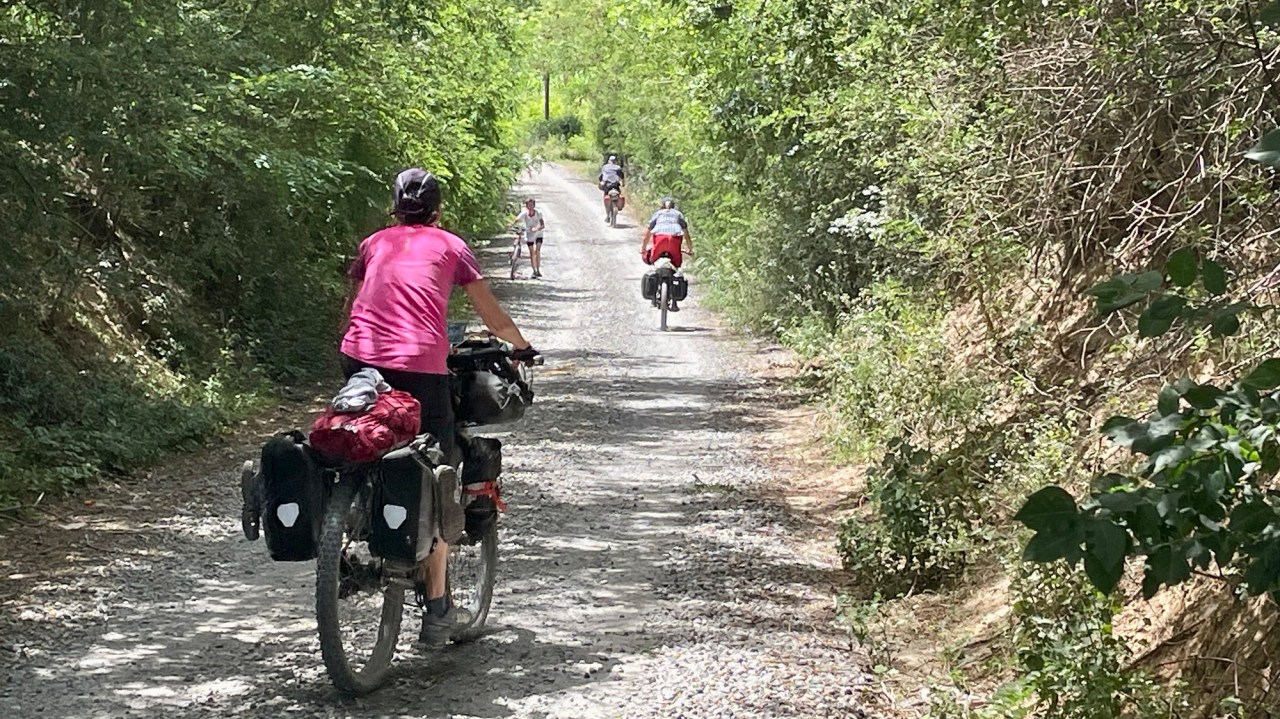
Small gravel lanes with bands of trees provide shade once in a while and we slowly weave our way to Loznica on the border with Bosnia Hercegovina.
We can’t check into our rented apartment when we arrive so we have a lovely lunch on a shady terrace.

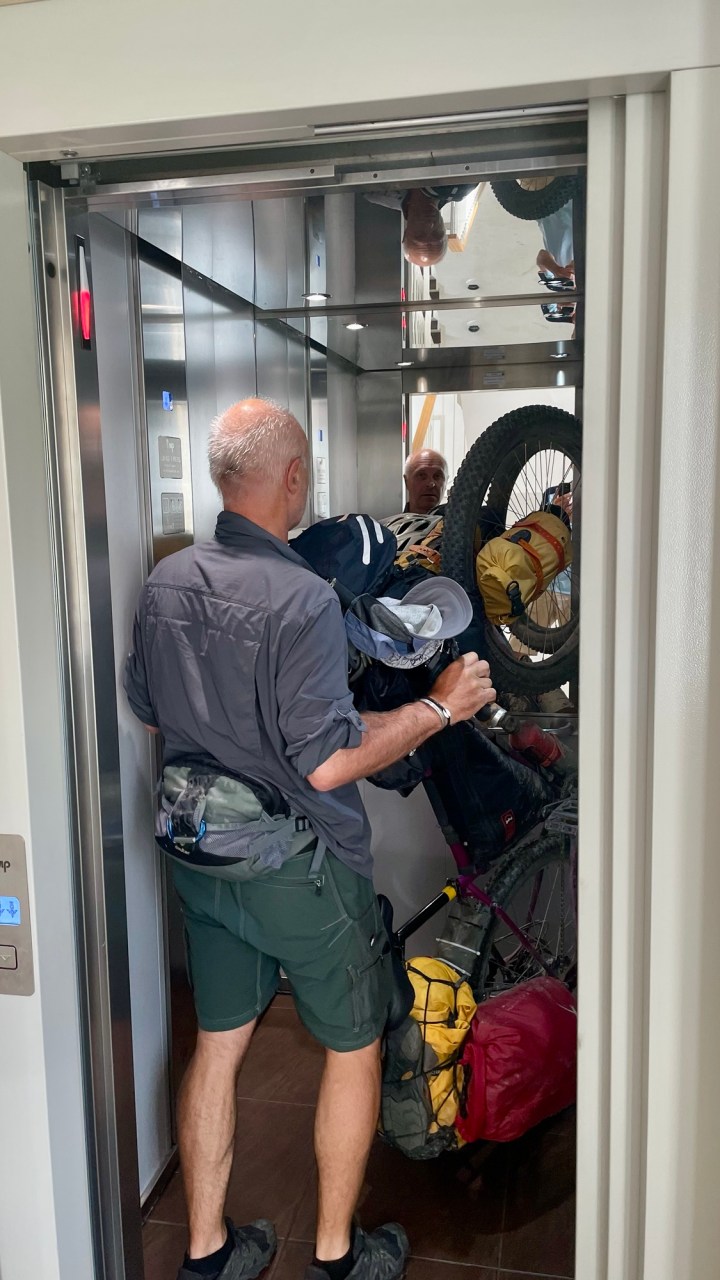
Sometimes, where to store the bicycles at accommodation is something we try to check in advance. Most people are willing to help with that and the owner of this apartment said we could put them on the balcony. The elevator was just large enough to take one bike at a time.

In the cool evening we stroll through the nearby park in this spa town. There are some seriously swanky hotels here.

We are poised to cross the border into Bosnia Hercegovina with Sarajevo as our destination where we will spend a few days to explore that mountain town, home of the 1984 Winter Olympics and more infamously known as the city under the longest siege of a capital in modern history. For nearly four years, from April 5, 1992 to February 29, 1996, Sarajevo was under siege by the army of Republika Srpska during the Bosnian war.

 2 l o v e c y c l i n g
Heat wave again? Bad luck. Danny
Hi Jan and Paul. We’re so enjoying your blogs especially the photos and explanations. I particularly enjoyed your ribbon likeness as that is how I felt when we were traveling on the boat and meeting so many interesting people. In that blog you shared 2 photos of rooftops with the eye-like dormers. My sister-in-law is an artist and loves painting rooftops, would you mind if I shared them with her? Keep well and keep adventuring. Cheers, Enid
Thanks Enid. Please share with her. Hope you’re well.
Hi Paul,
<
div>Thanks for your wonderful stories. We are leaving for Kyrgyzstan
Thx Maarten. Enjoy Kyrgyzstan. I think it might be hot there too.
Hi Paul,
Most of our cycling route in Kyrgyzstan is in the mountains at around 2000m or higher. Some passes are almost at 4000m so it can get very cold out there:-)
Maarten