As is often the case, we’ve made no real plan about where to go or what to do, other than to try to stick to small roads and tracks and see where our inspiration will take us.
We wanted to see Braşov, one of the older Saxon settlements in central Romania, surrounded by the Carpathian Mountains. It’s near the southeastern edge of the Transylvanian Plateau. The Black Church dates back to the 14th century and is the largest Gothic building in southeastern Europe.

The old part of the city is charming with well-kept houses, many shops and restaurants and streets converging in a large open square near the Black Church.
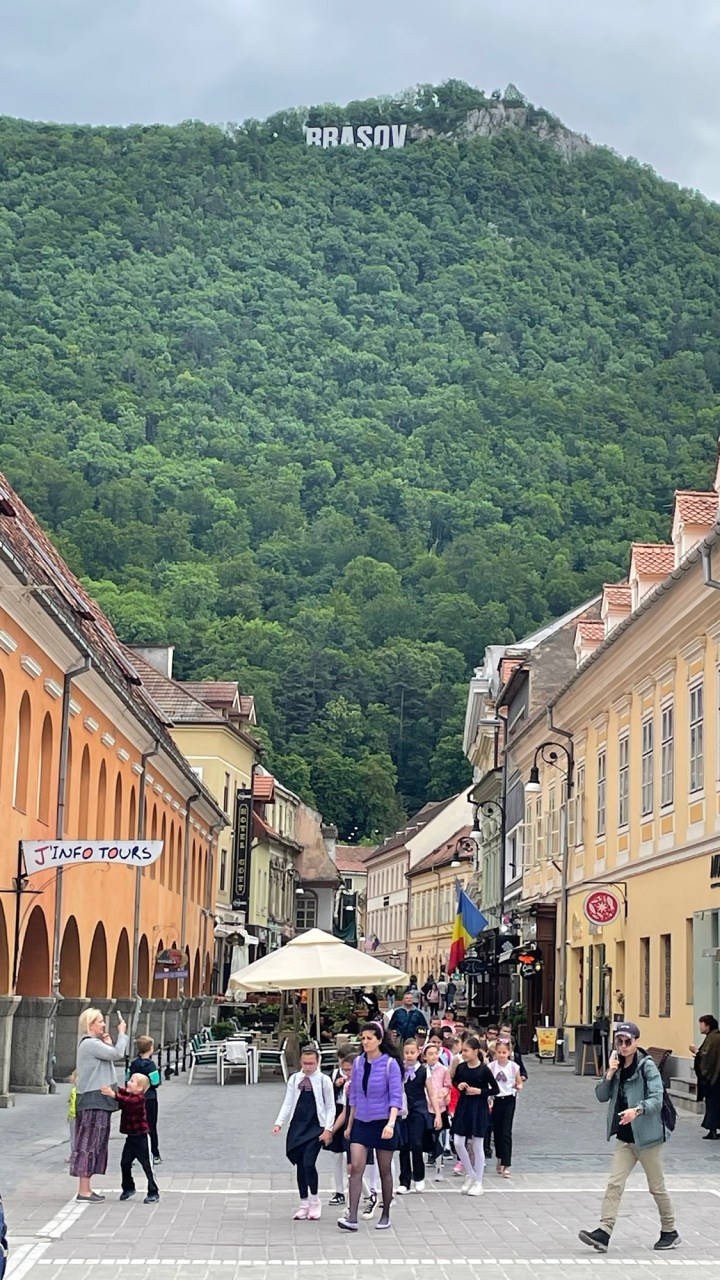
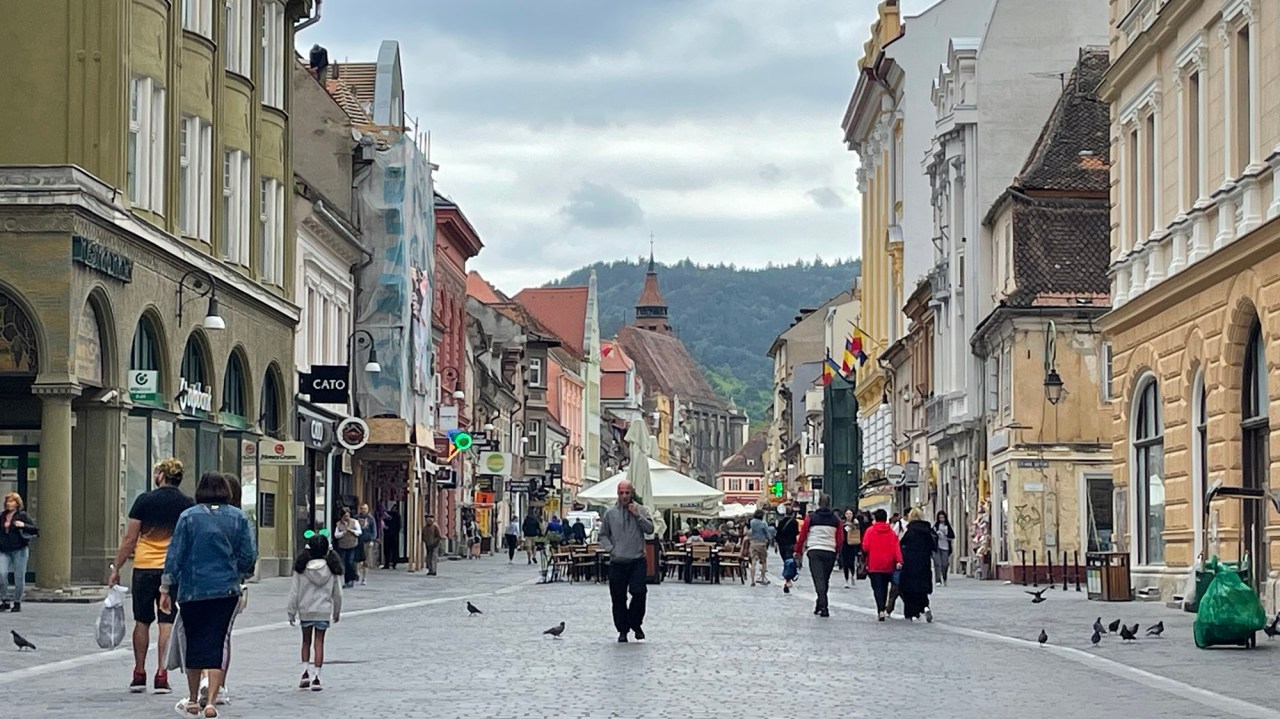
We decided to loosely follow the Fortification Trail north and west to explore the plateau and the Saxon villages dotting the landscape.
Not having a set itinerary leaves us free to pick a route each day and find a place to stay or camp. It always works out, somehow.
We ride away from Braşov on a busy road but as we get further along the traffic lessens and soon we turn onto a small road all to ourselves.
Intermittent rain showers have us looking for shelter and we find a lean-to next to a small store where we buy a few things and have lunch.
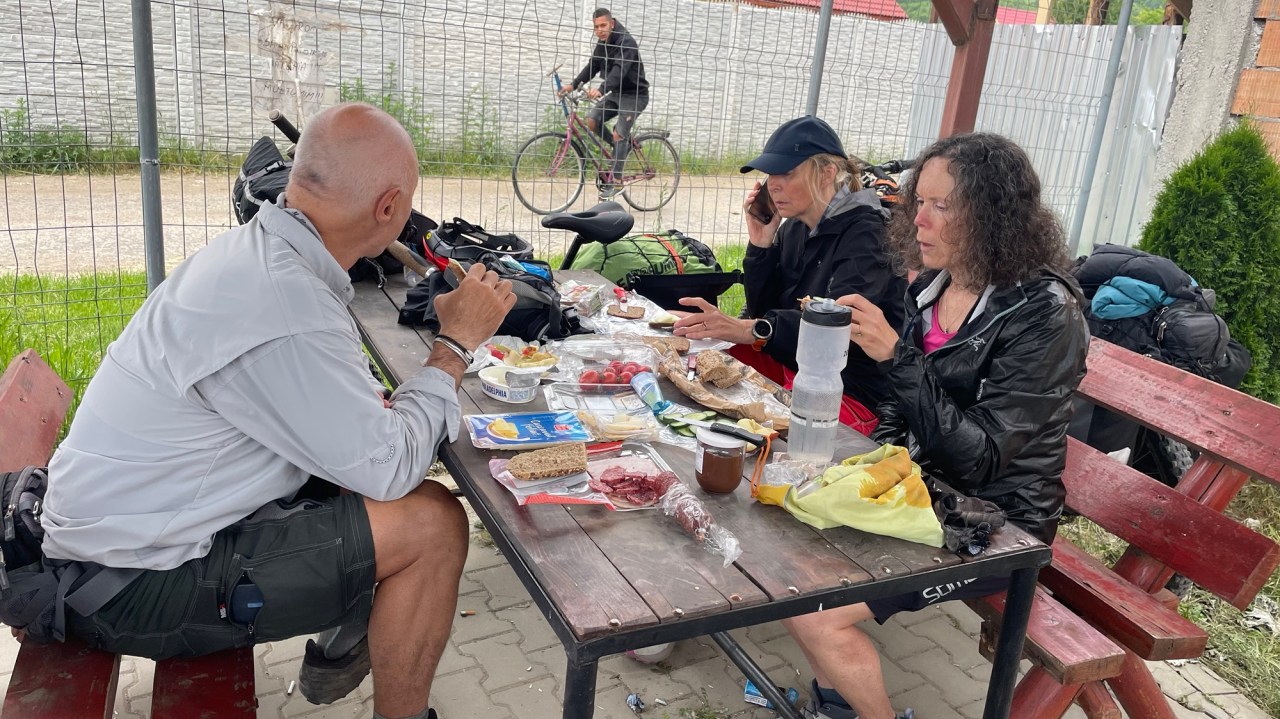
The woman in the store speaks some English and is impressed by our bike riding adventure. Some kids are hanging around and are curious and friendly. They look like they’re south Asian, perhaps indicating their Romani heritage.
The Romani, or Roma, originated in northwestern India and migrated westward. When and why is not really known but they have dispersed widely through Europe since the Middle Ages and subsequently through the rest of the world.
In Augustin, we find a dirt road along the Olt River. Rain showers come in short bursts but eventually we have to don our rain gear. Our tires kick up the mud and in no time everyone and everything is covered in the sticky stuff.

We look for a bridge to cross the river. There is a huge construction project and there is a bridge but it is not yet connected to the road and we can’t cross. But it isn’t the bridge we were looking for.
We find it a few hundred meters further along. It’s an old, narrow suspension bridge just wide enough to push the bikes across into the town of Racoş.
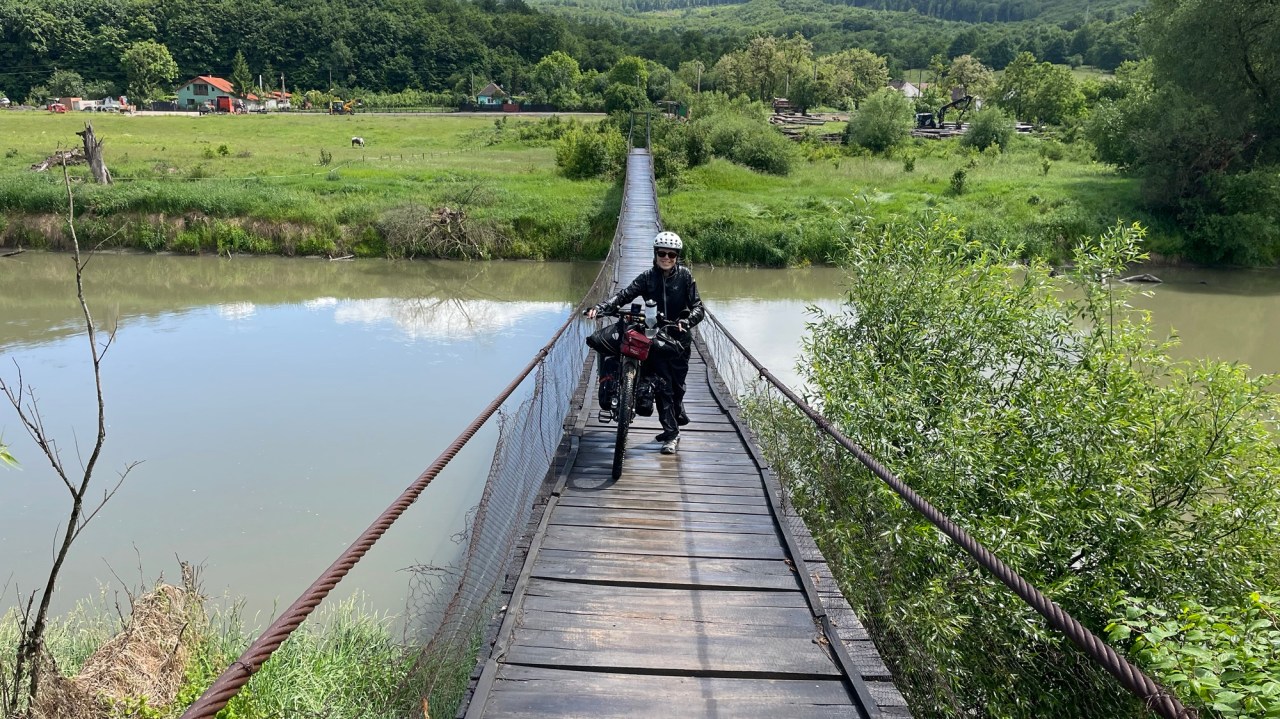
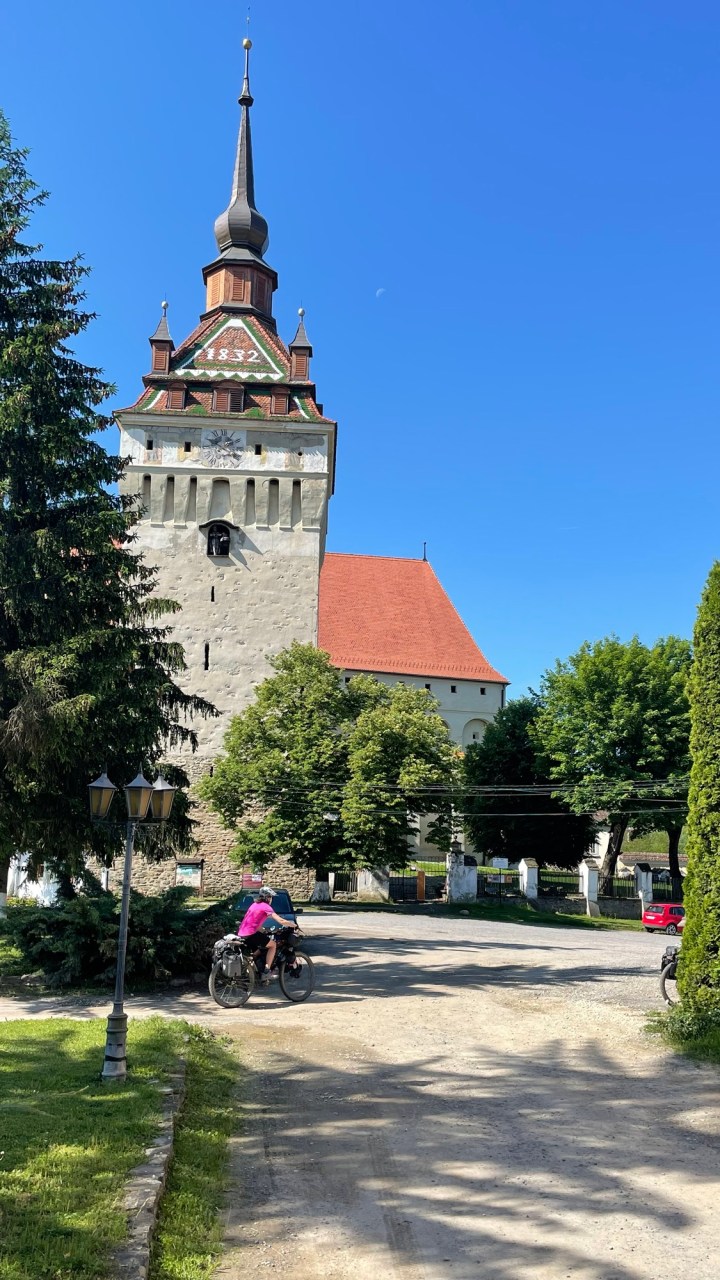
The sun is shining again. We are covered in mud. We find a store and look for a place to stay, finding a nice farm stay across the street from an old fortified church.
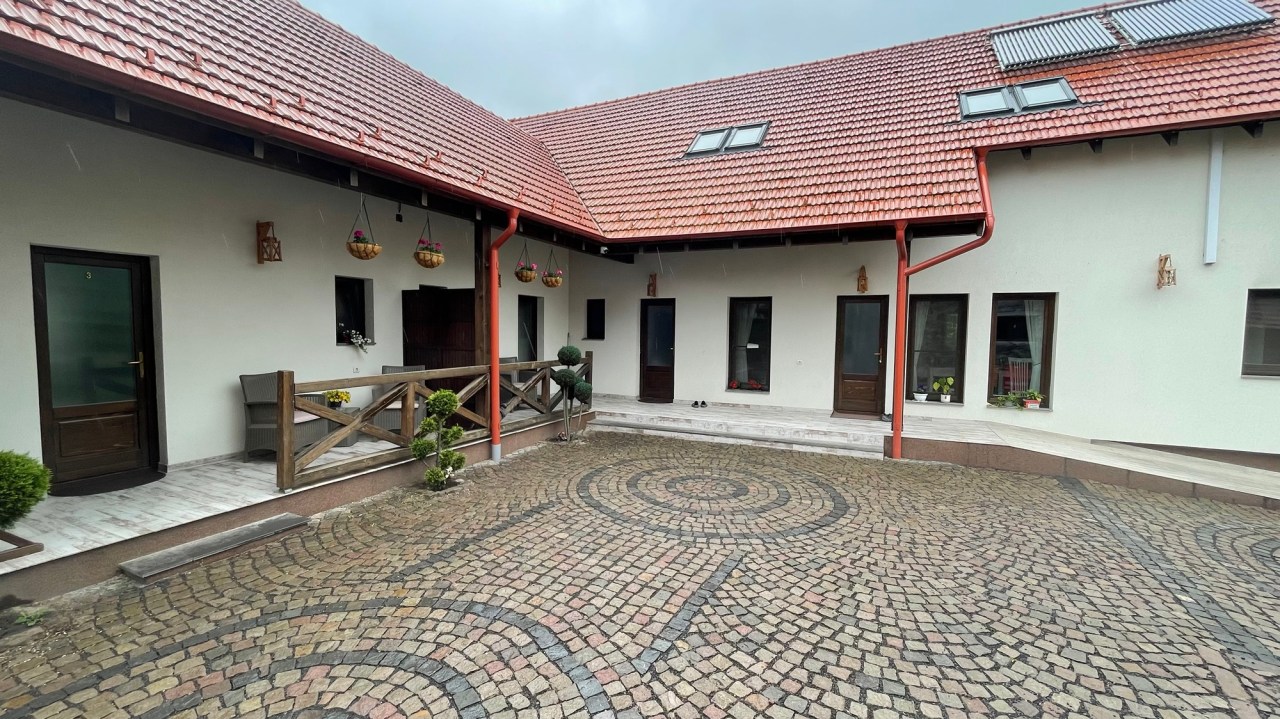
Laura, the owner of Pensinua Castelana, is friendly and helpful. The place is new. She and her husband have been building it over the last couple of years.
We hose off the mud as best as we can and get settled into our room. It’s modern and spacious with a lofted bedroom and a comfortable sofa bed on the main level.
It’s a very small town with few amenities but Laura points us to a couple of restaurants. The first one did not seem to want our business but at the other one they were happy to feed us.
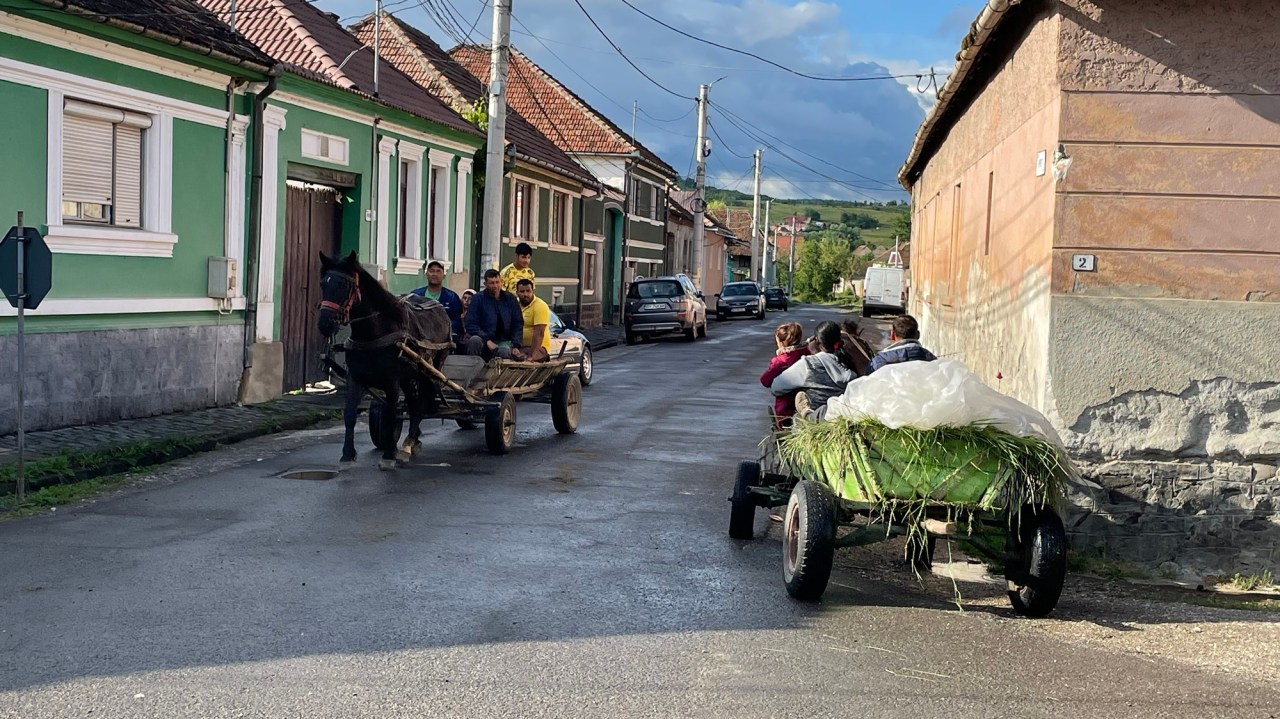
Shots of raki all around before dinner. It seems to be a custom. We ask if there is goulash and the woman nods. We smile and ask for four portions with bread and beer. It caps off a nice day.
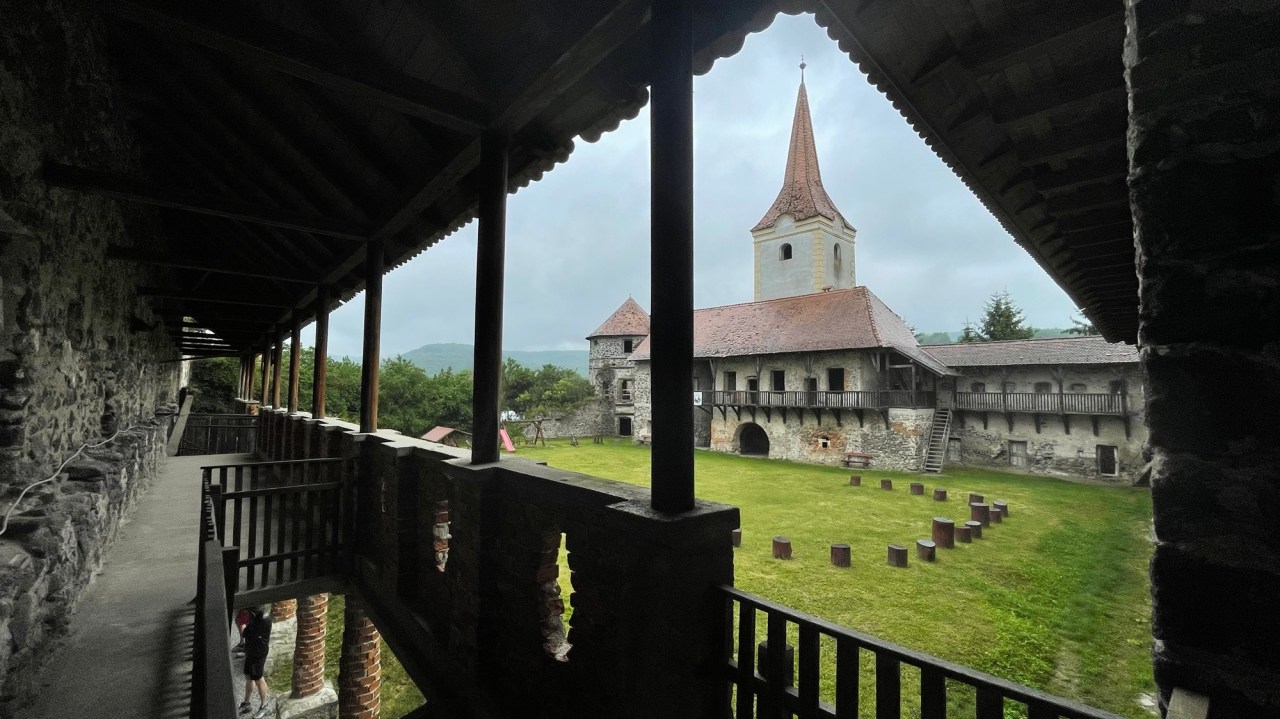
It’s pissing rain in the morning so we text Laura to ask if we can stay another night. No problem. We relax and wait for the rain to subside. There are some geological features in the area worth exploring, as well as the fortified church across the road. It dates back to 1636 and has been partially restored.
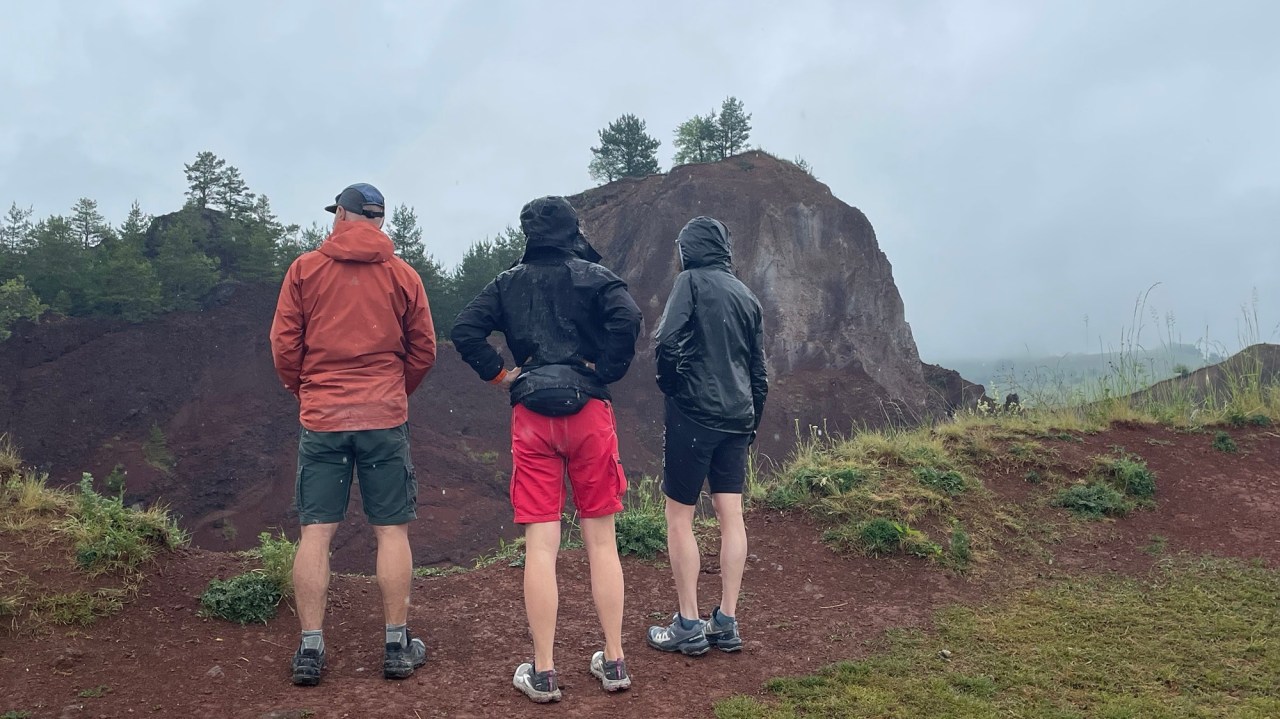
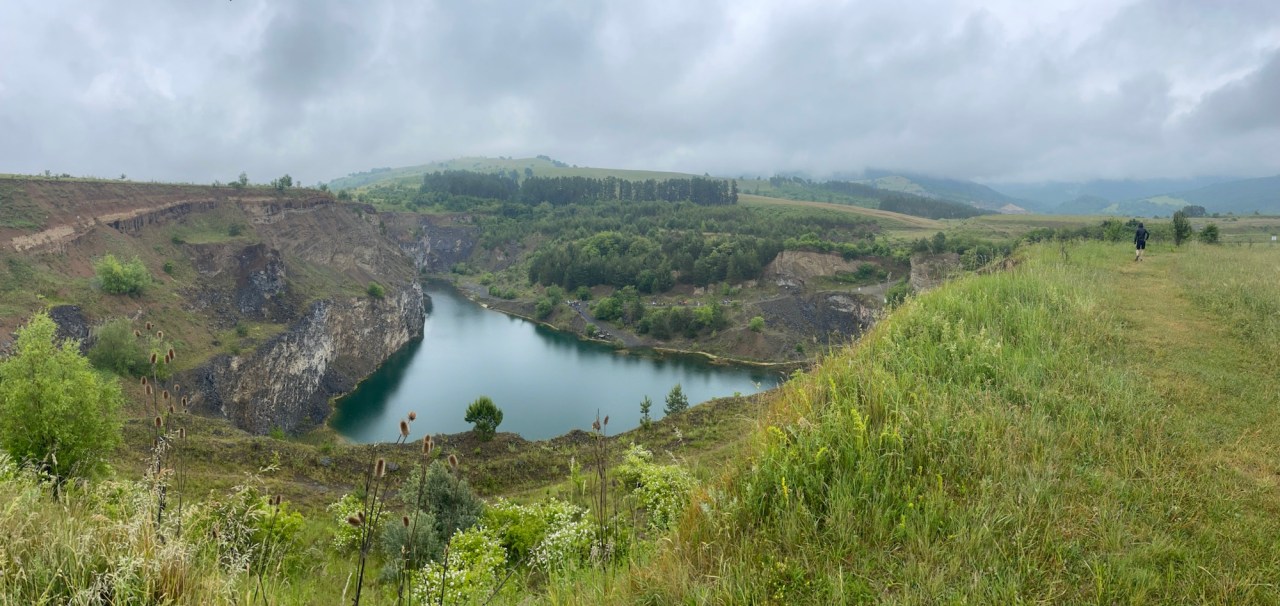
The Racoş volcano is the oldest in the area and is thought to be extinct. We go for a hike to the top and to another area nearby with basalt columns. It’s a relaxing day in the drizzle.
We pick up groceries on our way back to make dinner in the communal kitchen at our pension.
We continue west on small backroads with a stop in Rupea to look at the citadel. We can see it from a long way off, perched atop a hill above the town.
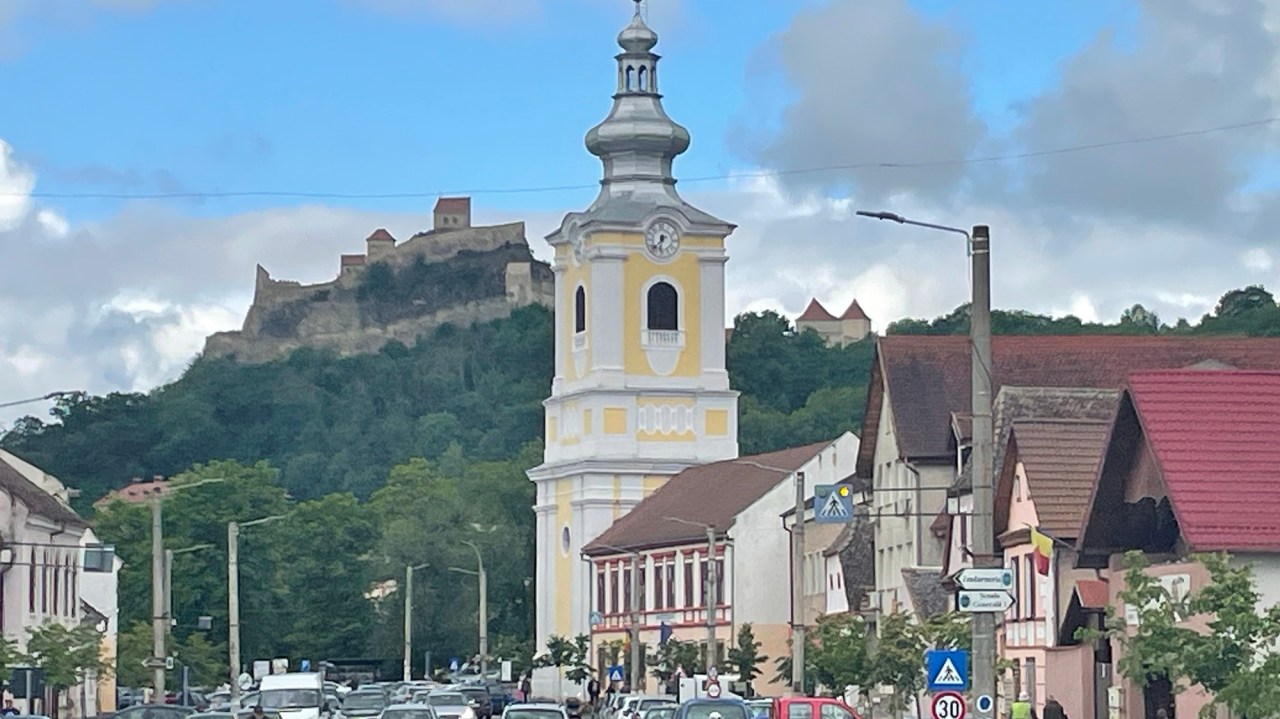
It’s worth the steep climb to see this partially restored fortress built in the 14th century by Saxons in what was then the Hungarian kingdom.
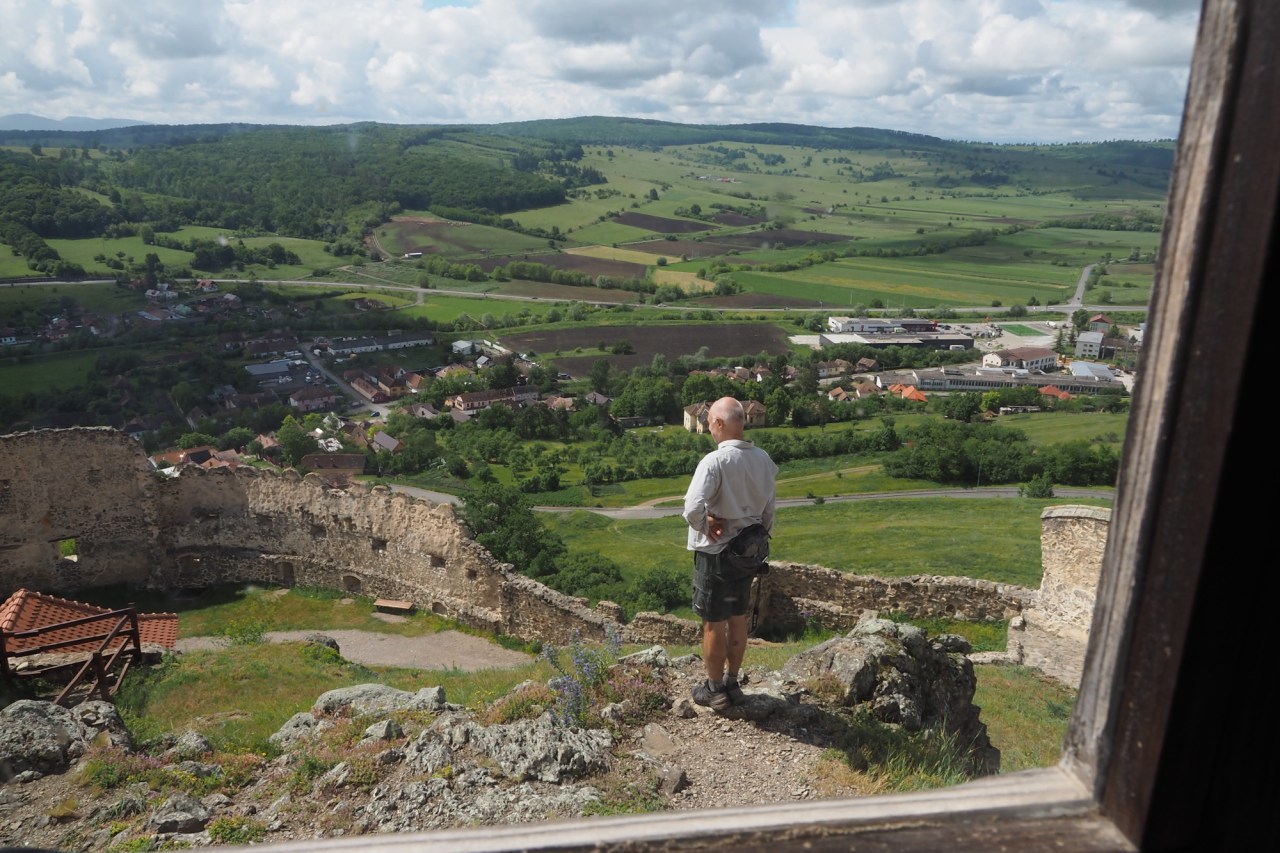
We have a coffee and a snack before continuing on through Dacia, Viscri and Buneşti en route to Criț.
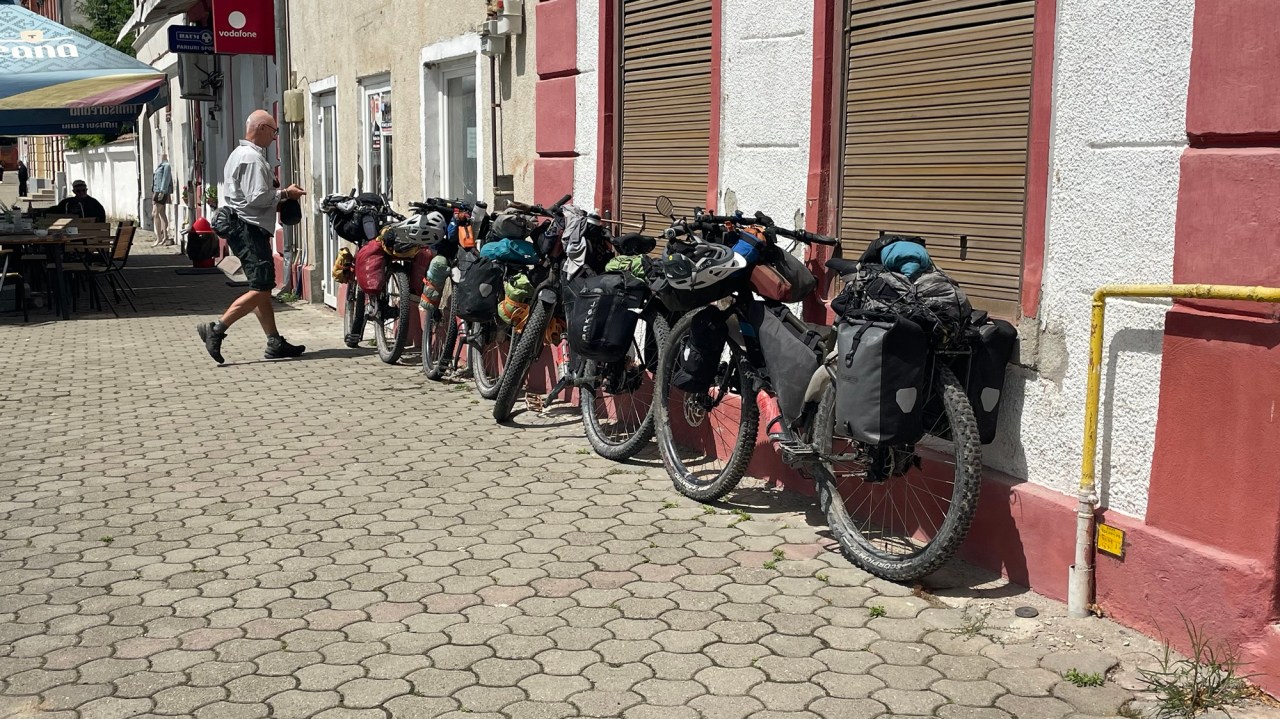
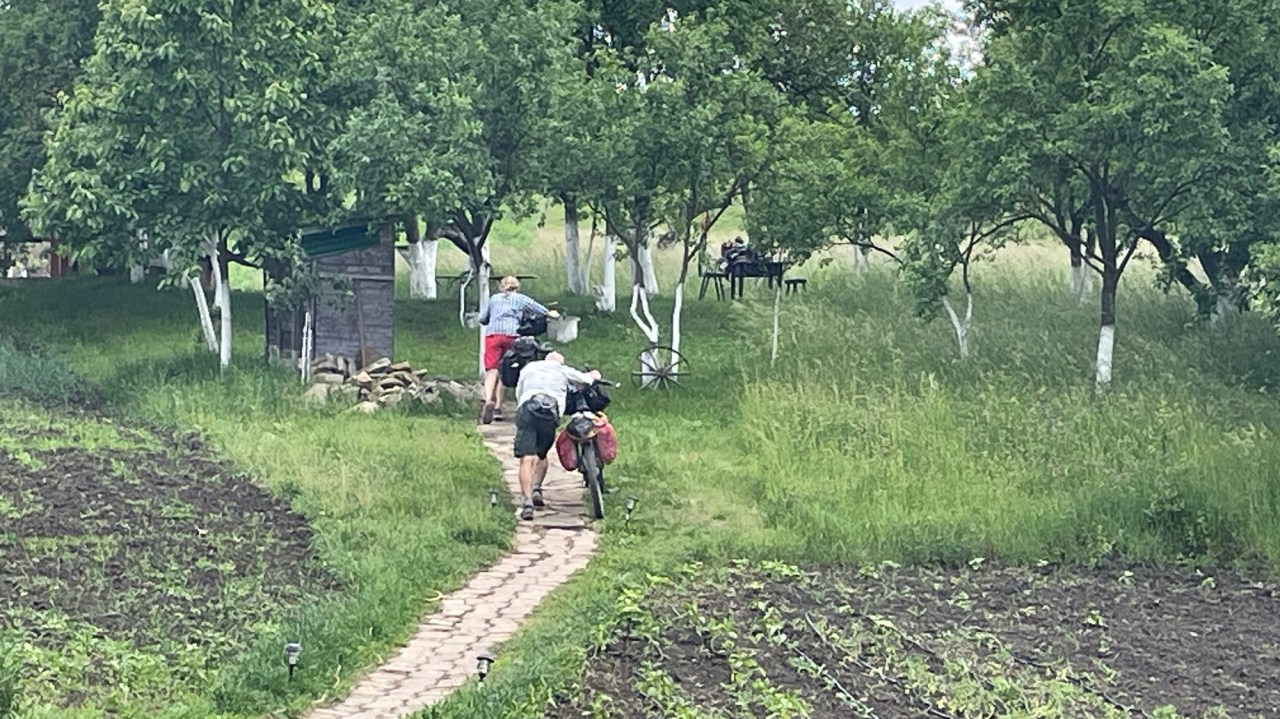
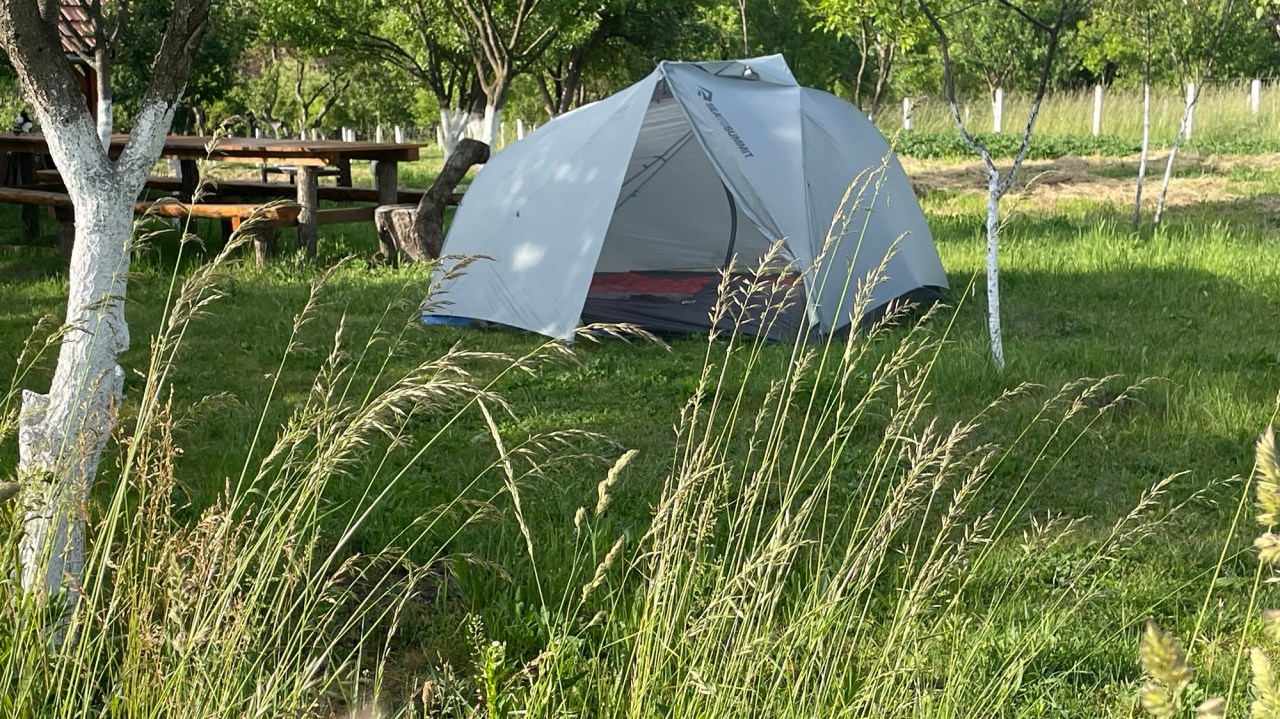
We find a farm stay that offers camping behind the garden and the hostess wants to know if we want dinner and breakfast. We eagerly accept the dinner offer, not wanting to miss the opportunity for a home cooked meal. We decide to do our own breakfast so we can leave when we want to in the morning.

The meal starts with soup, followed by venison sausages with potatoes. Pickles and hot peppers as garnish and cake for dessert. White wine and beer are also included.
We go to bed stuffed and happy to have found another wonderful experience along the way. You have to be open to the possibility of finding something.
We’re roughly following the Via Transilvanica, a 1400-kilometre-long hiking trail that runs diagonally across Romania from the northern border with Ukraine to the southwestern border with Serbia and Bulgaria.

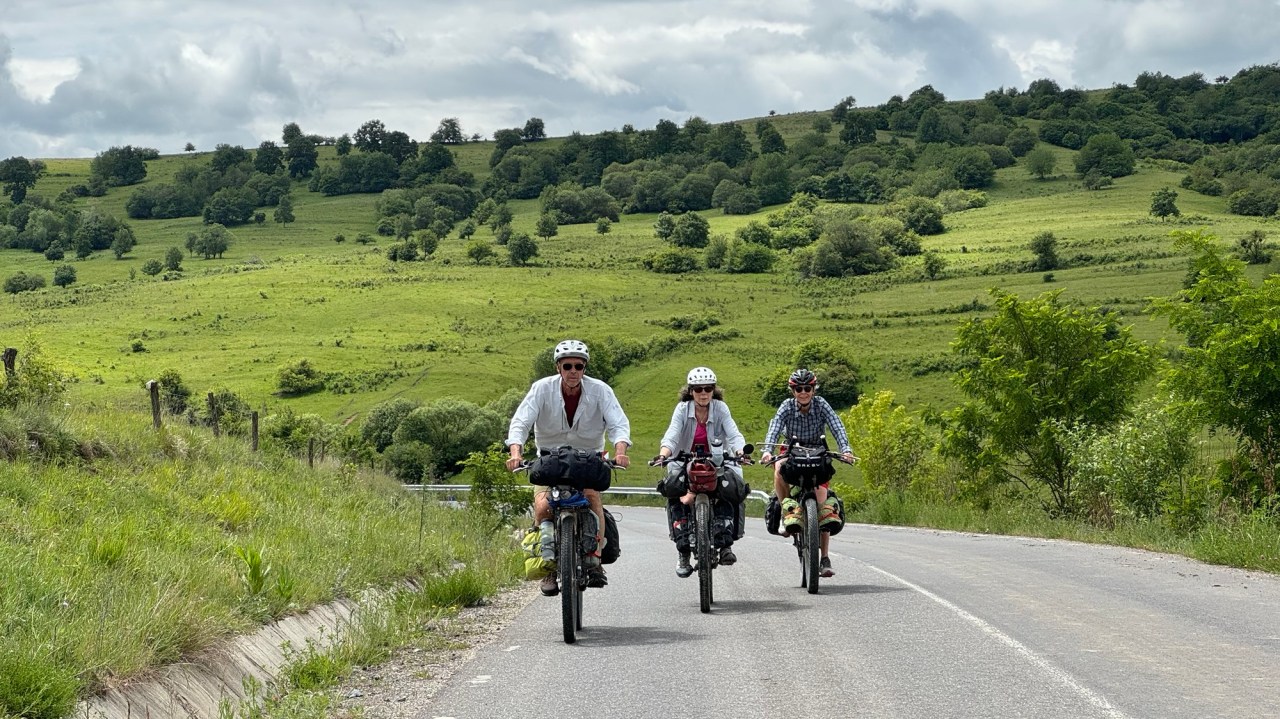
From Criț we ride some lovely tracks through the hilly countryside, traversing fields and cutting through forests. It’s signposted and relatively easy to follow.

We love these kinds of trails. No cars and offering nice views of the country.
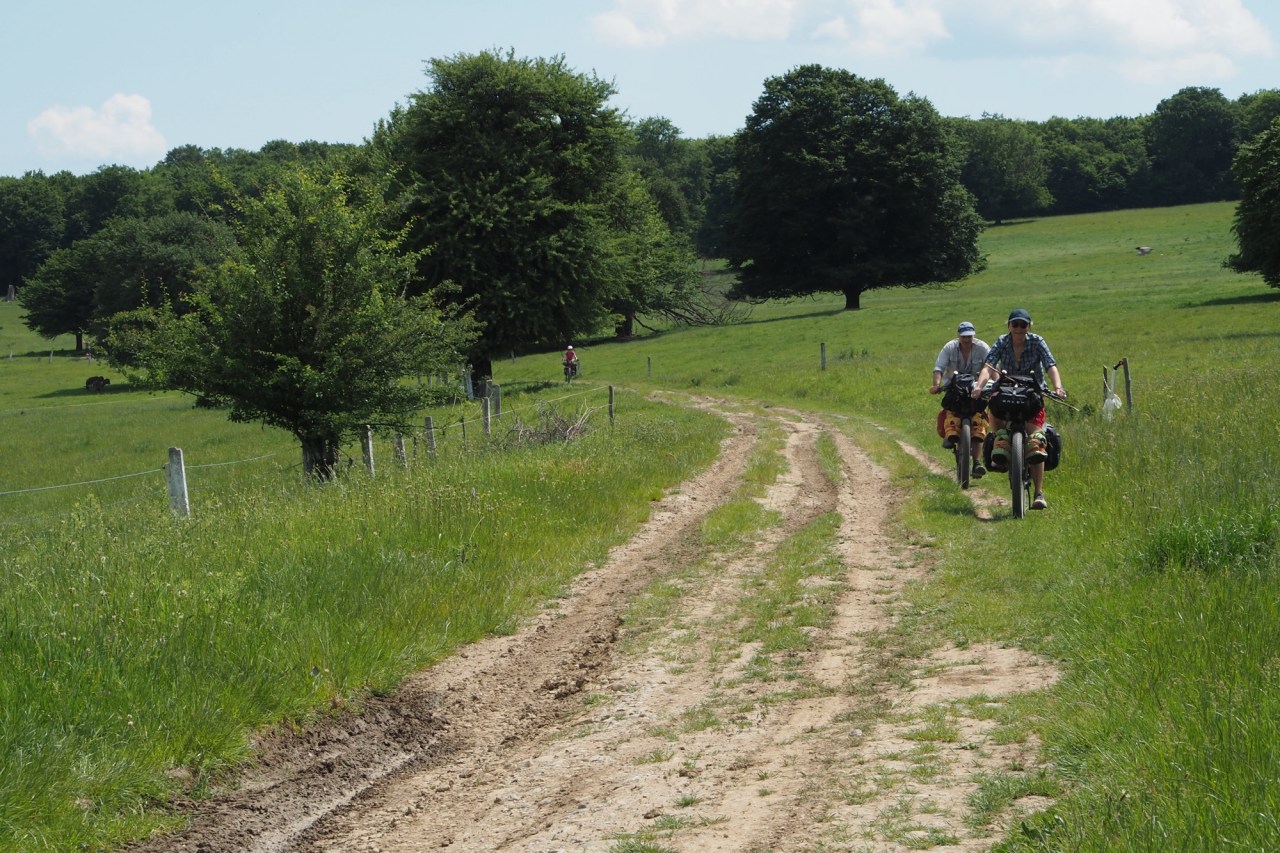
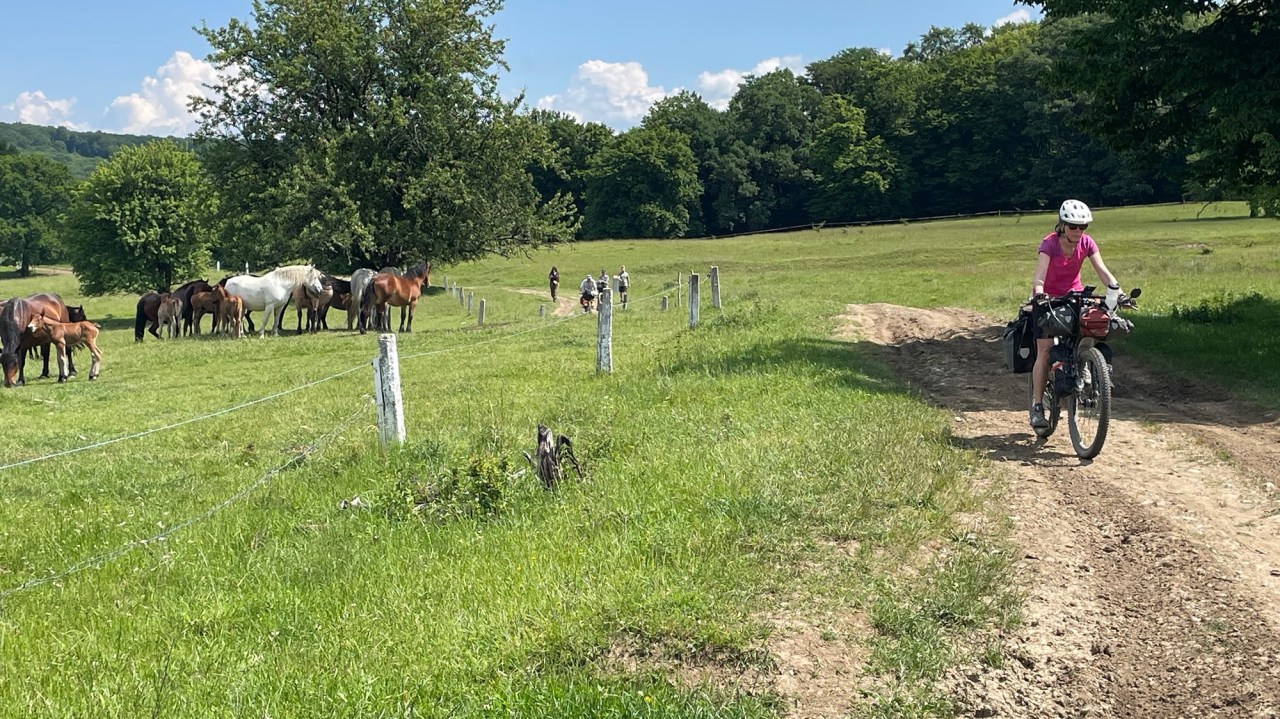
At the end of the day we have a long downhill into Sighişoara where there is a campsite right in the centre of town. We’re the only campers there as it’s still very early in the season.
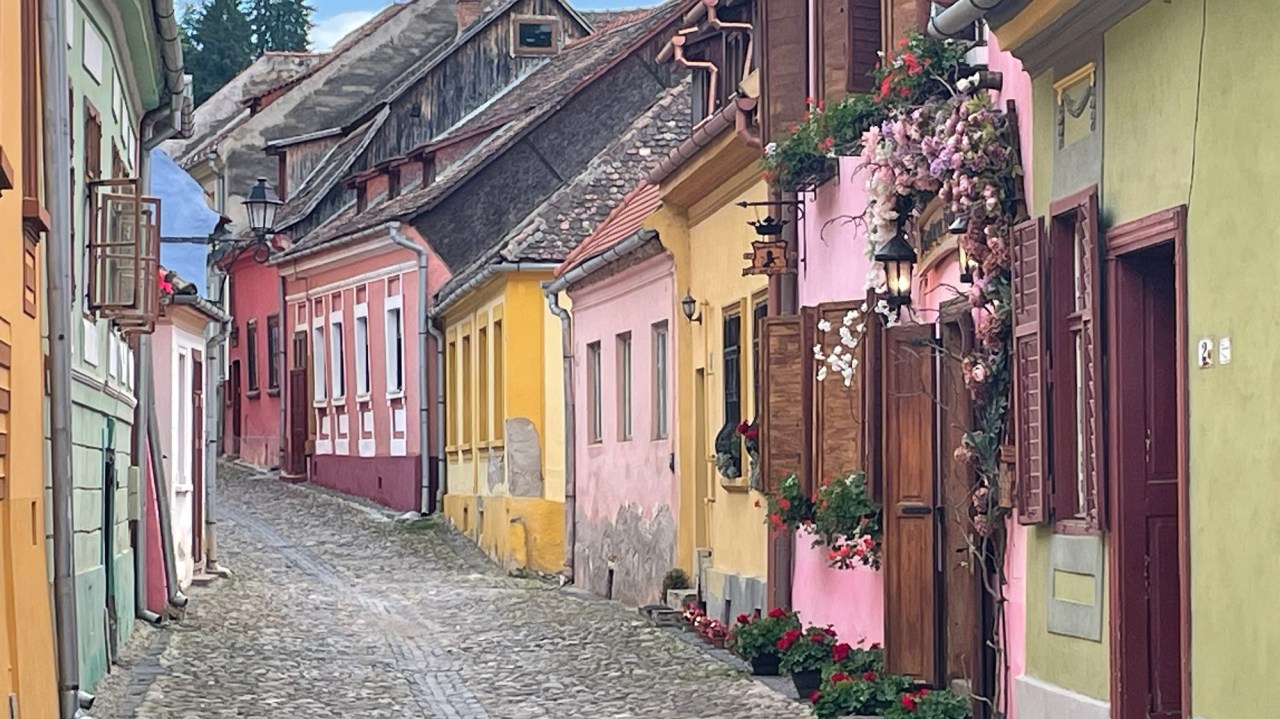
We head into the town to explore its twisty, narrow streets, as always, in search of food.
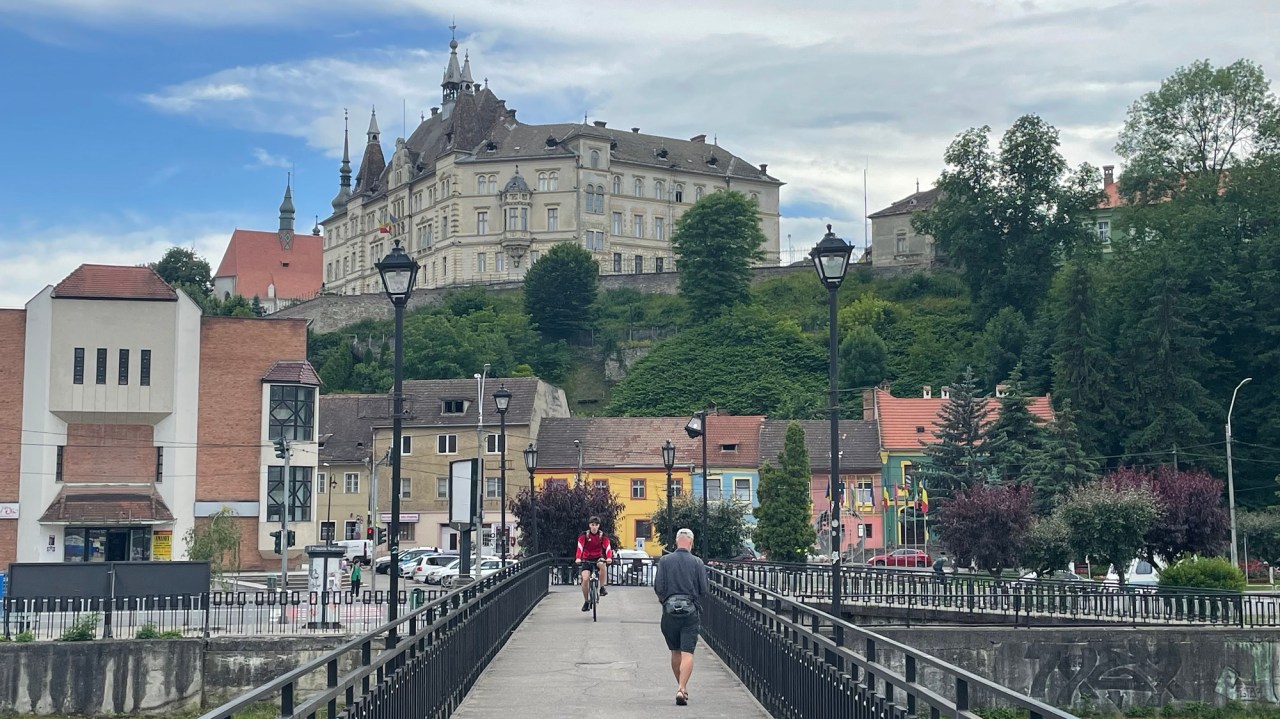

Sighişoara is one of the oldest and well-preserved Saxon towns, dating back to the 12th century and listed as a UNESCO world heritage site.
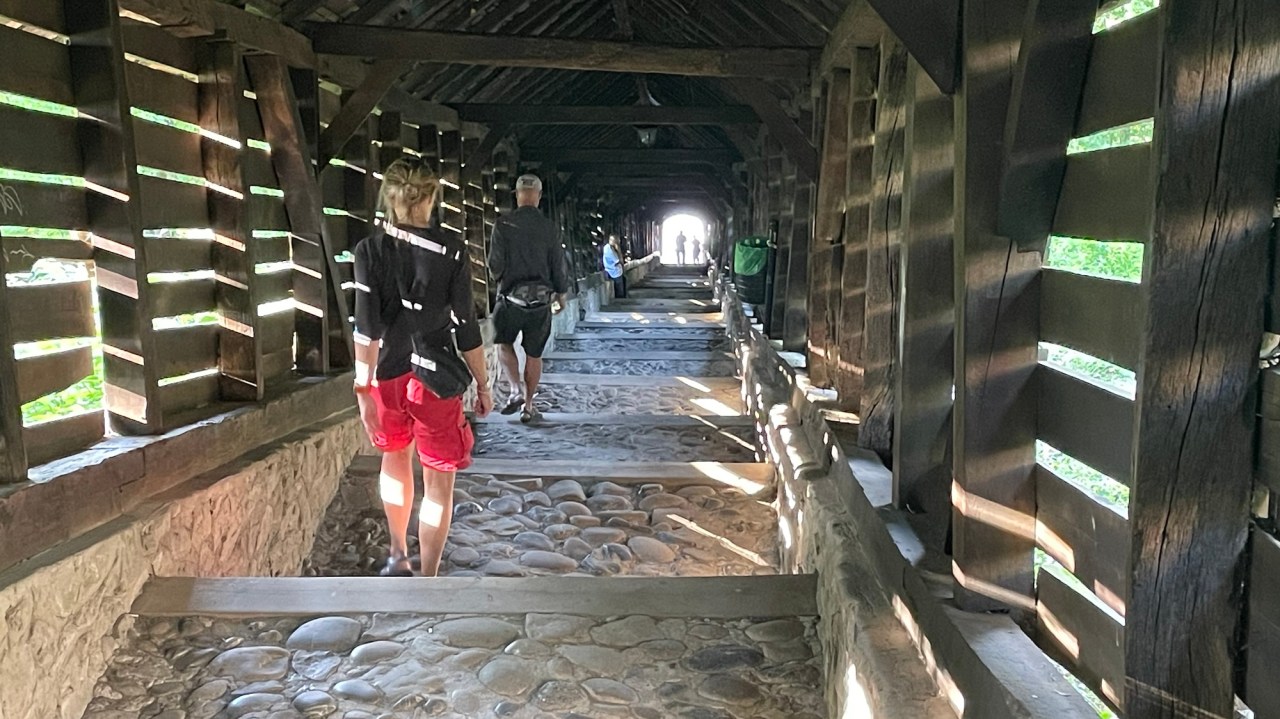

We again head out in the morning without a destination in mind but the possibility of camping at a a Scout Centre in the small town of Nocrich, 70 km away.
It’s a fast ride with two small climbs separated by a 30-kilometre gentle downhill run. The road is paved and without much car traffic.
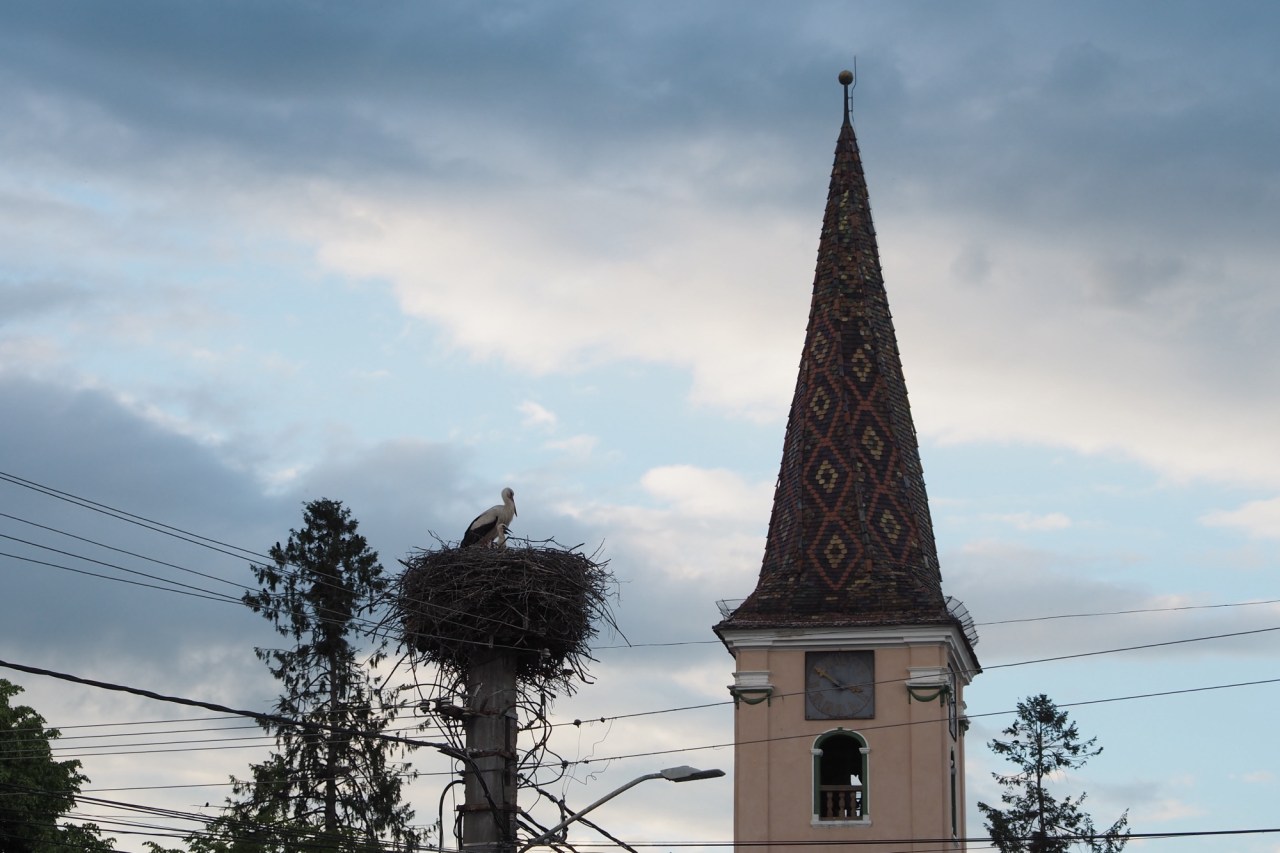
When we arrive at the Scout Centre, we’re met by Adi, one of the volunteers. There is a group of about 25 boys and girls camped in behind the house and we are invited to camp for a small fee.
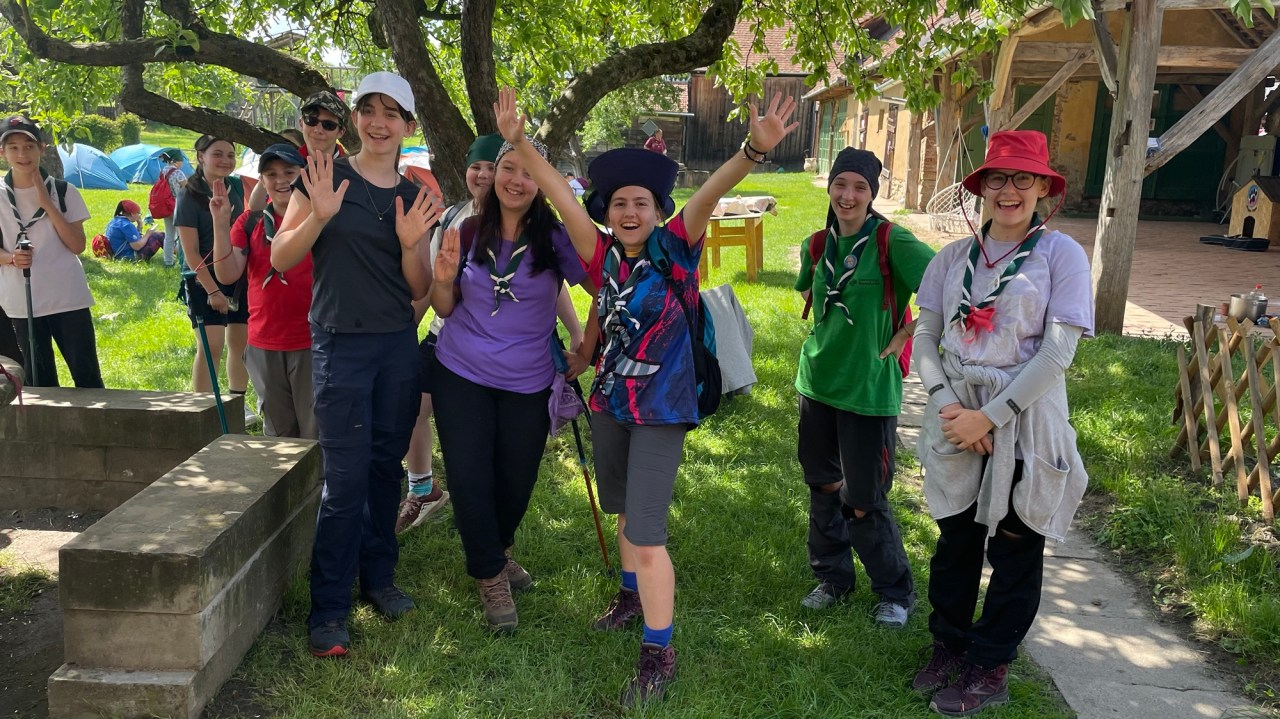
Adi takes us on a tour of the volunteer-run centre. They host scout groups from all over the world.

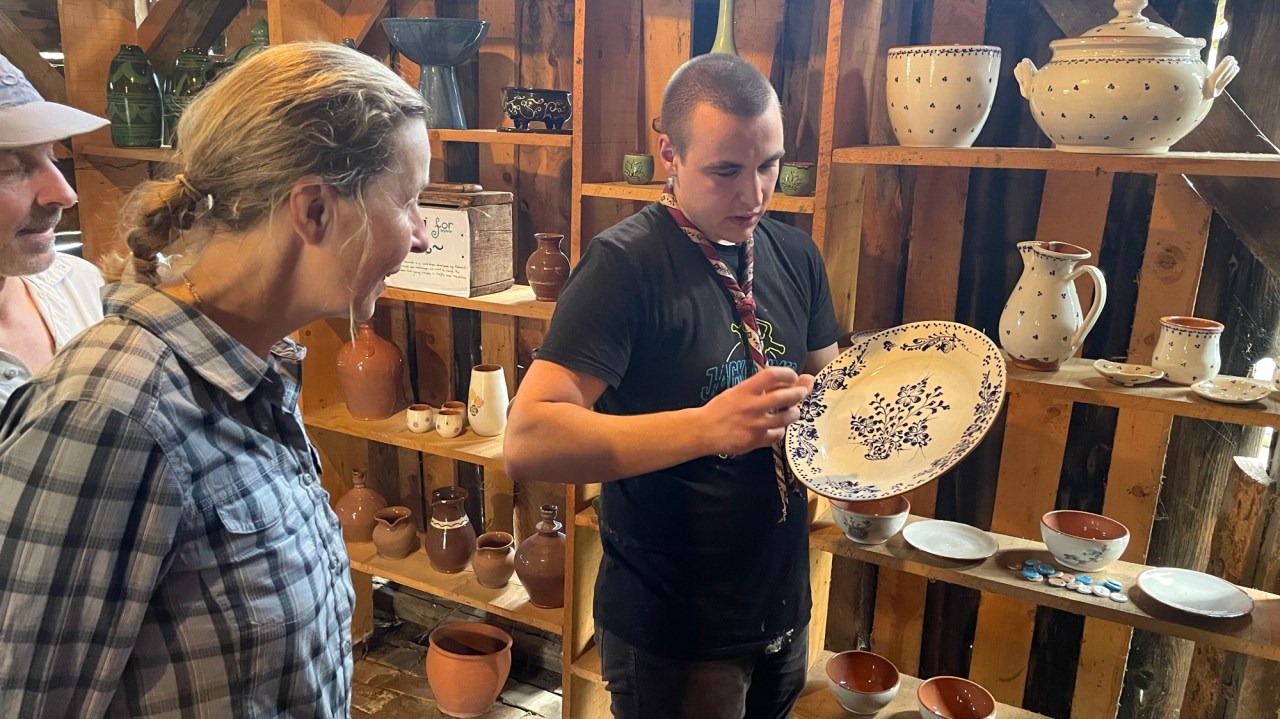
They also have a pottery workshop. The cups, bowls and plates are beautiful and widely sold in support of the centre.
The energy in the place is really positive and we feel lucky to have stumbled upon it. We have burgers and beers at a small cafe around the corner. The owner, a young guy, is happy to feed four hungry cyclists.
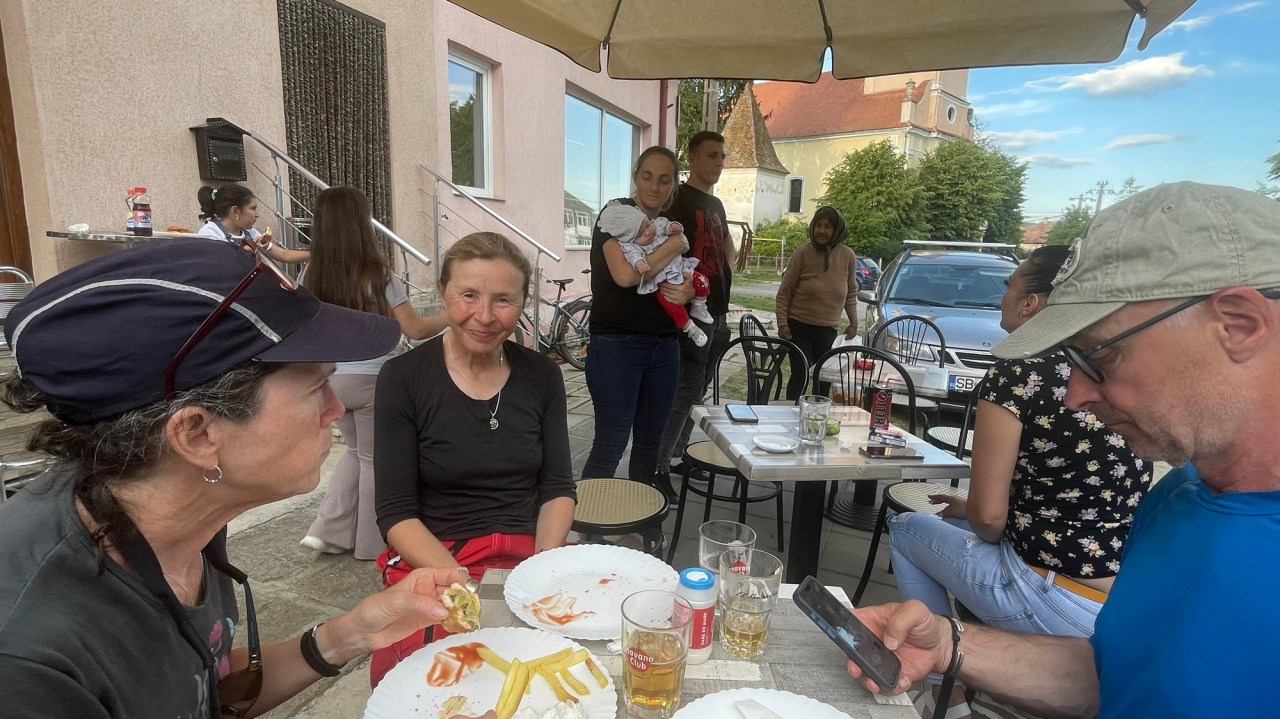

Unfortunately, there’s some kind of community party in a nearby building and band played on (badly) until 5 a.m. followed by the cacophony of a roost of crows as the sun rose. None of us had much sleep.
Thankfully, it’s a short 35 km ride to Sibiu where we have found an apartment to rent for a couple of nights so we can rest. It’s a scorching hot day and the lack of sleep has done us in.
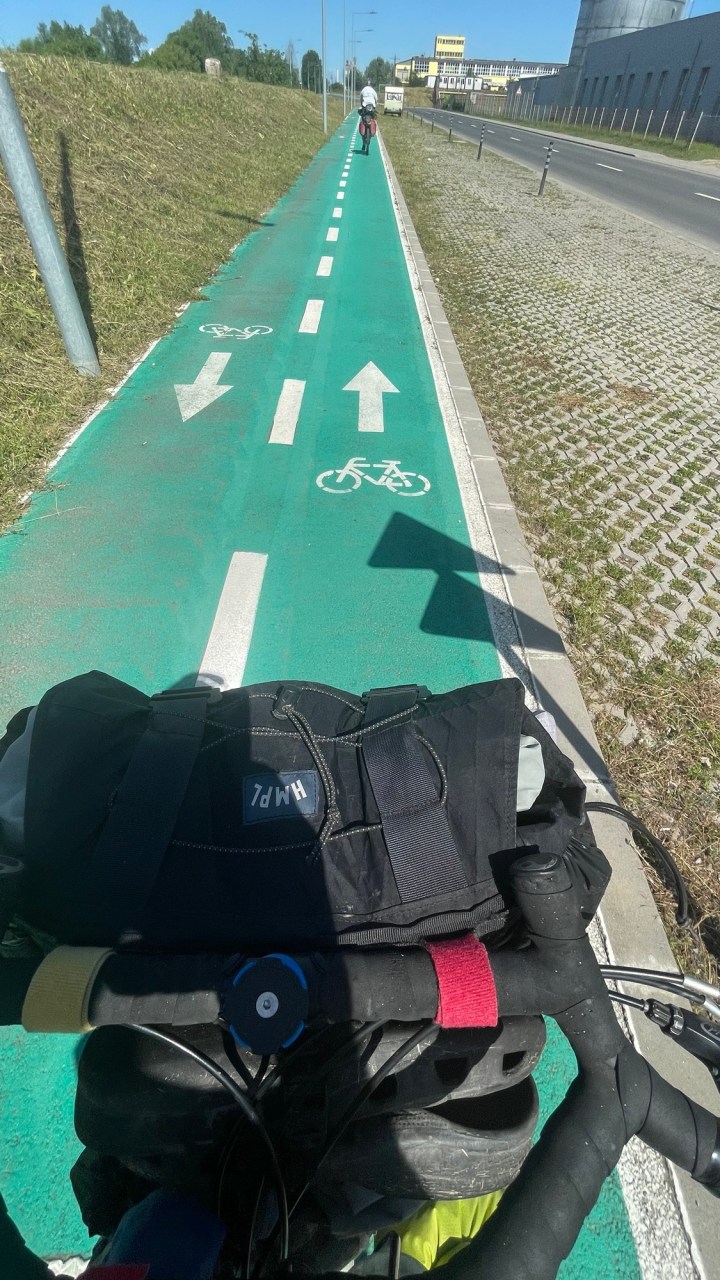
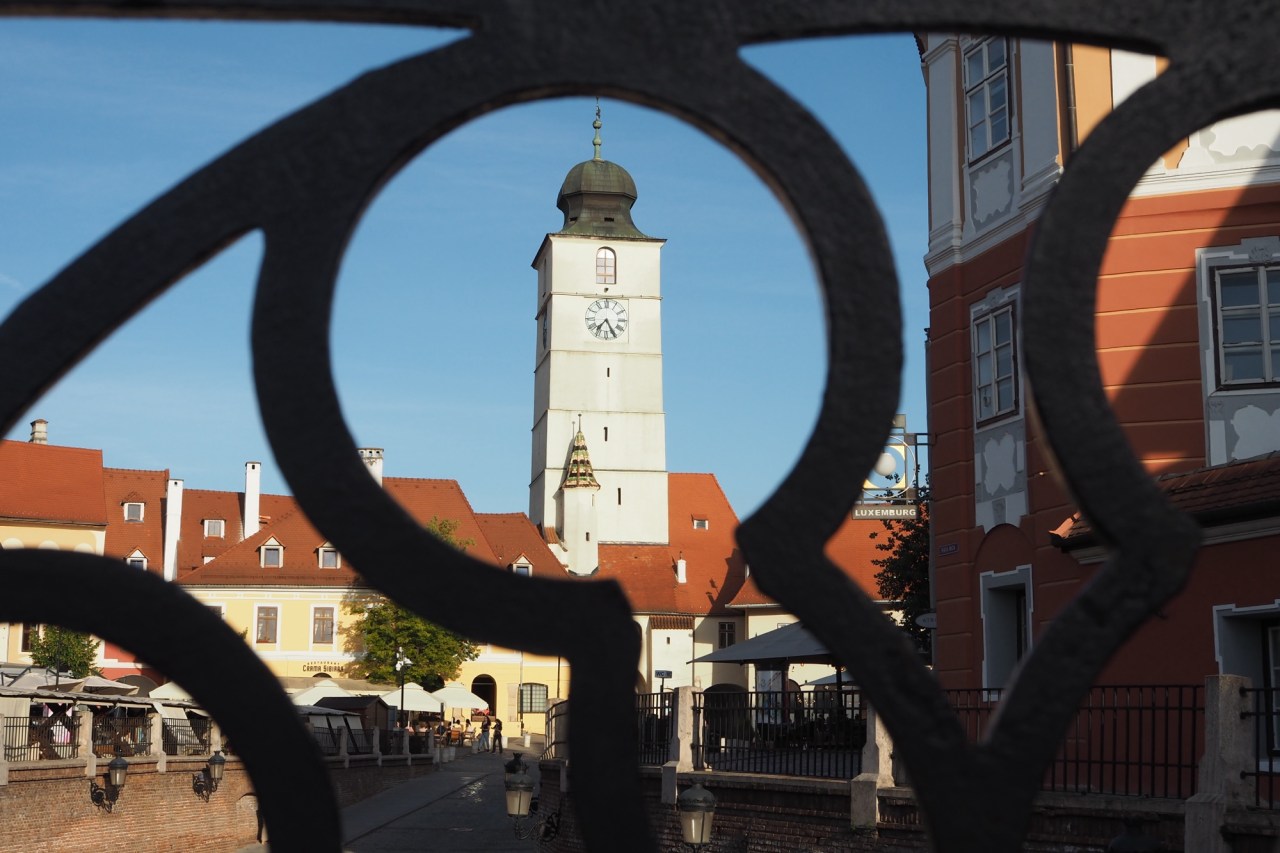
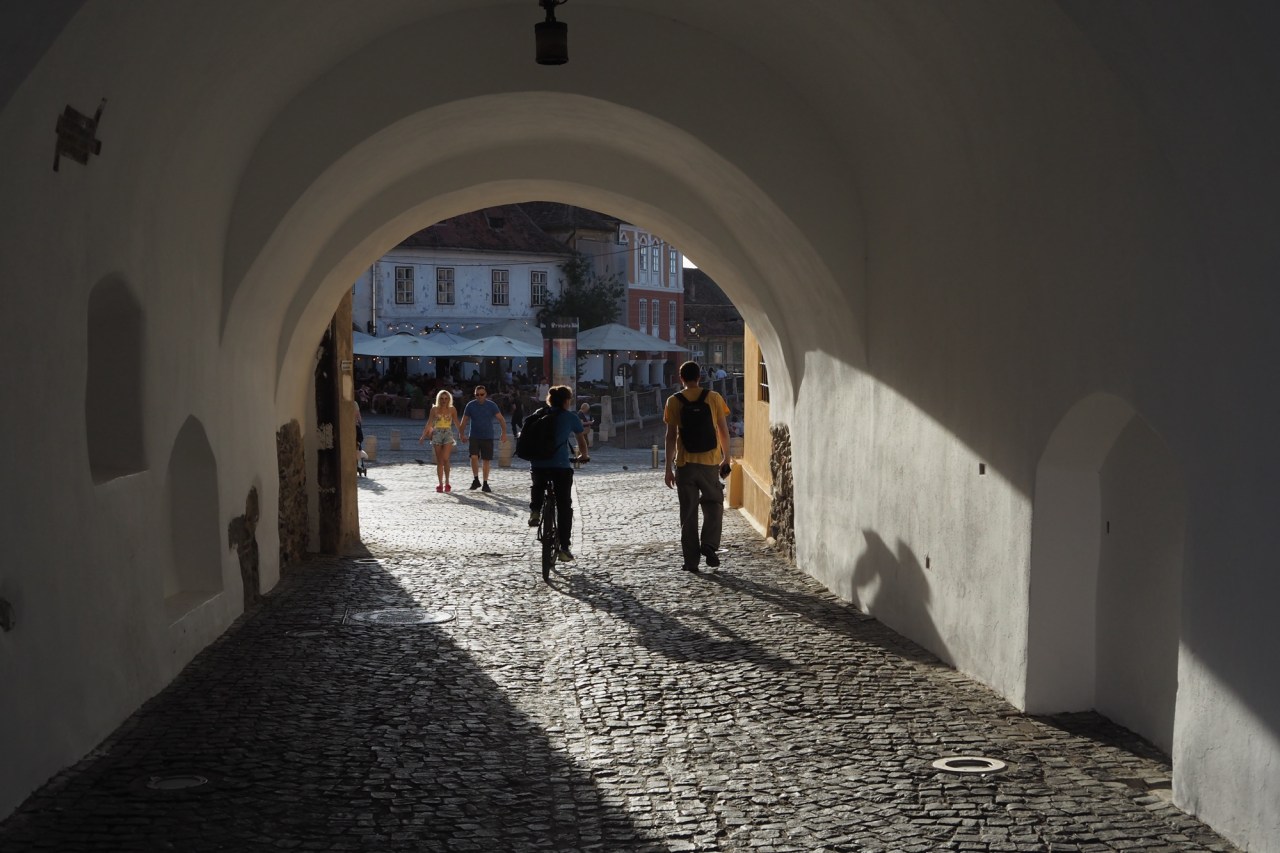
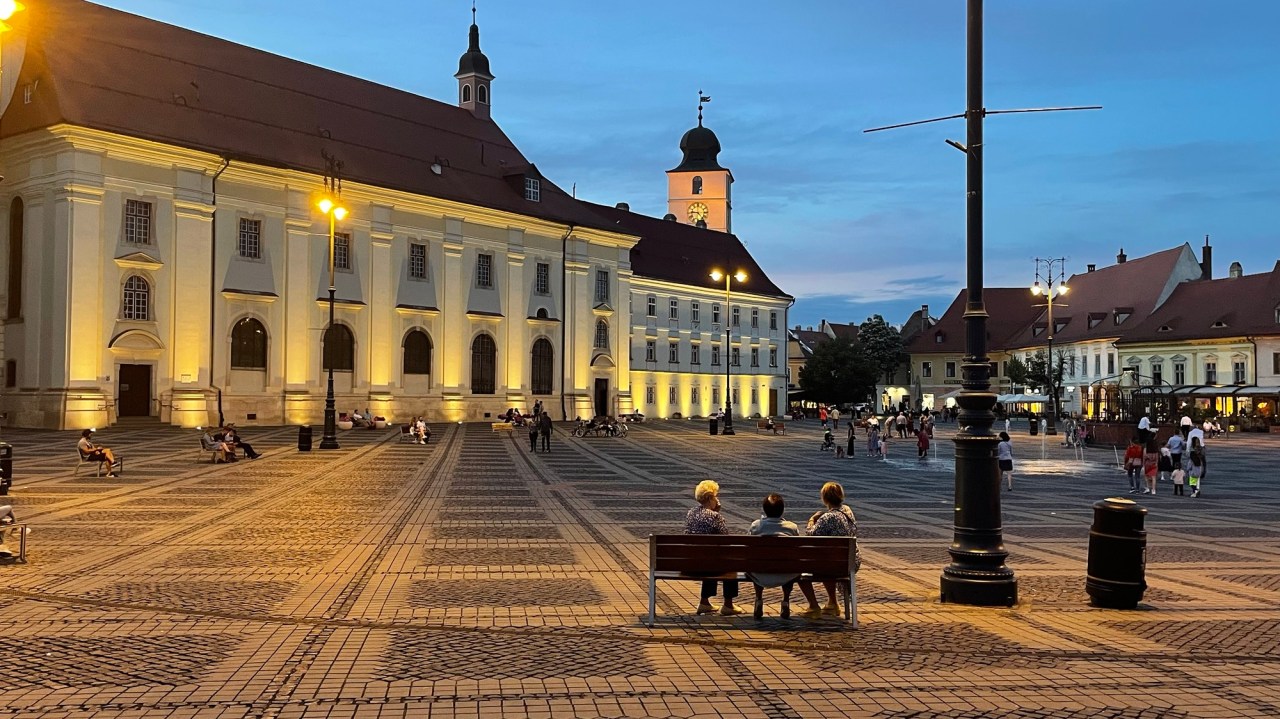
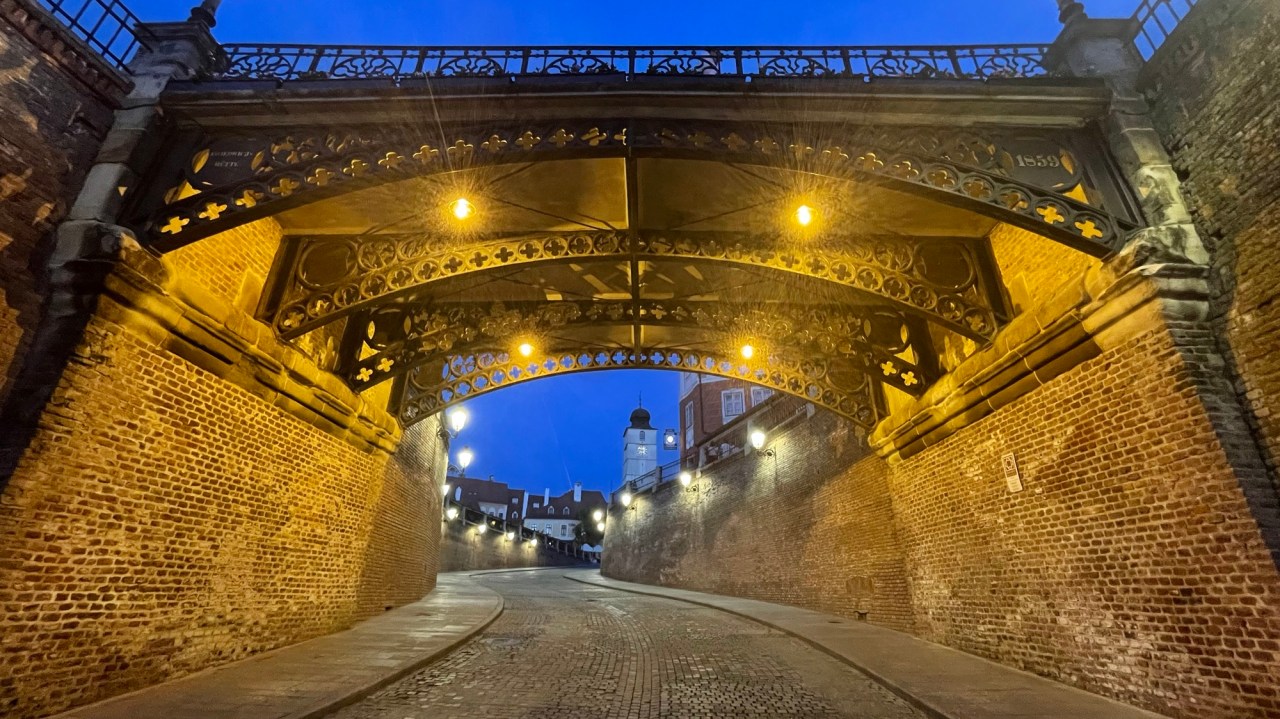
Sibiu is a medium-sized city with a beautiful old town centre where I write this. We’ve had some sleep and are having a look around town while looking at the map for a possible direction.

 2 l o v e c y c l i n g
Thanks. Always fun. Is the Black Church black?
T
Thanks for taking me along your trip. Fascinating as always… Norman
Gulasch, Raki & cycling – nothing more to ask for. What a nice adventure! Fantástico!