As we cross from Japan’s smallest island to its largest we contemplate how to get to Osaka. Honshu is home to about 100 million of Japan’s 124 million people. We’ve basically been in the countryside on Shikoku and Kyushu. We have no desire to ride through endless urban areas. We already had a little taste of that along Shikoku’s north shore.
From Onomichi to Osaka, along Honshu’s south shore, there is an almost continues cityscape. We’ve decided to cross back to Shikoku at the earliest opportunity. We will then cross back to Honshu from Tokushima and circle back to Osaka through Wakayama Prefecture which is more rural.
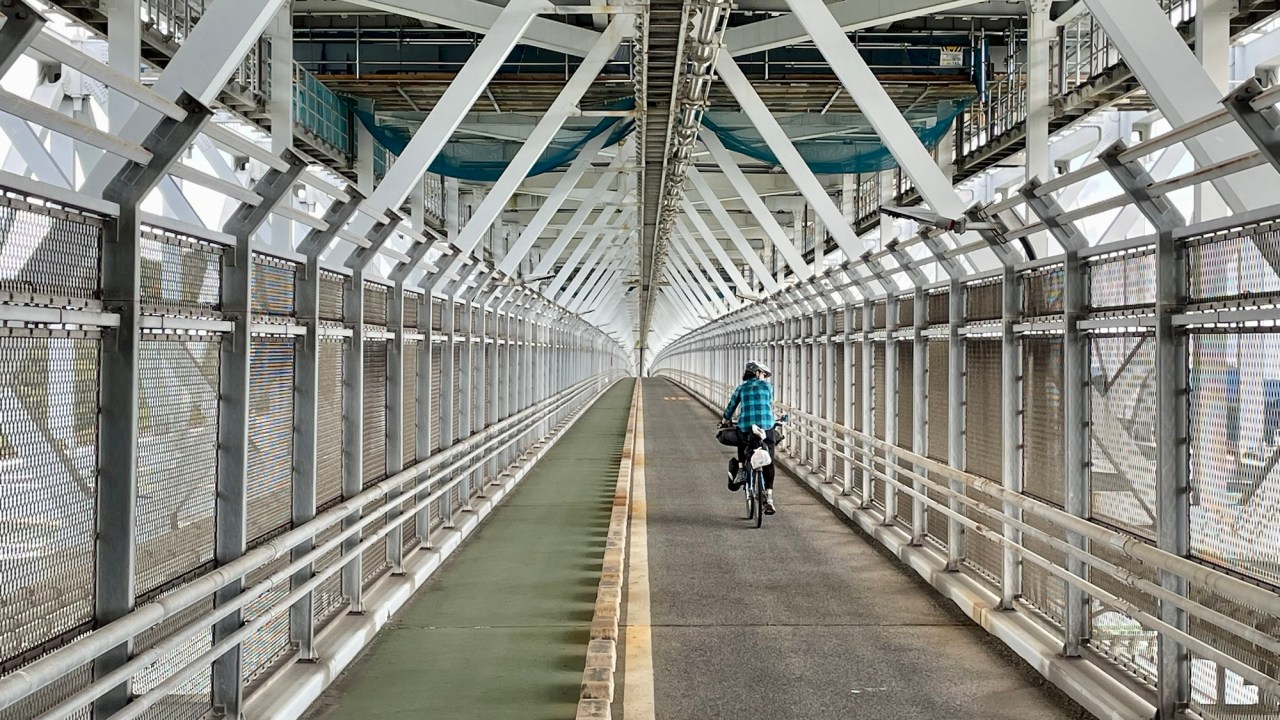
We continued our ride on the Shimanami Kaido across Ikuchi Island, Innoshima Island and Mukaishima Island. Spectacular bridges connect these islands and all have dedicated cycling paths, including a suspended bike path below the main car deck.
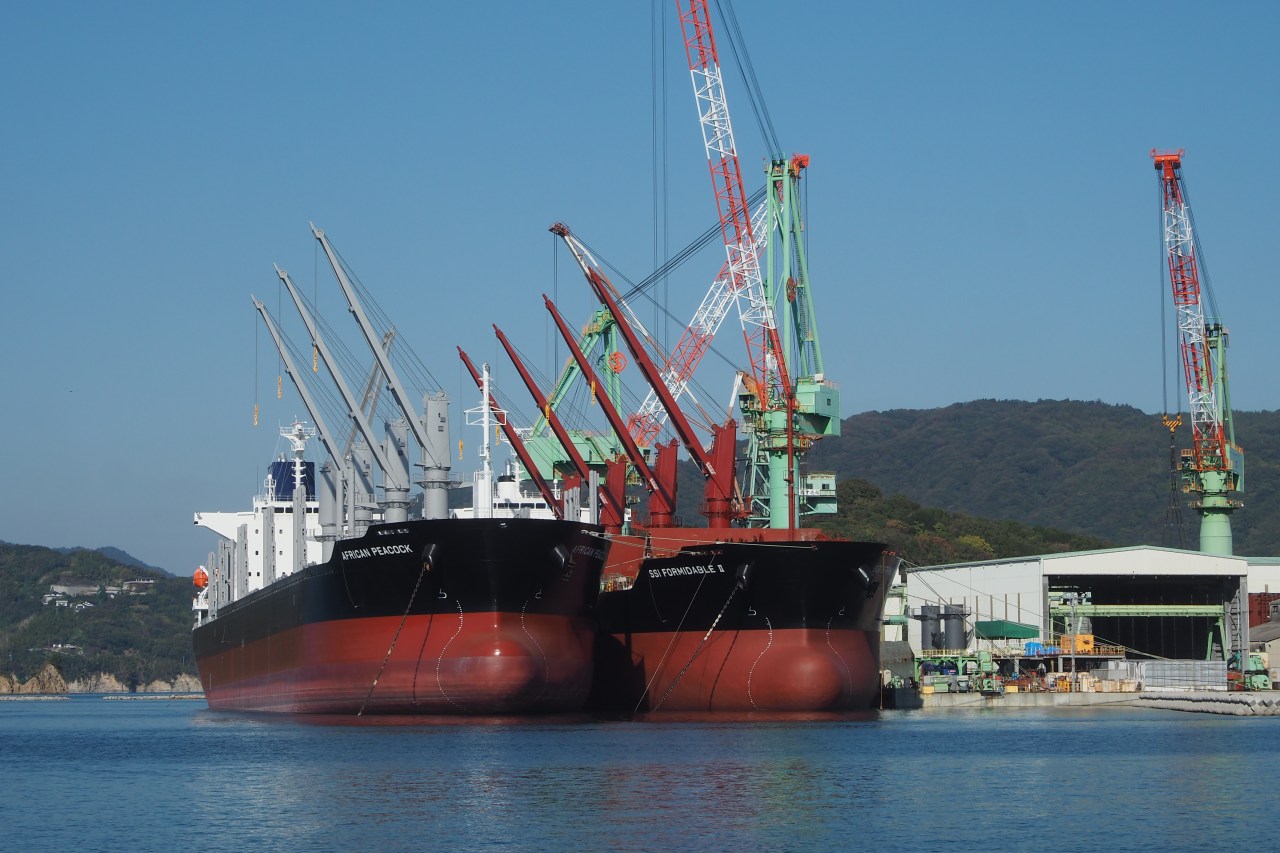
There are massive ship yards along the coast of these islands. The ships and cranes used to build them are huge and dwarf the landscape. I’m in awe of the scale of it all.
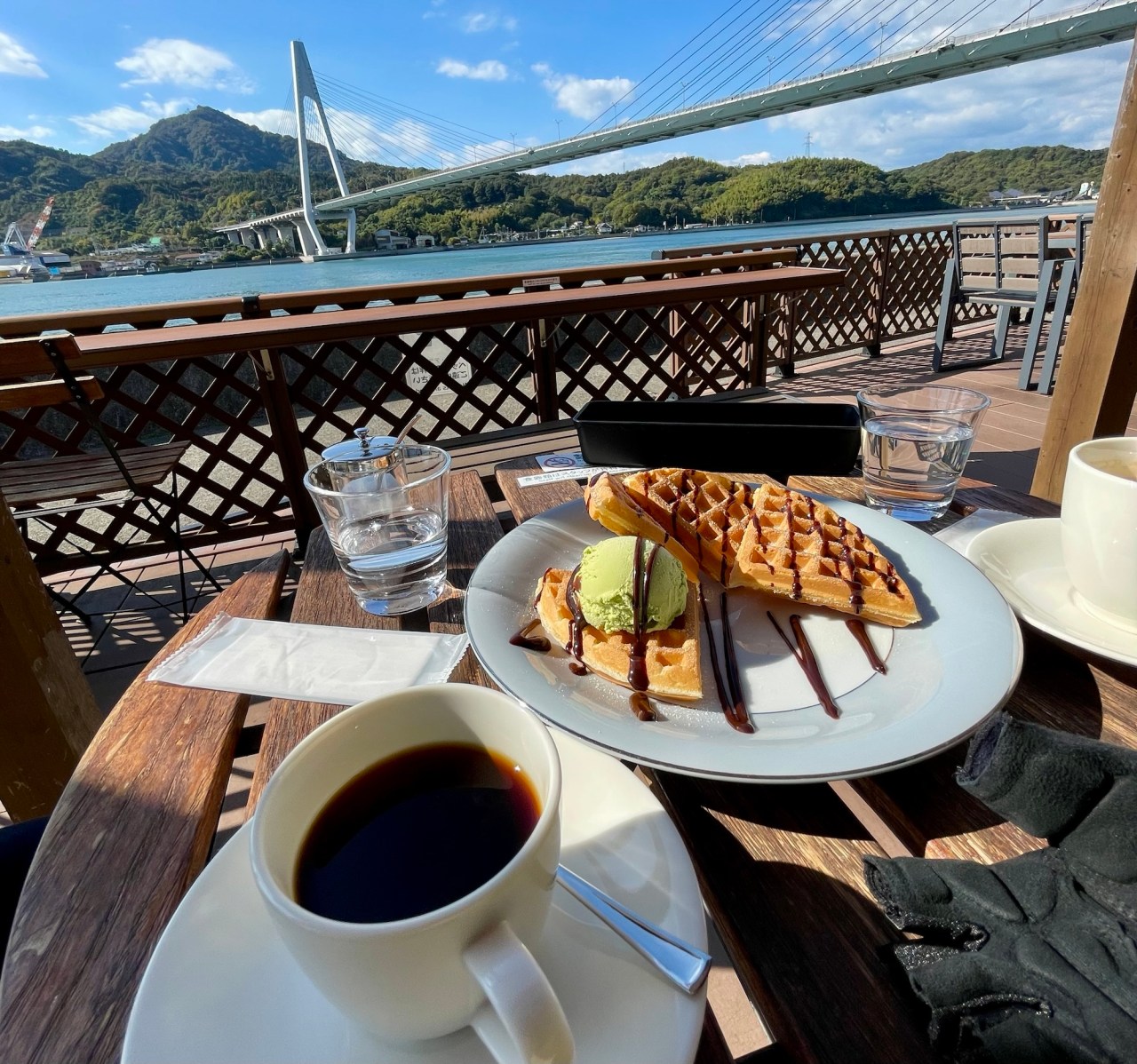
We continue to have perfect cycling weather: warm and sunny with a bit of a tail wind. We enjoy a coffee with waffles and green tea ice cream at a small café below the Ikuchi-Bashi Bridge before crossing Innoshima Island.
A one-kilometre-long climb tests my limits with my 1×9 setup. I manage pretty well but can’t keep up to Jan any longer on climbs. We go in search of a bike shop to see if we can find a new shifter but no luck.
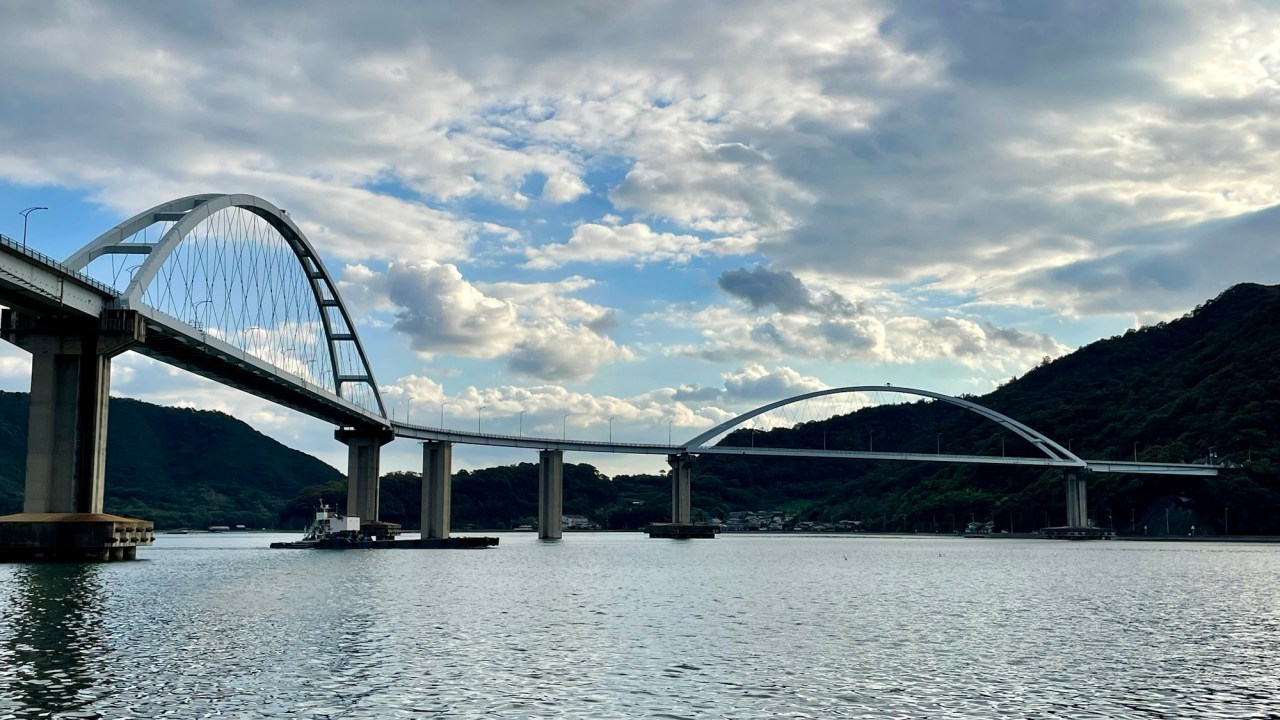
We traverse Mukaishima along its south shore and cross a final bridge to Honshu. The cycling along the coast is easy. There is little traffic on the road as we pass more ship yards and go in search of a supermarket. We buy food for dinner and breakfast and cross the Utsumi Bridge to Tajima Island where we spotted a beach-front camp site.
The camp site on a long, sandy crescent beach is deserted except for one other couple. We ask them where we can pay for camping but find out the office is already closed. We chat a while but the sun is setting so we excuse ourselves to make camp.
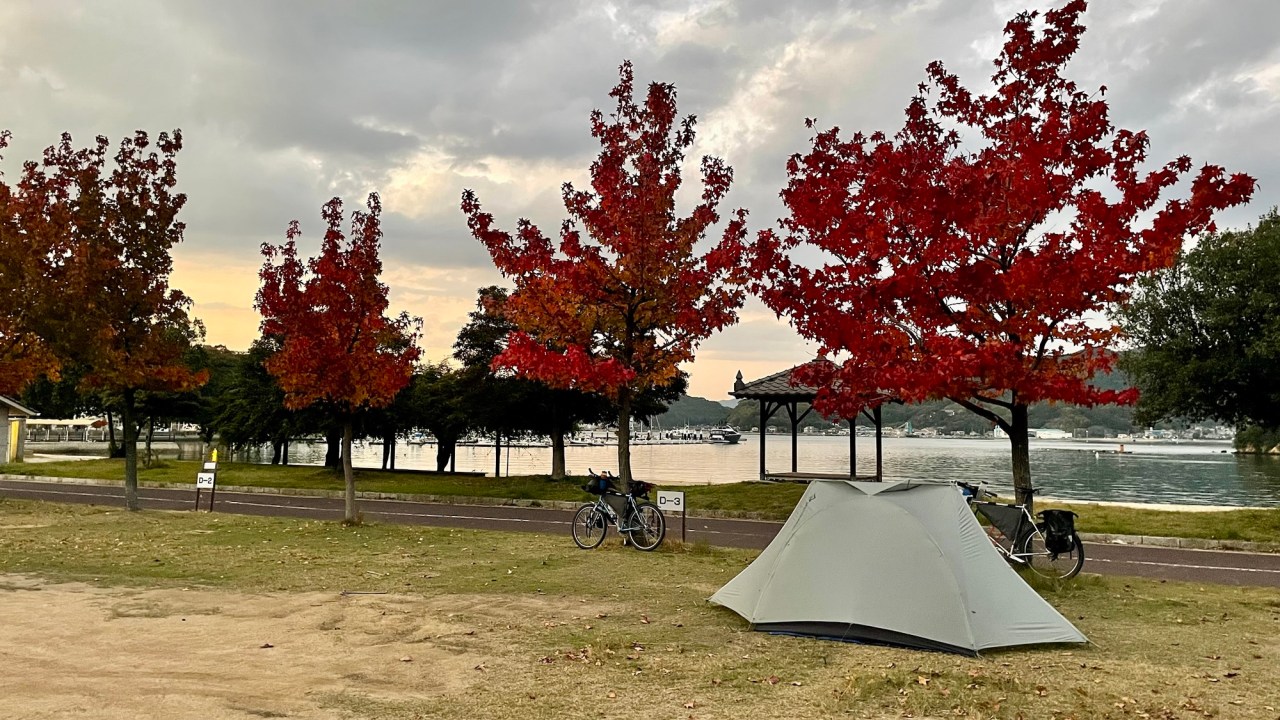
The temperature drops quickly now in the afternoons and by 6 pm it’s dark. While making dinner by headlamp, I spot some movement and shine my headlamp to discover a small fox-like creature. It’s a raccoon dog, also known as a tanuki.
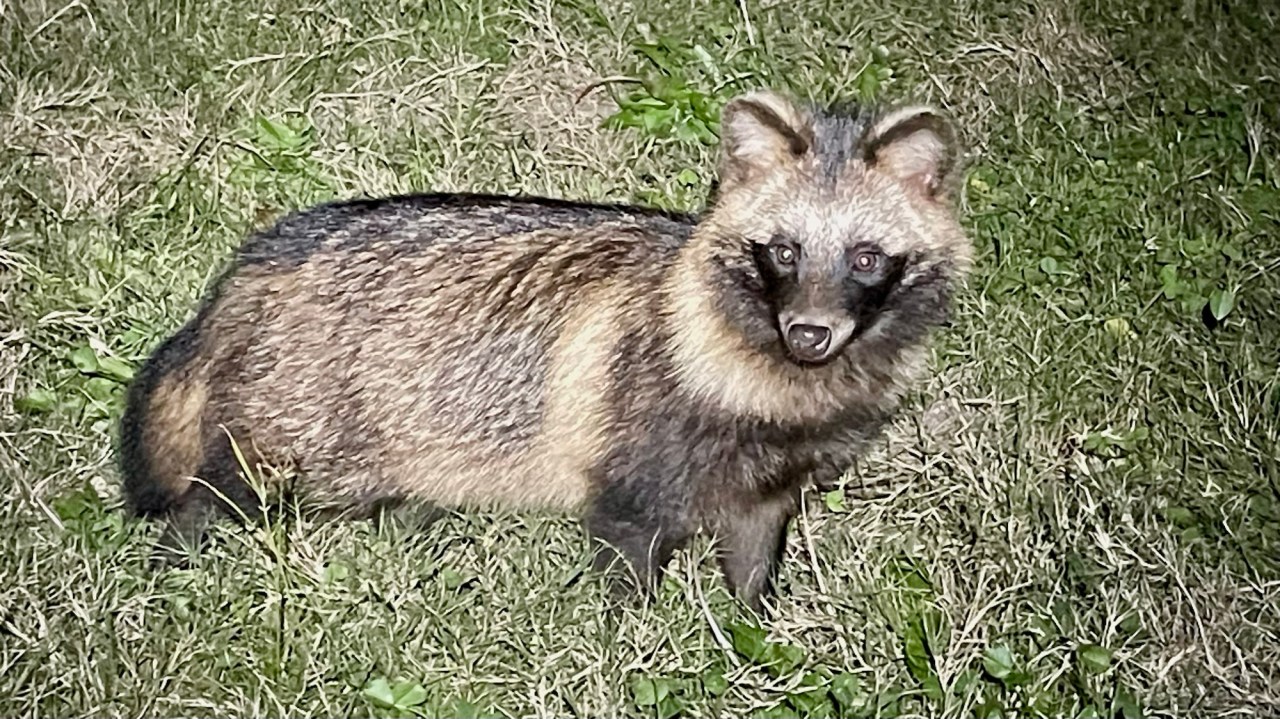
Another one shows up and they are definitely not shy. I suspect they’ve been fed by people at the camp site and have lost their fear of humans. We will have to put all our food away carefully when we go to sleep. They keep coming close to us and we have to scare them off while we’re cooking and eating.
I wake up from a noise near my head. I know immediately one of the tanukis has grabbed something from the tent vestibule. It’s taken one of my shoes. I don’t have any other shoes so this is serious. Jan wakes up because I’m cursing and yelling. I see the two tanukis about 50 metres away with my shoe. Jan, now also out of the tent, grabs a rock and walks towards them. She hurls the rock at them and they run off leaving my shoe.
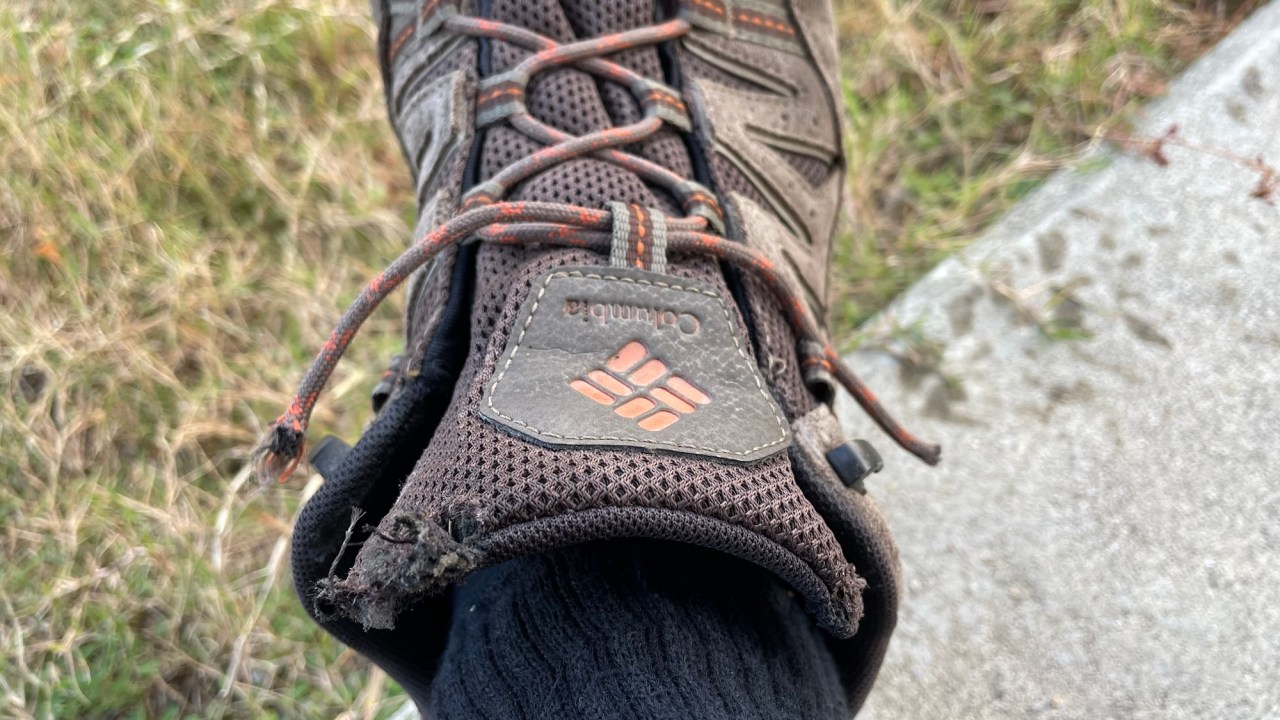
The shoe is a bit chewed up and the lace is mostly gone. But at least I still have two shoes. I’m thankful they didn’t run off with it. We crawl back into bed and keep our shoes inside the tent. There are no further tanuki disturbances in the night.

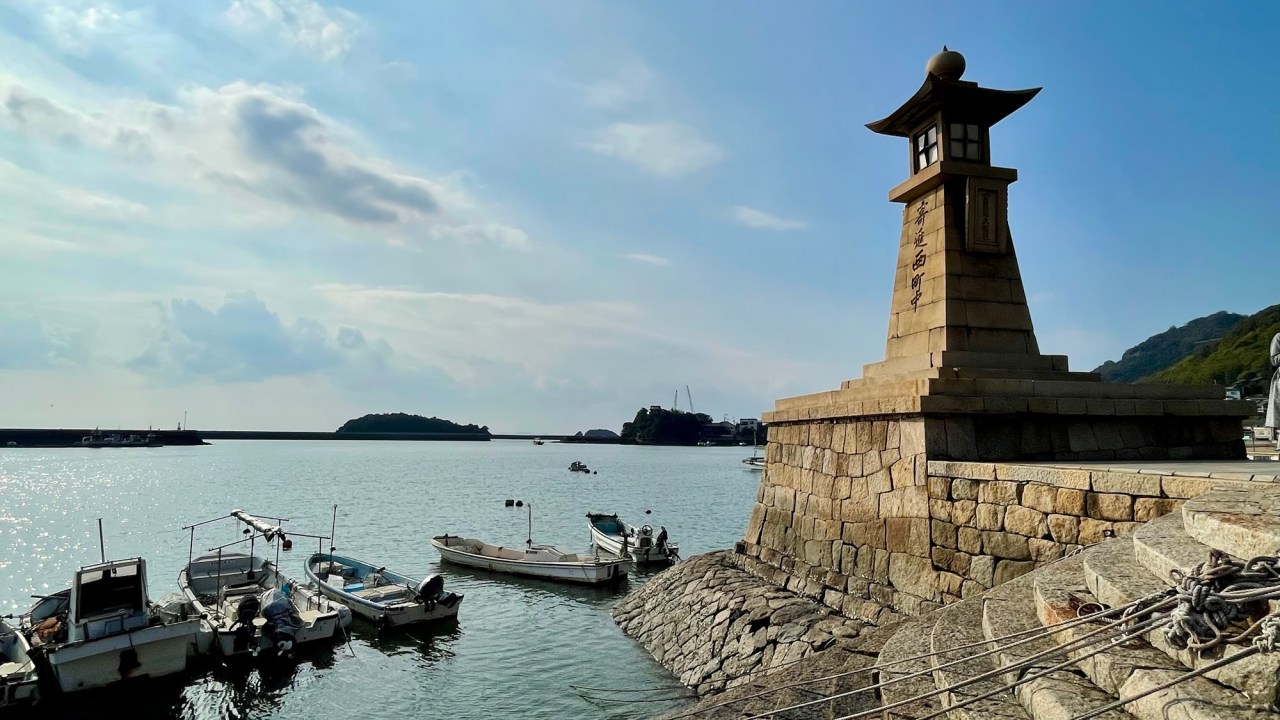
We cross back over the Utsumi Bridge and ride to Tomonoura, a small port town along the central coast of the inland Seto Sea between Honshu and Shikoku. There is a small stone lighthouse here that was built in 1859.
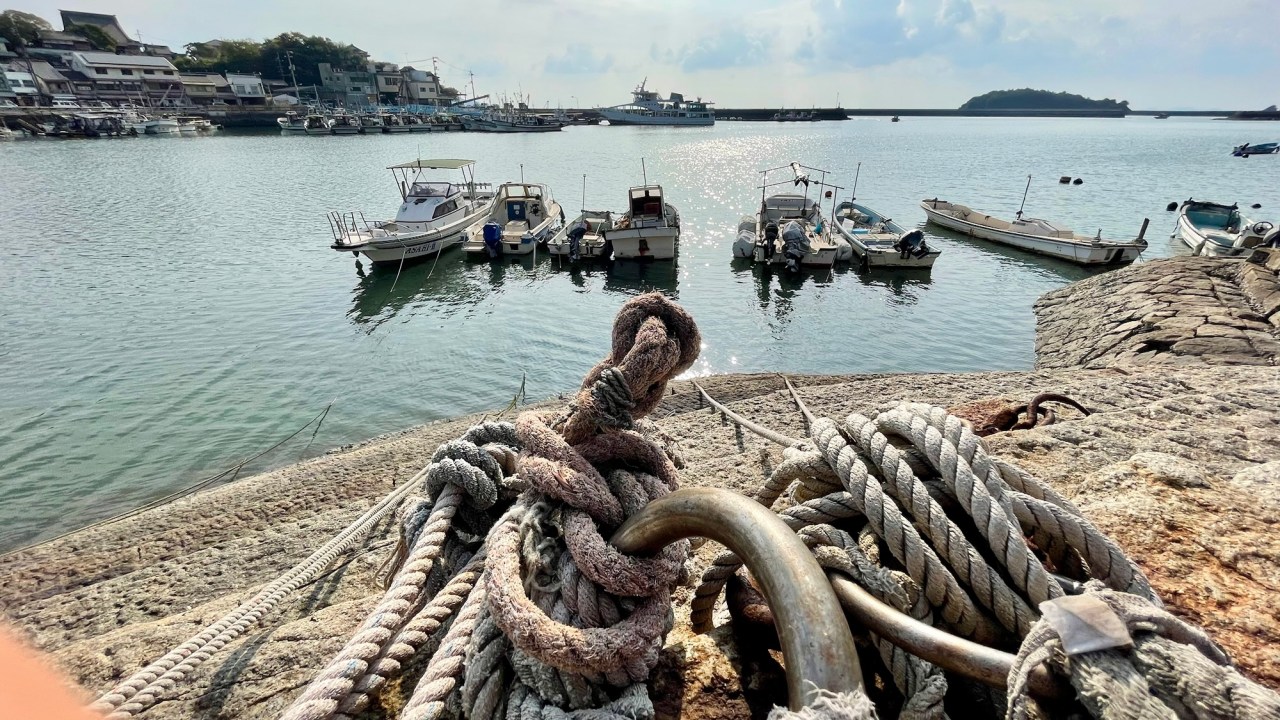
The unique circular harbour has been in use for centuries but has been preserved after modern port facilities were built. It’s a popular tourist draw and the narrow streets are busy. We take some photographs but don’t linger too long. We have no destination yet for today and a very urban ride ahead through Fukuyama.
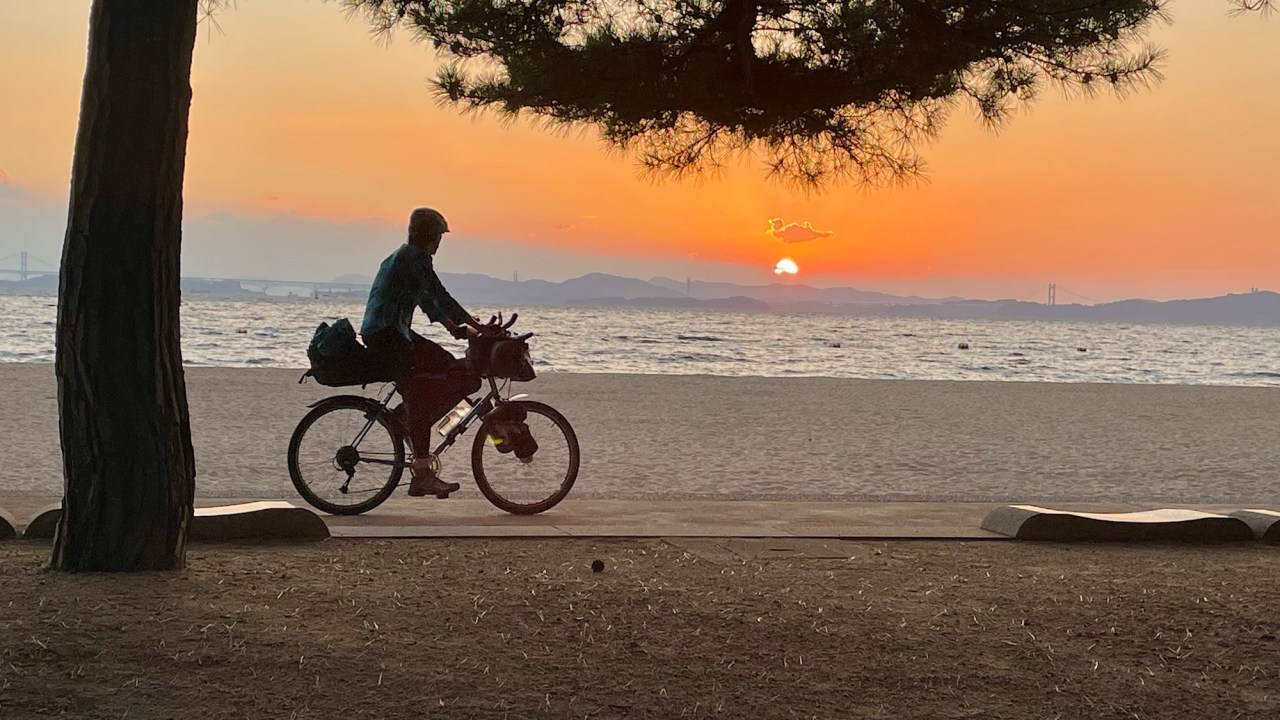
Most of the day is spent riding bike paths along busy roads. Fukuyama is a big industrial city of half a million people. It’s home to steel plants and ship yards that we have to skirt around. We eventually come out the other side and take a small coastal road to Shibukawa Beach. We ride onto the beach just as the sun sets over the Seto Sea. It’s a glorious scene but there is nowhere to camp.
We check availability at a large hotel on the beach but the price they quote us is much higher than online. Jan comes back and books a room on Agoda–breakfast buffet included. We wait a few minutes for the booking to go through and we’re in. It was a long day of nearly 90 kilometres of mostly urban cycling. We’re tired. I buy a couple of beers and a bag of chips in the lobby and we enjoy the salty snack and cold drinks in our room. After showers we forego the expensive buffet in the dining room and go to the basement restaurant for dinner. Nothing fancy but tasty.
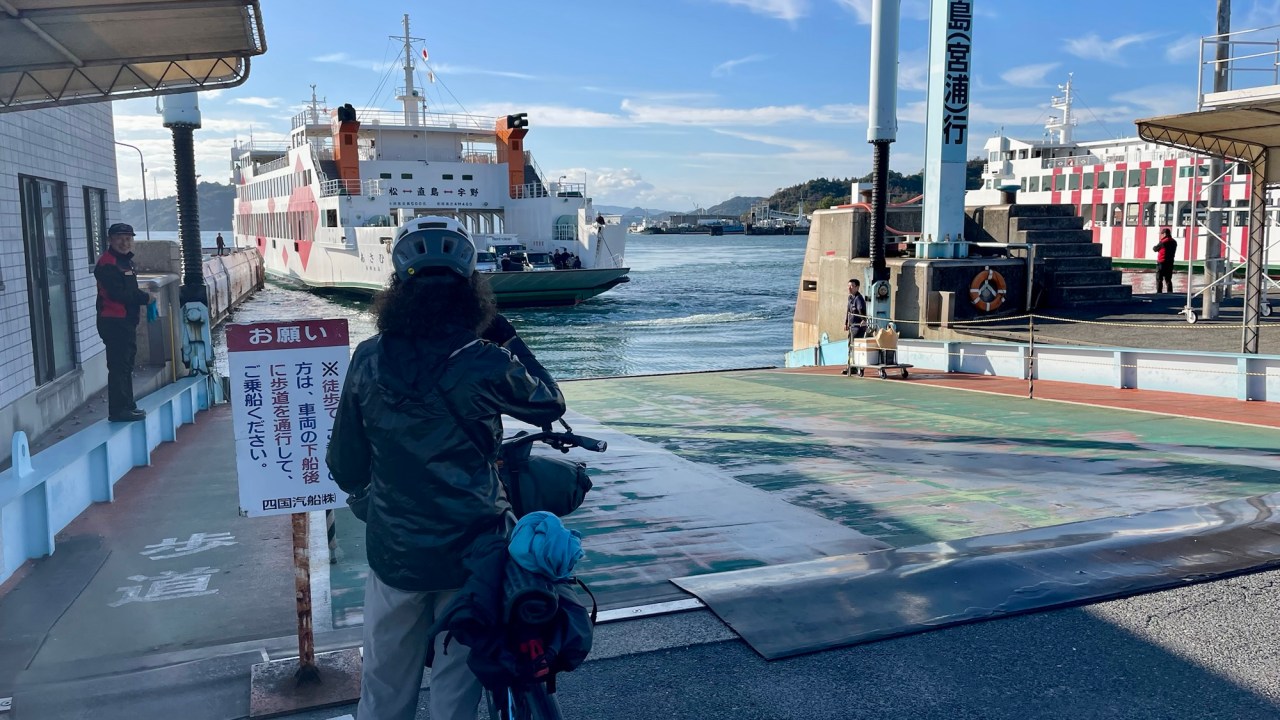
We have short eight-kilometre ride to Tamano where we take a ferry back to Shikoku. The journey across is actually two ferry rides. The first takes us to Naoshima Island, known for its art museums. We have a two hour wait for the ferry to Takamatsu so we go for a ride past public art installations and some of the museums.
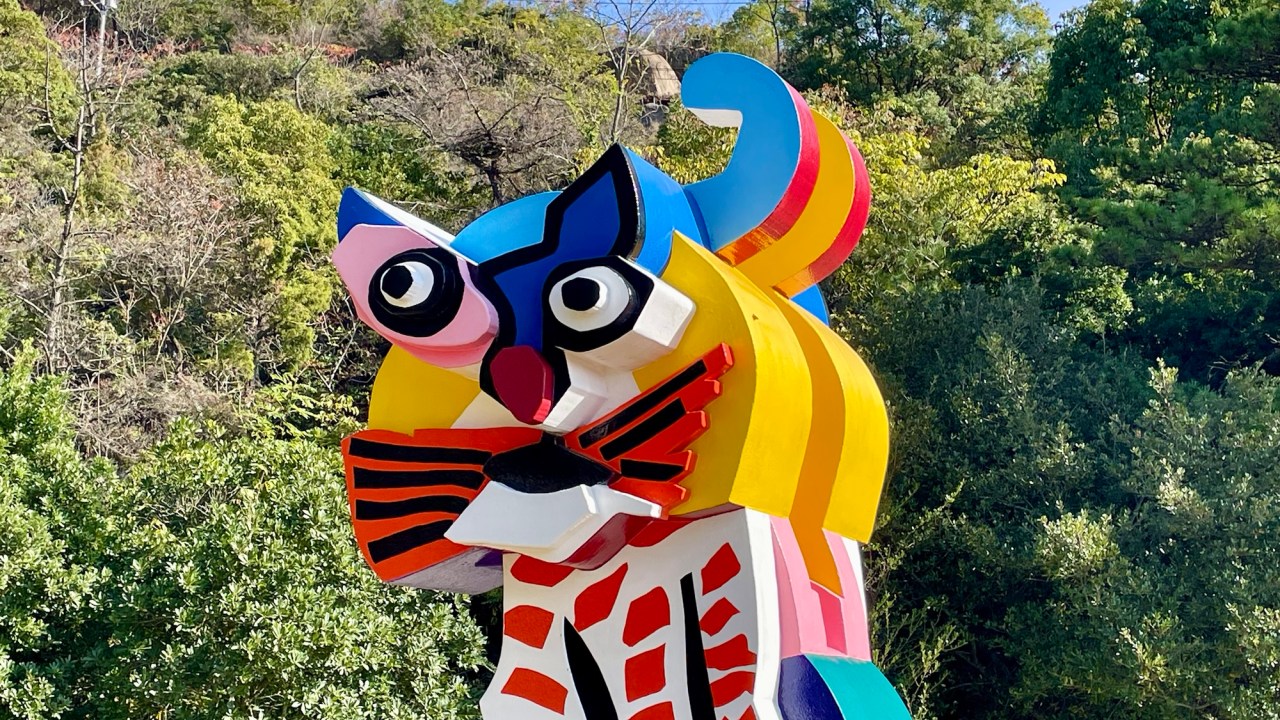
We don’t have time to go into any of them. Even if we did, we find out that they’re fully booked as hordes of people have come from Takamatsu and bought up all the tickets already. But we enjoy the ride around the island.

Upon arriving in Takamatsu we try another bike shop to see if they have a front shifter for my bike. They do! And they are happy to install it. Come back in two hours, they say. We go for lunch and in search of accommodation. No luck. Every hotel we try is booked. We eventually settle for a room in a love hotel a few kilometres from the centre.
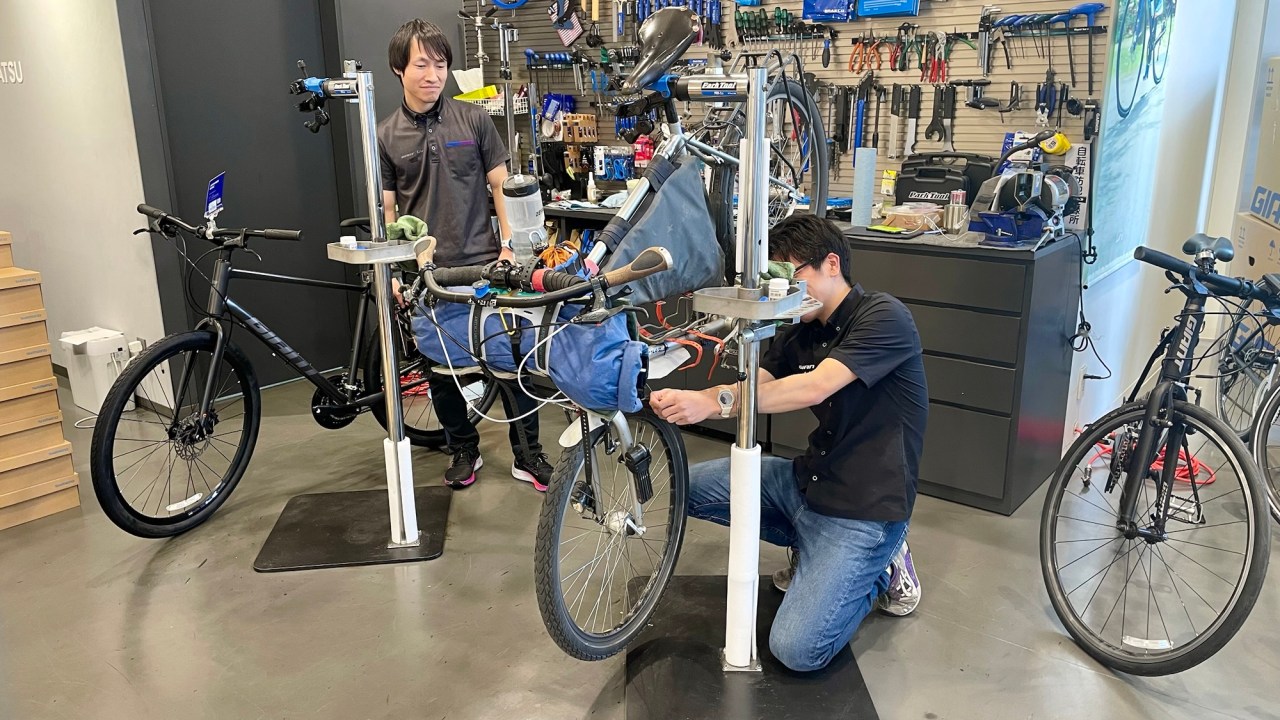
We go back to the bike shop to pick up my bike. They did a great job. They took a shifter from a bike in the shop and installed it with a new cable. It cost only $70 and it works perfectly.
We can’t check in until 7 pm so we ride to Ritsurin Garden and go for a walk. Ritsurin Garden was completed in 1745 as a private garden for the feudal lords of the area. It became a public garden more than a century later and is now one of the busiest tourist draws in Takamatsu.
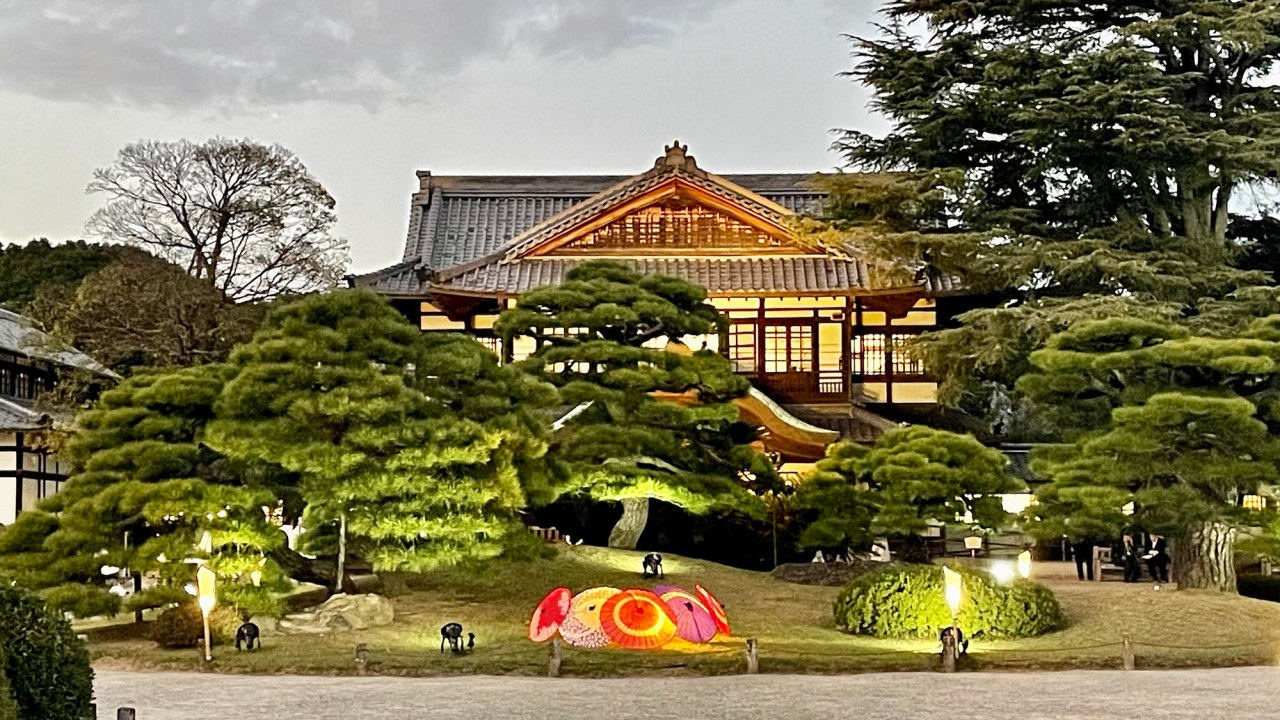
Part of it is a traditional Japanese garden with ponds and bridges, tea houses and shaped pine trees. The northern half of the garden was redesigned in a western style and has a large museum. At sundown, the garden is lit up by thousands of lights.
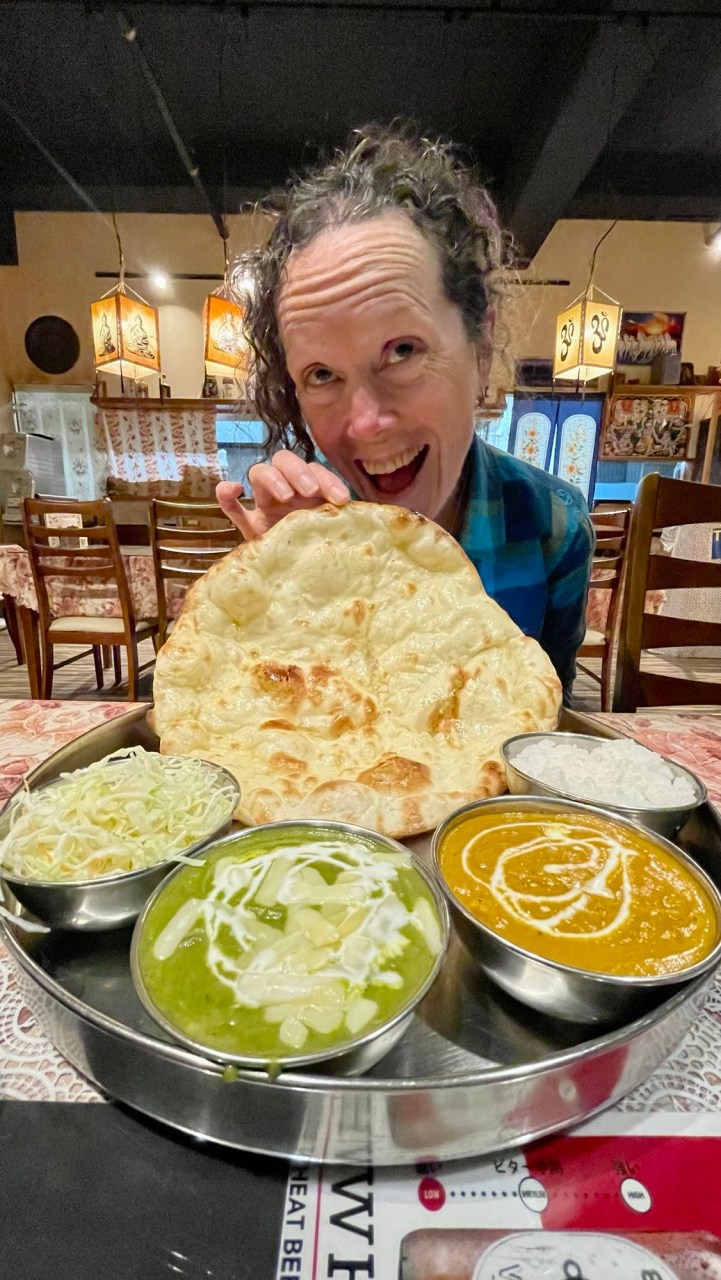
In the dark, we navigate through city streets to an Indian-Nepali restaurant where we have a great dinner. We’ve whiled away the time and can finally check into our hotel. It was a long day of ferry rides, getting my bike fixed and trying to find a hotel which was a frustrating, time-sucking experience. But the love hotel is comfortable and warm. We luxuriate in the oversize bathroom and the kingsize bed.
In the morning, I walk around the corner to a konbini for some takeout coffee and breakfast before we get on the road. We’ve booked a room already in Tokushima where we can get a ferry to Wakayama.
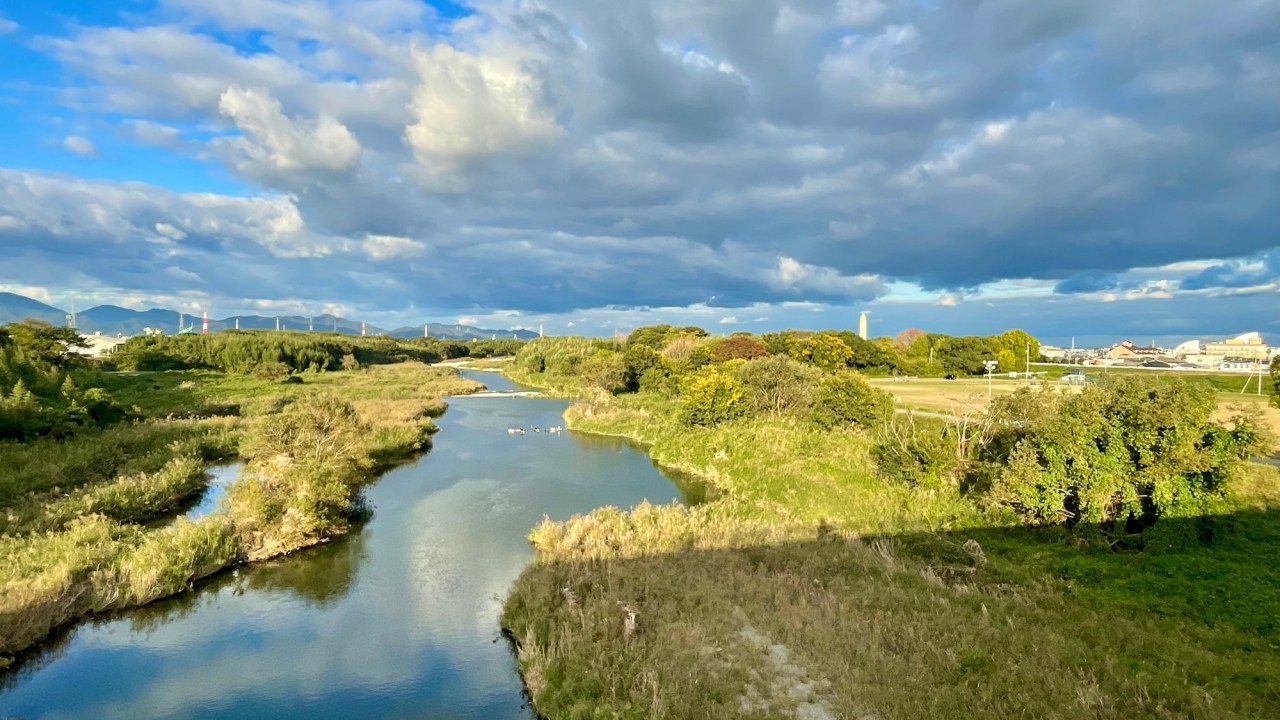
It’s a 20-kilometre ride to get out of the city but nice cycling on bike paths through the suburbs. The climbs are easier now that I have a full range of gears again as we ascend a mountain range separating greater Takamatsu from greater Tokushima.
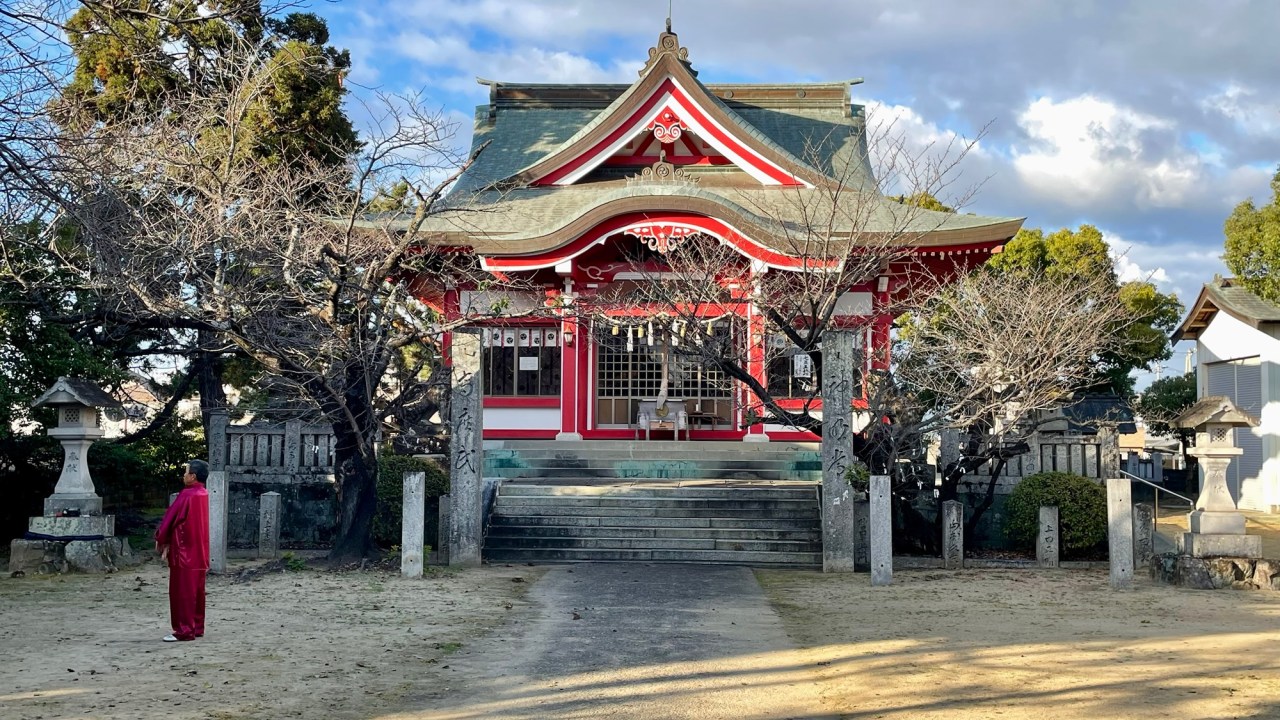
We stop at the Rurizan Ido-Ji Temple, one of the 88 temples on the Henro Trail. Kids are running around, playing tag and pilgrims, dressed in their white shirts, walk through the temple grounds. Behind one of the temple’s buildings, a man is doing what looks like tai chi. Other people are there to pray.
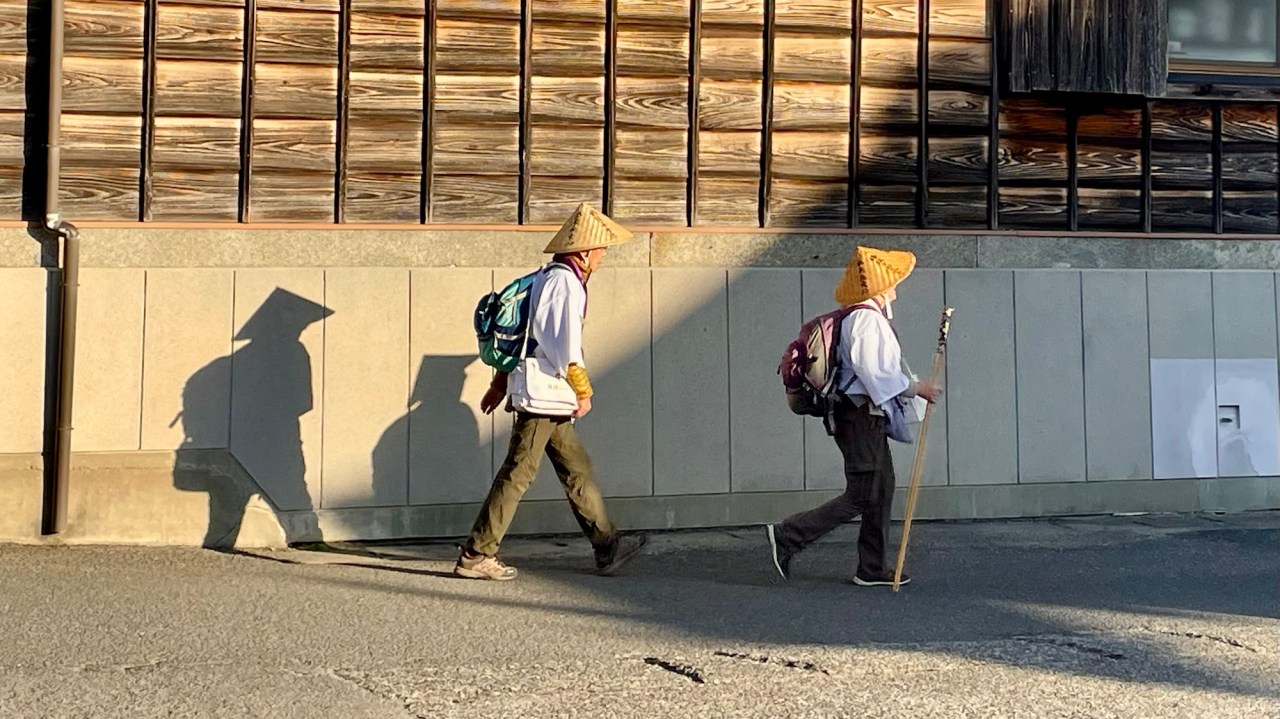
The temples seem to be central to Japanese life. Shinto and Buddhism are the two main faiths and often practiced simultaneously. They differ from western religions in that rights and practices are generally about well-being and community benefits, rather than about doctrine and the spiritual aspects of many beliefs. I wonder if this is the reason why I feel there is such a good vibe in this country. People are respectful to one another. Rarely do we hear anyone raise their voice. There is a lot of bowing. Almost too much bowing. But I do like it. It’s like a handshake but somehow seems just a bit more genuine.
A couple stops us to ask where we’re from and they are keen to learn more about our bicycle journey. We chat a while which we haven’t done a lot of here as people either don’t speak English or are hesitant to try. We make a nice connection. They wish us well and we say our goodbyes.
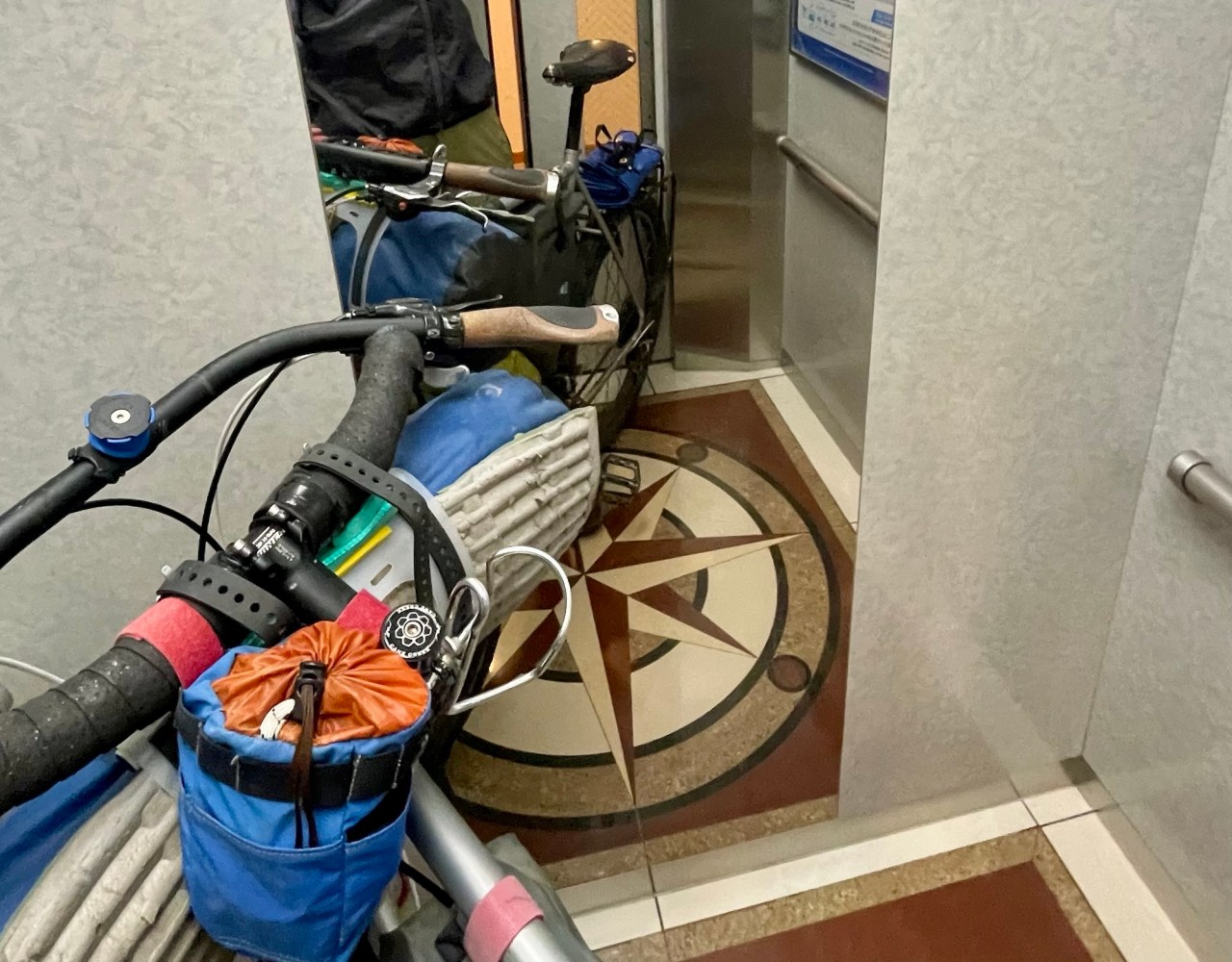
In Tokushima I navigate to the wrong hotel with a similar name to the one we had booked. Thankfully, the right hotel is not too far away. They don’t have a place to park our bikes so we take them up to the room. My bike barely fits in the elevator. The room is not very large but has a hallway that can just accommodate our two bikes.
In search of a place for dinner we walk past a small Izakaya across the street from our hotel. It looks inviting and the staff wave us in. We sit at the bar on stacked plastic crates with cushions on top. The interior of the restaurant is a mishmash of knickknack decor items. It has a great atmosphere and the staff is friendly and outgoing.
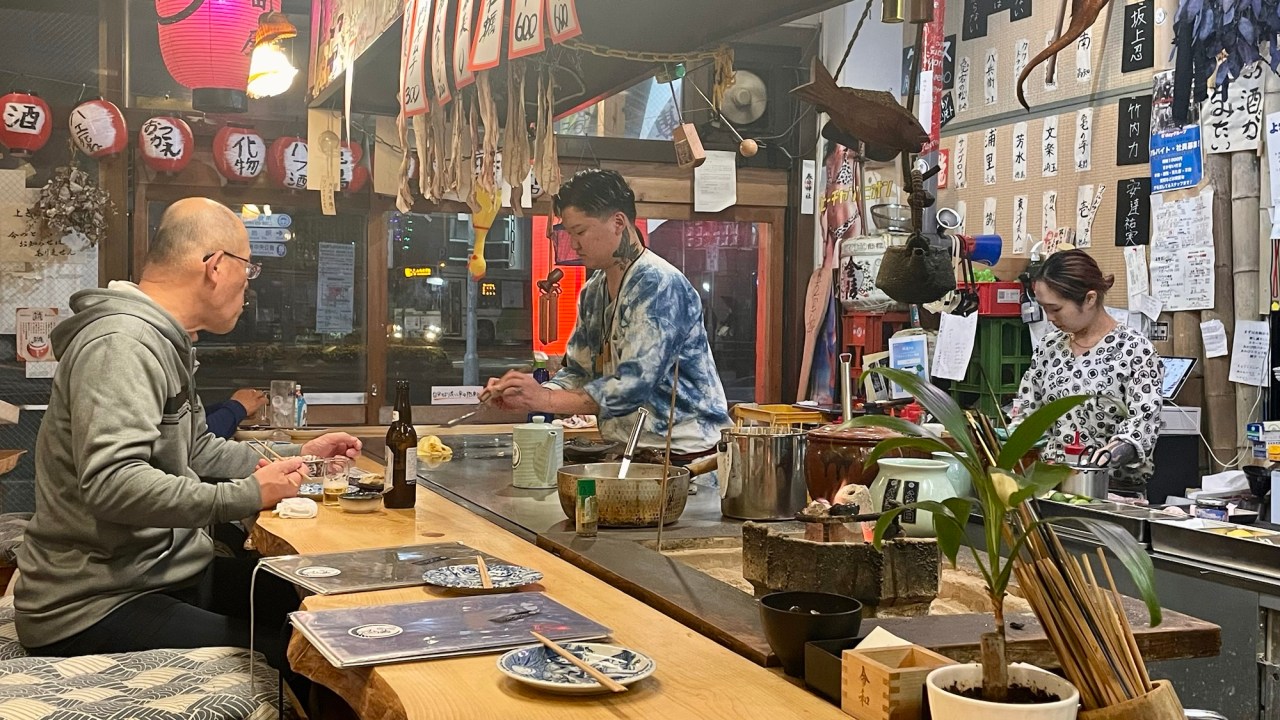
Izakayas are kind of like bars but having a drink without food is not all that common in Japan. Even when you just order a drink, they will always serve you a little dish of crackers or a few bite-size appetizers free of charge, similar to mezes in Greece.

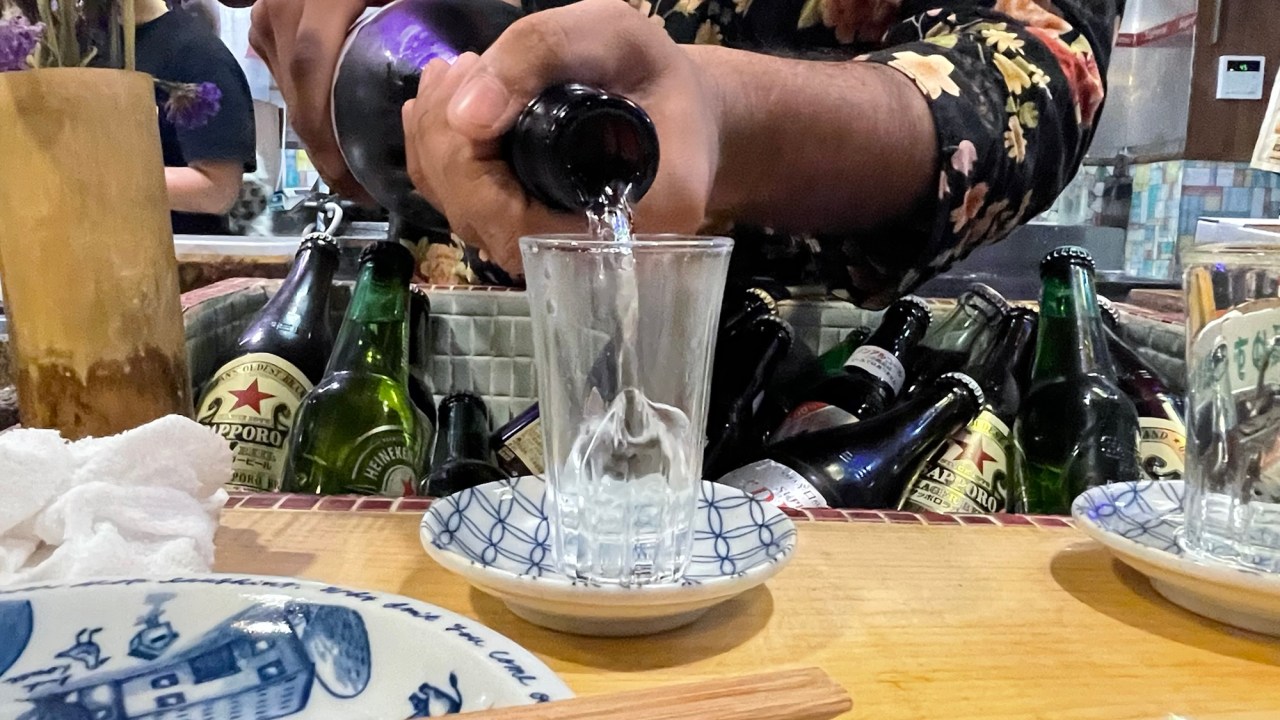
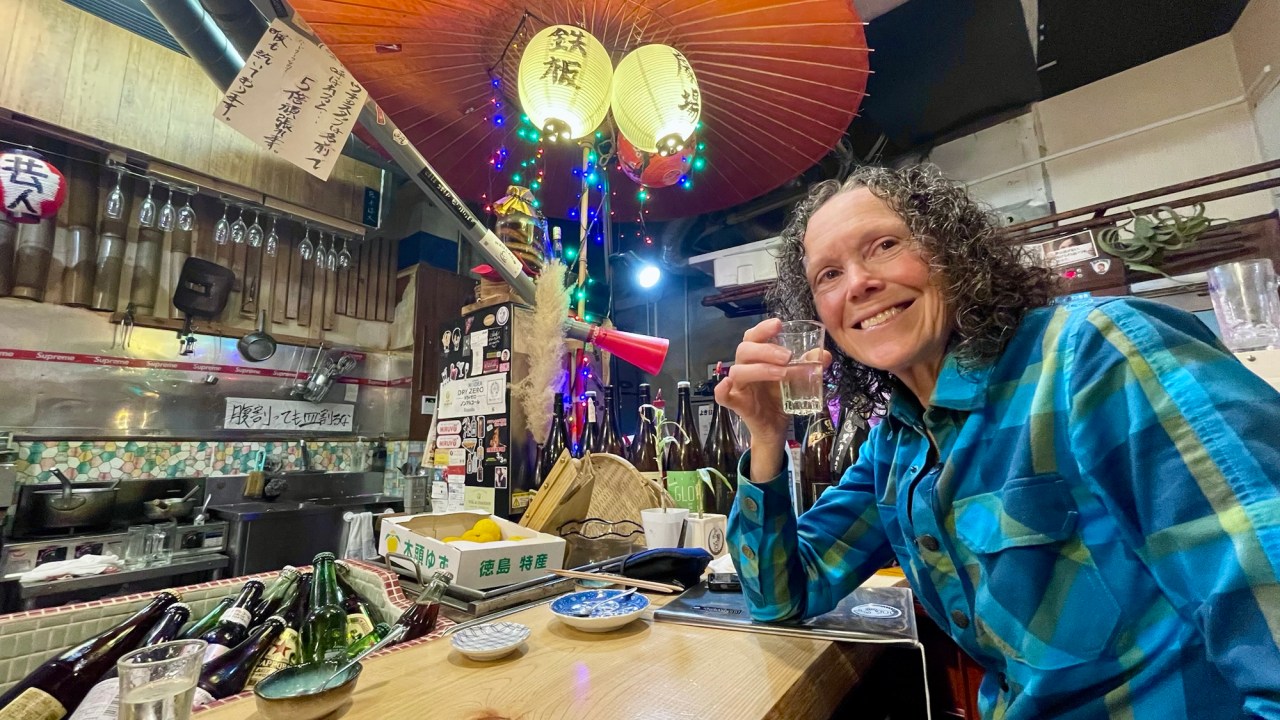
We peruse the menu and order some dishes and sake. The sake is poured into a small glass until it overflows. A little dish catches the overflow. It’s a generous pour. We try two different kinds. Both are delicious and go well with the dishes we ordered: karaage chicken, scallops and wagyu beef. We watch the chef prepare our food while we sip the sake. It’s easily one of the best meals we’ve had on this trip.
The ferry to Wakayama doesn’t leave until 11 a.m. so we ride around Tokushima to see the sites, including some of the many temples and Tokushima Central Park. The ferry is the most expensive one we’ve taken, almost $100 for a two and a half hour boat ride.

The weather forecast is awful for the next day so we book a room for two nights and will explore Wakayama. There is a beautiful castle and garden. The original Wakayama castle was built in the 16th century but was repeatedly destroyed and rebuilt. Today’s version was built in 1958 after Allied bombing campaigns in World War II reduced it to rubble.
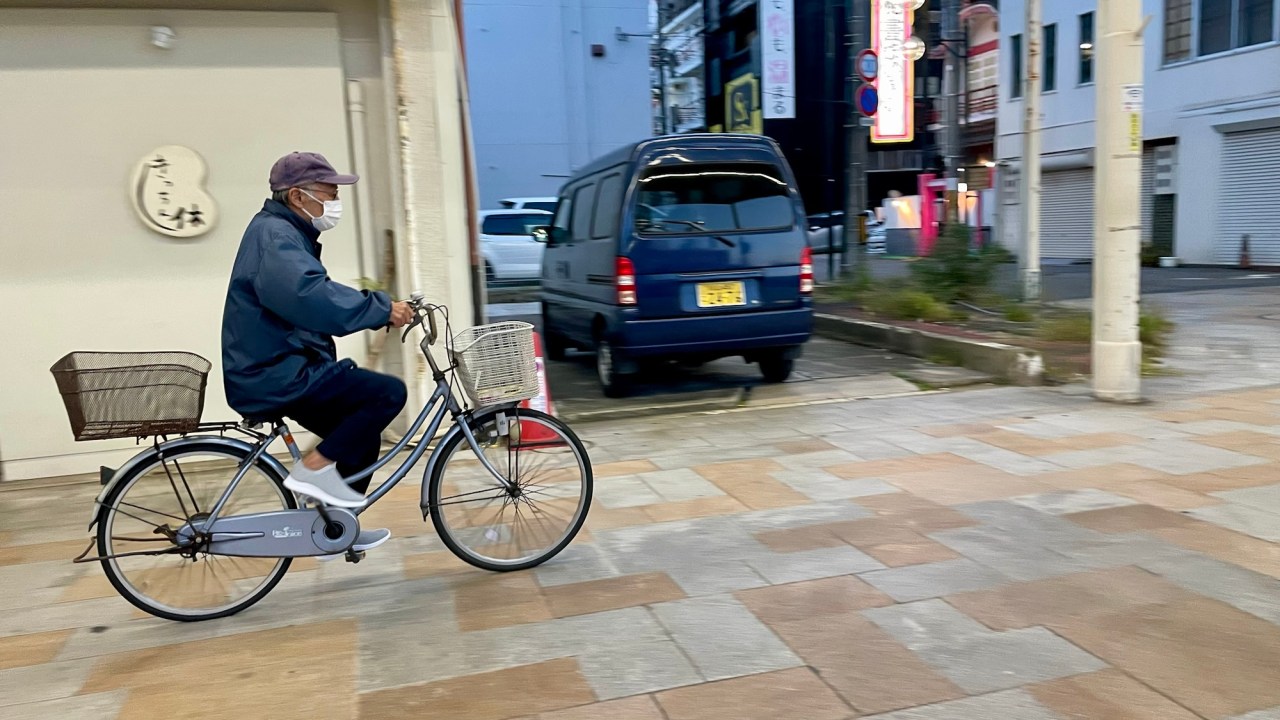

We ride north through the country side southeast of greater Osaka. We find another cheap love hotel on the outskirts of Nara for $35, including breakfast. It’s pissing rain in the morning but we don’t have to check out early. We linger in the room until the rain stops and head north to Nara.
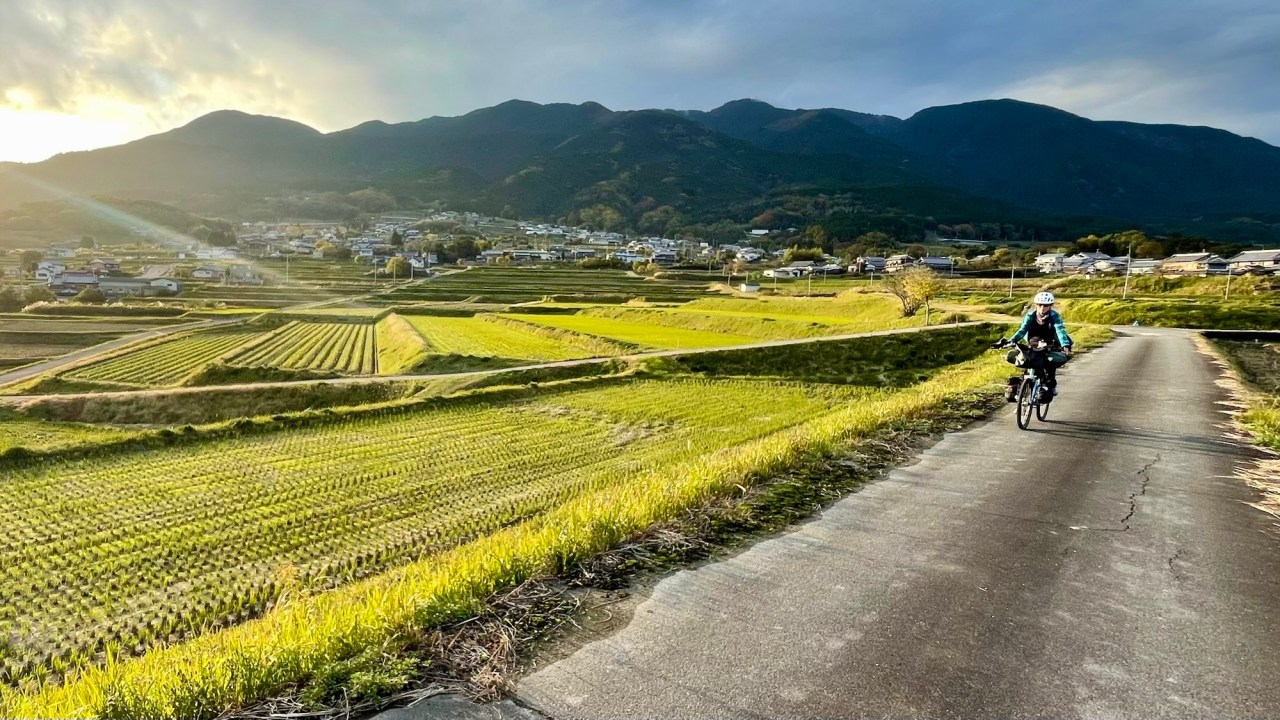
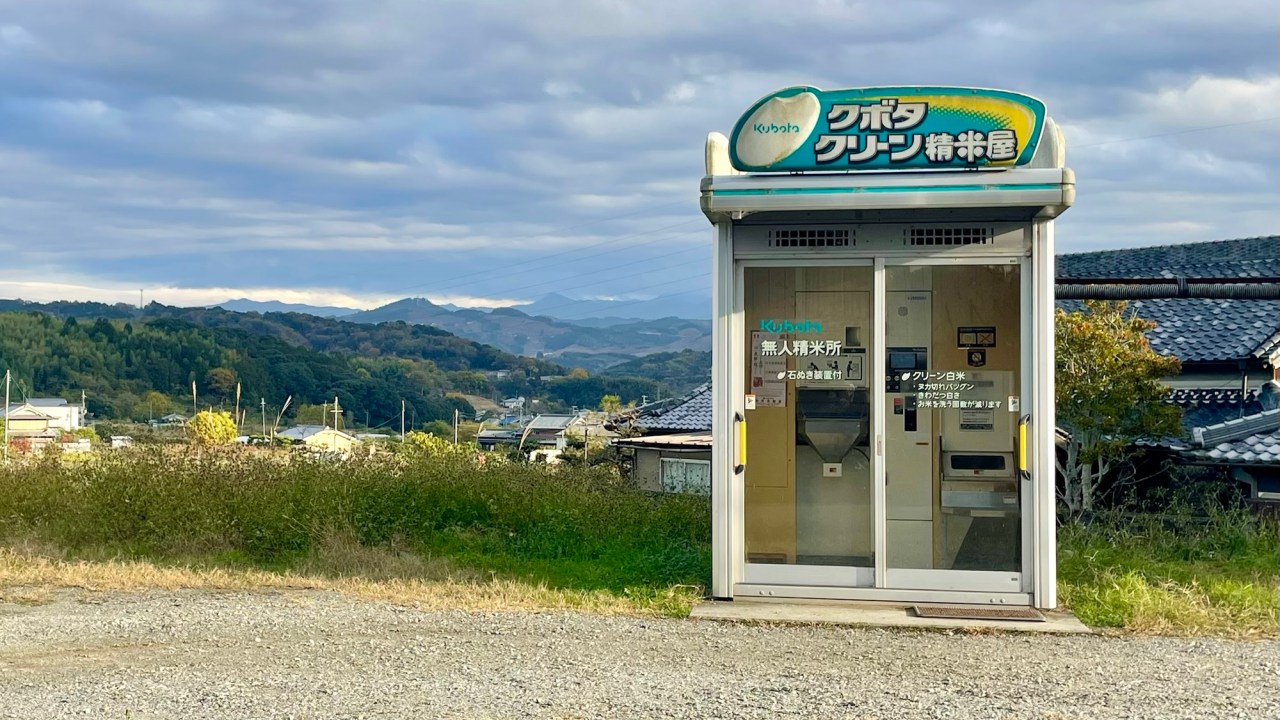
Nara dates back to the 8th century when it was Japan’s capital before the emperor moved to Kyoto. There are significant temples and monuments here, as well as hordes of tourists. We haven’t really experienced mass tourism yet in Japan and we are a bit shocked at the numbers of people.
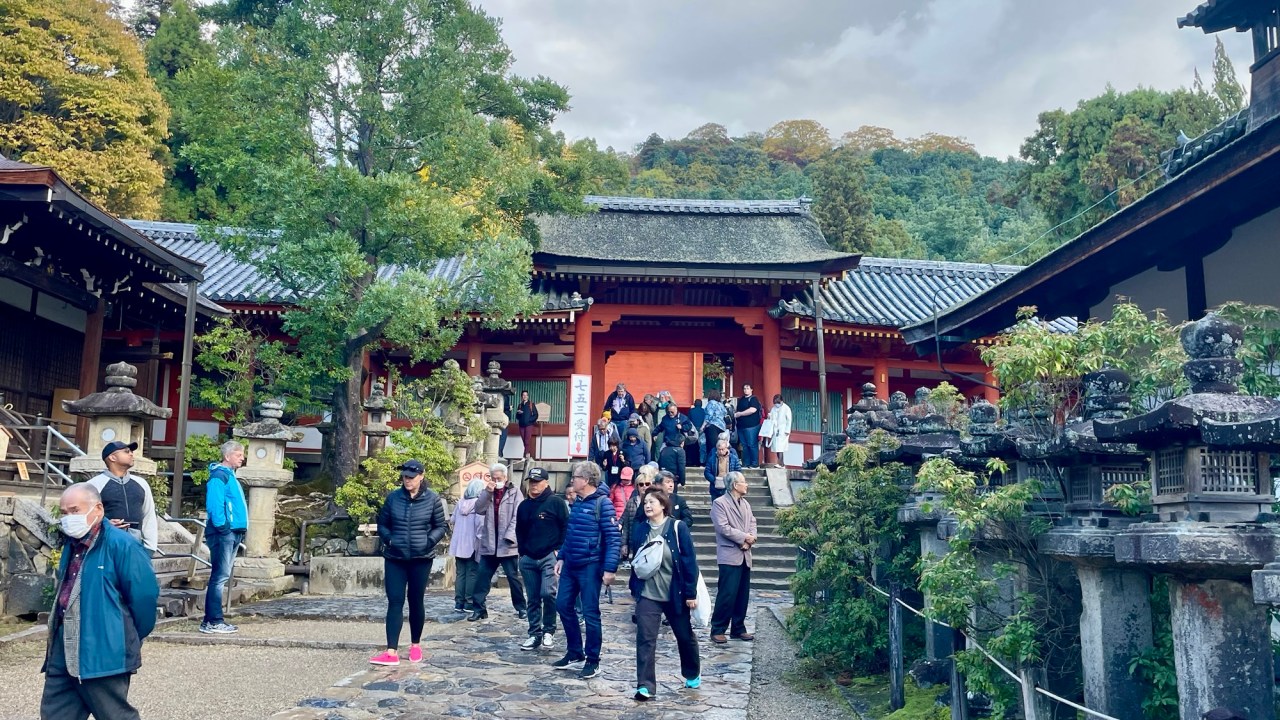

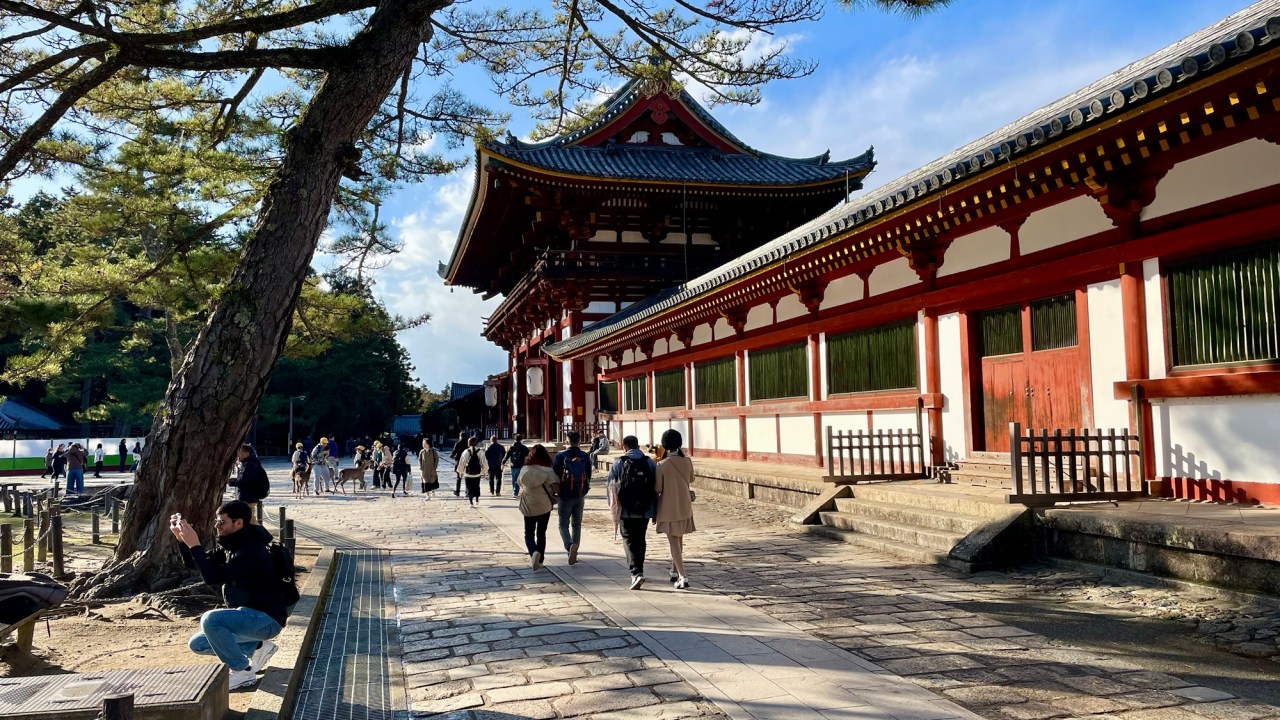
We make our way to Nara Park where hundreds of deer roam around getting fed by tourists. It’s all a bit of a turn-off. We walk around until we can’t tolerate the crowds any longer and head to our hotel. We have a long bubble bath, sipping free sake provided by the hotel.
Japan has seen a surge in tourism following the Covid pandemic. The government is actively trying to come up with strategies to divert people away from the popular destinations like Tokyo, Koyoto and Osaka to different regional destinations.
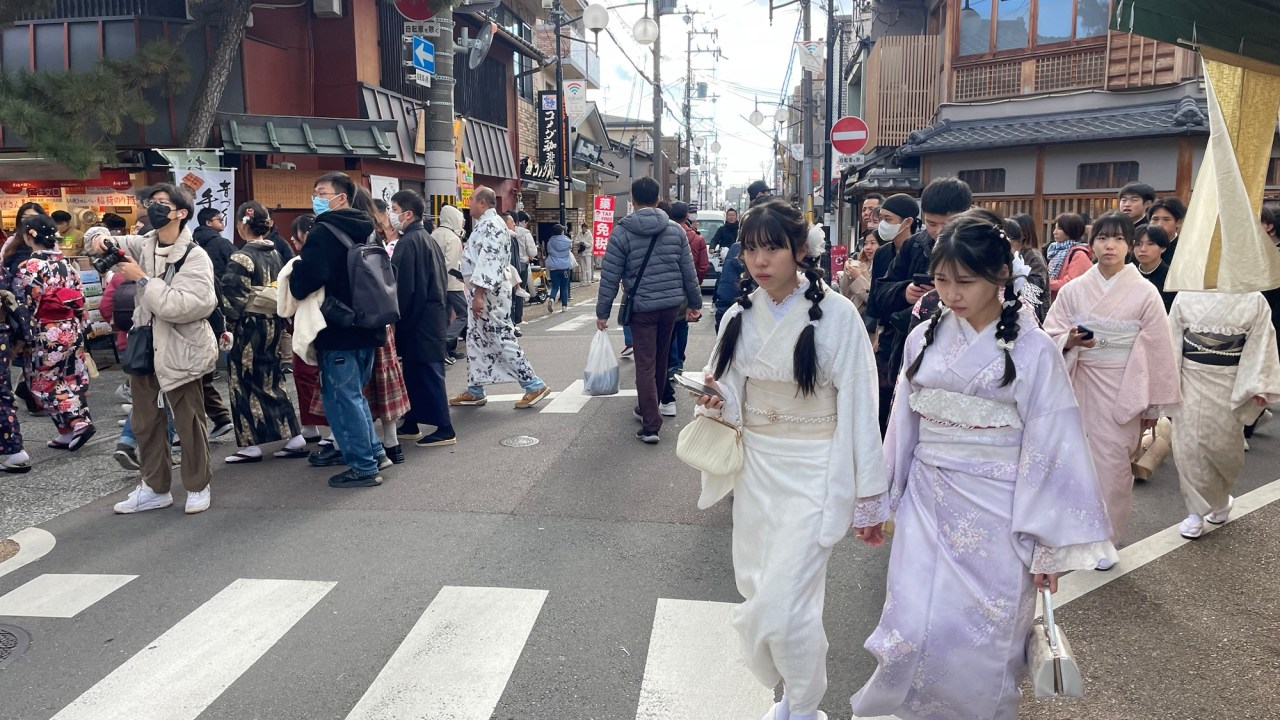
Travelling by bicycle is a great way to experience rural Japan. But most tourists don’t travel like we do, however, there is excellent public transportation in the form of trains and buses. It would be a great way to see Japan, providing you travel light. Lugging around big suitcases is not much fun. We often see people wrestling with suitcases or multiple backpacks and wonder what they are hauling around that they can’t do without.
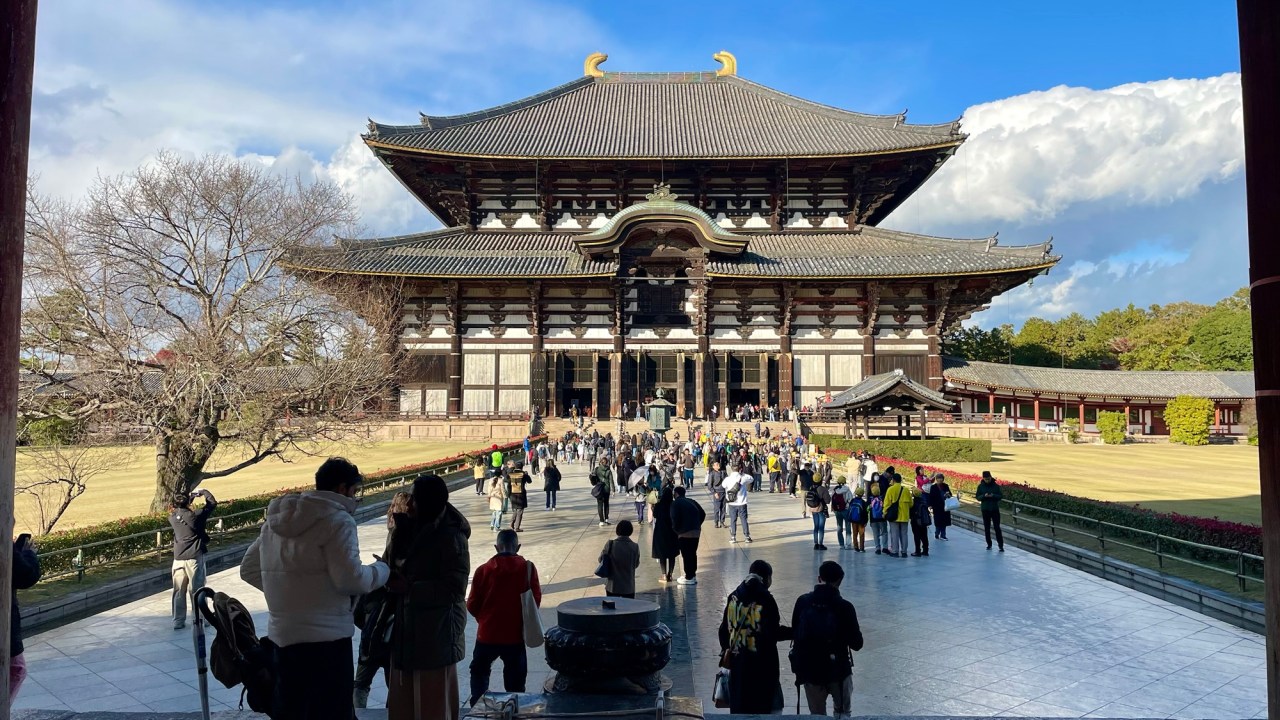
Despite the large number of other travellers, we did want to see Kyoto and had booked a room for two nights. Our ride from Nara to Kyoto continued on the Keinawa Bicycle Road, a 180 km dedicated bike path between Wakayama and Kyoto. Impossible to get lost as there is a blue line painted along nearly the entire route.
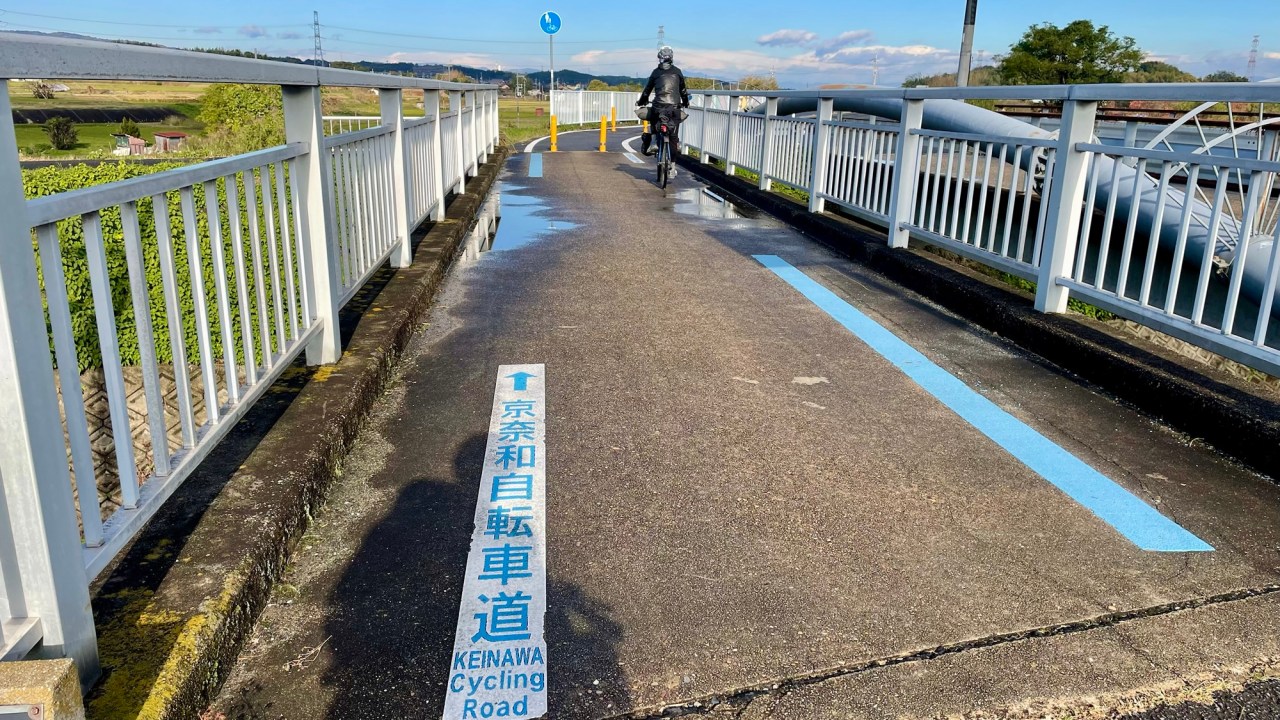
Cycling along you’d almost not know that just to the west, the metro area of Osaka is home to 19 million people. The bike route parallels the Kizu River through rice fields, tea plantations and the river’s riparian areas. It’s an easy ride and we get to Kyoto quickly.
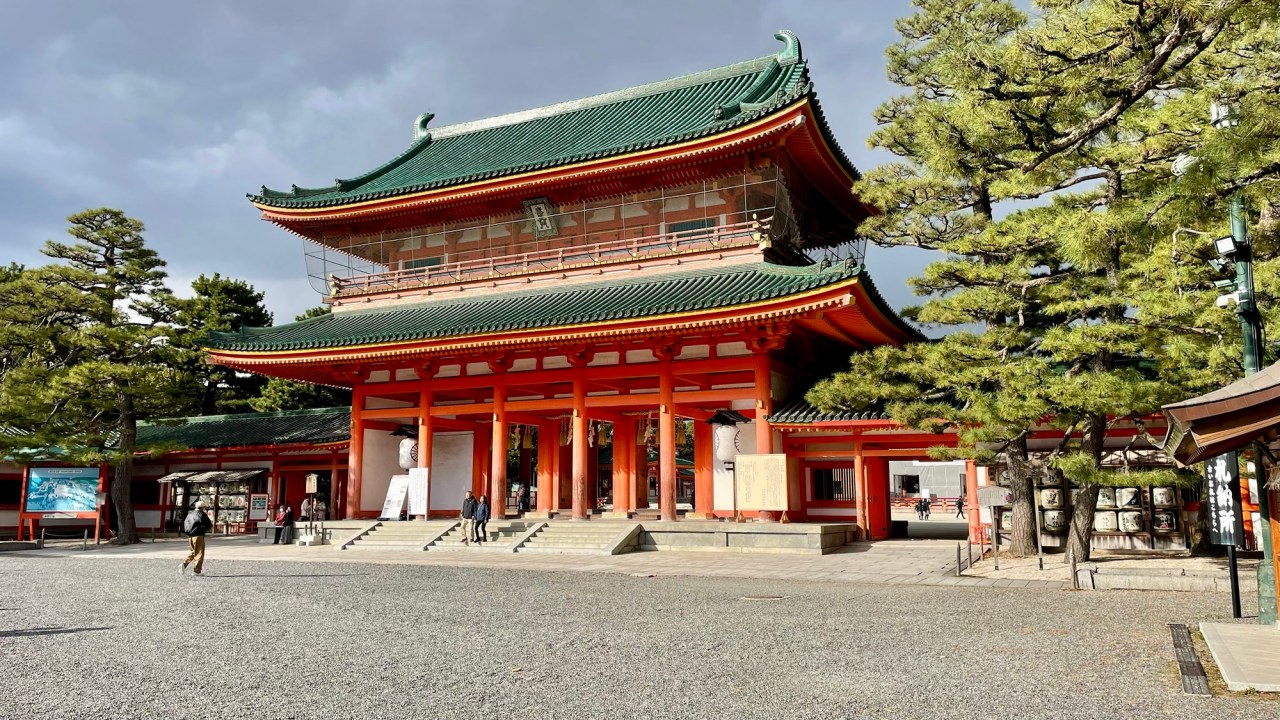
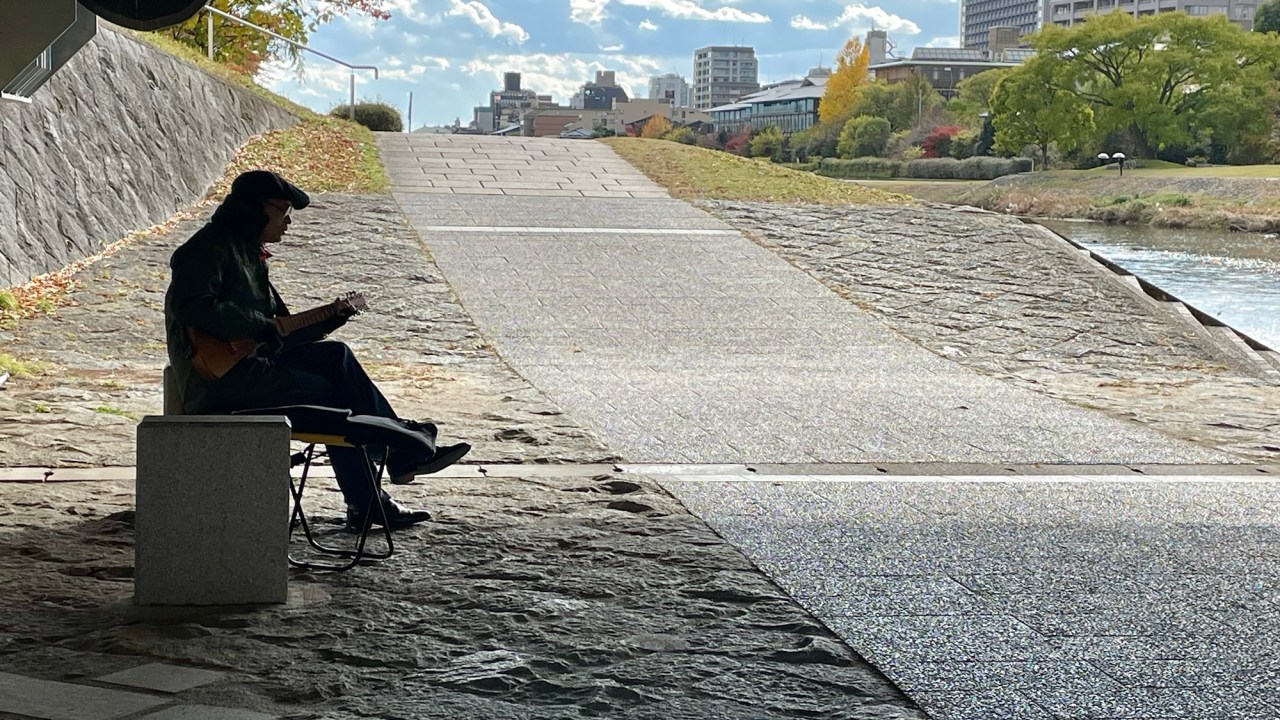
We ride towards the Fushimi Inari Shrine, famous for its thousands of torii gates, but our progress is arrested by hordes of people. It’s impossible on the bike so we leave. Instead, we ride along the paths adjacent to the Kamo River and find a nice Thai restaurant for lunch.
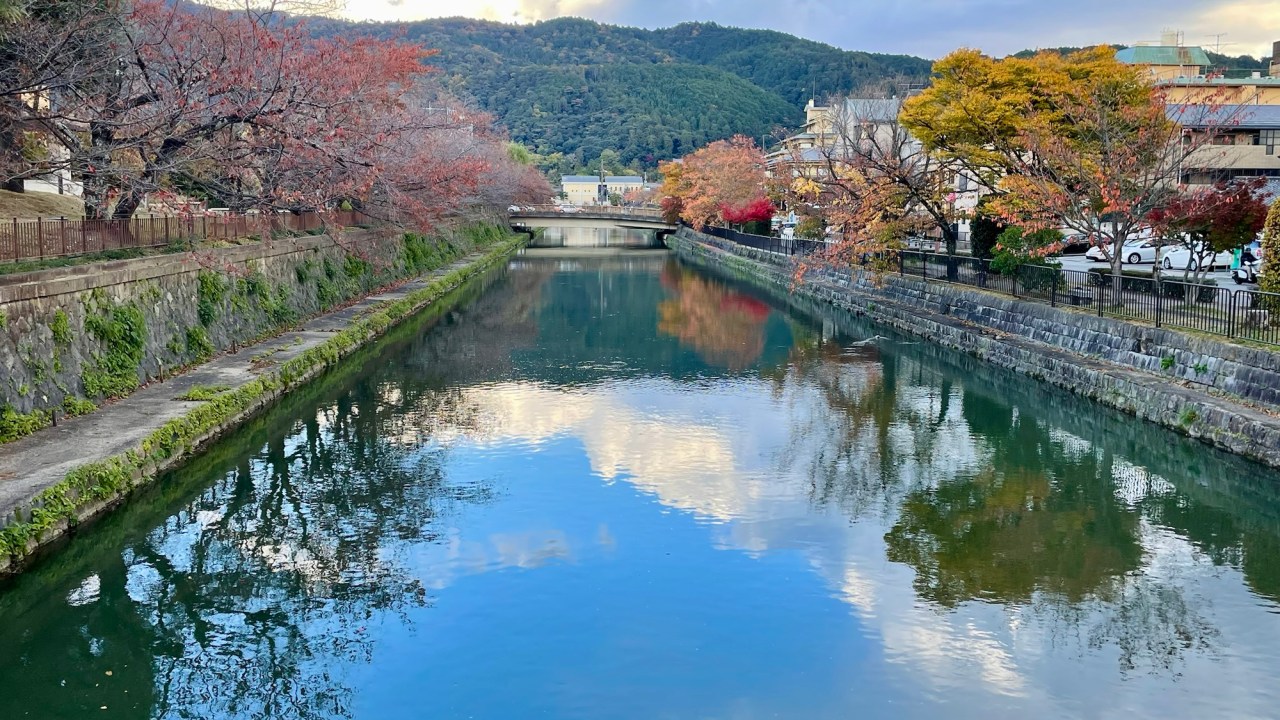
Our hotel is in a vibrant neighbourhood with lots of shops and restaurants but the staff informs us they do not have space anywhere for our bicycles. They suggest a bicycle parkade around the corner. We unload our gear and walk the bikes around the corner and quickly find the parkade.
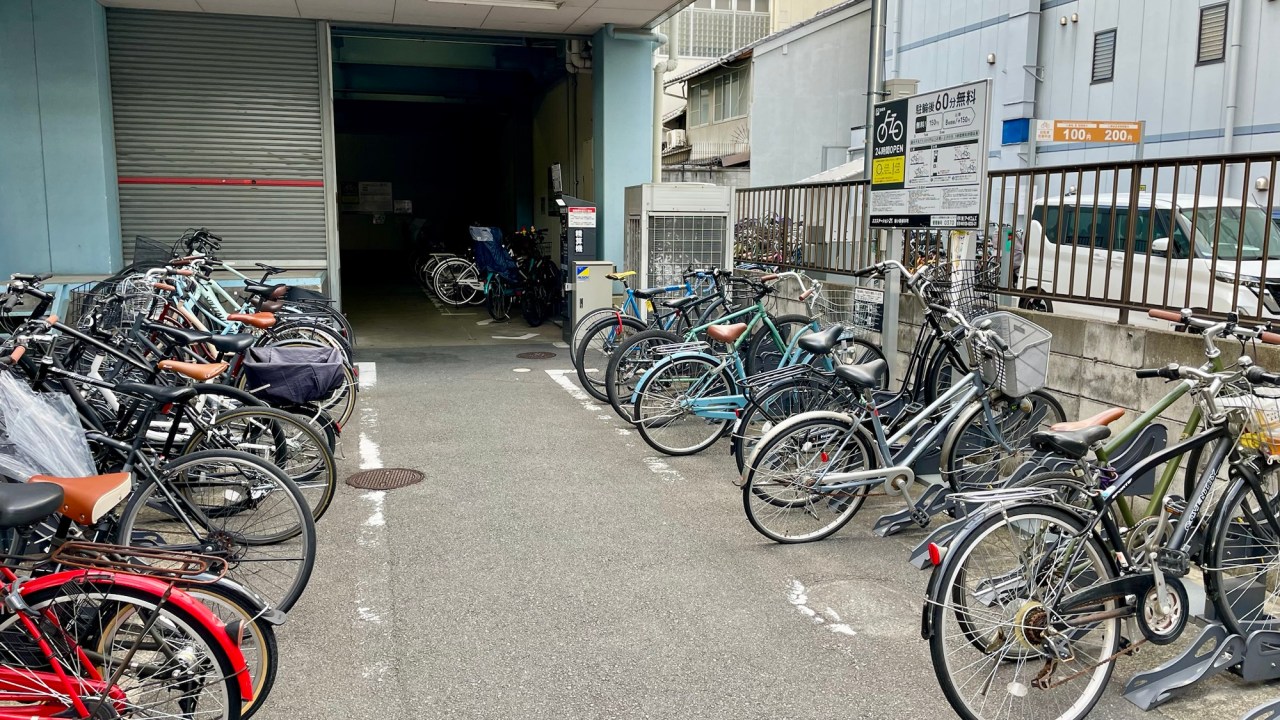
The bikes’ wheels fit into a rack that has a built-in lock that engages automatically. To unlock there is a bar code you scan with the phone, enter your bike’s parking stall and use apple pay or a credit card. There are also pay machines where you can use cash or a credit card. We throw our own lock around both bikes as added security because in reality there is nothing stopping anyone to just pay the fee for a stall and take the bike that is in that stall. But bike theft seems not to be an issue in Japan as many people park their bikes anywhere, often without locking them to anything.
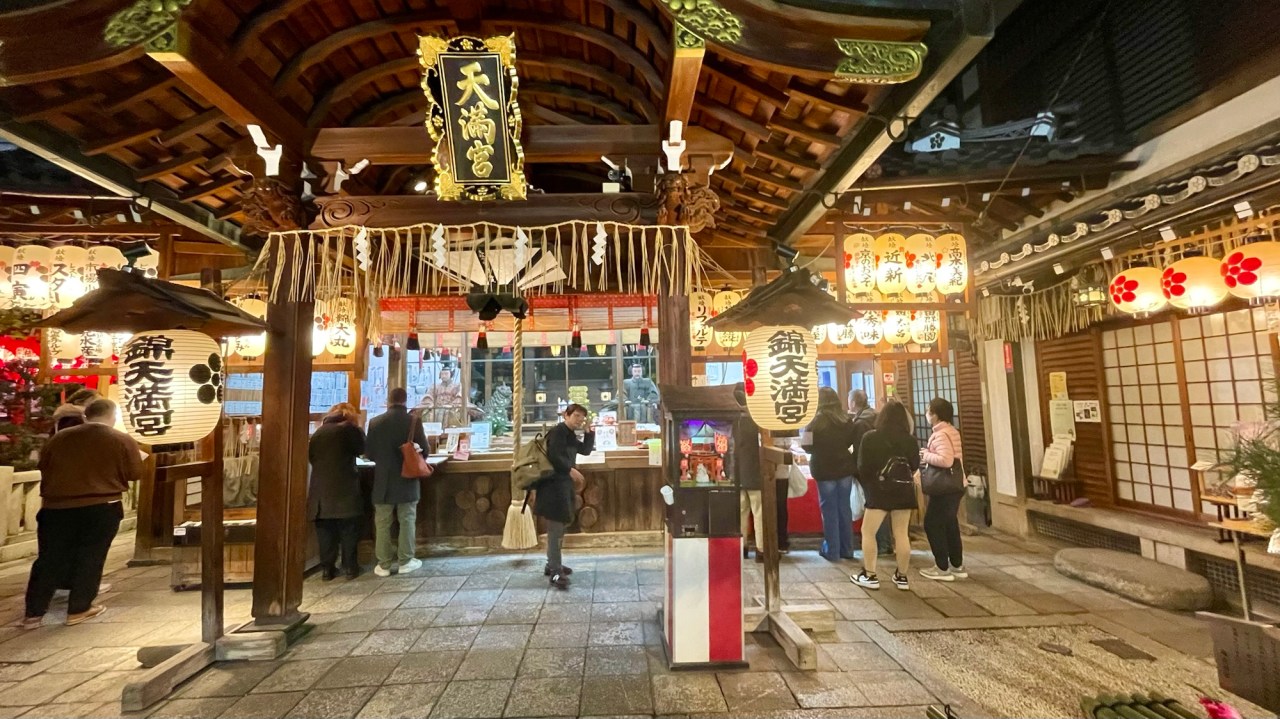
Two days later, as we get ready to leave Kyoto, we pick up the bikes and pay the $7 fee for each bike. They have not been touched and the bags we left on the bike are also still there, along with their contents.
We wander our neighbourhood after checking into the hotel and visit the nearby Nishiki Market looking for a place to eat. We settle on a restaurant that looks like an Izakaya but has a lot of seating other than around the bar. We choose the bar to watch the chefs in action.
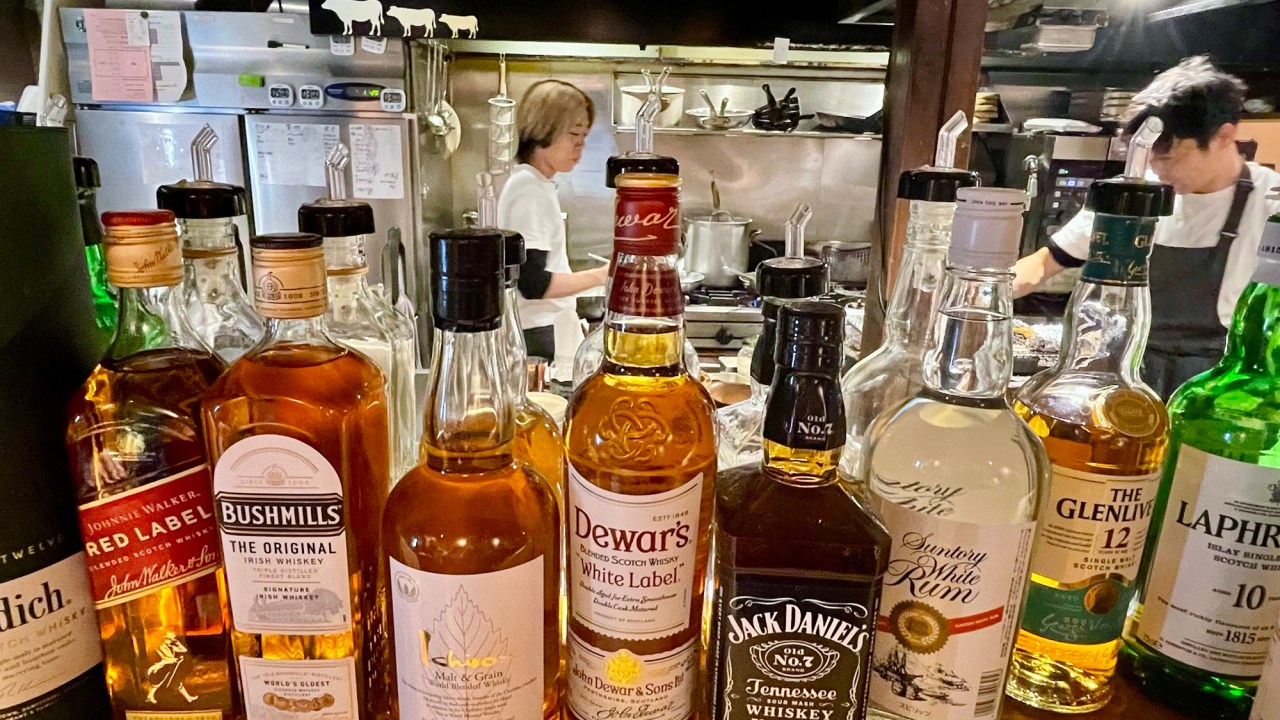
Kyoto has lots to offer and we don’t nearly have enough time to see it all. But we walk for hours the next day and get our fill of shrines, temples and tourists. One of the most remarkable structures is the Yasaka Pagoda, a 5-story tall pagoda dating back to the 7th century.
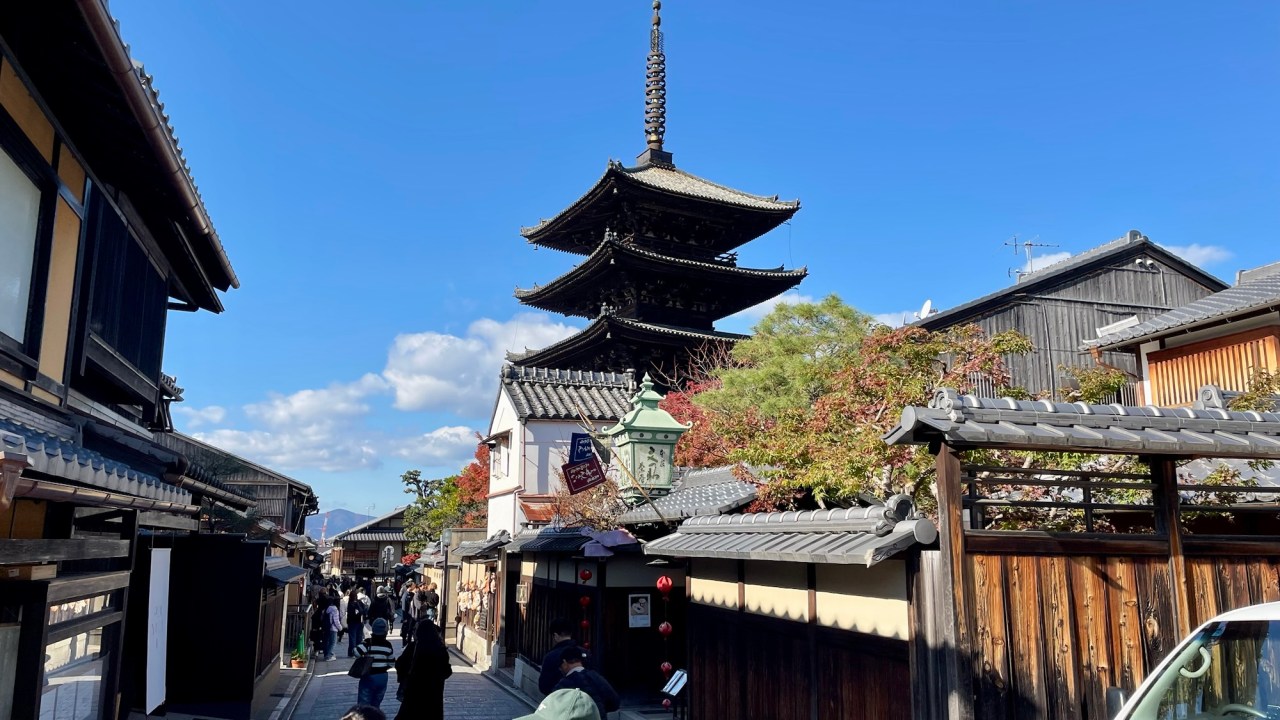
The pagoda was part of the Hōkan-ji Temple and destroyed and rebuilt several times. The pagoda was last rebuilt in 1440 and has stood here for nearly 600 years. Inside the dimly lit ground floor are four Buddhas facing the four compass points.
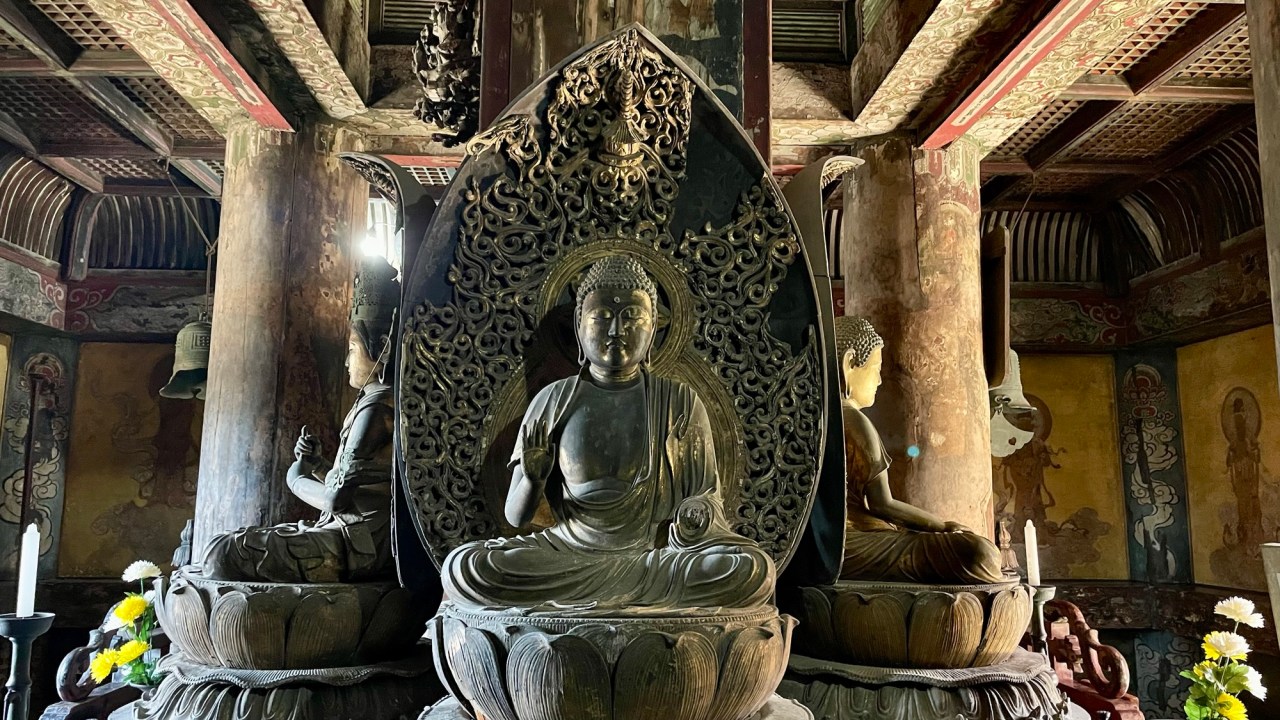
We climb a steep, narrow ladder to the second floor. Unfortunately, the remaining upper floors are not open to the public. Amazingly, there are only a few people here while outside the walls surrounding the pagoda throngs of people walk by without a glance at what is one of the oldest structures in Japan.
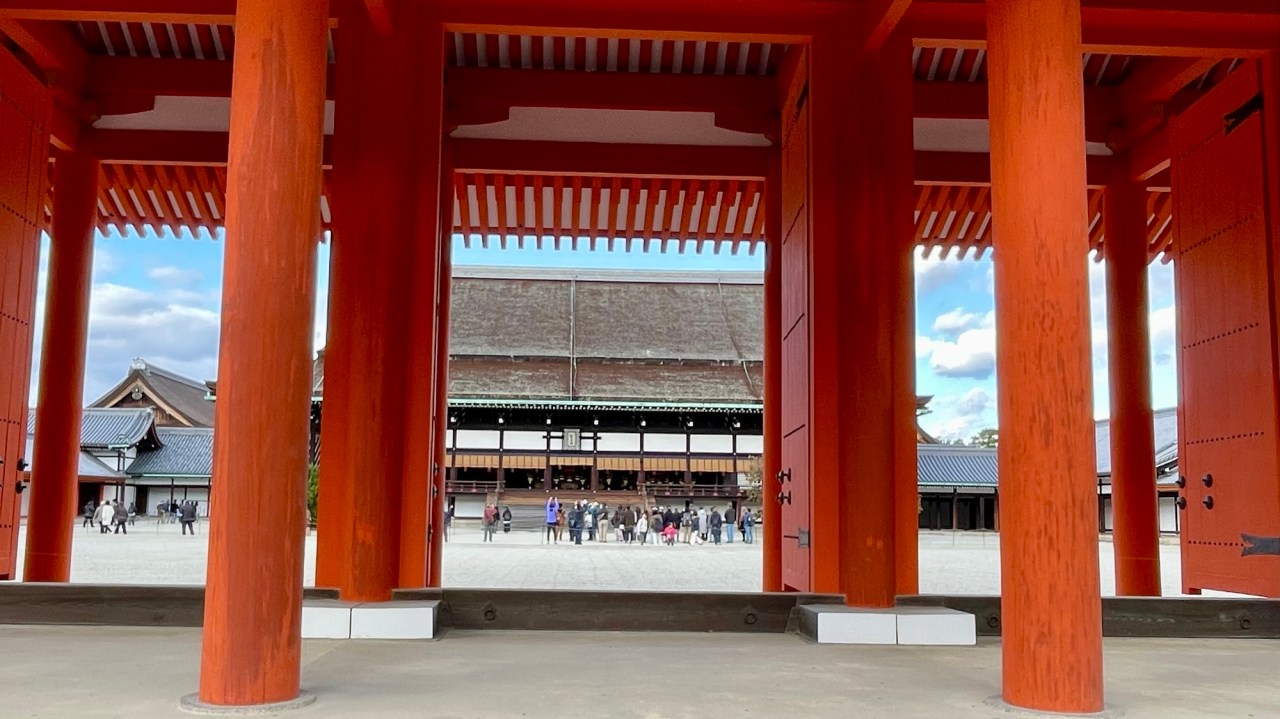
We also visit the Kyoto Imperial Palace but it’s an underwhelming experience. It’s busy, as expected, but besides the old palace buildings there is nothing to see. You can’t enter any of the buildings. You can only look in from the outside. They are empty. They give almost no clue to what life at the imperial palace may have been like.
We find a nice bar on the way back from the palace near the Nishiki Market and take a load off while enjoying a cold beverage. Our journey is nearly over. We have one more day of riding to get to Osaka where we booked an apartment for a few days. There we will pack up our bikes and prepare to fly home.
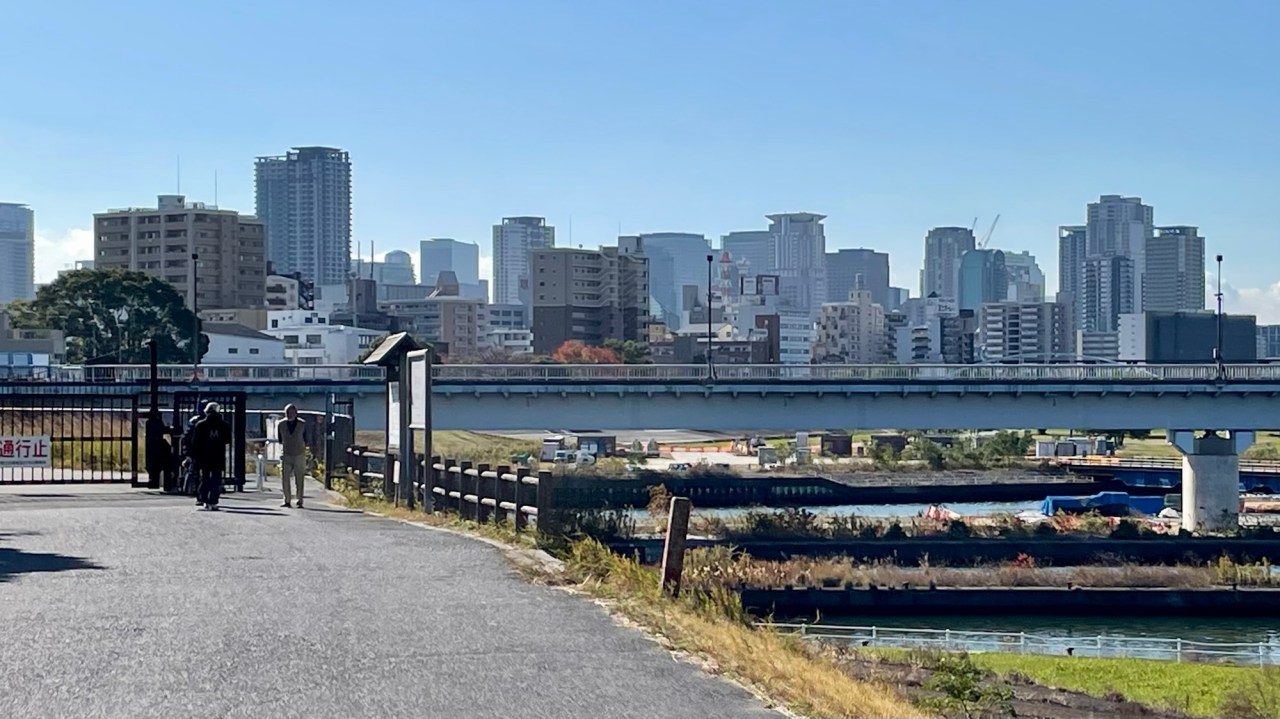
The ride has us partially backtracking on the Keinawa bicycle path south of Kyoto until we join the Yodo River flowing through the middle of Osaka. It’s an easy ride completely on a bike path but a little boring. There is not much interesting scenery until we get near downtown Osaka.
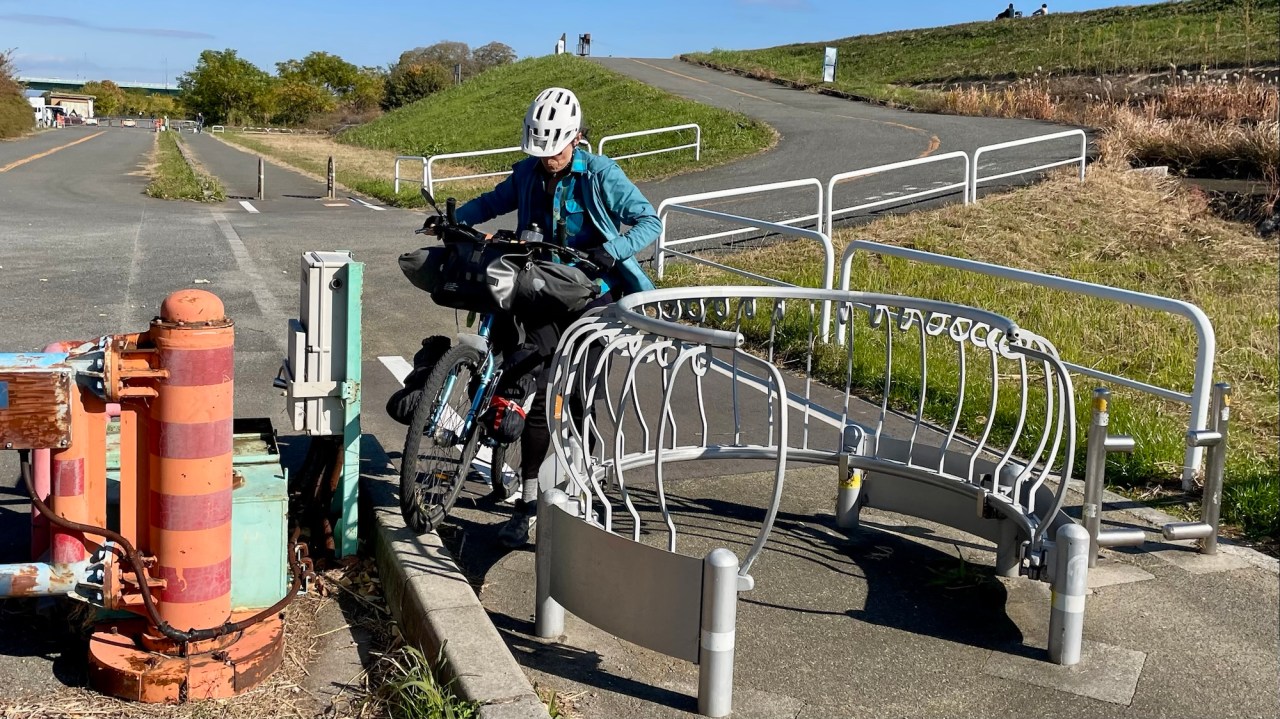
Elevated expressways crisscross everywhere as the size of the buildings gradually increases. We check a bike shop to see if they have any bike boxes but we strike out. We go to another that we had emailed and they do have two boxes for us but we have to pay them 1500 yen for each box, about $15. Beggars can’t be choosers and we pay them, arranging to come pick them up after we check into our accommodation.

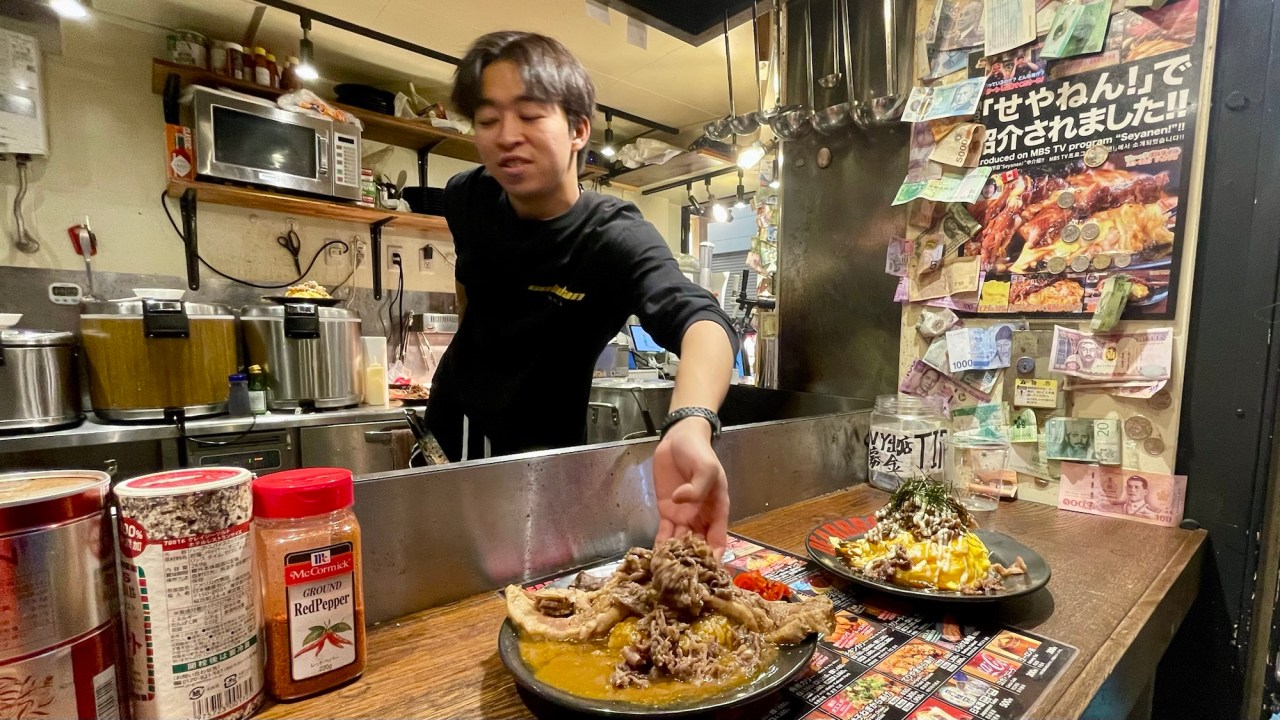
Nearby, we find a restaurant where we have a late lunch. Afterwards a group of rather drunk guys from the same restaurant chat with us as we get back on our bikes. They want to take pictures and we agree. We ride to our apartment and haul our loaded bikes up to the second floor and put them on the balcony.

We walk back to the bike shop to collect the boxes and carry them back through the city streets. En route we meet a young guy from Finland who’s in town to present a paper at a conference. He’s working on his PhD and here just for a few days to attend the conference.

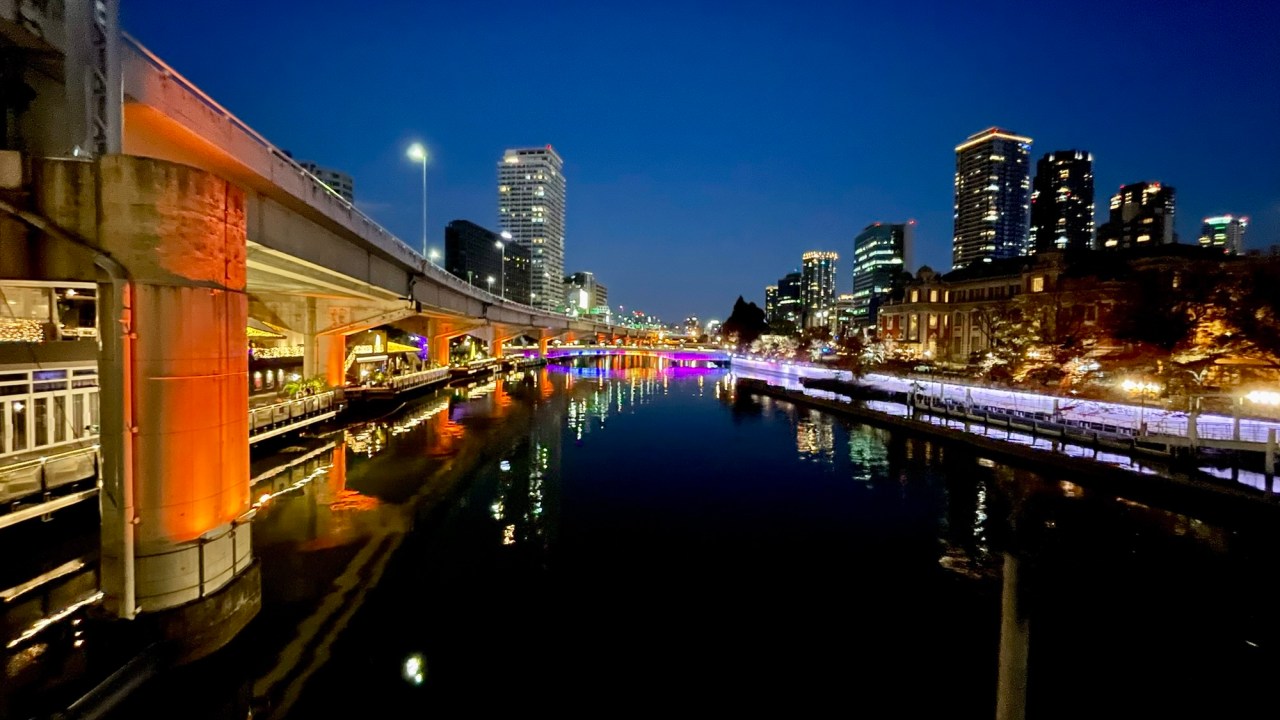
We spend three days exploring Osaka and in between our wanderings we disassemble the bicycles and pack them up. Arranging a ride to the airport proves to be fairly easy but rather expensive. I find an online booking agency and book a minivan for the morning of our departure. It arrives on time and our ride to Itami International Airport is without problems. We check in the bikes and our bag and that’s that.
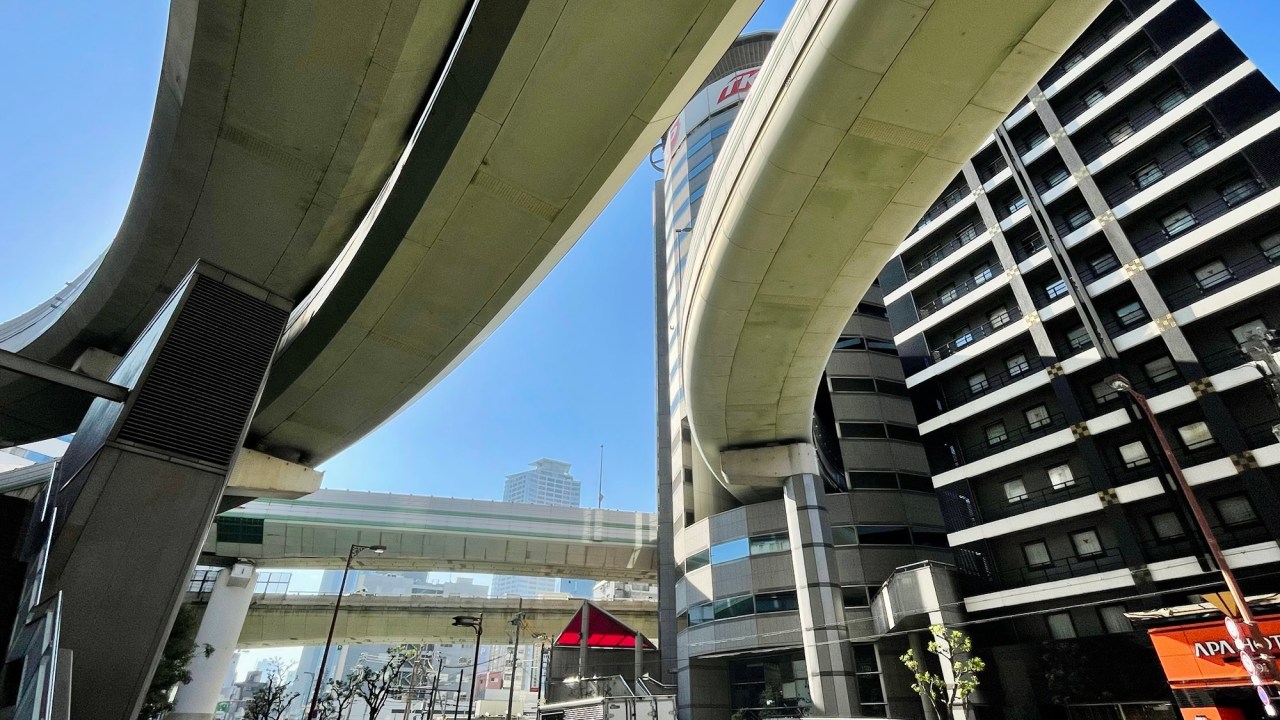
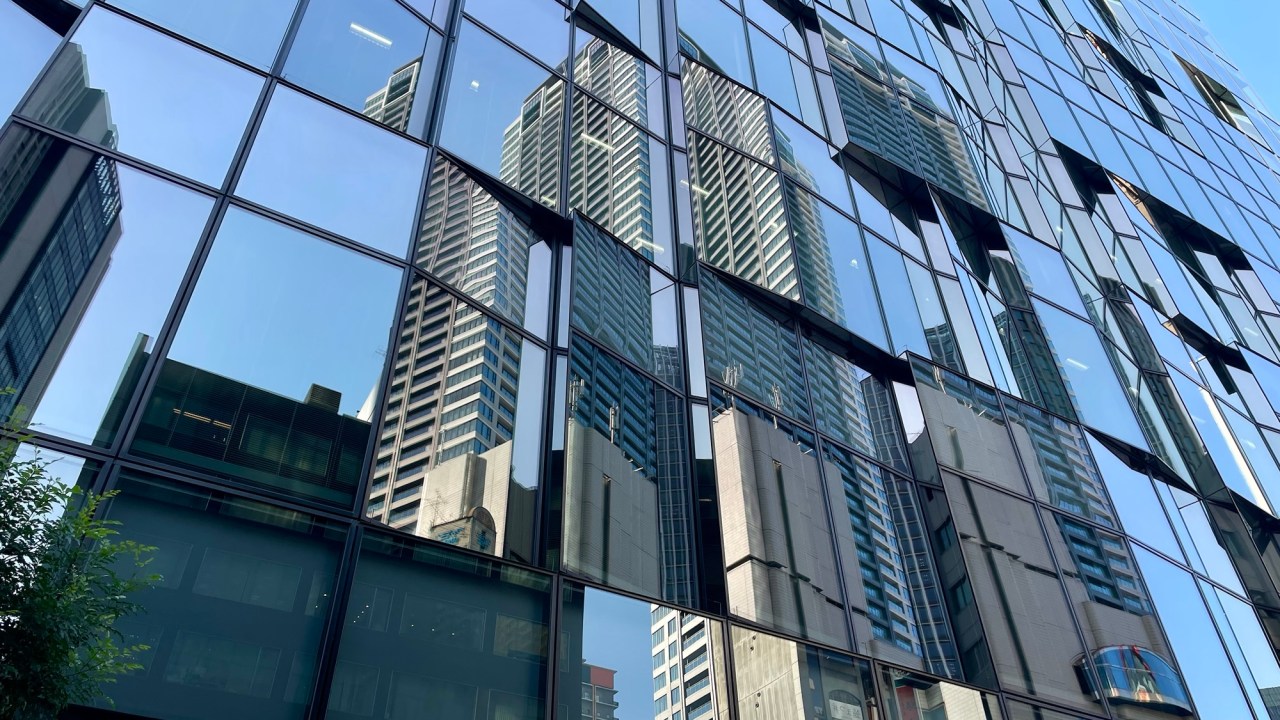
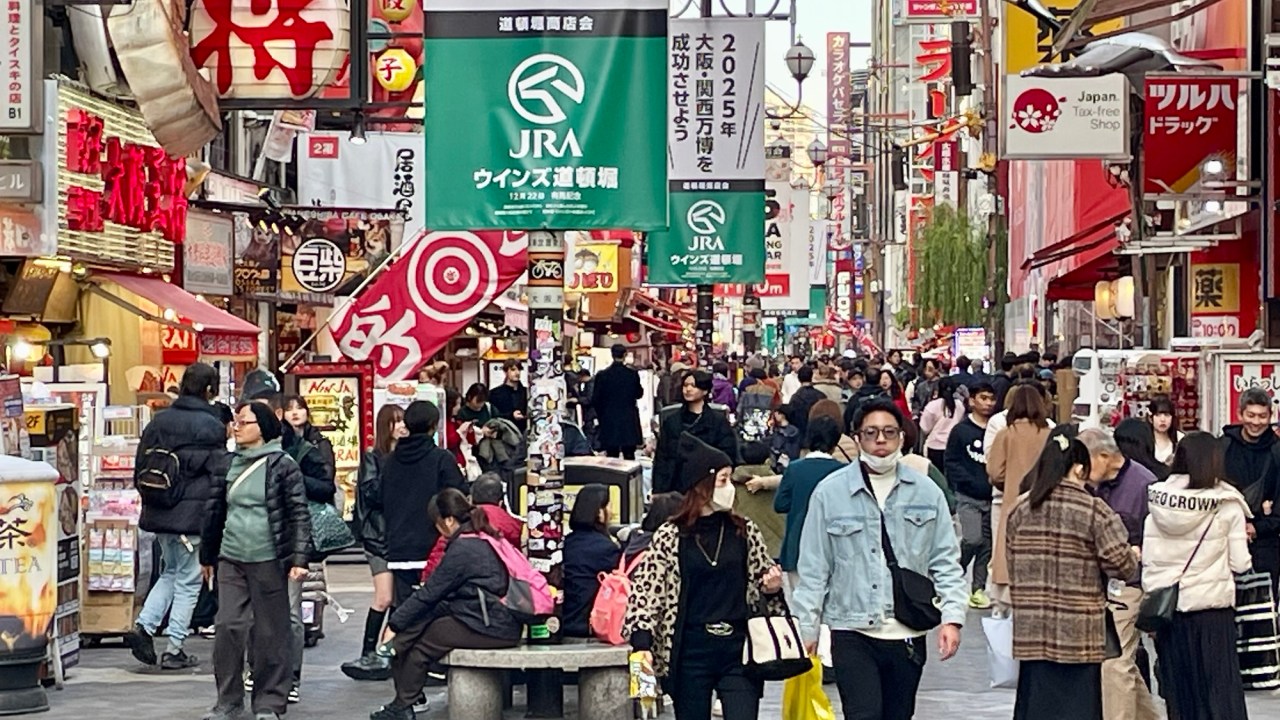

It’s been a wonderful two-month journey through Korea and southern Japan. We will definitely come back to Japan to perhaps do a combination trip with skiing and cycling. Click on the map for a detailed view of our route on this final segment of our journey.


 2 l o v e c y c l i n g
Your description is absolutely enthralling and enchanting.
As our “tomo-dachi” we look forward to seeing you on this side of the Pacific.
May your journey home, be smooth and culminate an adventurous cycle.
DAS
Thank you, David.
Your two months adventure has been distilled into a wonderfully satisfying twenty minute post, Paul and Jan. When in Japan we were always amazed by people’s courtesy and honesty. Once Greta and I visited a laundromat in Tokyo’s Meguro district. A 4000 yen note was tacked to a bulletin board with a note: “Will the American tourist who left this money behind please claim it”!!! It’s all mostly good in Japan but the several independent western women I know who have worked in Japan were often uncomfortable with men’s attitudes to females.
Thank you, Jim.