We’ve been in Japan for a while now.
After our Jeju Island tour, we arrived on a late ferry in Yeosu in the dark. We had decided not to ride to Busan to save a few days so we could cross to Japan and have more time there.

We rode to the intercity bus terminal in the morning and were able to get on a bus shortly after. No problem with the bikes. They went into the large luggage compartment under the seating area. There was only a small fee for the bikes.
Three hours later, we were in Busan and made our way to the international ferry terminal to see about tickets. Again, this was impossible to do online. We were lucky and able to book a cabin on the ferry that night.

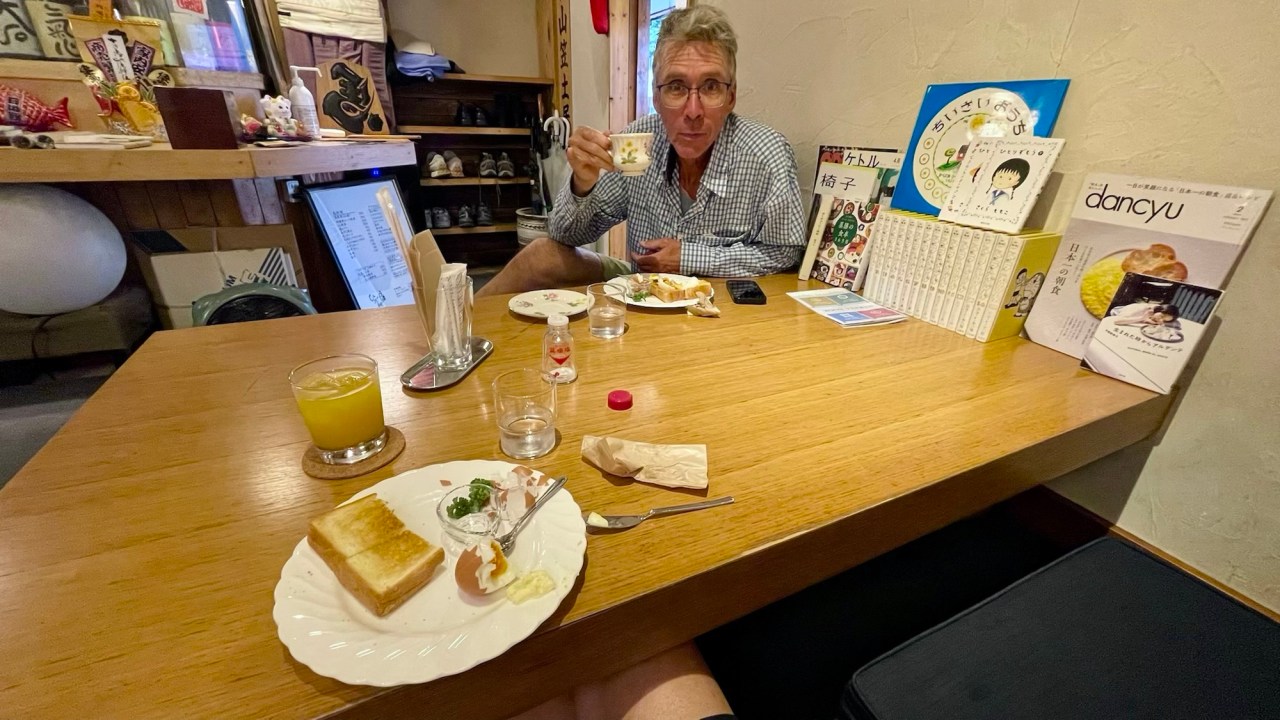
We arrived in Fukuoka on Kyushu Island early the next morning and once we were through immigration, we set off in search of a place for breakfast. We found a little coffee shop where they served toast and eggs and good coffee, Japanese-style, shoes off at the door and sitting on tatami mats at a low table.
That done, we went in search of an outdoor equipment store to buy a gas canister for our camping stove as the one we had was confiscated upon boarding the ferry. So were our pocket knives but they gave those back to us upon arrival.
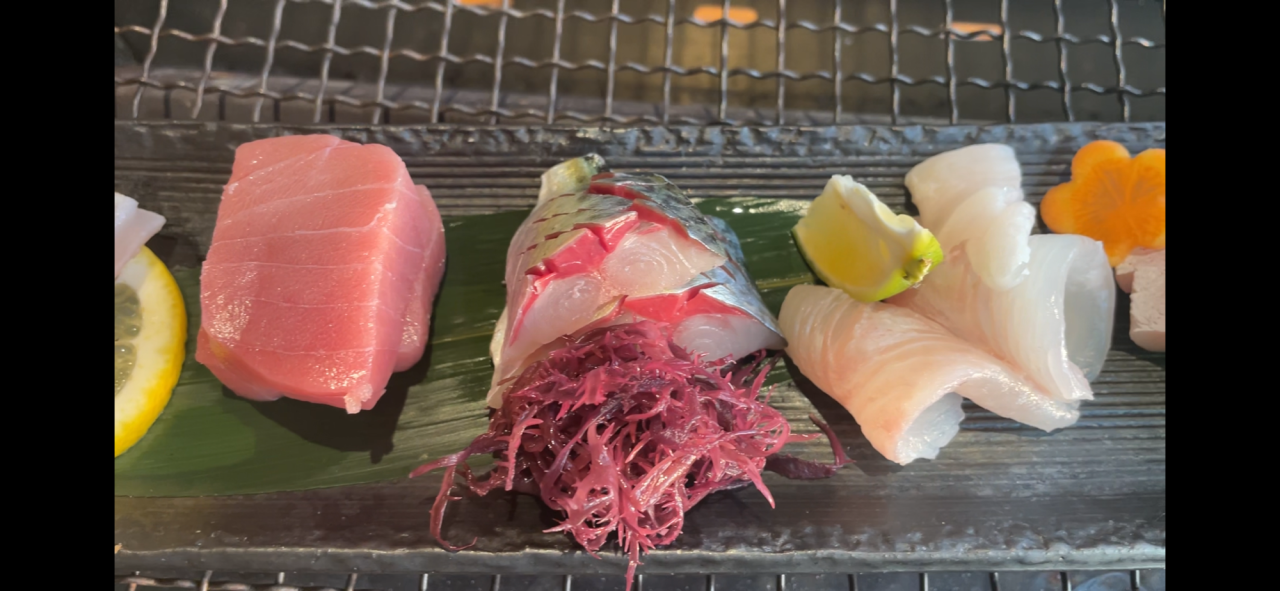
We didn’t linger in Fukuoka. It’s a big, busy city and we weren’t into staying. Instead, we rode east through the city and camped at Keya Beach. Nobody there but an excellent seafood restaurant was open and our first dinner in Japan set a pretty high bar.

We rode on to Karatsu, a small city famous for its castle and its annual fall kunchi, or festival.

For three days they parade 14 massive hikiyama through the streets. They are 5 to 6 metres tall, made of wood, bamboo, paper and lacquer in the shape of samurai helmets, fish, dragons and other fantastical creatures.
The oldest hikiyama is Aka-Jishi, a lion head built in 1819. It’s 5.4 metres tall and weighs 1.7 tons, or 3750 lbs. They are all works of art.


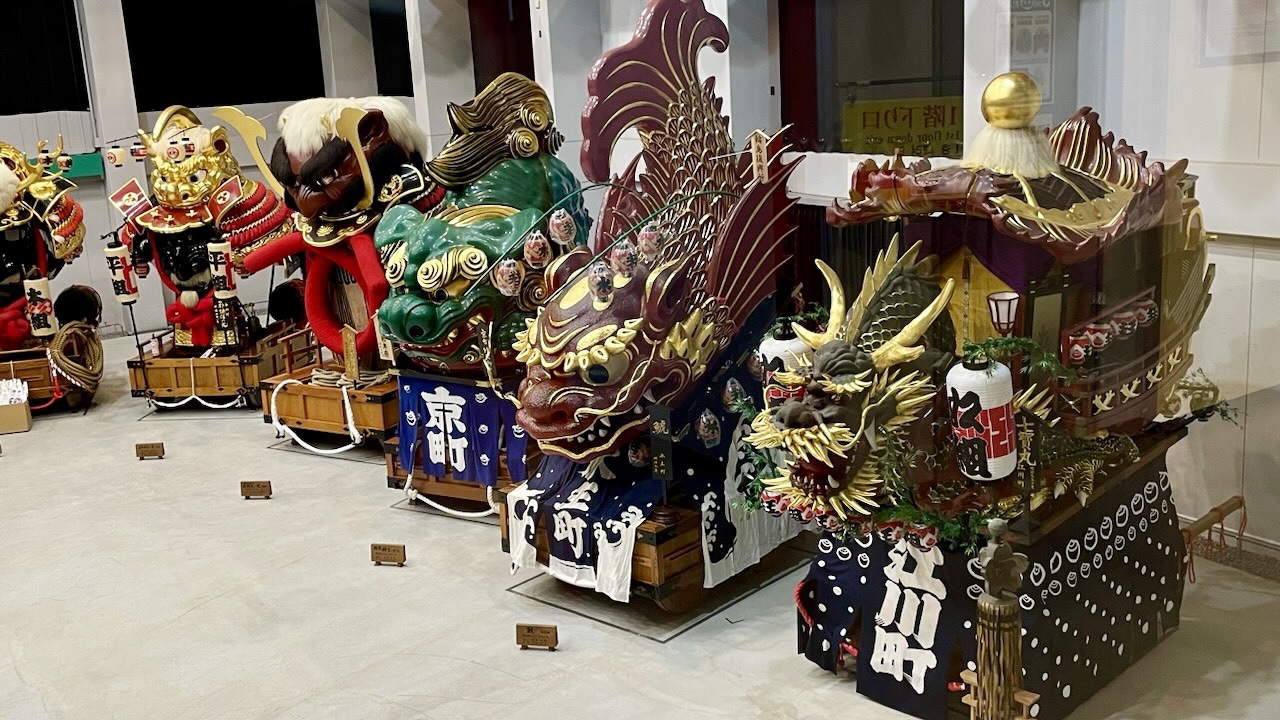
The problem: not a room to be had in town or anywhere near it for the weekend as some years up to 500,000 people come to see the event. So we had to settle for seeing the hikiyama in a large hangar in the centre of town prior to the festivities.

The weather for the weekend was also forecast to be terrible with up to 140 mm of rain so we needed to find a place to sit out the storm. We ended up in Ōmura, a city on a large bay of the same name opposite Nagasaki.

For two days it pissed rain and we hunkered down in a small hotel room, going out for walks with umbrellas kindly provided by the hotel.

We wandered around Ōmura Park and the castle ruins, partially rebuilt in 1981. Only portions of the stone walls remain. The keep was taken down in 1871 and a Shinto shrine erected on its foundation in 1884.


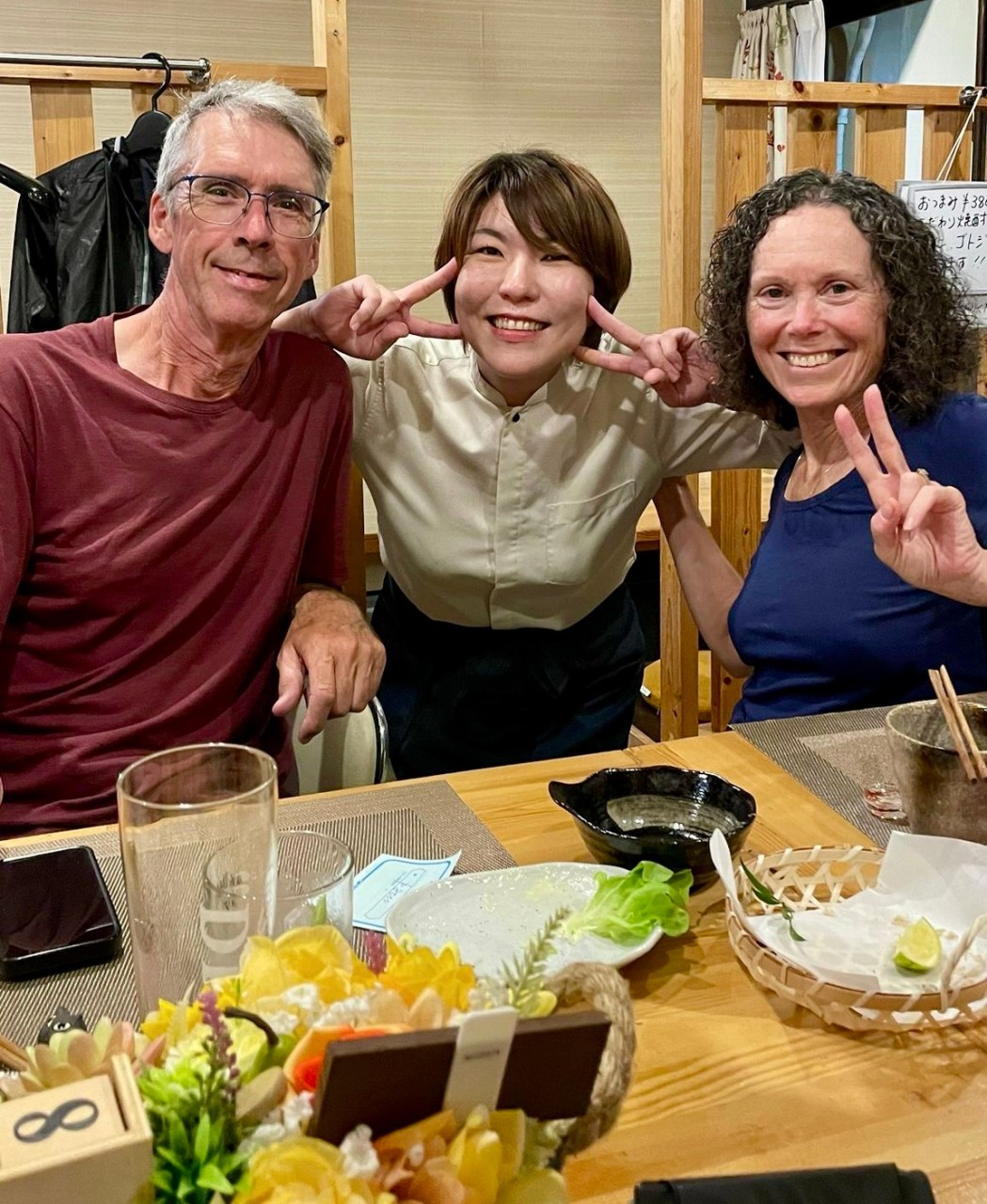
We found a little bar/restaurant where we had a lovely evening with the owner, Yuko Tamura. She fed us little tapas-style dishes that were delicious, including sashimi, deep fried smelt and croquettes.
The storm broke and we wasted no time getting back on the road, picking our way through Ōmura’s neighbourhoods on little streets. It feels like we’re riding through people’s backyards.


We cut across the isthmus of a peninsula bounded by Shimabara Bay on the east side and Tachibana Bay on the west side.
Riding along the coast on a long-ago abandoned rail line was pure joy. The Old Obama Railway was opened in 1927 and closed in 1938.

In Tomito we stumbled upon a little café overlooking the bay and met a young woman from Seattle. She lives in this little town teaching English. We ordered lunch in the café, enjoying the scenery.
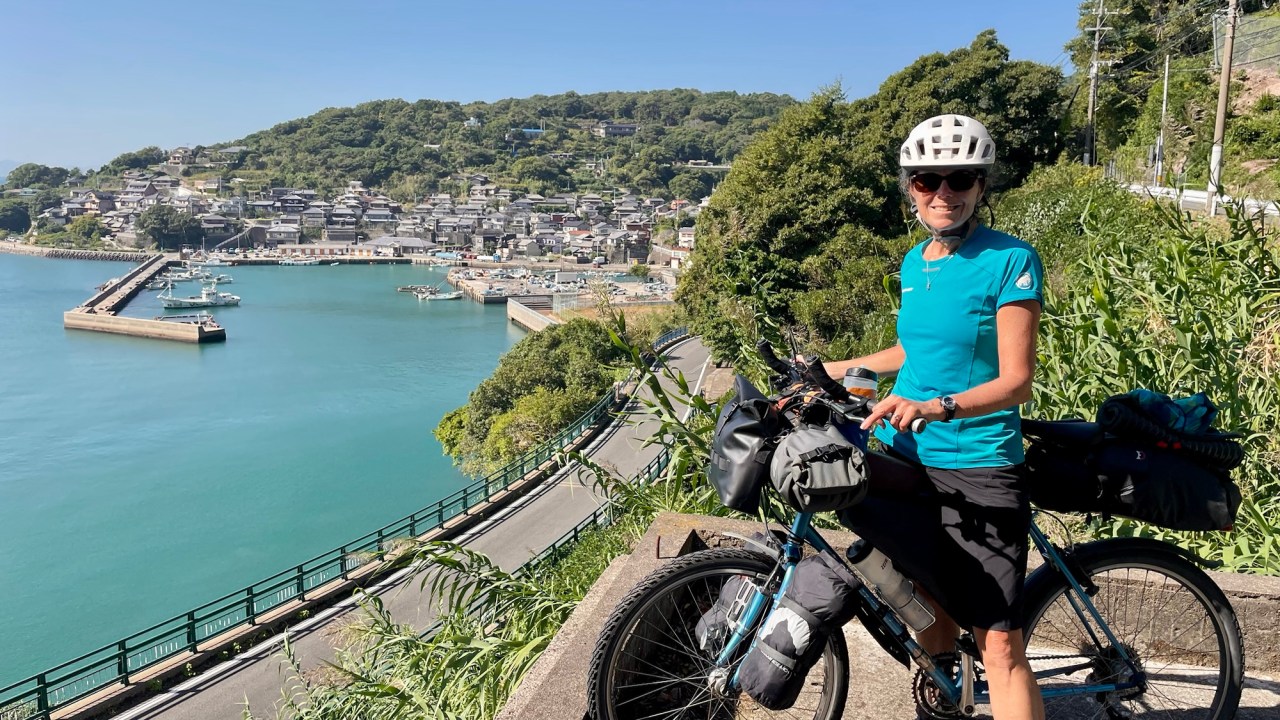
We finished the day at the little town of Kuchinotsuchoko and its municipal campsite set among the pines above the beach. There were several other campers there.
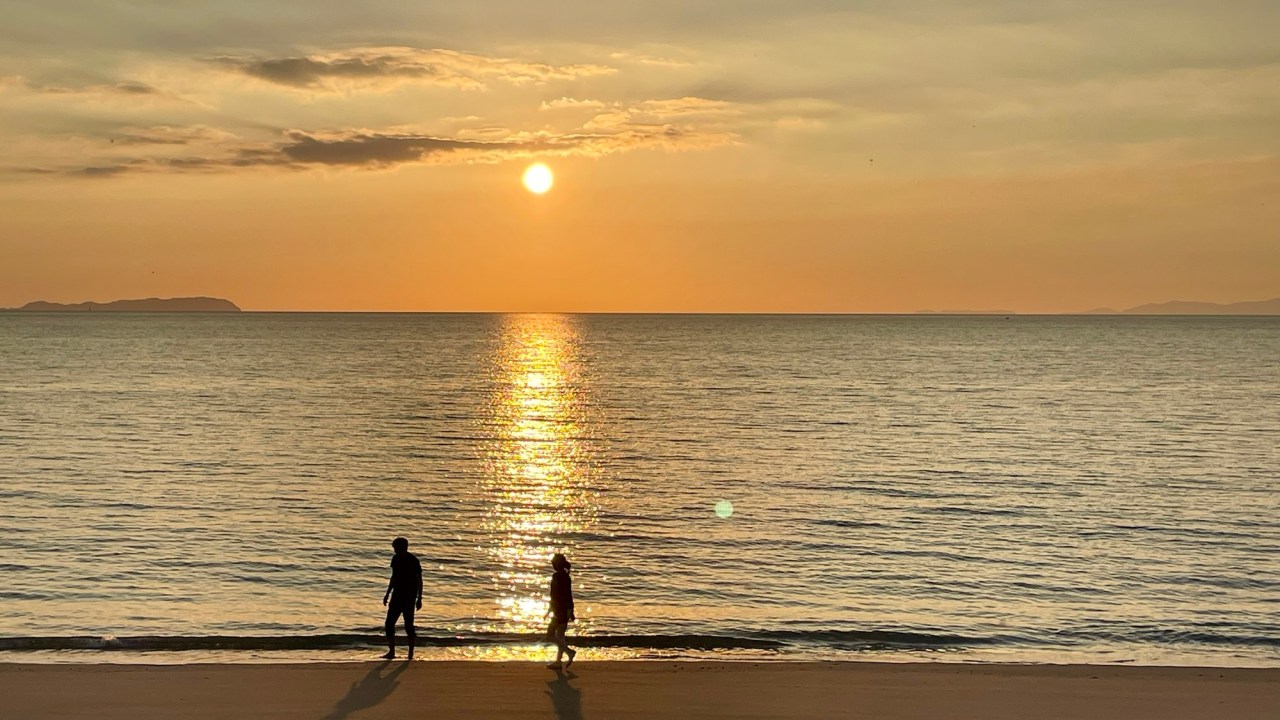

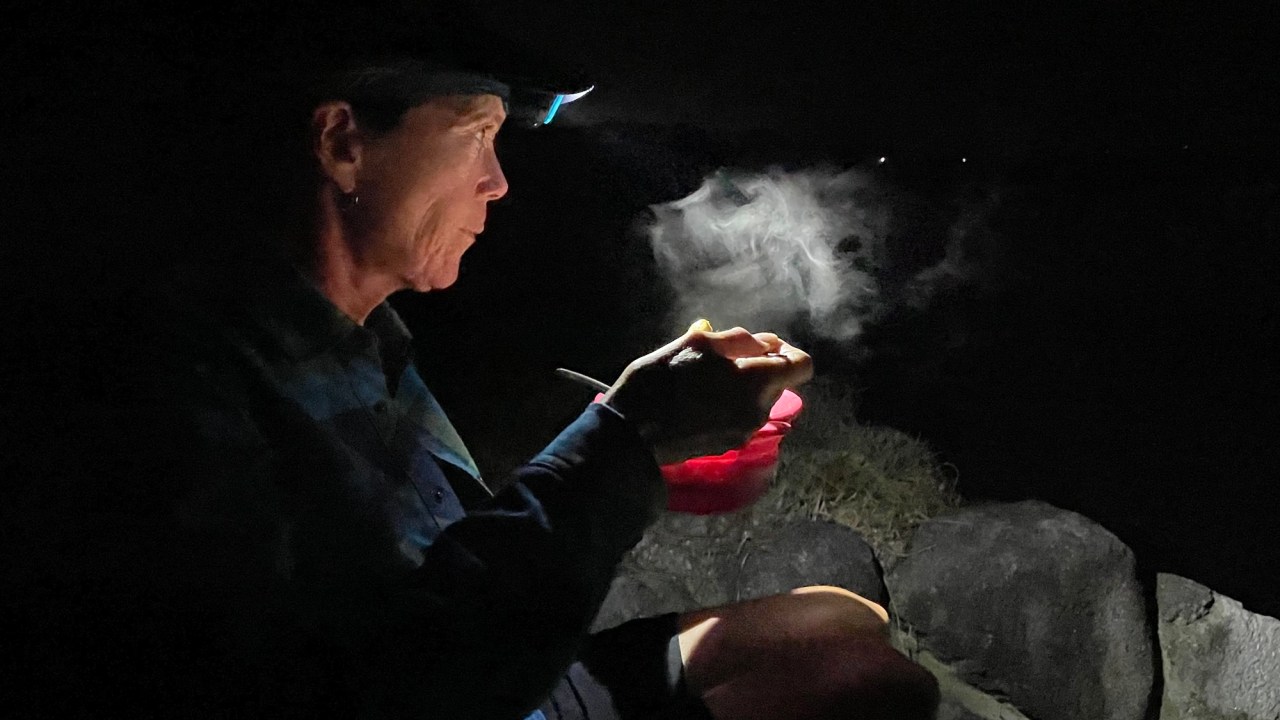
We rode to the nearby supermarket for some dinner stuff and cooked our meal of noodles, veggies and curry sauce by headlamp. It gets dark around 18:00 and it was early to bed as we don’t tend to sit around long after dinner, although the nights are almost as warm as the days with only a few degrees difference.
In the morning it was a short ride to the ferry terminal for the crossing to Shimoshima Island, followed by a 30-kilometre ride to another ferry, crossing to Shoura-Jima island. It was just us and one car on the little ferry.

Shimoshima is connected by bridge to much larger Nagashima Island and we slowly made our way south through its hilly interior, crossing another bridge back to the main island of Kyushu.

We had our sights on a long beach in a bay north of Akune. We found a suitable spot and headed back up the road to a supermarket to get some supplies, returning just before sunset.
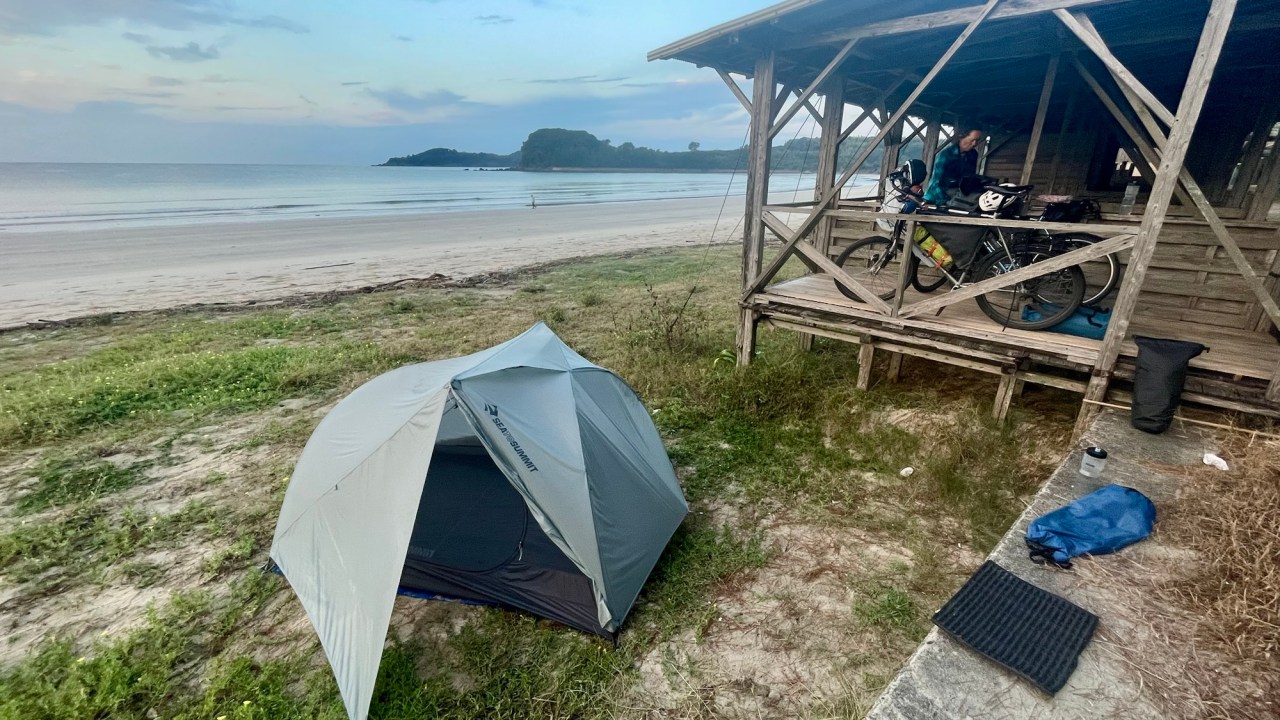
The beach was pretty much deserted and we enjoyed the solitude as the tide slowly crept up the beach.
Unbeknownst to us, the beach was closed to camping. We looked at all the signage, translating it to make sure, but nowhere did it forbid camping.

In the morning, however, a gentleman came along and informed us of this. He phoned someone and handed me the phone. I spoke with a n English-speaking gentleman who asked what we were doing there and I told him about our journey. He was curious and asked more questions and then told me the beach is a nesting site for turtles and camping was not allowed. I apologized for our ignorance and the infraction and that settled the matter. A few minutes later, the man who had found us camped returned and presented us with two small bottles of iced tea. It wasn’t the first time we’ve been given gifts of food or drink.

We had our breakfast, broke camp and continued on south to Kagoshima. It was another warm day with two fairly long climbs but gentle grades. In the end, it was another 80-kilometre-long ride and we arrived at our accommodation mid-afternoon, close to the port.

Kagoshima is a medium-sized city with 600,000 inhabitants living in the shadow of Japan’s most active volcano: Sakurajima.

From our room we could see it across the bay, only four kilometres away, venting steam into the orange evening sky. It’s a strata volcano that was formerly an island but a large 1914 eruption connected it to the Ōsumi Peninsula.


Sakurajima continues to erupt, including eruptions earlier in 2024, emitting plumes more than five kilometres into the sky and spewing rocks more than a kilometre from its crater.
We took the ferry across the next morning and cycled around the north side of the volcano. There were impressive views of large lava flows below the crater. All the while, steam was venting into the brilliant blue sky.
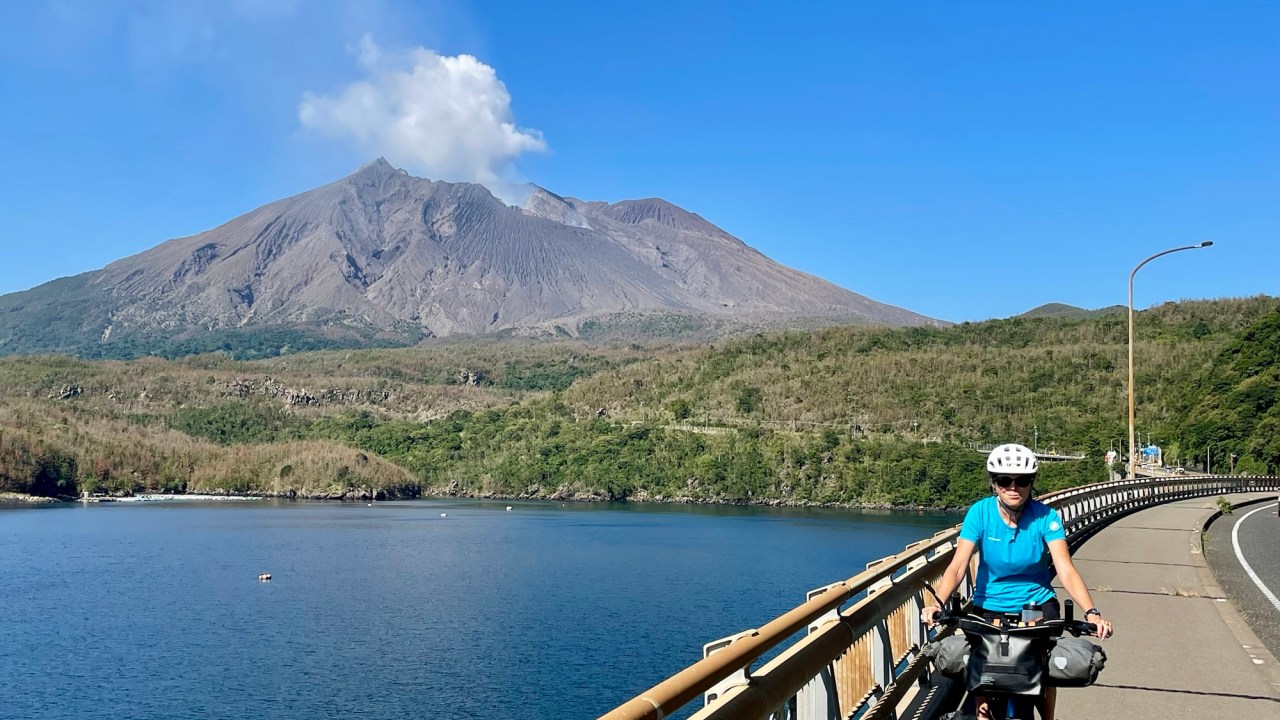
There are many eruption shelters along the way, as well as evacuation ports for the population should another eruption occur. And it will. Thankfully not while we cycled along its flanks.

We had another lengthy ride of 90 kilometres ending in Higashikushira and its municipal campsite. Many towns maintain these campsites and they are free to use. They always have bathrooms stocked with toilet paper and soap, and often cooking shelters, complete with barbecues and sinks to wash up dishes.

We cobbled together a meal of instant noodles and some vegetables from a tiny store, along with some chips and beer. Enough for a couple of hungry cyclists. The campsite was huge but besides us there were only a couple of other people camped for the night.

One of the problems we’ve been having is getting rid of garbage and recycling. There are no public garbage cans anywhere. After 9/11 they were all removed, we were told. How that prevents people from flying planes into buildings is something I have yet to work out but in the end we’re stuck with our garbage and have to look for ways to get rid of it.

There are drop off sites in communities but everything goes in special bags for plastic, aluminum, glass, compost and burnable waste. We can’t get those bags so we have to surreptitiously dump our waste with other people’s garbage. Sometimes we carry it for half the day or longer before being able to get rid of it.

Sometimes we can sneak it into a bin at a konbini, or convenience store, or at a supermarket. But this morning we were caught red-handed by a recycling truck driver as we tried to dump our little bag of garbage from the night before.

He tried to explain it to us but it was difficult because of the language barrier. He made a phone call and within a few minutes two cars pulled up and some gentlemen greeted us, one of whom spoke perfect English.

They explained that we couldn’t dump our garbage and we explained that we didn’t know what to do with it and that we could not carry it with us on the bike. They agreed it was a problem and would raise the matter with their local council. One of the men graciously took our little bag of garbage to dispose of properly. It was an educational moment for both parties. However, we continue to have this problem.
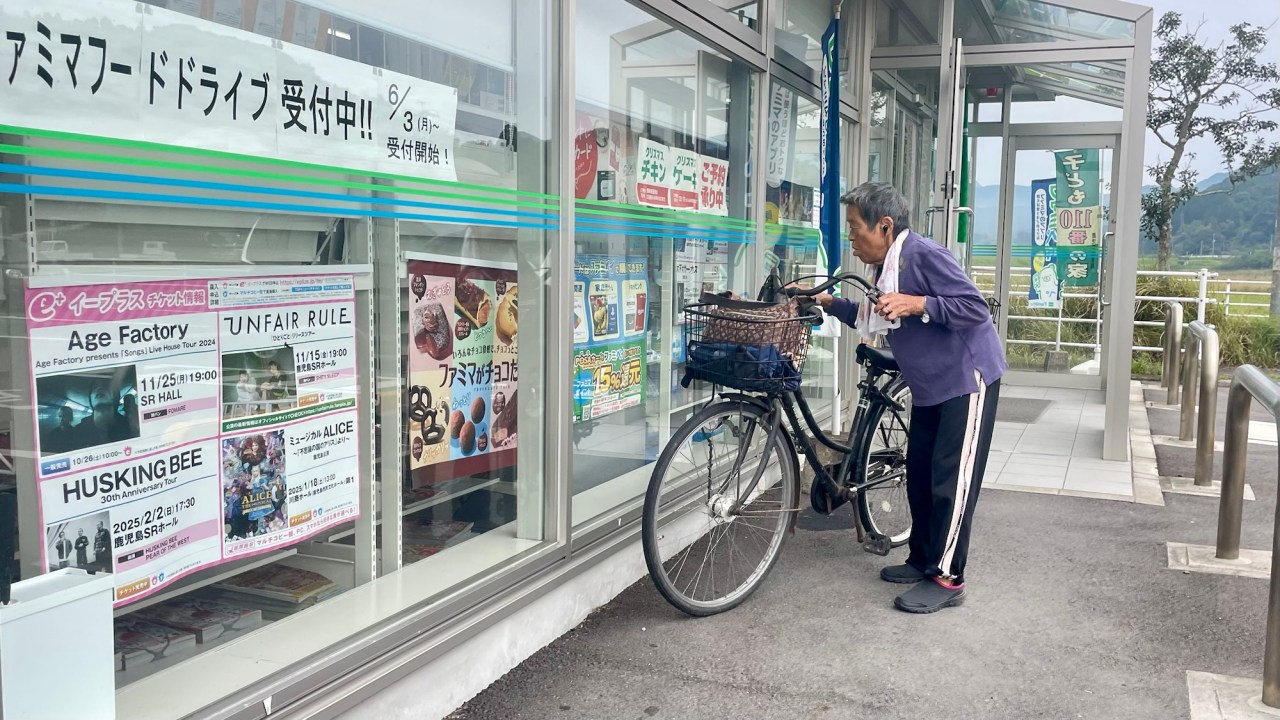
What we do now is buy lunch every day at a konbini like 7/11 or Lawson Station. They sell delicious food, hot and cold, for about $5 a meal. Sushi, sashimi, noodles, bento boxes, salads and sandwiches. We eat our lunch and then can dump the wrappings and containers in the bins they provide for their customers and we sneak our dinner garbage from the night before in with it. Mostly we buy stuff from the konbini anyway so it ends up where it belongs.
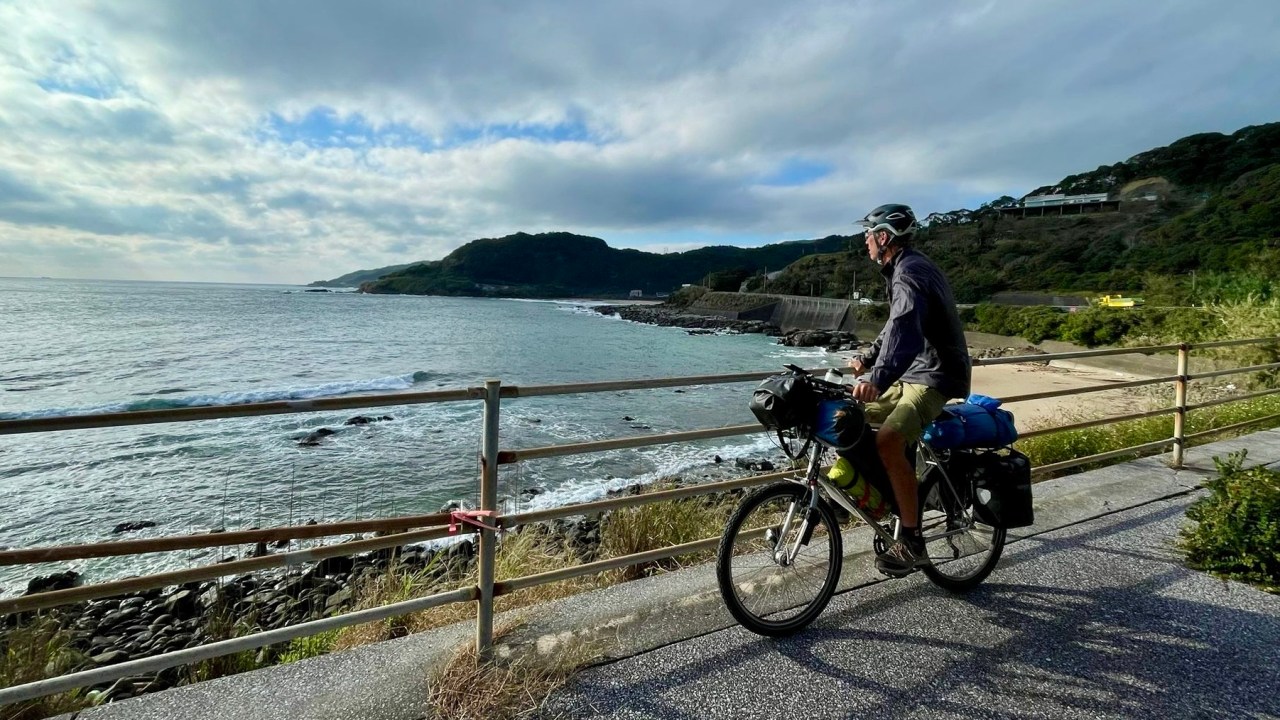
That night we camped at a campsite near Futo beach. The campsite was closed because it had been flooded two weeks earlier by heavy rain and all the buildings had sustained water damage. But a man working there said it was okay for us to camp.

In the morning we met someone else who had arrived before sunrise and we tried to pay him but he said that he could not accept our money. I don’t think he was affiliated with the campsite. He had his own shop there, building kayaks, and showed us one he was finishing. His shop was a mess as a result of the flooding and he was busy cleaning up.

We said our goodbyes and left him to his work, beginning our day backtracking a bit to ride through a tunnel as the road around the headland was closed. Tunnels are loud but they have bike paths through them so we don’t mind taking them. It saves a lot of climbing up old roads to get over the mountains. They often have a separated bike lane, although in some older tunnels they are less than a metre wide and it can be a bit unnerving. Speed is your friend and pedalling helps keep one balanced.

The ride through the Miyazaki valley was very urban. We tried to us small streets but we often had no option but to use a busy road but always on a bike path. It’s just the traffic noise that gets very tiresome.


It was a long, flat ride. We had seen a campsite on the map in Hyūga but that proved to be 10 kilometres too far. When a campsite presented itself just south of there we called it a day.
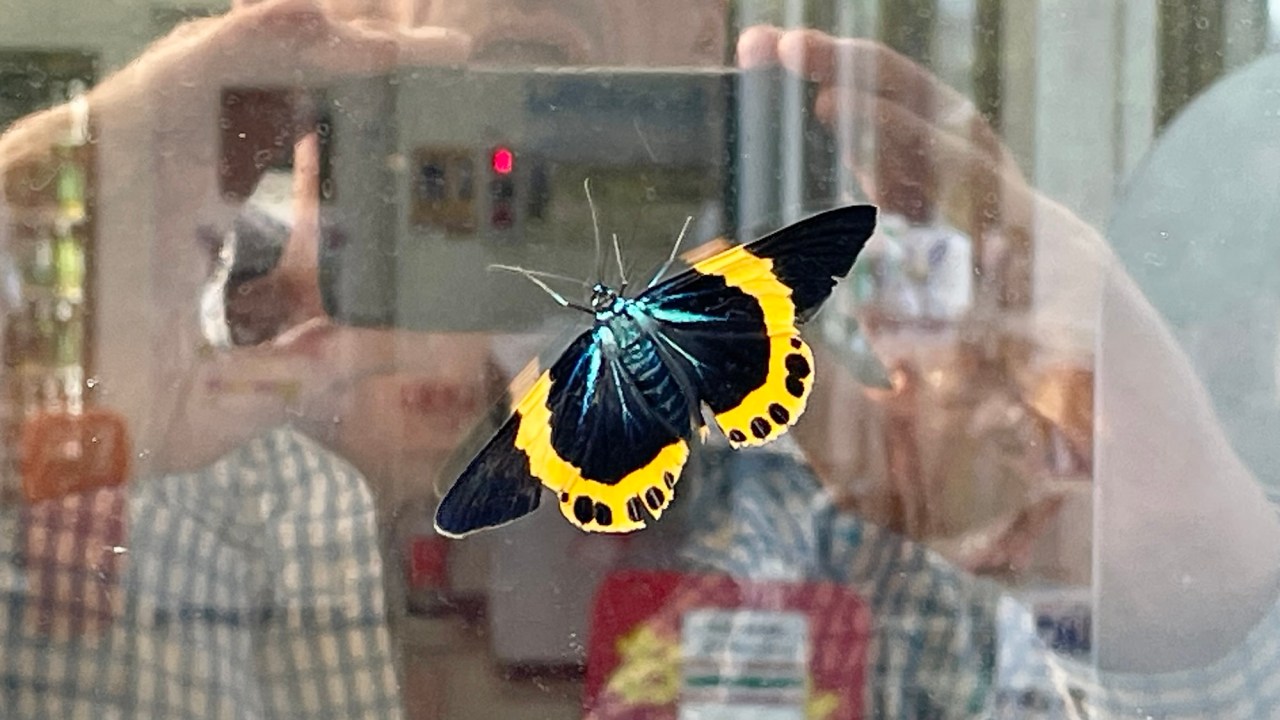
It was a bit pricey at ¥3,850 but they also had little rustic cabins for ¥4,950. It was a no-brainer to go for a cabin. There was nothing in it except a low table and some cushions but it was just what we needed at the end of that day, arriving at dark and tired from successive long days of riding. We were due for a day off.
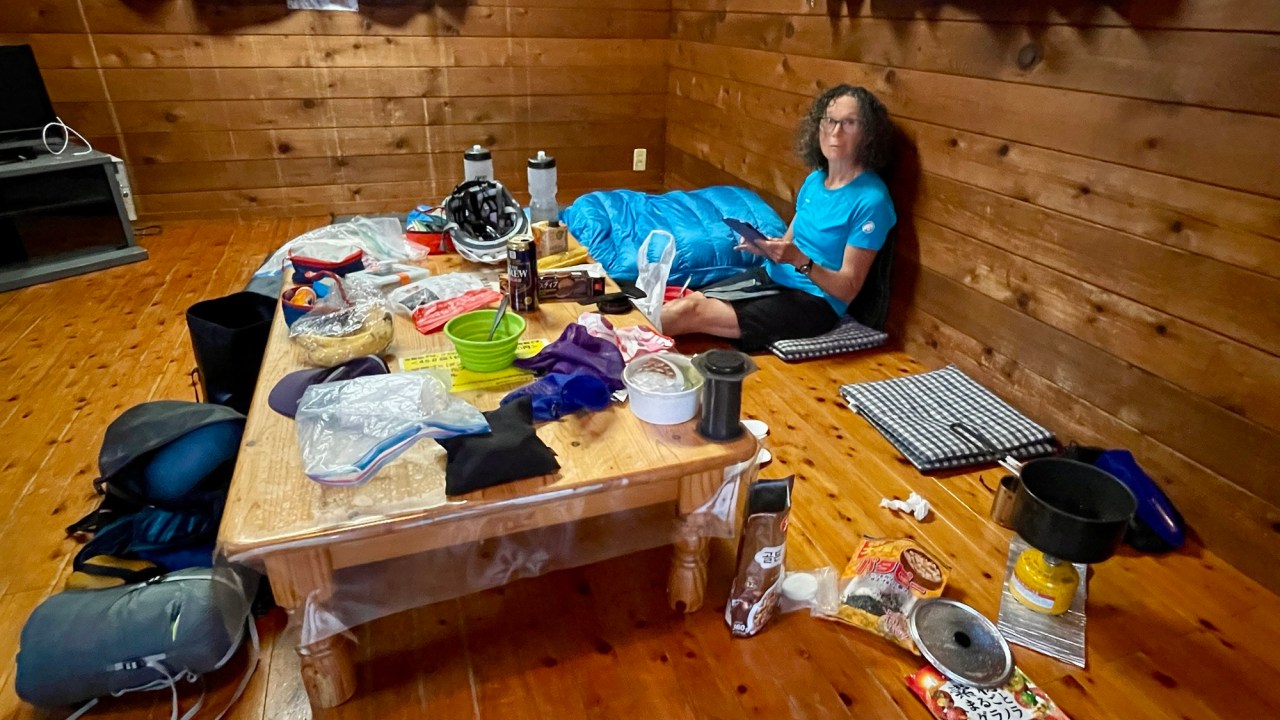
Two more days to Beppu where we had booked a ryokan for two nights. From there we planned to take the ferry to Shikoku.

We angled away from the coast to ride through the mountains to Beppu, 140 kilometres away. Right at the halfway point there was a roadside stop with a few shops and a little restaurant, as well as a campsite.
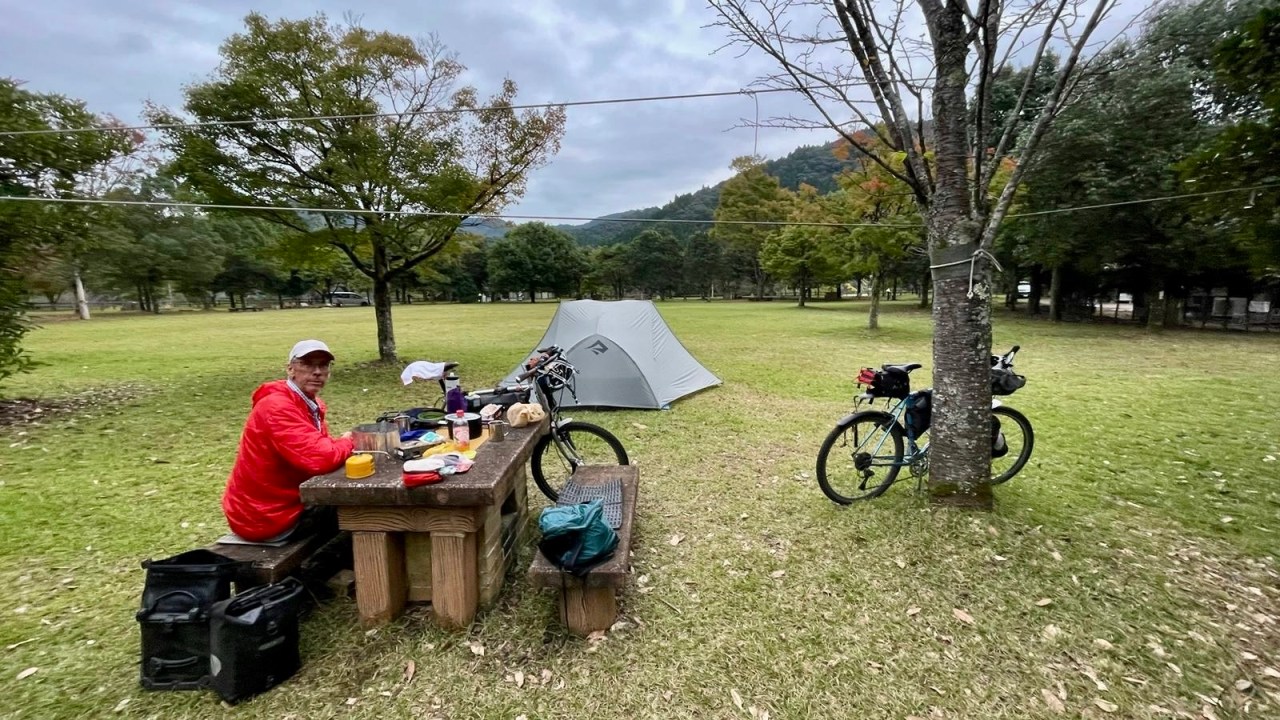
Two women working there, Junko and Yuuka were keenly interested in our journey and came over to our campsite after finishing work. They stayed to chat with us for a long time and we conversed in Japlish or Englinese, with the help of translation apps. It was a really fun evening and we made a nice connection.
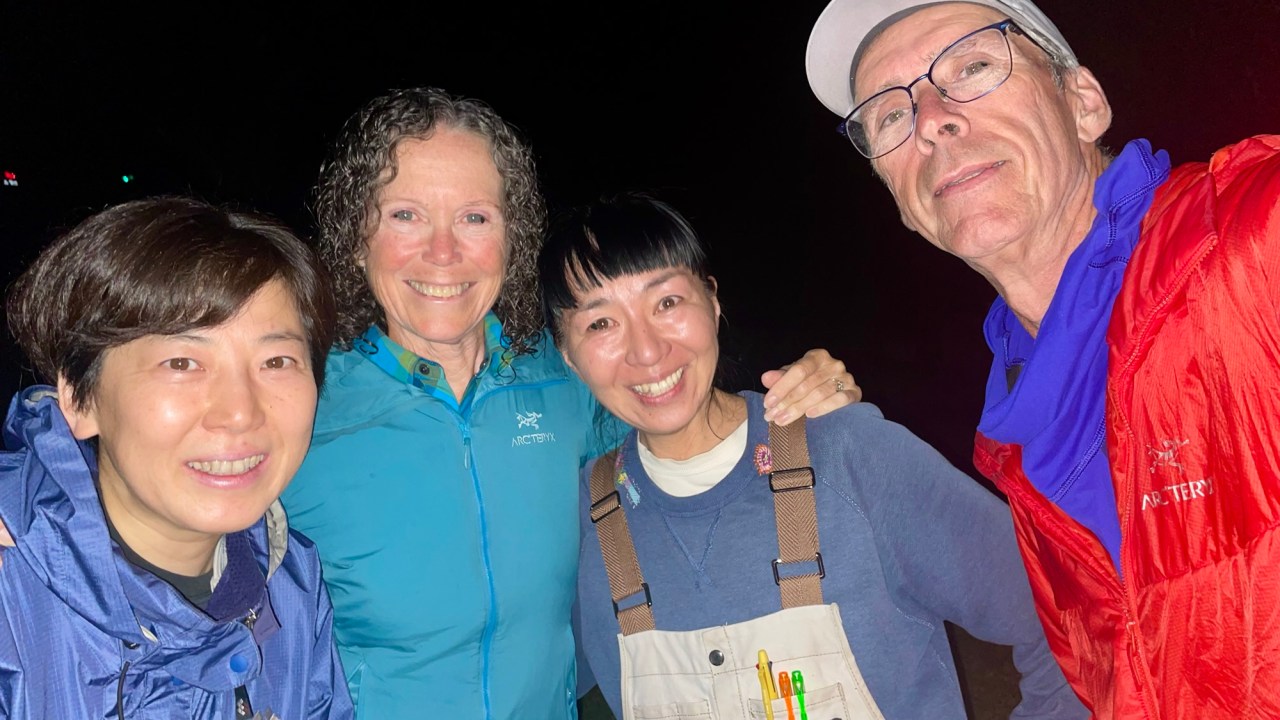
The following morning a van slows down beside us and I hear a voice yelling my name. It’s Junko and her husband, Satoru, heading for Bungo-Ono to shop. We bump into them again in town when we had stopped at a konbini for a coffee.
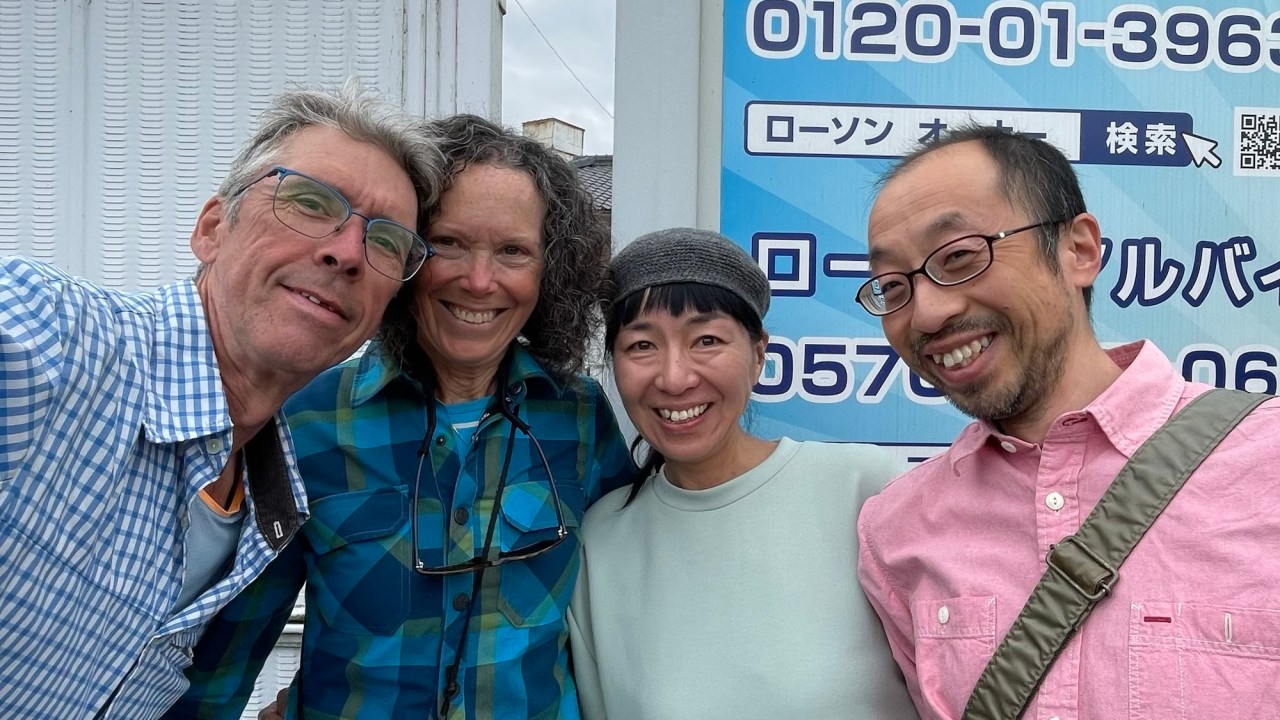
Junko presented us each with an origami crane. Inside there was a written message, revealed when the wings were folded out. one was in Japanese and the other in English. A few hugs later we both hit the road.

We also met a family of seven along the road. Tamar and Jakob and their five children. They have been walking the length of Japan from the northernmost Cape Soya in Hokkaido to the southernmost Cape Sata. This was their 100th day of walking, having covered nearly 2,200 kilometres.
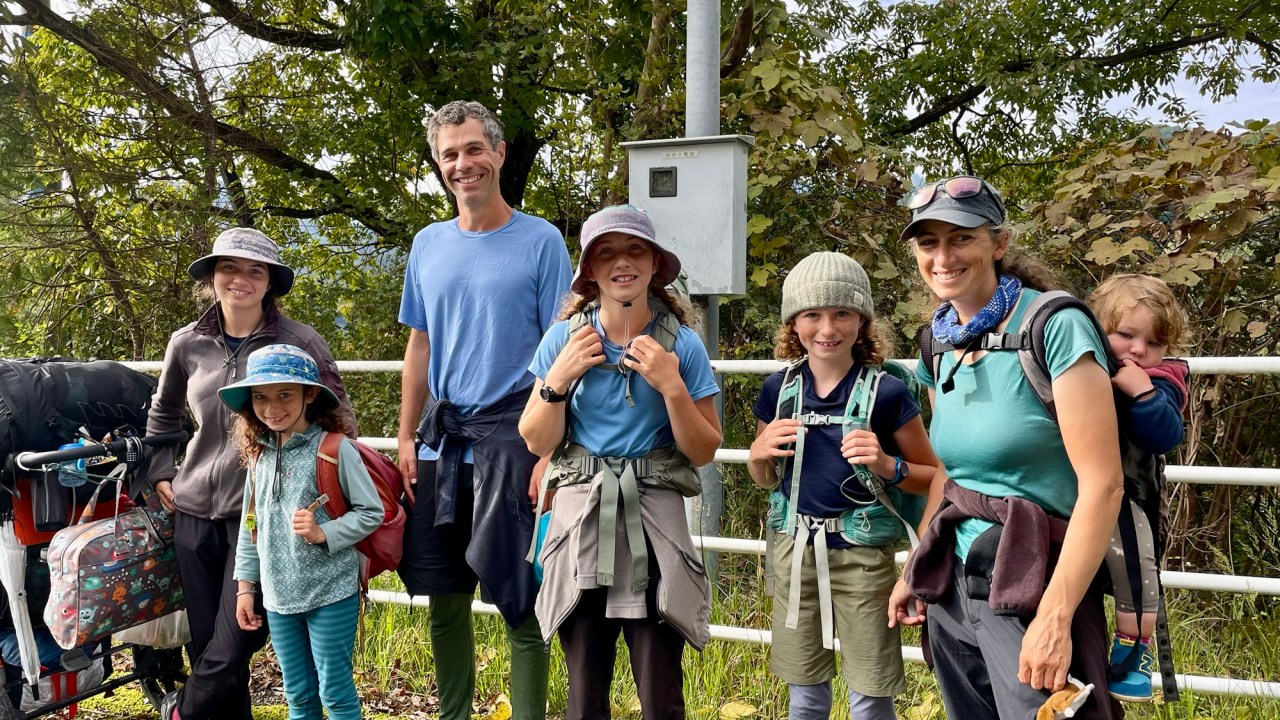
We were blown away by their journey and duly impressed. They are fellow Canadians from Montreal but they’ve been away from home with their kids (and had more kids) for 11 years, working and travelling. You can read about their exploits on their blog.
Too much chatting on the road with other people meant we were unable to get to Beppu before the forecast rain. The last 20 kilometres were very wet but it didn’t matter as we had our accommodation booked and all our wet stuff would go straight into the laundry.
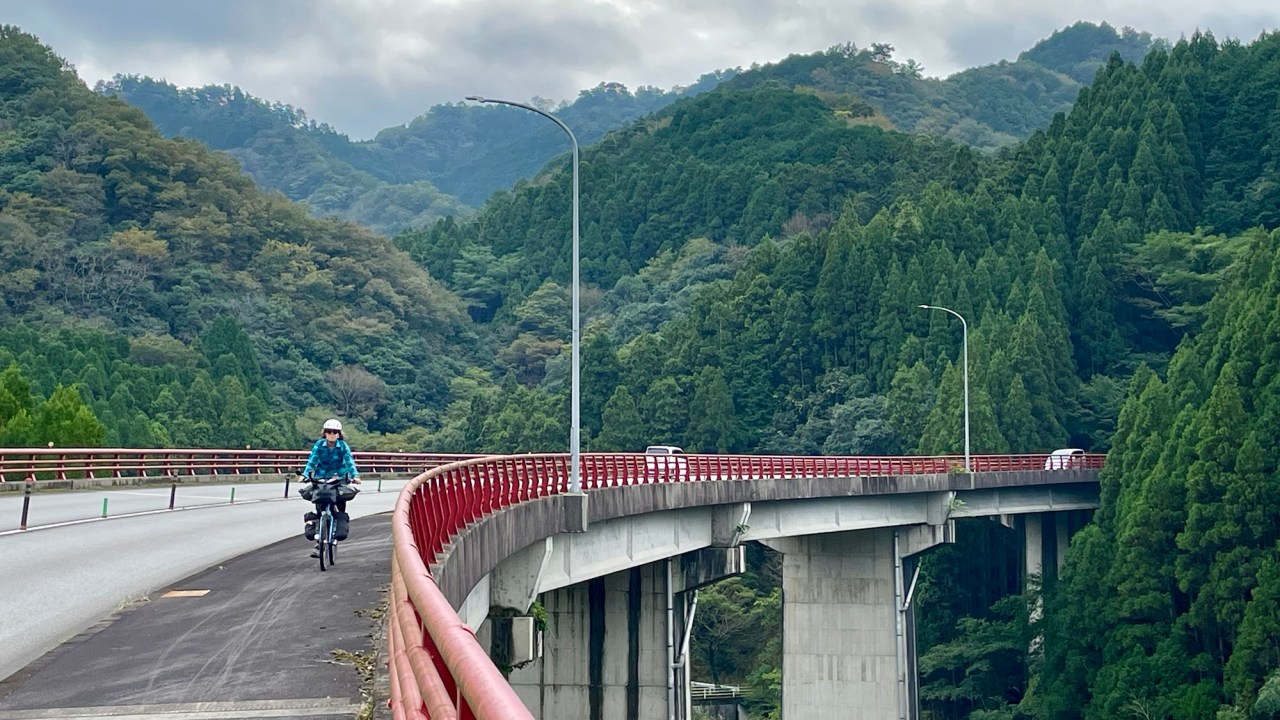

We enjoyed the onsen at our ryokan — there are 2,000 of them in Beppu. It was glorious to sit in the hot water after our cold wet end of the ride. We went out for a nice dinner nearby afterwards and slept like babies.

The next day was spent planning the next part of our journey on Shikoku Island. And, of course, another onsen at the end of the day.



Here is a map of our route in Kyushu.


 2 l o v e c y c l i n g
So cool that you met that family of 7. I had seen a post they did on the Shikoku 88 page and was very curious about them. What an undertaking!!
We heard the removal of public trash cans was due to the Sarin gas attacks in 1995. I found this was as good an explanation as to why it works for them.
https://medium.com/sustainable-eco-society/4-reasons-why-there-are-no-rubbish-bins-in-japan-df27ce1cf44b#:~:text=Another%20reason%20why%20there%20are,Japan%20have%20removed%20bins%20altogether. It’s a big inconvenience for visitors though.
As always, I love seeing your pics and reading your impressions!
Thanks for that. The man we met referenced 9/11. The lack of trash cans does however I still a sense of responsibility in people to deal with their trash and recycling. He told me that their town had an 84% recycling rate. But the plastic that everything comes in is still burned.
They also use a huge number of single-use disposable items, but overall, it’s a very tidy place!
Well done my good friend, well done!
Sounds like great camping.