The ferry ride from Mokpo to Jeju Island was a relaxing five and a half hour journey. Getting to that point, however, was frustrating. We had a lot of conflicting information from the web about ferries: where they go to and from, when they go, and whether they took bicycles. Booking online was a non-starter.
Eventually, we found a helpful woman who spoke English and our trip to Jeju was booked. But the return journey was another exercise in frustration. We were sent from one terminal to another. We again had conflicting information about when and where to buy a ticket and we spent nearly two hours in the port of Jeju trying to get a return ticket to Yeosu.

We were eventually able to make a reservation but not pay for it because, we were told, you have to do that on the day of your sailing just before departure.
We left feeling frustrated by this nonsense for something that should be a really simple online process.
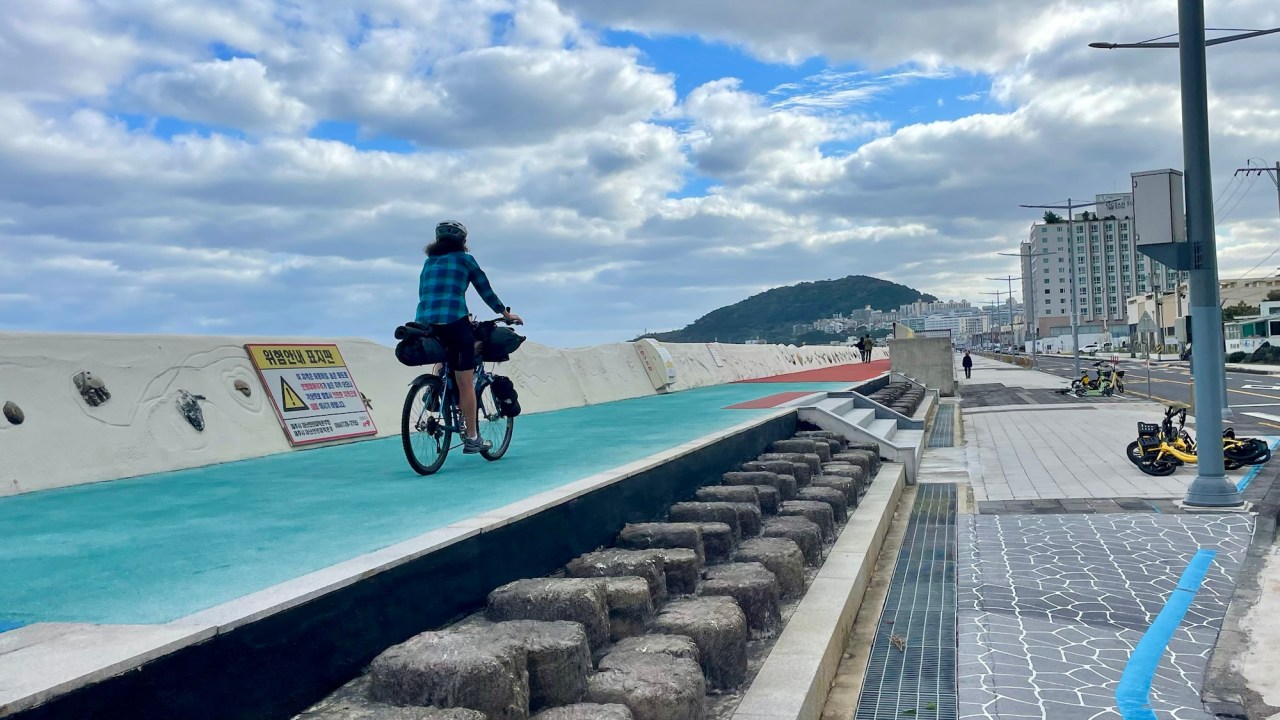
Once out of the dual confines of Jeju City and the ferry bureaucracy we rode east with a brilliant tailwind in the direction of Seongsan-ri at the very eastern tip of the island.

Jeju is basically a volcano with people on it. It is Korea’s largest island and lies in the South China Sea about 80 kilometres from the mainland.
Volcanic activity with repeated eruptions formed the island about 700 thousand years ago. This continued with prolonged periods of non-activity between eruptions.

Hallasan, a shield volcano, was formed by an eruption about 100 thousand years ago. It sits nearly smack dab in the middle of the island and can be seen from around the island. It is Koreas’s highest mountain at 1947 m.a.s.l.
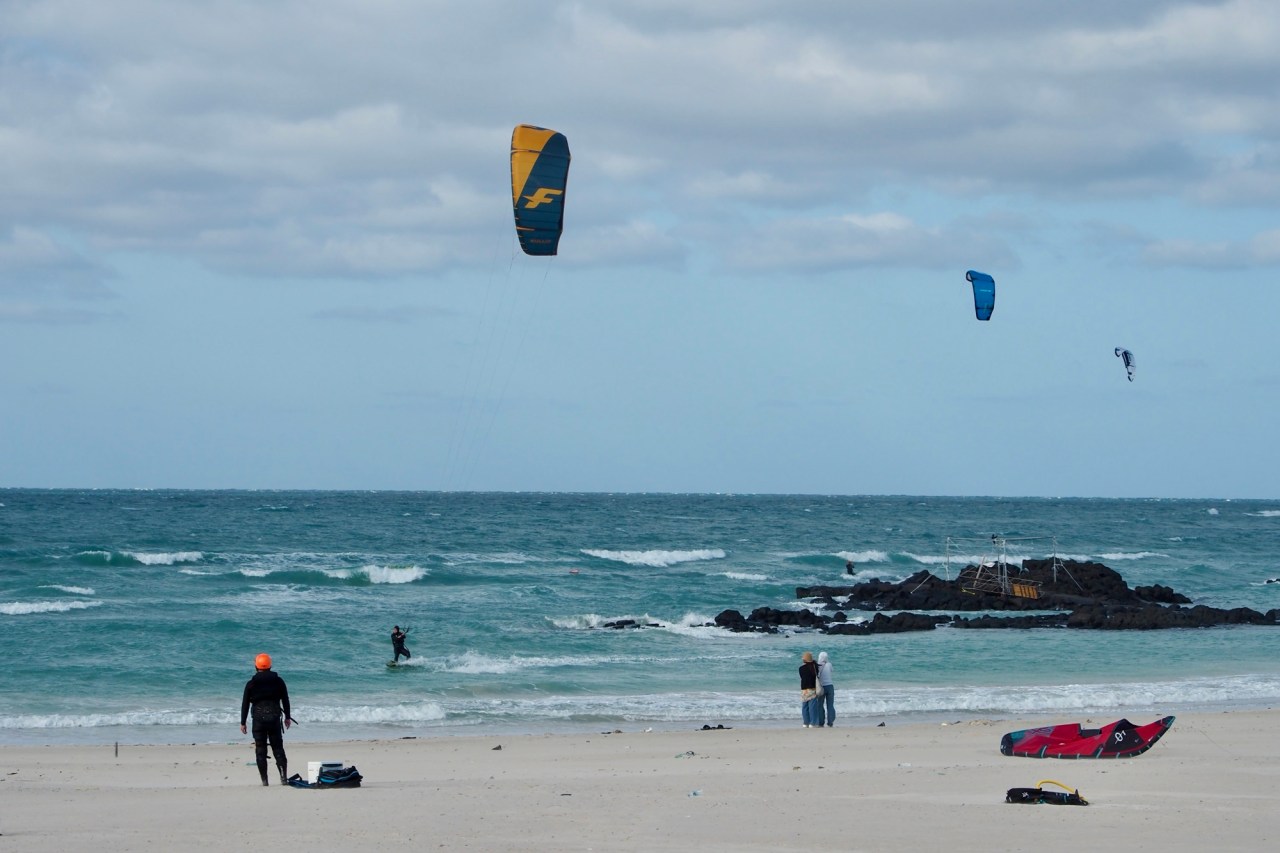
The northern coastline heading east is mostly black lava rock with the occasional black sand beach or white sand beach. it reminds us a lot of Iceland where we’ve been twice. Jeju is not as rugged due to its humid subtropical climate. Even now, at the end of October the temperature is a pleasant 24 degrees. Citrus trees are abundant as well as fishing and other agricultural activity.


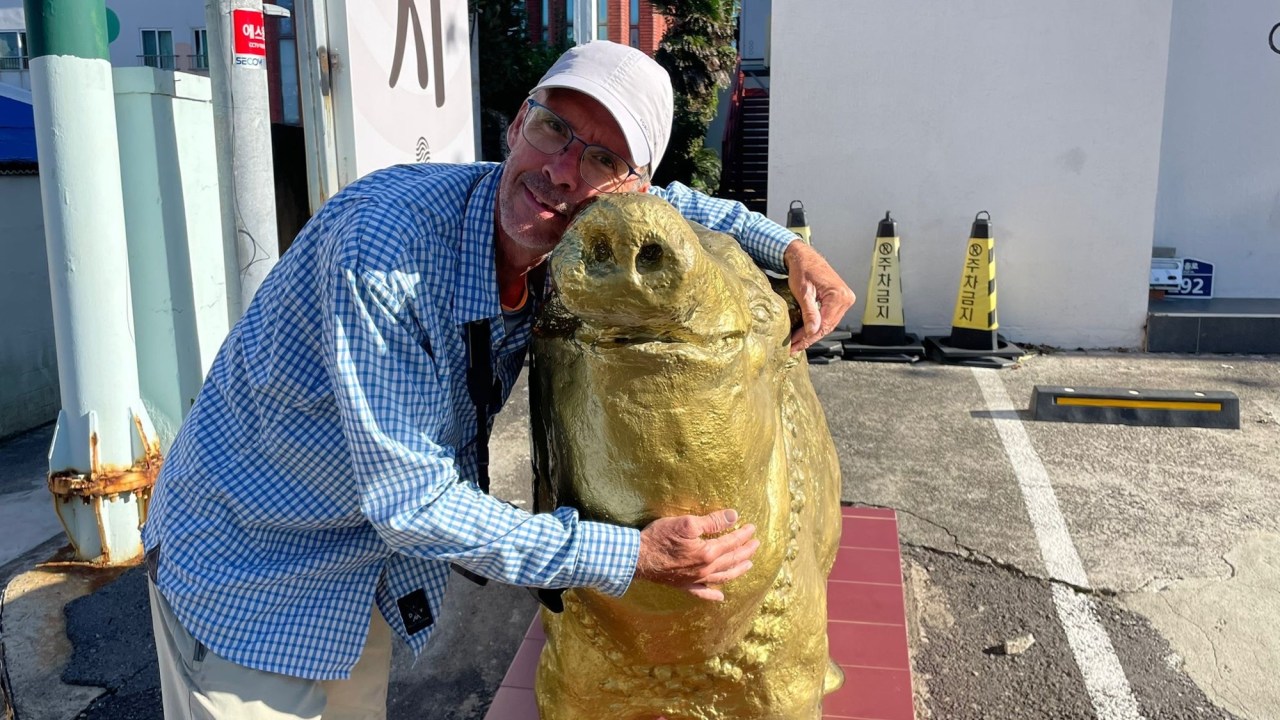
Jeju is also know for its black pigs, a Korean breed of domestic pig. It is a must-do dining experience when on Jeju. We found a restaurant near our hotel where we had a typical Korean BBQ of Jeju black pork and accompaniments.

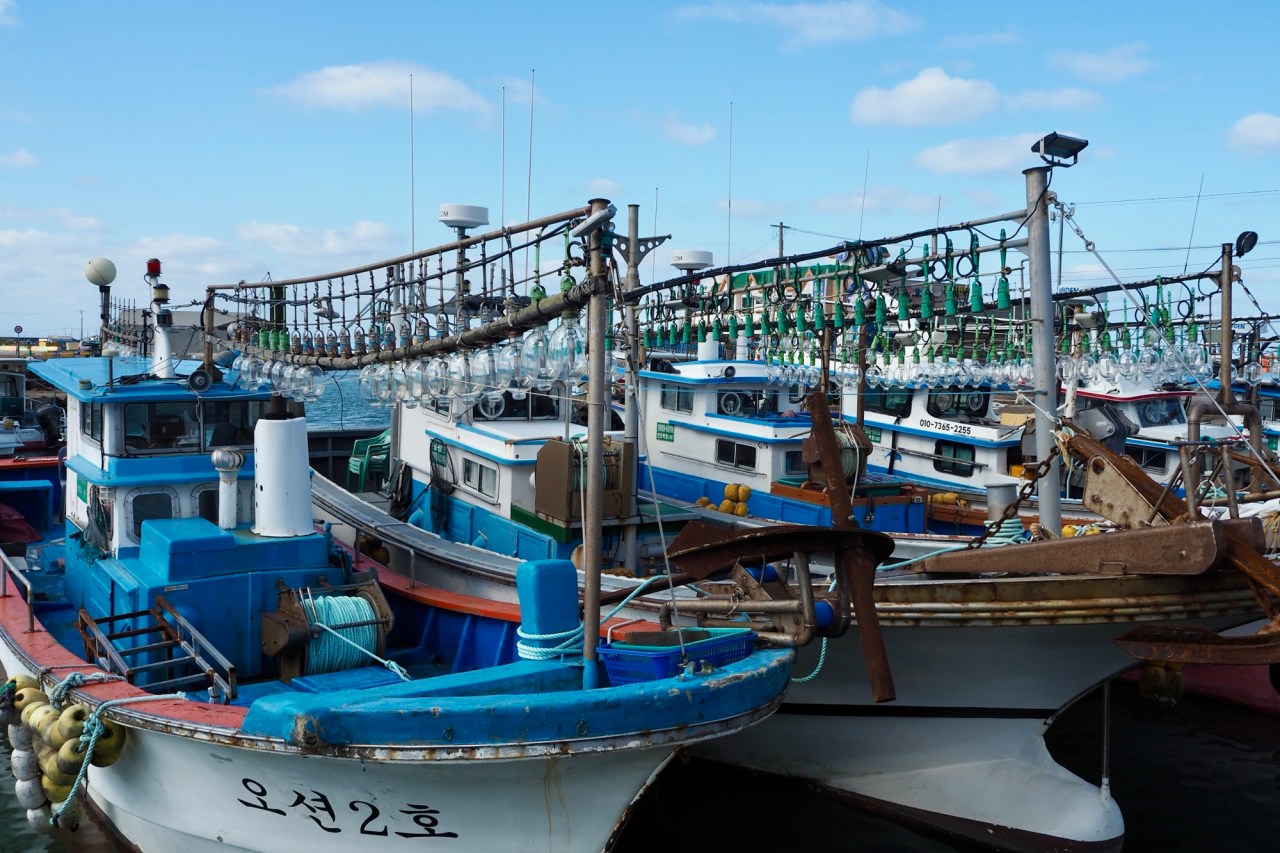
Once away from the sprawl of Jeju City and its half million inhabitants the country side is more mellow and laid back. We rode through small fishing villages where the restaurants have tanks with the live catch ready for your dining pleasure.

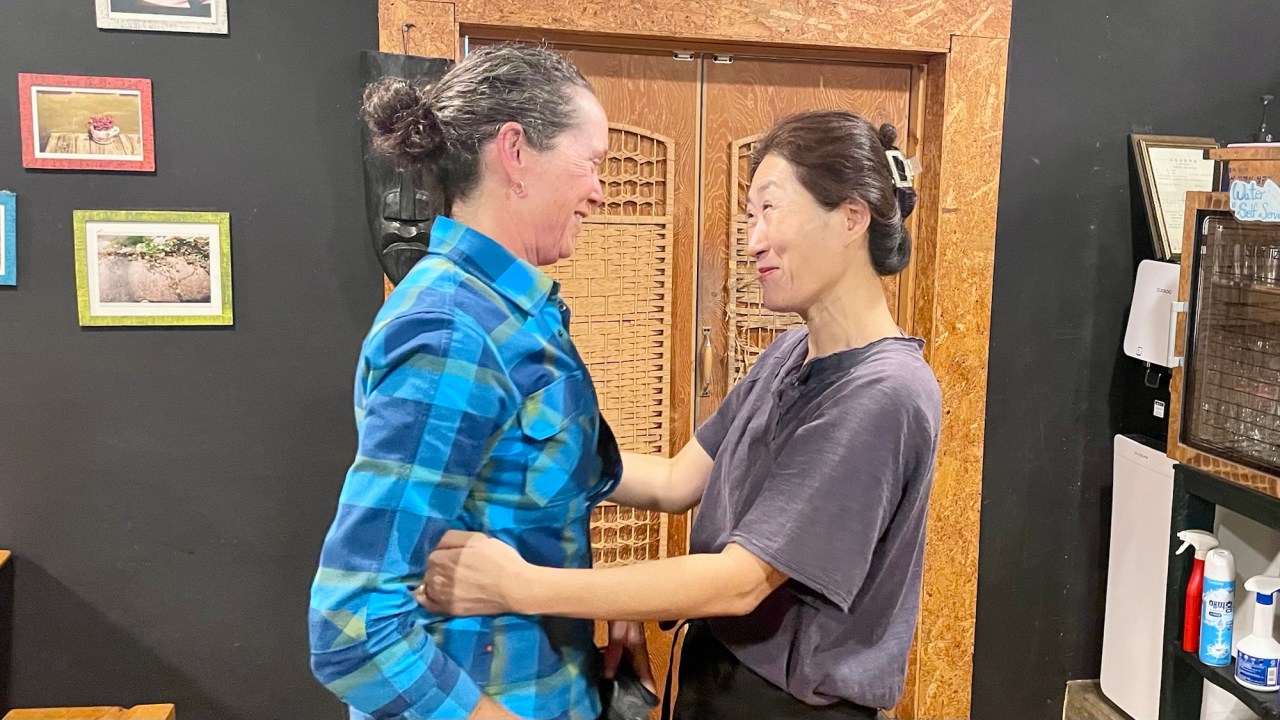
By day’s end we arrived in Seongsan-ri and find another cheap hotel ($43). Across the street is a small burger joint I had seen earlier. I chatted with the woman while Jan was checking a hotel. Speaking fluent English she told me she had a friend living in Calgary and she would love to visit Canada.
We dropped our stuff in the hotel and rushed back to Papaya Hamburger. She was just closing up but urged us inside. She said she would stay open late for us. We were the only customers at the end of the day and she made us delicious horse meat burgers with a big helping of fries. A five-star meal for two hungry cyclists.


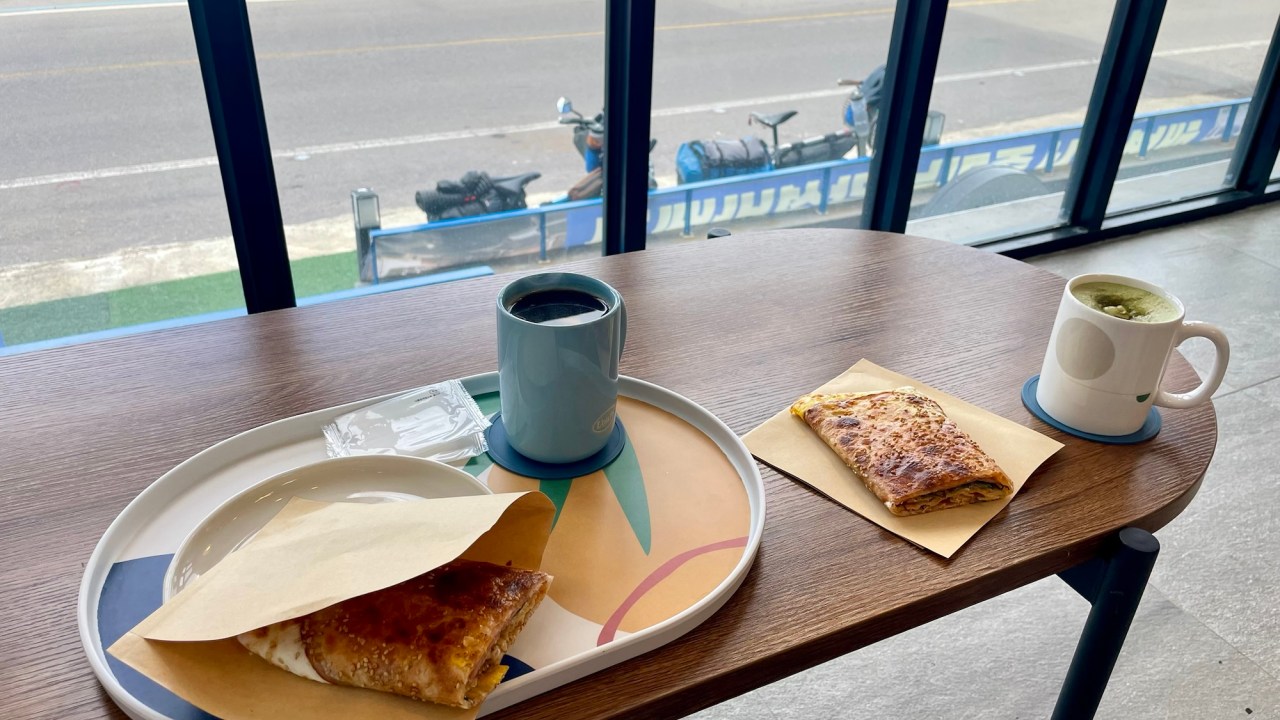
Afterwards, we did a quick shop for some breakfast stuff and headed back to our room where we fell asleep watching an old Clint Eastwood movie.
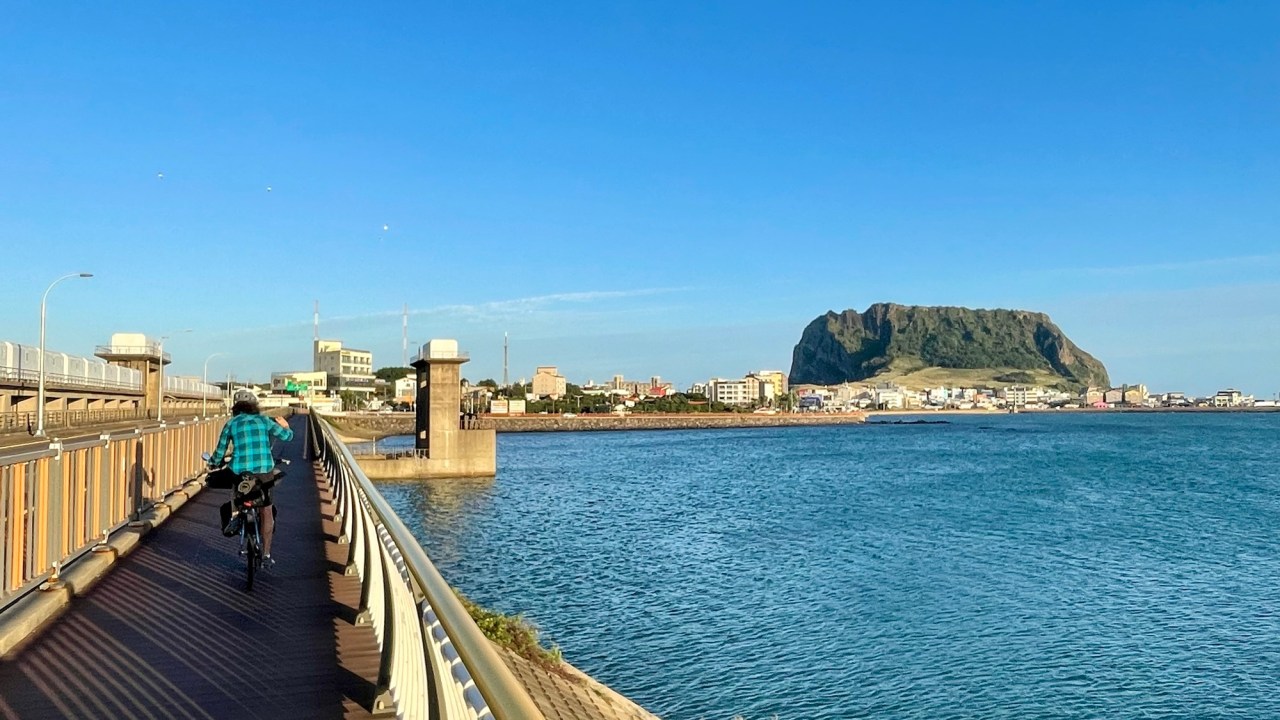
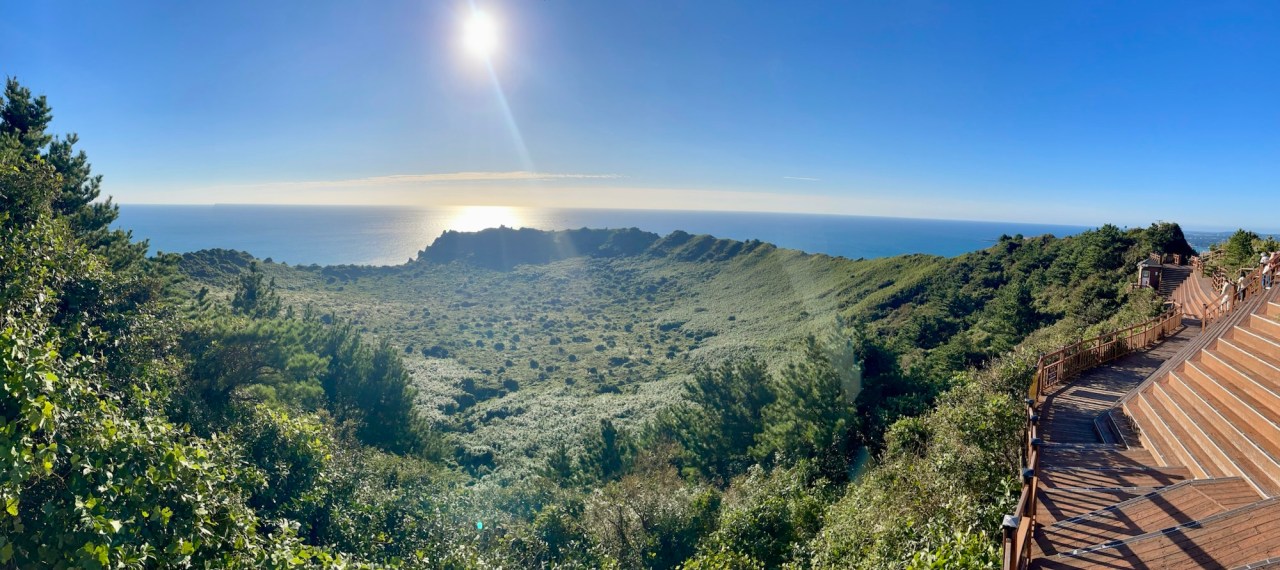
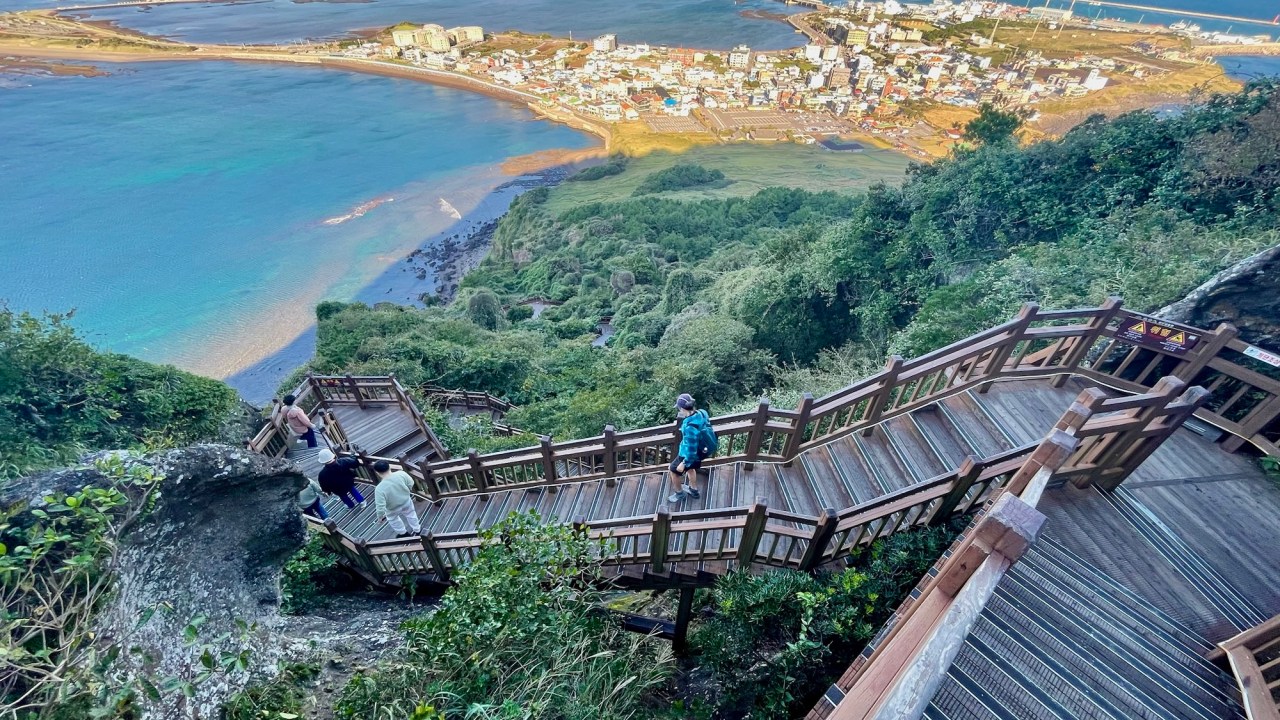
There is a very cool geological feature in Seongsan-ri: Seongsan Ilchulbong, or Seongsan Sunrise Peak. It’s 182 metres high with a crater on top and considered one of Korea’s most beautiful attractions. It’s also a UNESCO Natural World Heritage site.

We awoke as usual with the sunrise at 6:30, had a quick breakfast and hiked up Ilchulbong. There are stairs all the way up to the top and only took us half an hour. Great view over the crater and also of Udo-Myeon, a small island just off the coast.

By the time we got back down the tour buses had begun to arrive and we were glad about our early start. We had a coffee in yet another gorgeous café and planned our next few days before checking out of our hotel and riding west toward Seogwipo, Jeju’s second largest city on the south-central shore.
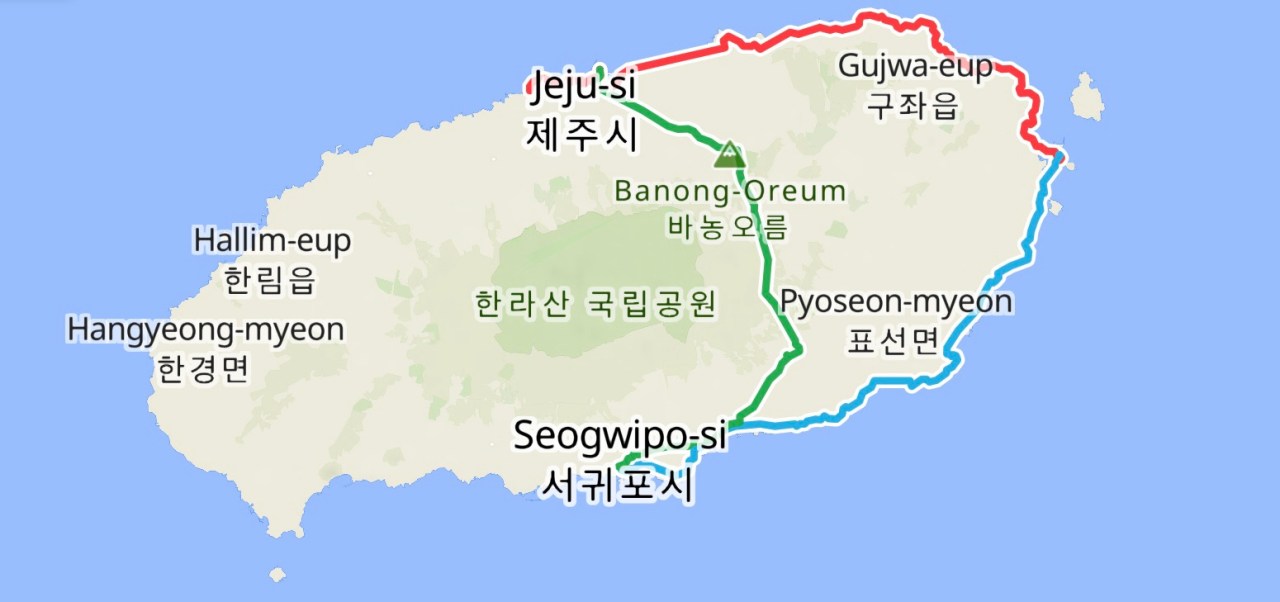
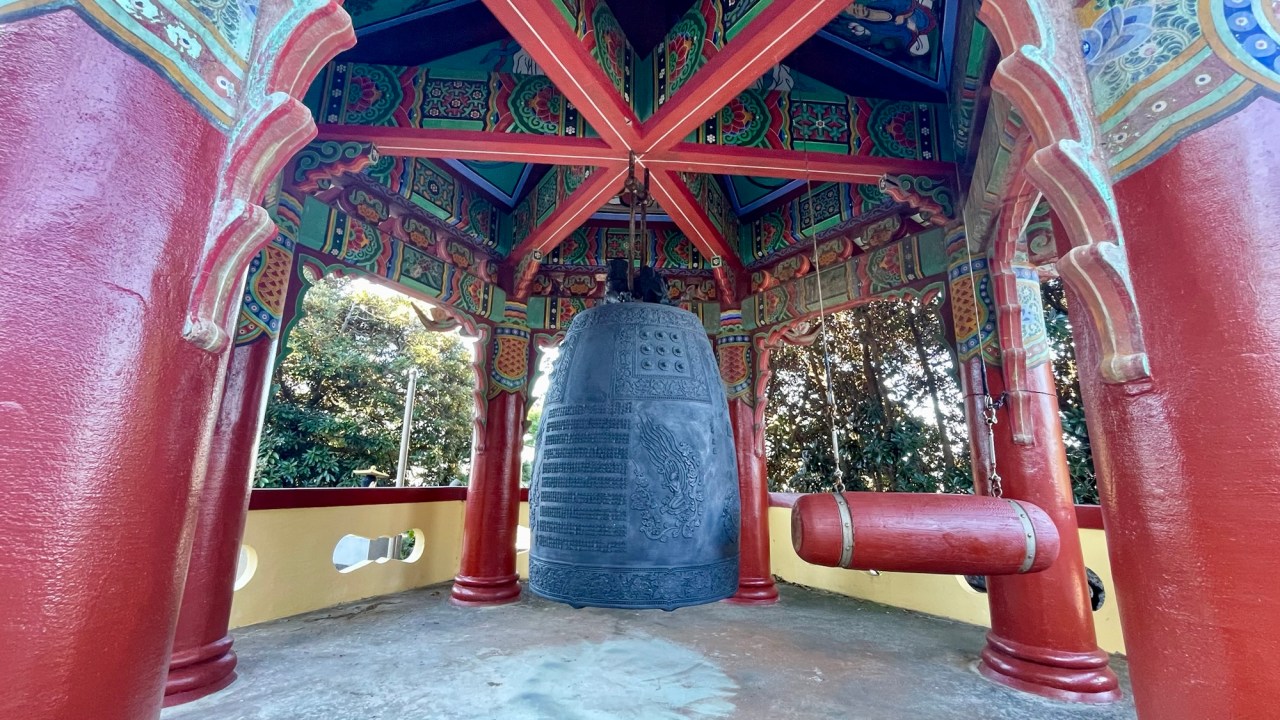
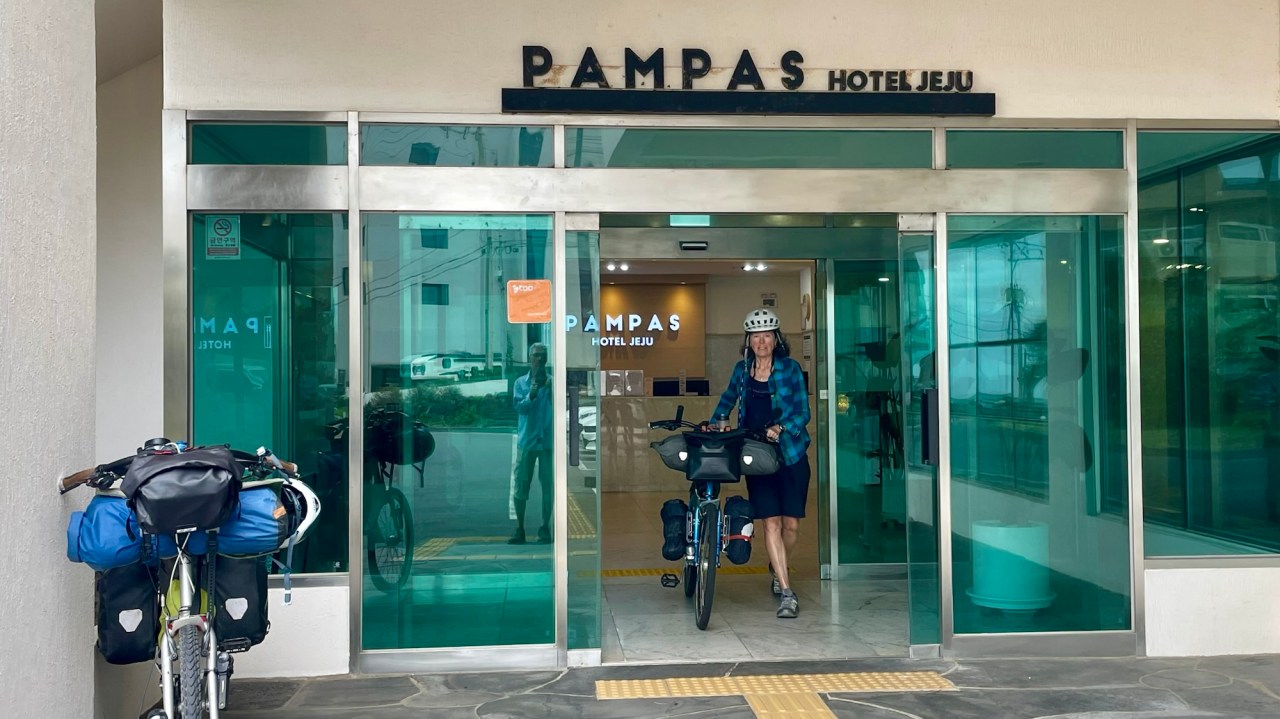
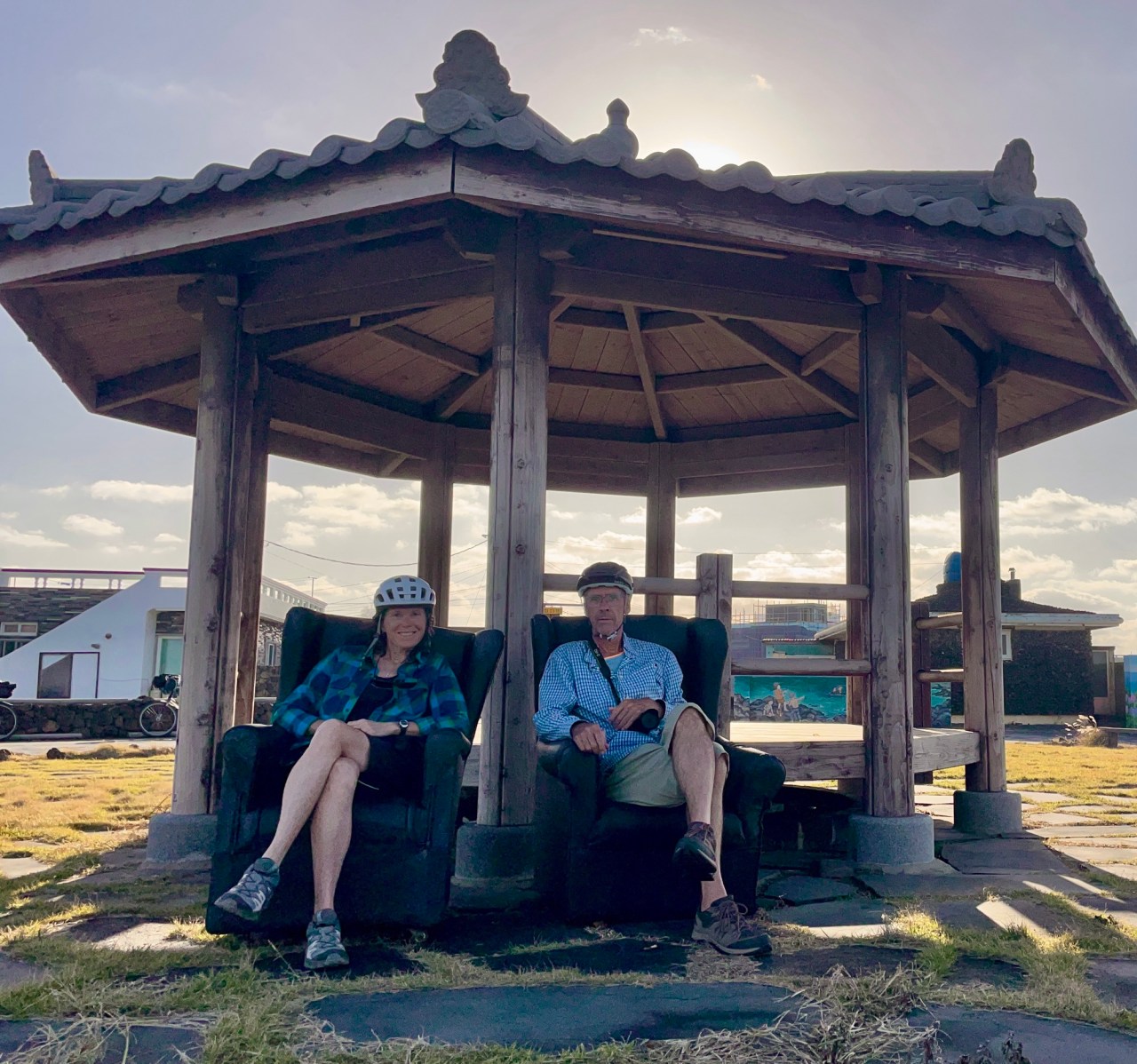
We decided on a layover in Seogwipo to have a day to hike up Hallasan and also to have a rest day. Hotels are cheap and plentiful and we found a nice one in the centre of town ($150 for 3 nights)
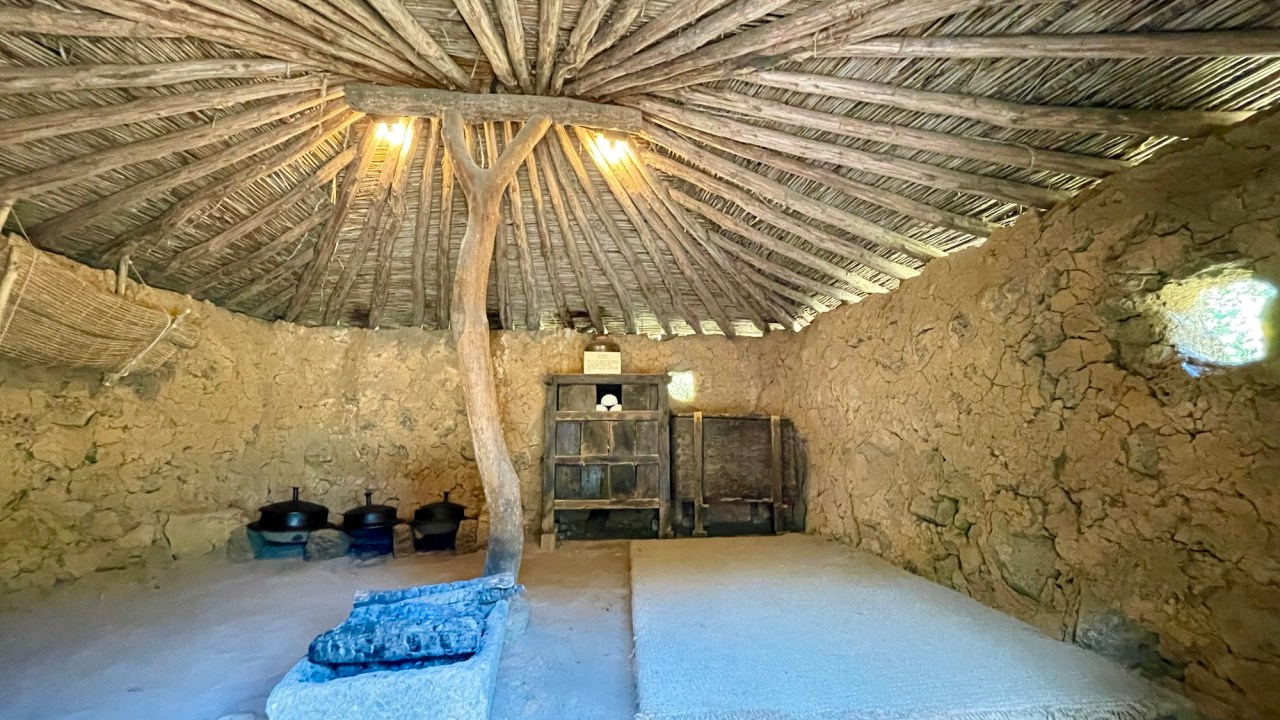
We made a stop along the way at a Jeju folk village, a reconstruction of typical villages at the end of the 19th century. It was a kind of open air museum.


That night we discovered hiking to the summit of Hallasan is popular and is done by reservation only and, unfortunately for us, the next day was fully booked.
So we found an alternate trail that did not require reservations but it doesn’t get you to the summit. We took a 40-minute taxi ride to the trailhead and headed up.
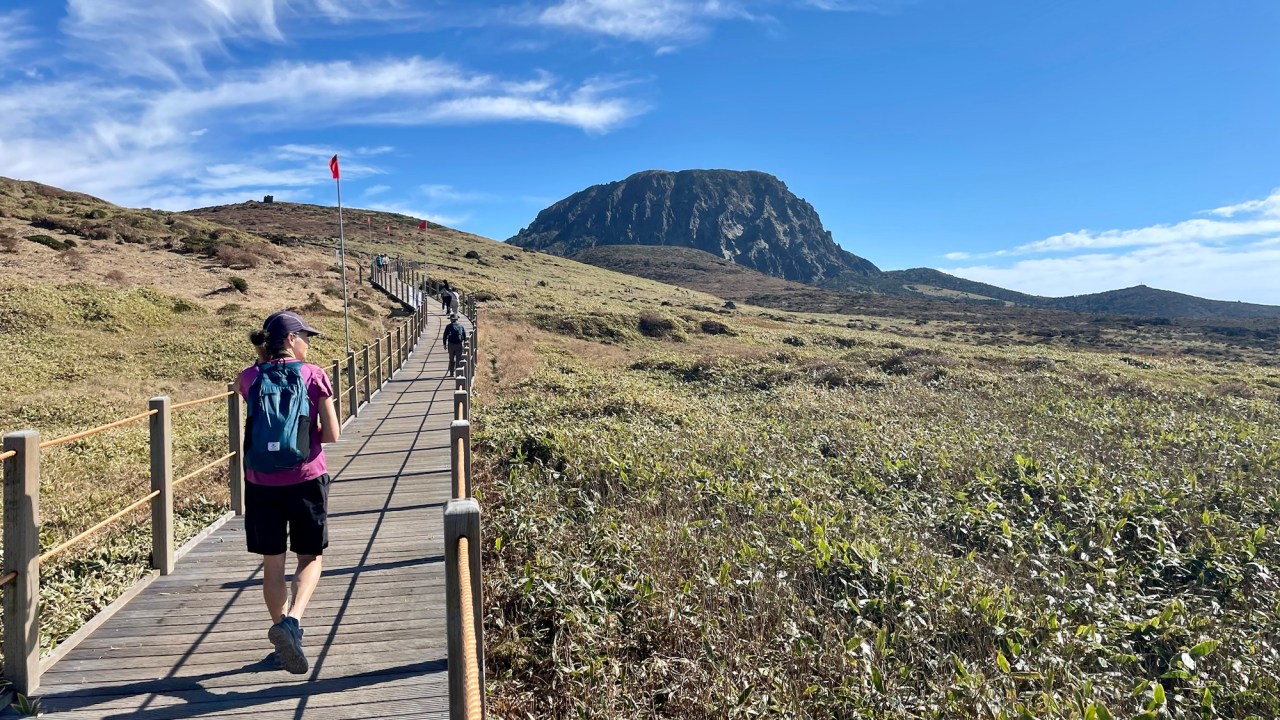
It was a beautiful walk up a well-built boardwalk and stairs. Given its popularity, putting in that infrastructure was the only way to protect the surrounding landscape and keep people from wandering off in all directions.

It was not a wilderness hike by any stretch of the imagination but there were great views of Hallasan’s volcanic summit and the island stretching out below us in all directions.
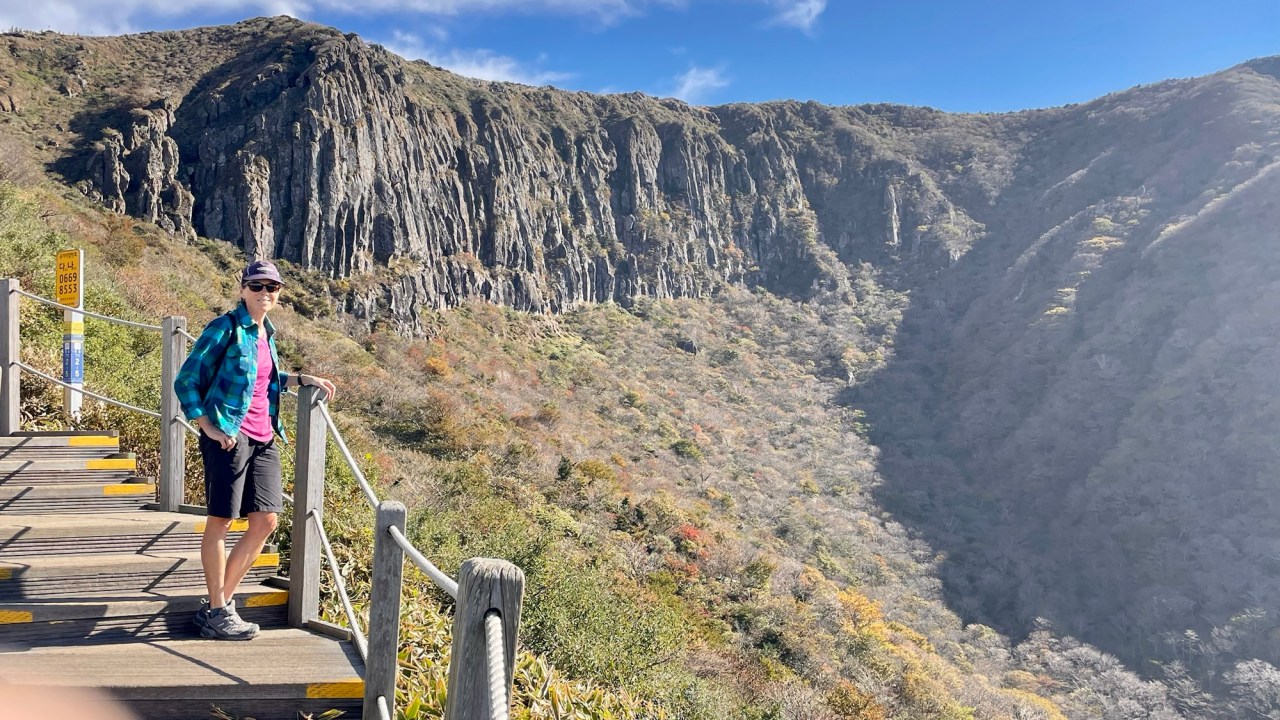
We took a different trail down and had planned on taking a bus back but there was a taxi waiting in the parking lot and the driver happy to take us back to Seogwipo.
The morning taxi we had booked through Uber but it was a city taxi that took us up, just like the one that took us back. They charge 1,000 KRW per kilometre, irrespective of the time it takes. The meter is mounted in the console of the car (it was a Hyundai Ioniq5 EV) so no ripping people off like what happens in so many places. At our hotel, the driver took our credit card, stuck it in the meter and it printed a receipt. All very slick.

Back at our hotel, we relaxed before going out to find a place to eat. We ended up finding a little hidden gem close by that called itself a Korean rice wine lounge.
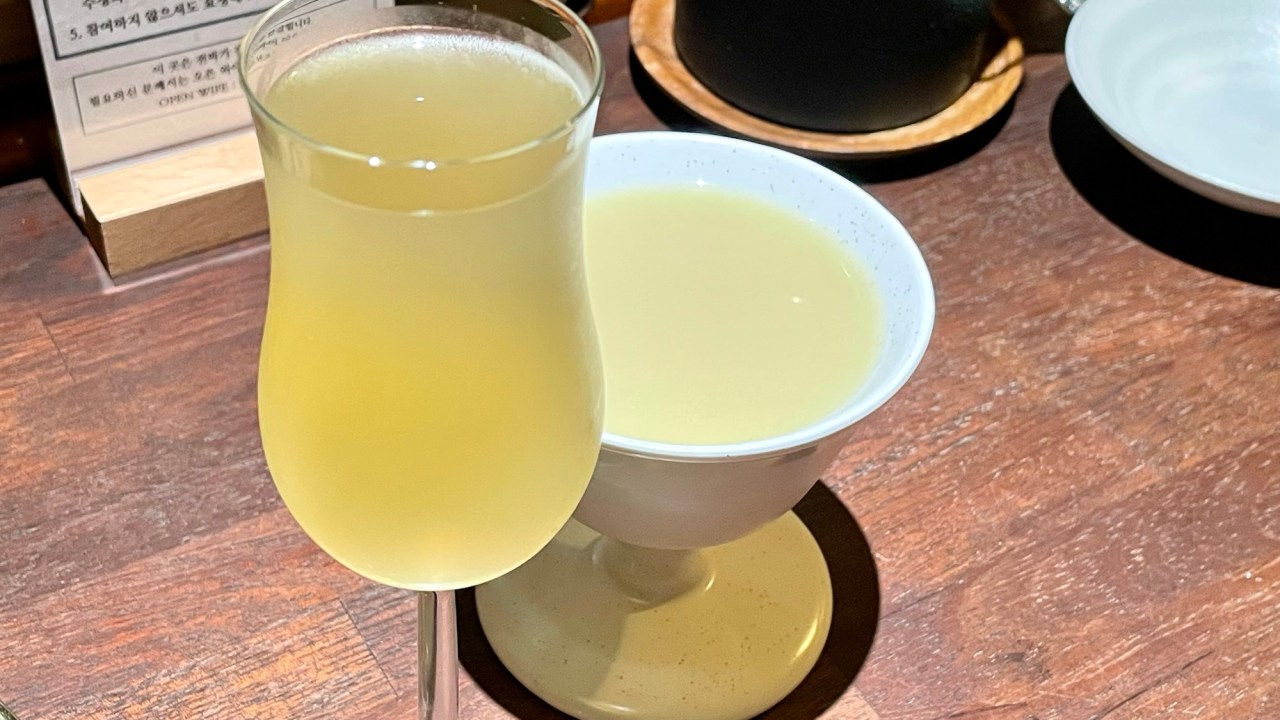
Our meal was their signature dish: steamed beef and fish in Hinoki. Hinoki is also known as Japanese cypress, native to central Japan. With it we had two different kinds of rice wine.

One was Goheung Yuja, a Cheong-ju or a clear rice wine, and the other was mandarin makgeolli, an ivory rice wine. It’s an unpasteurized rice wine that continues to ferment in the bottle and therefore has a short shelf life.
Our food was steamed in a two-tier, square steamer made of Hinoki. In the top box was the fish with a medley of vegetables, enoki mushrooms and herbs. In the bottom box were thin slices of beef layered between pieces of lettuce and cabbage leaves, along with mushroom and bean sprouts. All of it delicate and flavourful with just the slightest hint of cedar. A beautiful meal.
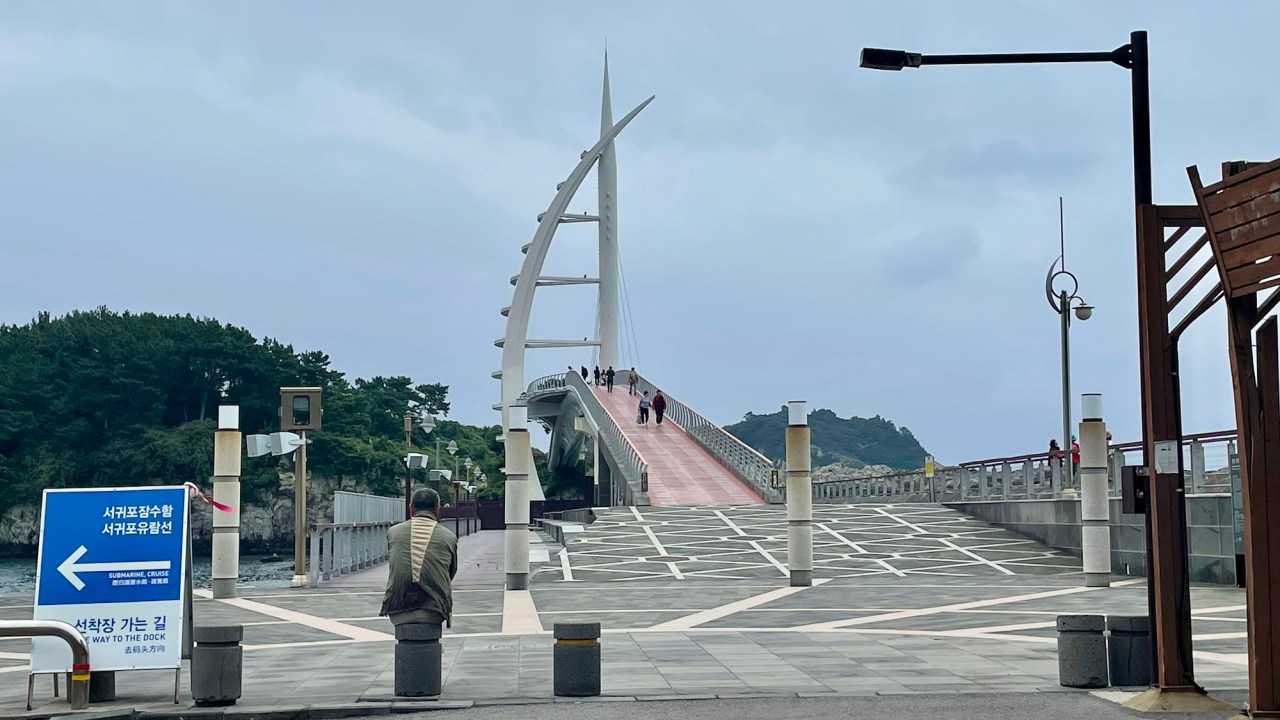
The next day, with iffy weather forecast, we relaxed at our hotel, did a walk around the gorge and harbour and some much needed bike maintenance. Our first day off since arriving here nearly three weeks ago.


We normally don’t ride this many days in a row but the riding here hasn’t been as demanding as in other places. Not having to deal with traffic most of the time really does take the edge off. It makes for a much more relaxed type of cycling. But we could feel the fatigue, nevertheless, and we also really needed to do laundry. We washed just about all our clothes.
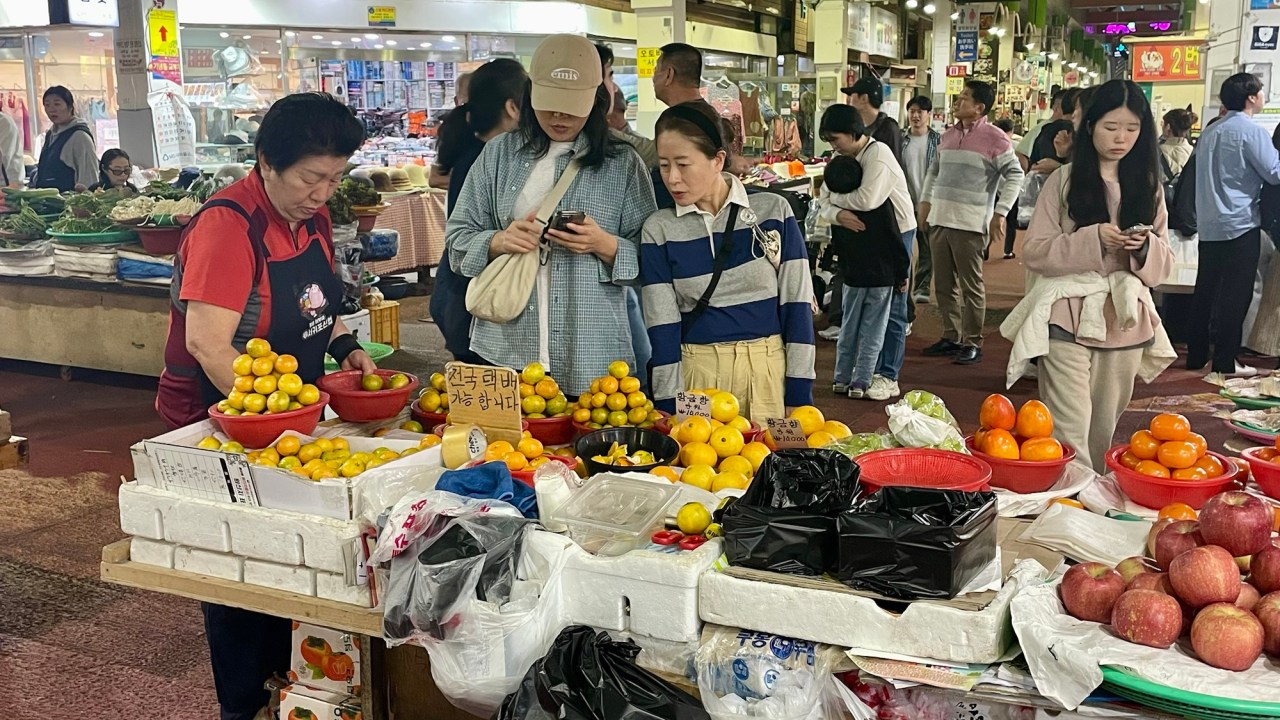

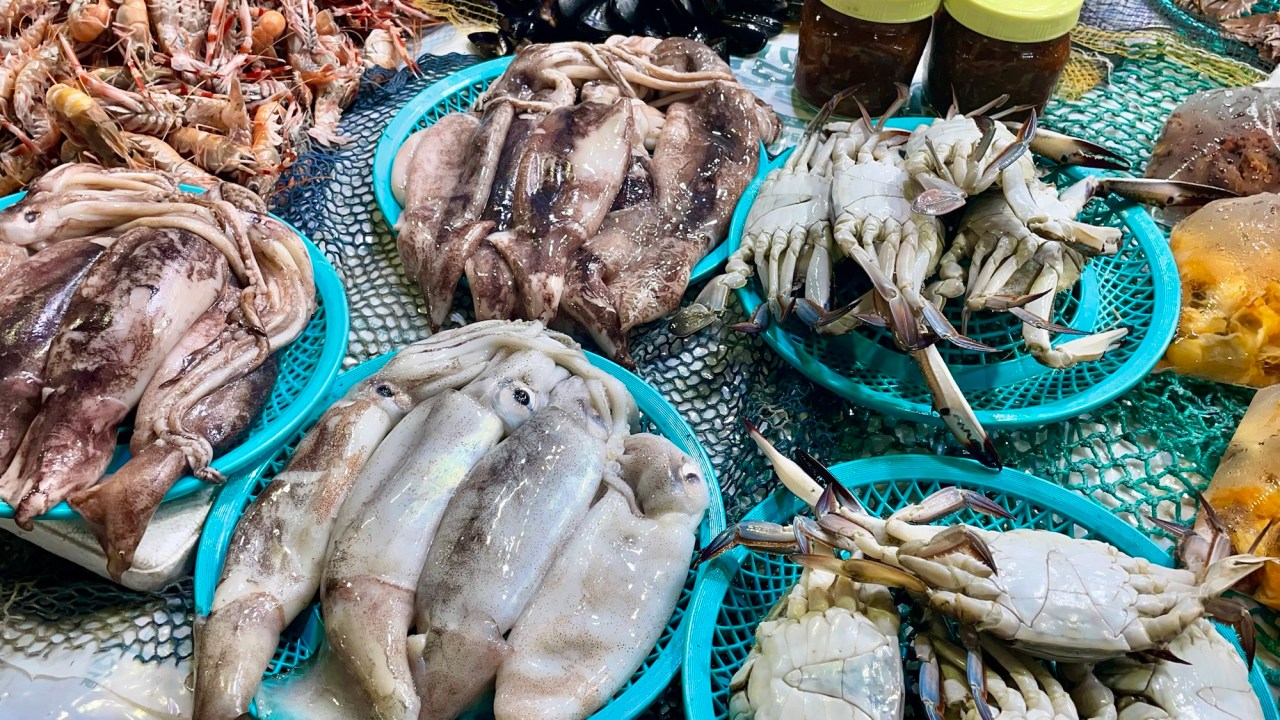
That night we wandered through the Olle Market which was alive with street food vendors, fish mongers and a mix of hawkers selling groceries, household goods and tourist trinkets.

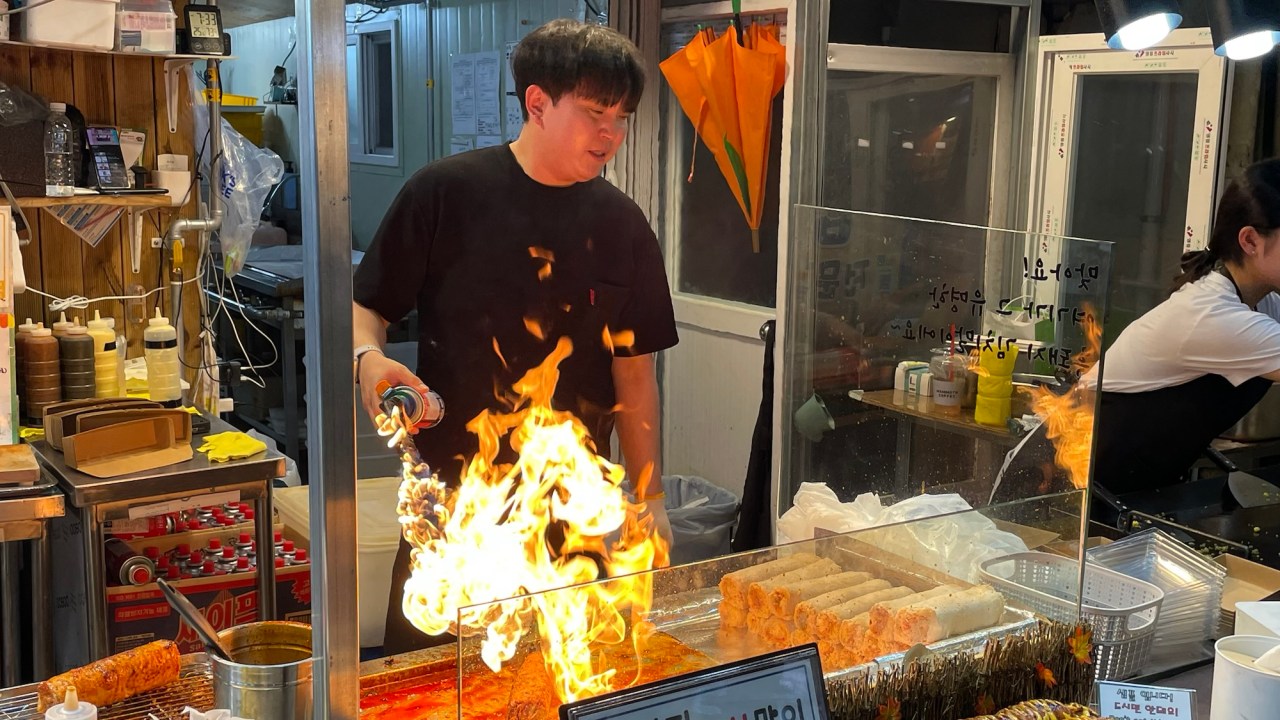
We sampled some dumplings and bought a large pork and spicy noodle roll that was deep fried and took that to a small craft beer joint where we had a drink to wash down the roll.


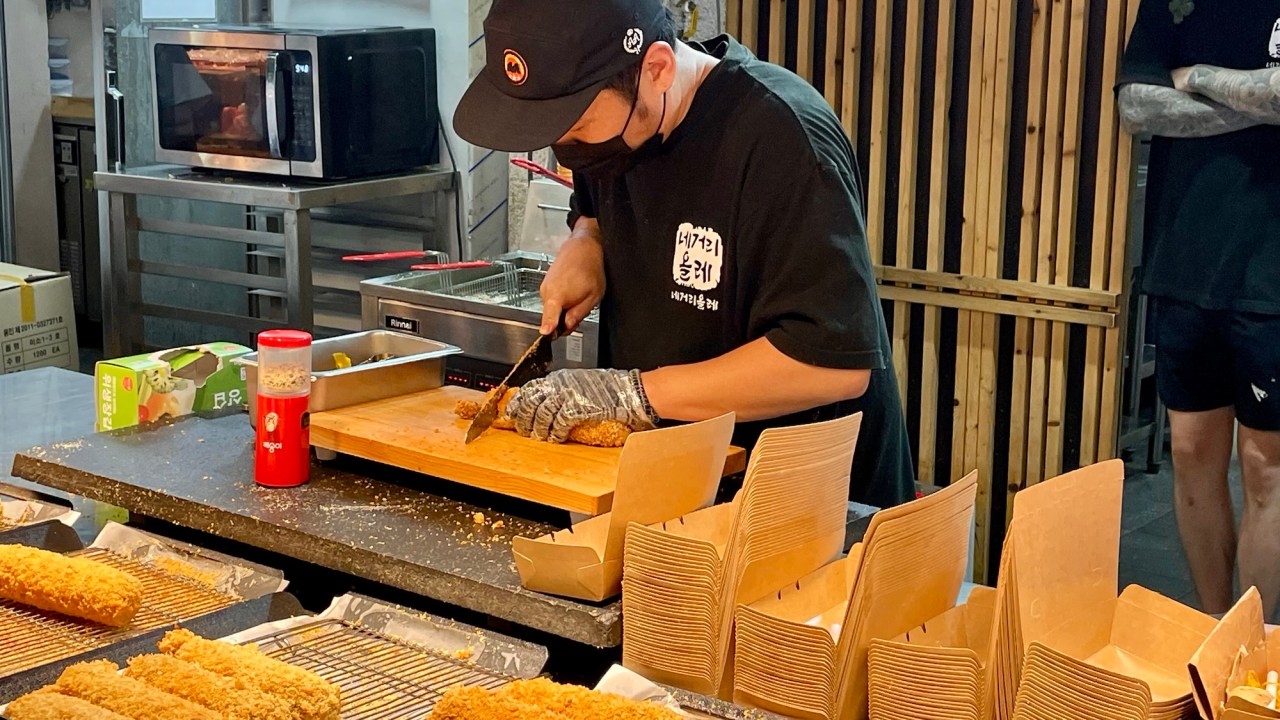
Markets are always fun places to wander, observe and learn about what people are buying and eating. So then you do as the locals do. And you have to be a bit brave sometimes because you just don’t always know what you’re gonna get.

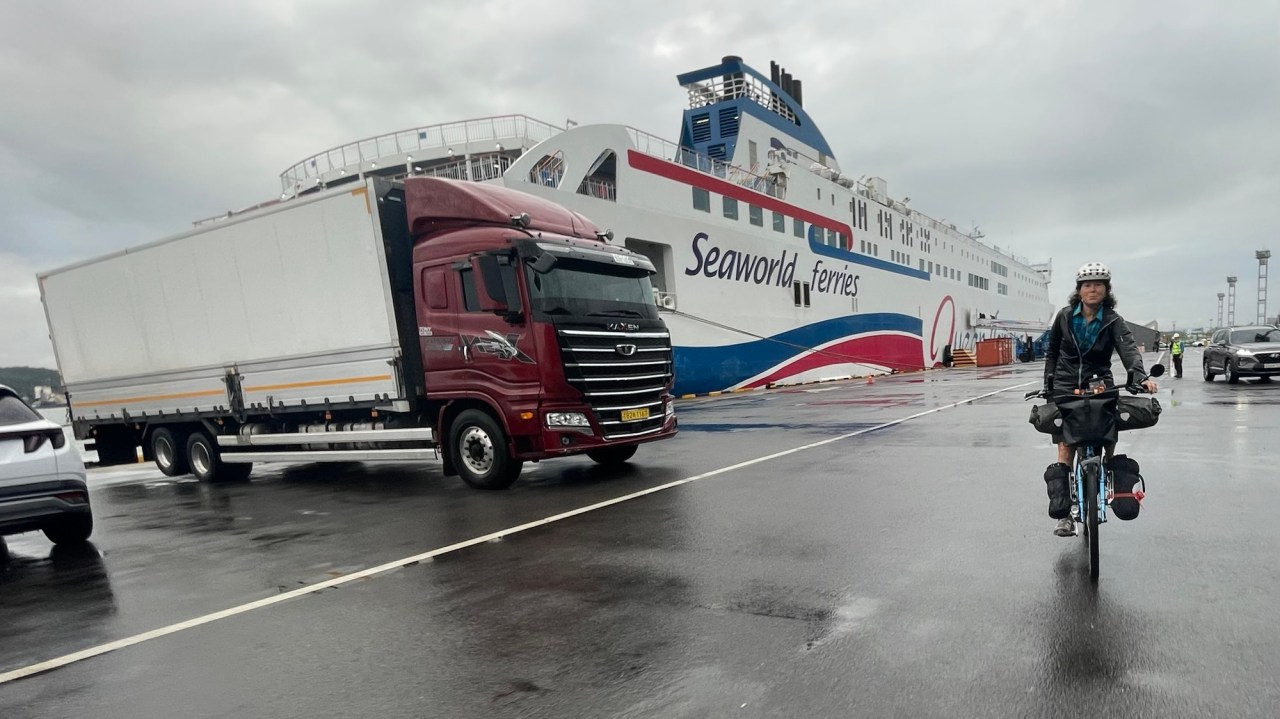
The next morning was wet. Rain had moved in over the island overnight and we had a 50-kilometre ride across the island back to the port of Jeju to take a ferry back to the mainland.

We contemplated taking a bus but that can often be a hassle, especially when there is a language barrier. We opted to ride. It wasn’t raining that hard. At least not for the first 90 minutes and then the rain began in earnest.
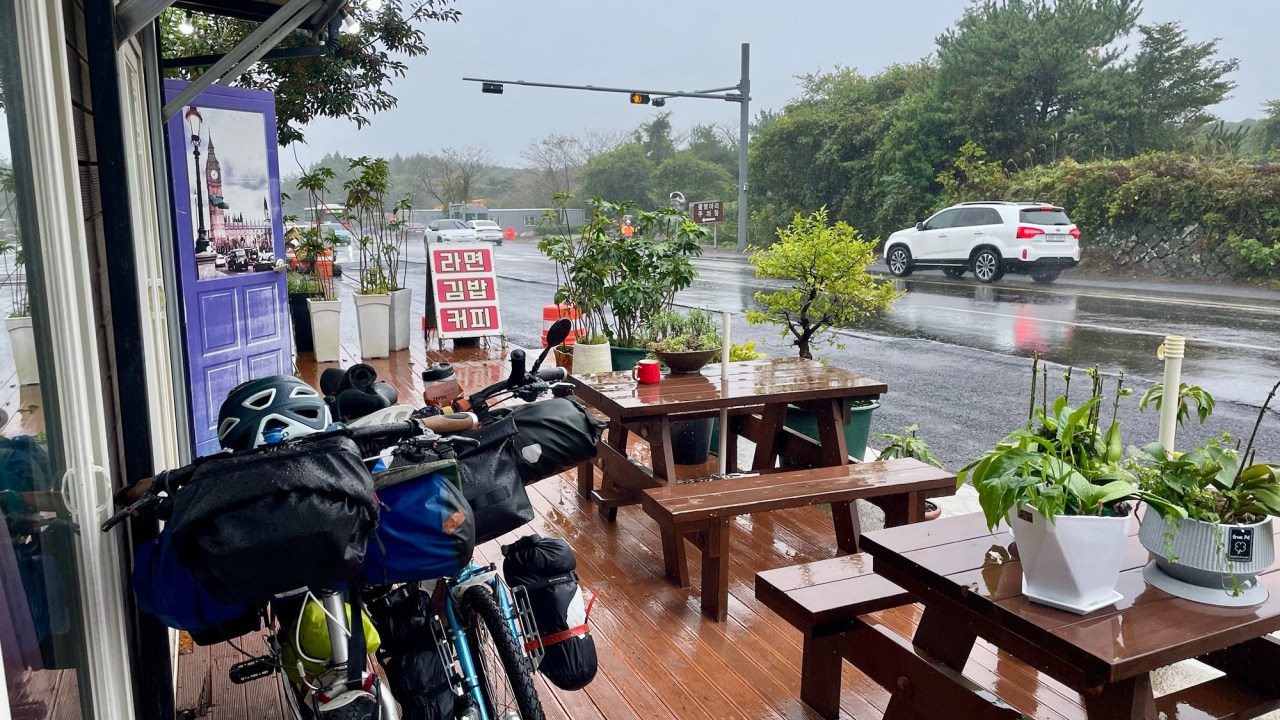
We pushed hard and only stopped for a quick coffee at about the halfway point. We got to the ferry terminal in just under four hours thoroughly soaked right down to the skin.
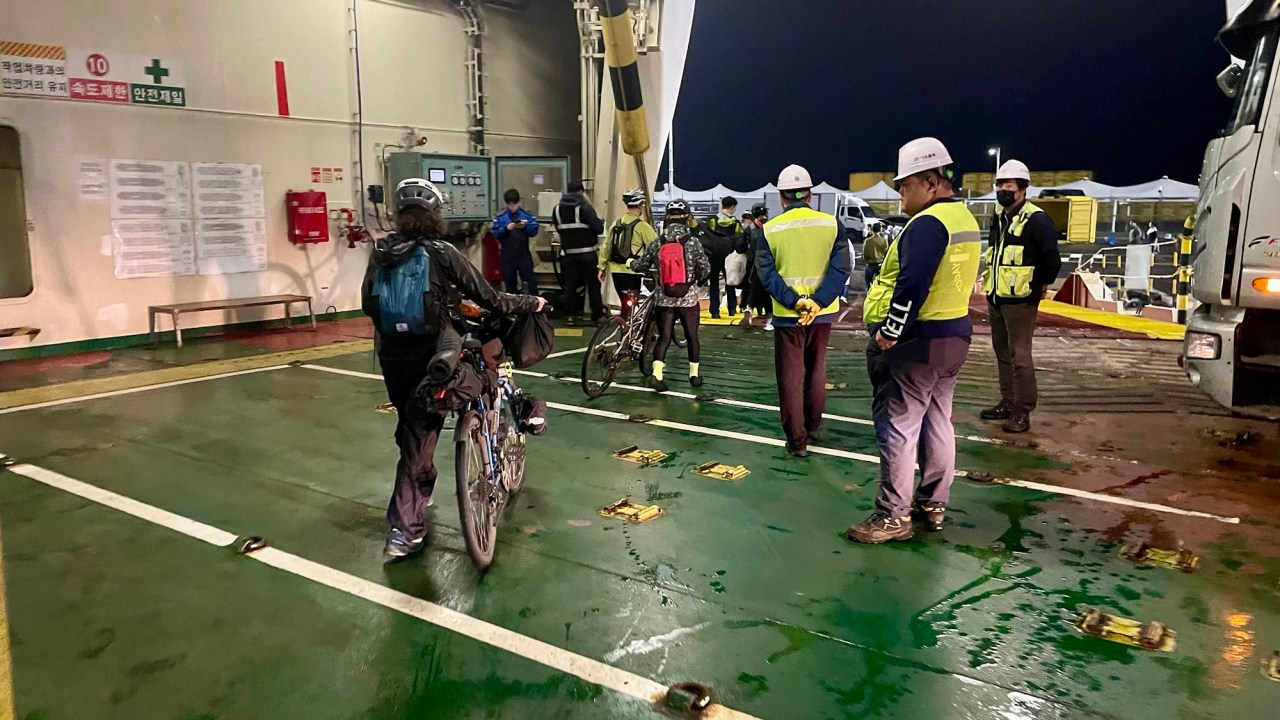
I’m writing this on the ferry and most of me and my clothes have dried except for my socks and shoes, and the feet in them. I can’t wait to get to the hotel in Yeosu to take them off.
Jeju Island was a fun ride, except for the ride back to Jeju City. It’s easy to see why it’s so popular with Koreans. It’s a different kind of place compared to the mainland.
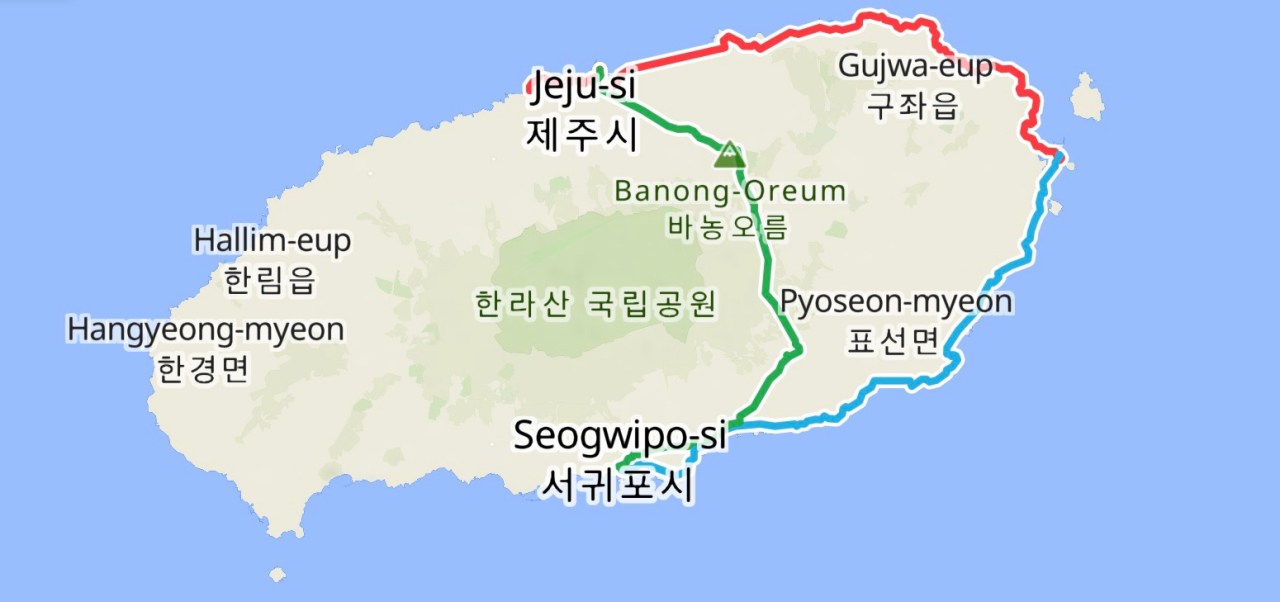
Now on to Busan and a ferry to Fukuoka, Japan. Here is a link to our route.

 2 l o v e c y c l i n g
Sounds like a wonderful “dining” tour.
We don’t get very far without food 😬
You guys and, especially, the food look great!
T
Goede morgen,Het is weer een mooie expeditie! Veel genoegen daar. Wij hebben net een rondreisje door Portugal achter de rug. Ook mooi! Groeten,Ben & Geke.
Very much enjoying your view of the world. And, through all the years I’ve known you – you don’t look any older!!
C
It must be because of the cycling 😃
WOW! I love the scenery and markets. The scenery is very different and a change to what I am used to. I hope we didn’t send the rain over to you because it is now quite dry here. Looking forward to seeing Japan thru your eyes. It is all so fantastic. Talk to you soon. Love Mom
Travel to N. Korea and I imagine Jan would have been thrown in prison for her slipper faux pas… ?? I pretend that your blog has yellow covers like the Nat Geo mags of my past… always opening my windows on the planet, causing yet more reflection… . My mouth is watering… but I had some kippered sardines for my supper, so now after looking at your photos I am amazed there are any fish left in our oceans; truly what an amazing resource. You have missed out on an atmospheric river causing floods and destruction back home*, but I could still feel and empathize with your wet feet. I am looking forward to your segments in Japan. *(As a child in the mid nineteen fifties I recollect two or three days of my family travelling around Vancouver in a rented box truck looking for a new home after a nearby creek flooded and destroyed our North Van home. — Climate Change, or climate cycling? As I said… your blog has me reflecting). Interesting for me to read that S. Korea has such progressive planning to develop the bicycle routes and flood protection infrastructure. Here in Canada some of our more narrow-minded citizens and provincial governments are actually becoming regressive regarding bicycle lanes; Ontario starting to tear some lanes out as they are promoting the idea that these cycle paths create traffic congestion. Ride, photograph, write on. Enjoy.